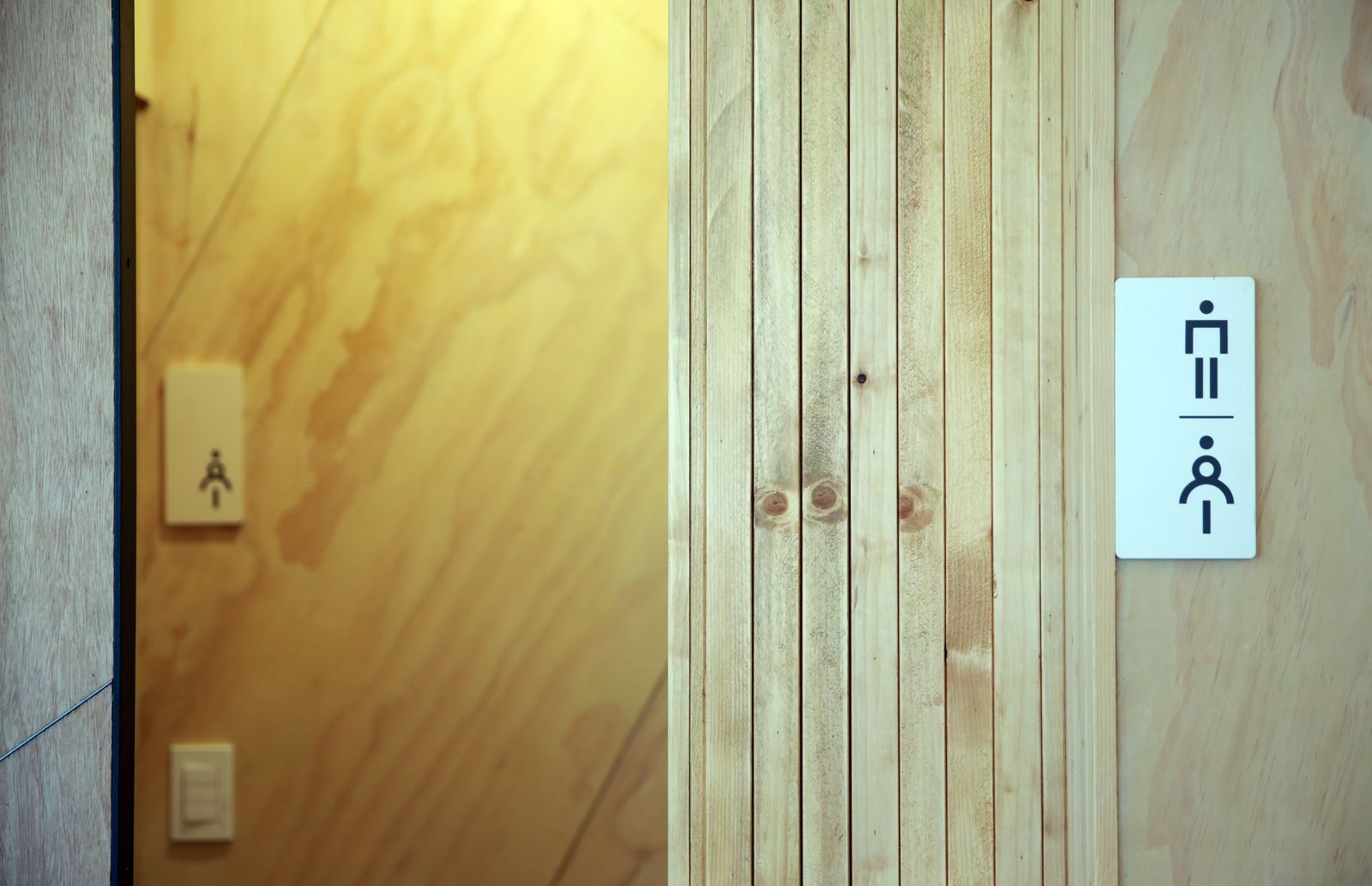
A line has started appearing on kiosk menus at some Korean cafes that has nothing to do with coffee: “restroom only, no purchase required, 2,000 won.” Most cafes now lock their bathrooms and print the door code on the receipt, but a smaller number have gone further, charging non-customers a flat fee just to use the toilet, according to reporting picked up in April by Kyunghyang Shinmun and Asia Economy.
Cafe owners frame it as a cost-control measure rather than pure profit: water, electricity, cleaning staff, and supplies all cost money to maintain a bathroom, and unauthorized use by non-paying passersby, plus people occupying the bathroom for extended periods, made the space one few owners could leave uncontrolled. Legally, the practice holds up: a cafe restroom is private property, not a public facility, and under Korea’s principle of private autonomy, an owner charging for its use is acting within their rights. Social convention, rather than law, is what’s setting the going rate — reporting on the trend puts the socially acceptable range at roughly 1,000 to 2,000 won.
The comparison being drawn in Korean coverage is Europe, where paying half a euro to two euros (roughly 700 to 3,000 won) for a public restroom is unremarkable in Germany, France, and Italy. For a country where free, well-maintained public and cafe restrooms have long been treated as a basic expectation — part of what visitors often praise about Korea, specifically by contrast with Europe — a 2,000-won cafe bathroom charge marks a small but real shift in that expectation, one still confined to a minority of cafes but visible enough to have become a recurring news story.
Source: Kyunghyang Shinmun and Asia Economy, April 2026.