
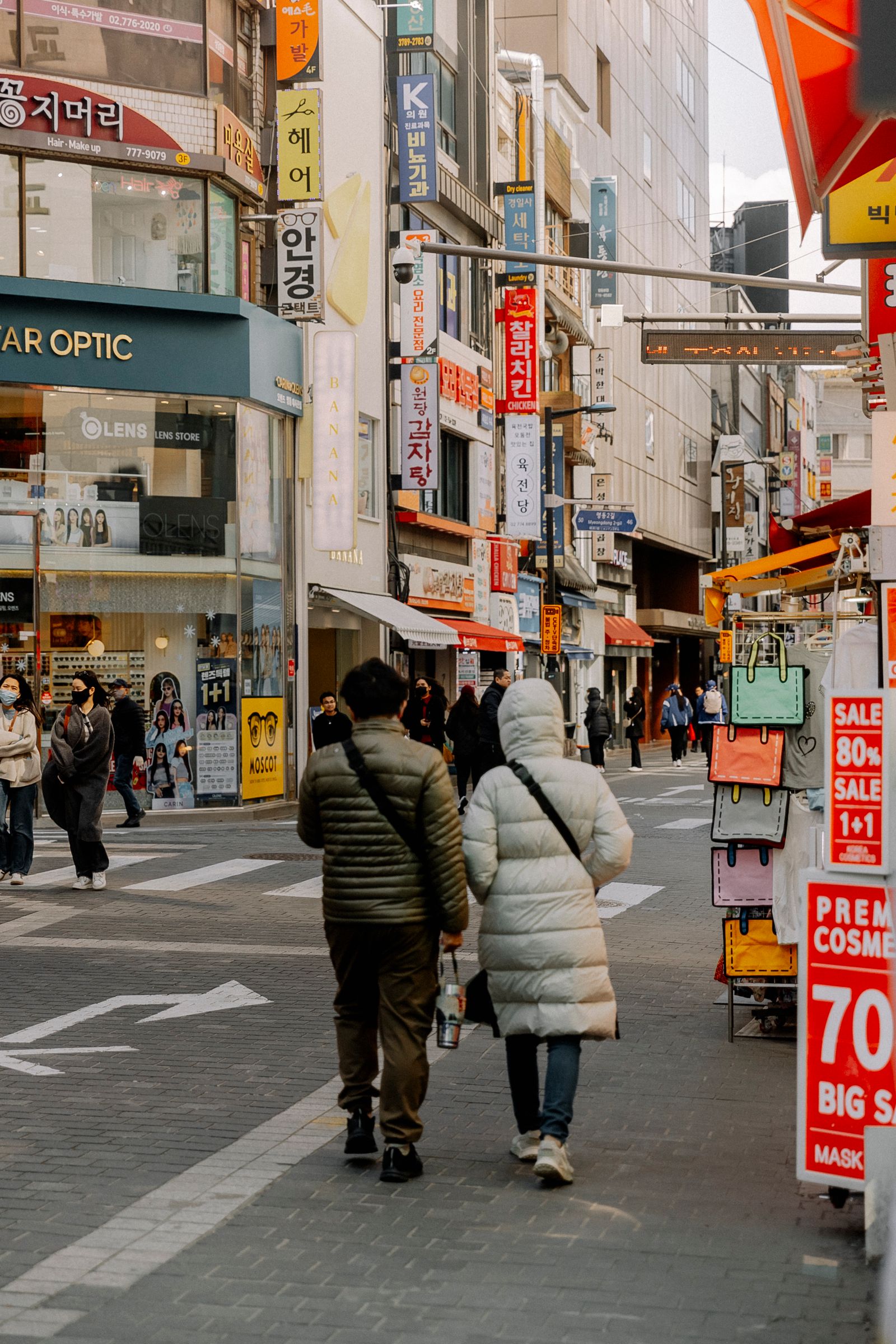
Ask a first-time visitor to Korea what surprised them most, and a fairly consistent shortlist tends to come up in travel forums, vlogs, and visitor surveys: the absence of tipping, the intensity and speed of Korean customer service, the sheer density of convenience stores, and the country’s deep, near-universal delivery culture that lets almost anything — from fried chicken to a single canned coffee — arrive at a door within the hour.
Service speed and thoroughness draw particularly consistent comment. Visitors accustomed to slower-paced service elsewhere often describe Korean restaurant staff, retail workers, and delivery riders as operating with a level of efficiency and formality that can initially read as brusque before visitors recognize it as a cultural default rather than rudeness — quick, precise service is simply the norm rather than a marker of a particularly good or bad establishment.
The convenience-store density surprises visitors from less urbanized countries especially: it’s common in central Seoul to find multiple 24-hour convenience stores within a single city block, each stocked with a surprisingly deep range of ready meals, and functioning as informal neighborhood hubs where people eat, charge devices, and even do minor banking via ATM.
Public safety is another frequently cited shock, particularly for visitors from countries with higher street-crime rates — the sight of laptops and phones left unattended on cafe tables to save a seat, a common practice in Korea, tends to startle newcomers before they adjust to the country’s relatively low rates of petty theft.
None of these observations are new to longtime Korea residents, but they remain a remarkably stable set of “aha” moments across waves of new visitors, suggesting they reflect genuine, durable differences in daily-life infrastructure and social norms rather than passing novelties.
Source: Aggregated visitor accounts and Korean travel-culture commentary on common culture-shock observations, 2026.