For visitors and new residents navigating Korean meals for the first time, dining etiquette (식사 예절) can feel like a small minefield of unwritten rules — most of which are far less complicated than they first appear, once the underlying logic of respect-for-elders becomes clear. A few core rules cover the vast majority of everyday situations.
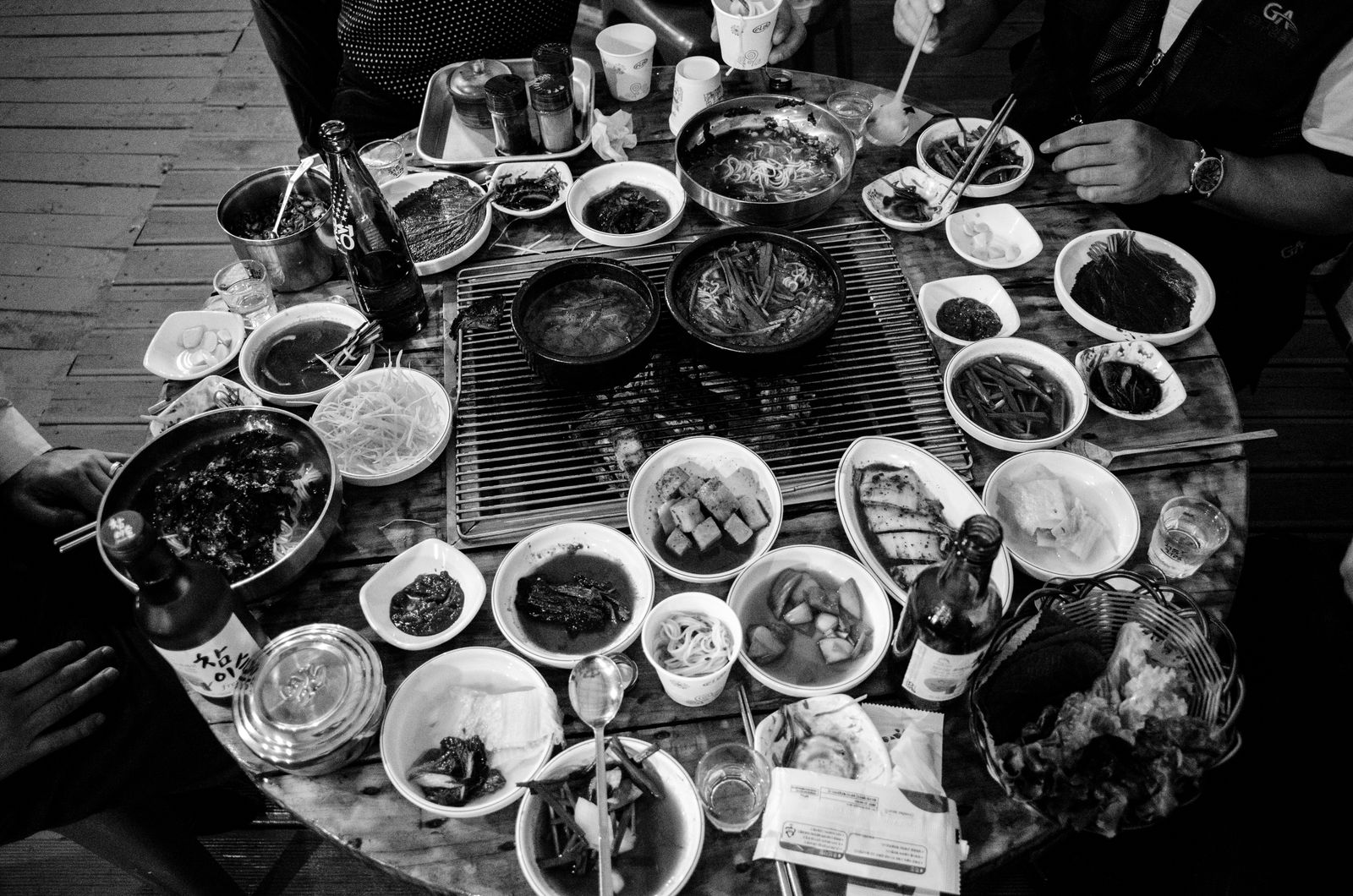
Chopstick and spoon use follows fairly strict conventions: rice and soup are eaten with a spoon, not chopsticks, and chopsticks are reserved for side dishes and other solid food. Sticking chopsticks upright in a bowl of rice is avoided, since the gesture resembles incense offerings made at funerals or ancestral rites — one of the few genuinely taboo table gestures in Korean dining etiquette.
Drinking and pouring order matters more than food order at group meals involving alcohol. The general rule is that the youngest or lowest-seniority person at the table pours for elders and superiors first, using both hands or supporting the pouring arm with the other hand as a sign of respect, and traditionally turns slightly away from an elder when drinking rather than facing them directly. These conventions loosen considerably among peers of similar age and status, but remain widely observed in more formal or hierarchical settings, such as meals with a boss or older relative.
Perhaps the most immediately useful fact for visitors: tipping is not expected in Korea, in restaurants, taxis, or most other service settings, and attempting to leave a tip can occasionally cause confusion or be politely declined rather than appreciated the way it would be in the United States. Service charges, where they exist, are built into pricing rather than left to customer discretion.
None of these customs are enforced rigidly against foreigners, who are generally given considerable latitude — but visitors who make an effort to follow the basics, particularly the pouring-order and both-hands conventions, tend to find it goes a long way with Korean hosts and colleagues.
Source: Korean dining etiquette (식사 예절) reference guides and cultural explainers, 2026.