A photo of a kiosk sign went viral in Korea recently. It read: “Using toilet without ordering drinks (1 time per person) 2,000 won.” Reactions split immediately — some defended the cafe owner for charging non-paying visitors, others called the policy cold and excessive. It’s a small sign, but it’s exposing a real fault line in Korean everyday etiquette: where does customer courtesy end and property rights begin?
The legal answer, at least, isn’t ambiguous. “Cafe restrooms are private facilities intended for customers,” attorney Oh Soo-jin told The Korea Herald (April 9, 2026). They’re not classified as public restrooms under the Public Toilets Act, which means owners are free to set conditions on access — and a clearly disclosed fee counts as a “legitimate condition of transaction” under the principle of private autonomy. Oh was also asked the harder question: does an urgent physical need override that? No, she said — urgency doesn’t grant a legal right to enter private property.
That legal clarity hasn’t stopped things from escalating. In January, a customer in Uijeongbu was reported to police for interference with business after using a franchised cafe’s restroom without making a purchase; signs there warned that only paying customers could use the facilities, with a 5,000 won fee otherwise. The customer said he had an emergency and a child waiting outside, but the owner reportedly demanded he buy a drink before leaving. Police ultimately found no basis for obstruction-of-business charges, ruling that restroom use itself wasn’t punishable.
If the law is mostly settled, why does the backlash keep happening? Two researchers The Korea Herald spoke to argue it’s less about money than about psychology. Chae Kyu-man, an emeritus psychology professor at Sungshin Women’s University, points to loss aversion: “When people use a service at no cost for a long time, they develop a sense of entitlement. Even without legal rights, they feel it belongs to them and view the fee as something being taken away.” In other words, the backlash isn’t really against a 2,000 won charge — it’s against the experience of a free thing becoming a paid thing, which registers as a loss even when, legally, nothing was ever owed.
Choo Eun-woo, a sociology professor at ChungAng University, adds a second layer specific to what’s being charged for. “A fee that does not come with a tangible product, like a drink or a seat, can feel like paying for nothing,” he said — restroom access doesn’t feel like a “service” in the way a coffee does, even though both cost the business money to provide. Choo also ties the friction to a specific expectation Korean cafe culture built over time: “Local cafes once offered neighbors free drinks. That shaped expectations of service. Allowing restroom use is seen as part of that culture, so removing it can feel cold.”
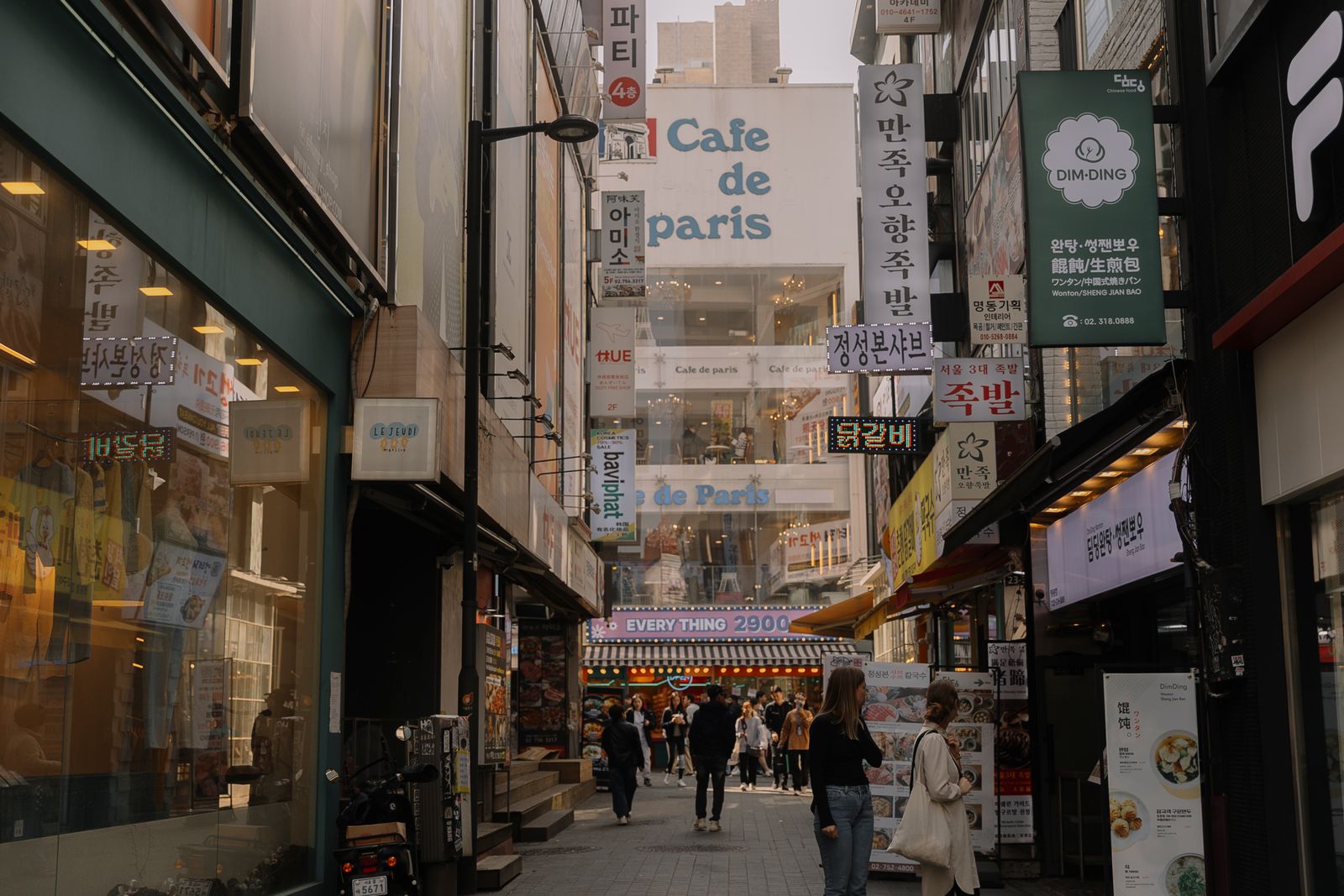
The dispute is also picking up an unexpected audience: foreign visitors. Paid public restrooms are familiar in parts of Europe and Asia, but charging specifically at a cafe — a space that in Korea has historically functioned as a quasi-public “third place” — is a less familiar combination, and it’s becoming one of the small cultural-adjustment notes new arrivals trade with each other.
None of this means the fee policy is going away, or that it should. Owners are responding to a real cost: non-paying foot traffic using facilities, supplies, and cleaning time that a cafe’s margins weren’t built to absorb. But the size of the reaction to a 2,000 won sign suggests Korea is mid-renegotiation of an unwritten rule — one where “the bathroom is just available” quietly stops being assumed, and nobody has agreed yet on what replaces it.
Sources: The Korea Herald, “Pay to pee? Cafes charging toilet fee sparks debate” (Choi Jeong-yoon, April 9, 2026), including comments from attorney Oh Soo-jin, Sungshin Women’s University psychology professor Chae Kyu-man, and ChungAng University sociology professor Choo Eun-woo.