
Table of Contents
A Holiday Split Between Parents’ Homes and Personal Sanctuaries
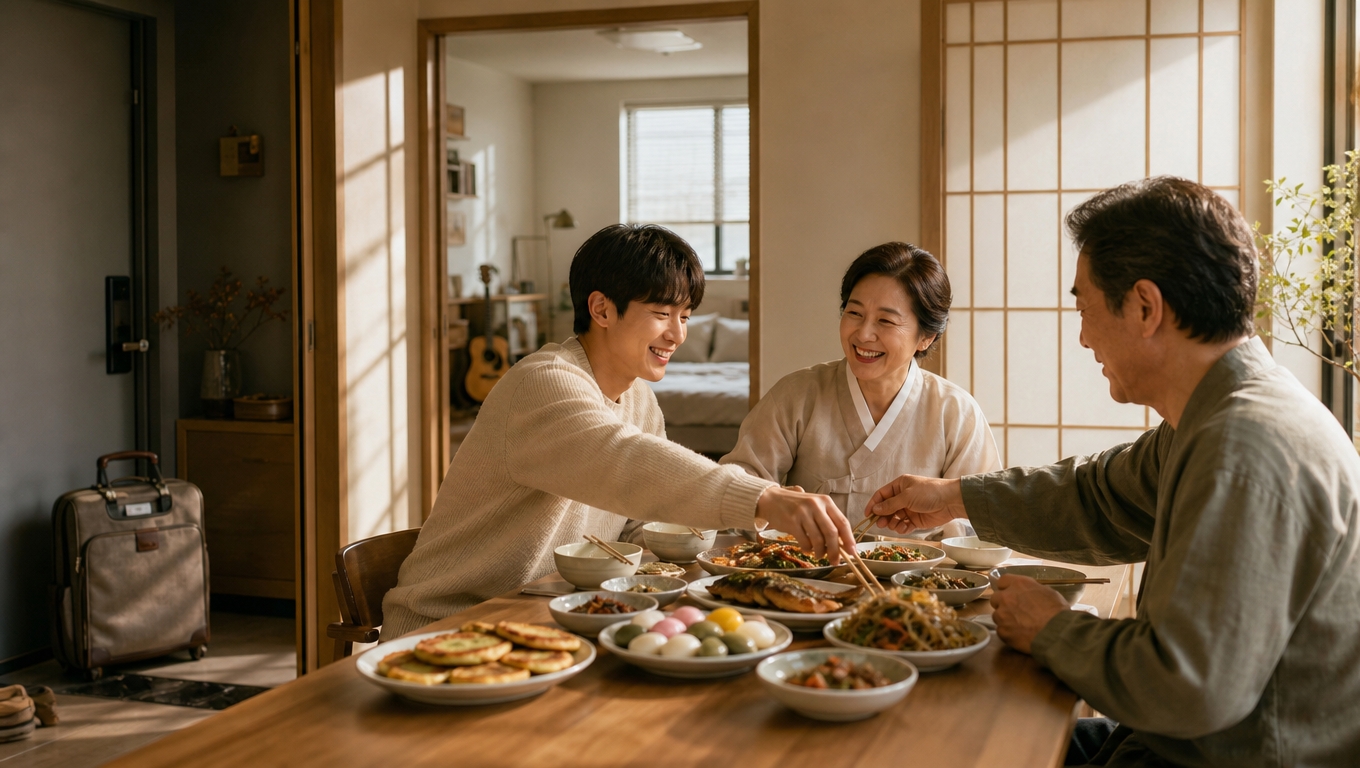
A typical Chuseok itinerary in 2026 might look like this: visit your parents on the first day for a shared meal, then head back to your own place the next day to rest. Instead of spending hours on an elaborate ancestral feast, the family eats out or orders takeout. With the time left over, people take a short day trip nearby or catch up with siblings and close friends. No single household lives this exact schedule. It’s a composite drawn from the range of choices this year’s consumer holiday surveys turned up.
People increasingly mix all three: traveling home, resting, and visiting relatives, in the same few days. Going home no longer means staying under the family roof for the whole break, and resting at home doesn’t mean cutting family out either. A short visit, some downtime, a shared meal, and a stop at the family grave can all fit into one holiday. Chuseok is less “go home or stay away” now and more a question of how to divide up a handful of days.
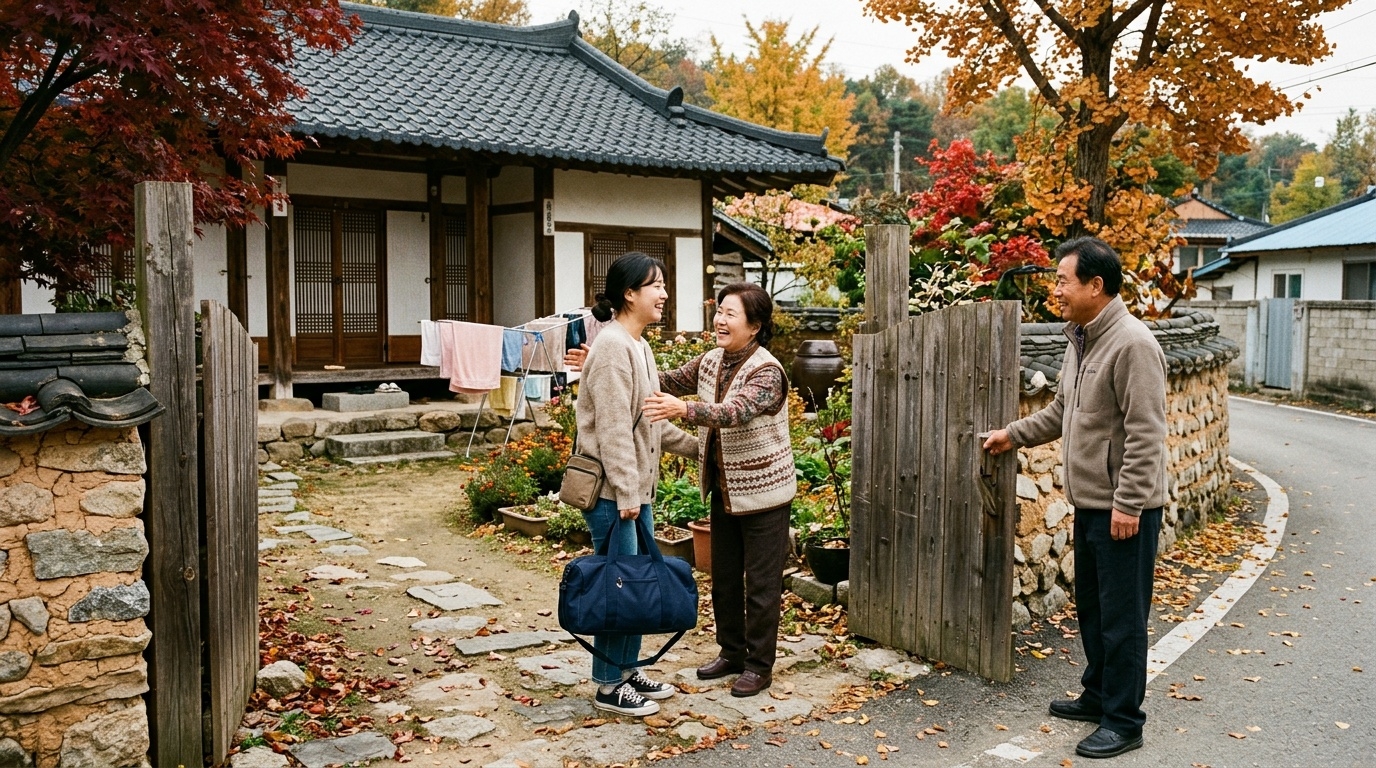
Chuseok in Korea has long been called the “Great National Migration,” when people working or studying in the cities poured back into the countryside. Going home to see living parents and honor ancestors was tied to filial duty, and skipping it carried a quiet accusation of neglect. Fighting for train and bus tickets and sitting through highway gridlock were treated as unavoidable parts of the holiday. This year’s survey still shows home visits as a leading choice, just no longer the only acceptable one.
Traveling Home at 44.2%, Recharging at Home at 44.7%
According to the “2026 Chuseok Consumer Perception Survey” conducted by Consumer Korea among 1,000 consumers aged 20 to 69 nationwide, 44.2% of respondents planned to travel back to their hometowns. That is an increase of 7.8 percentage points from last year’s 36.4%. At the same time, 44.7% reported planning to “rest at home with immediate family,” edging out hometown visits by 0.5 percentage points. The two options landed almost neck and neck, and the holiday didn’t tilt clearly toward travel or toward staying home.
Rounding out the responses, visiting family graves or columbaria drew 23.2%, visiting siblings and extended relatives stood at 18.9%, domestic travel was at 17.9%, and casual meetups with friends accounted for 16.9%. Overseas travel plans registered at just 2.8%. Because this was a multiple-choice question where participants could select several activities, these percentages should not be combined to total 100%. A respondent heading home to see parents might easily spend another part of the weekend resting at their own place or catching up with relatives, and a short domestic getaway can comfortably fit alongside family visits.
Reading the 44.7% who rest at home and the 44.2% who visit hometowns as two opposing camps misses the point. Often the same person spends part of the holiday with family and the rest recovering at home. Whether to see family is turning into a separate decision from where and how long to stay. Home visits rose this year, but homecoming alone doesn’t define the holiday anymore.
A Four-Day Break Reshaped the Flow of Travel
The official Chuseok holiday in 2026 ran from Thursday, September 24 through Saturday, September 26. Adding Sunday the 27th made four days off in a row. That’s not long enough for a long-haul international trip, and it doesn’t leave much room for a long stay at a distant hometown followed by an easy return to work. Consumer Korea pointed to this shorter window as the main reason overseas travel fell while home visits and quiet time at home both rose.
Domestic trip plans slipped from 23.2% last year to 17.9%, down 5.3 points, and overseas plans dropped from 5.7% to 2.8%. Hometown visits, by contrast, climbed 7.8 points. A longer holiday lets people combine a family visit with a leisure trip, but in a four-day window, cutting down on travel distance and transit time makes practical sense. Visiting parents and resting at home won out over vacation travel.
None of this means old-style homecoming culture is suddenly back in force. The drop in leisure travel and the rise in home visits look more like practical responses to the calendar than a cultural swing. The same person might book a flight abroad during a longer break, then choose a trip home instead when time is tight. This year’s numbers suggest holiday habits track the length and shape of the break, not just fixed tradition.
Cherishing Family, but Finding New Ways to Show It
When asked about the most important value guiding holiday spending, 24.7% of survey respondents chose “spending time with family and nurturing relationships,” the highest share overall. Practical utility followed at 16.9%, price sensitivity at 15.5%, and health-related factors at 14.0%. Even amid rising living costs, keeping family bonds strong remains the core emotional anchor of the holiday. What’s different now is that caring for family no longer requires a long, exhausting visit or a complete ancestral ritual.
In decades past, holiday norms treated the entire journey as an indivisible package: traveling home, gathering multiple generations under one roof, cooking elaborate traditional foods, and carrying out ancestral rites (charye) followed by grave tending (seongmyo). Today, these elements can be freely separated. A family might visit parents without holding full ancestral rites, or visit a memorial park without attending an extended clan gathering. Sharing a warm, relaxed meal before returning to individual routines is increasingly seen as a healthy, caring way to maintain family ties.
Demographic changes explain part of this: more people live alone, and more families are scattered across different cities. When relatives don’t live nearby or share the same work schedule, a multi-day gathering under one roof gets harder to pull off. Different generations also weigh personal time and rest differently. Families aren’t giving up on the holiday. They’re rebuilding it around what everyone can actually manage.
Prioritizing a Shared Meal Over a Feast of Obligation
Chuseok charye is a traditional Korean ancestral ritual where ceremonial food is offered with deep reverence. Traditionally, having several generations gather to prepare trays of pan-fried delicacies (jeon), seasoned greens (namul), savory meats, and fresh seasonal fruit was seen as the heart of the holiday. Food preparation was more than just putting dinner on the table; it was a communal rite designed to honor ancestors and solidify family unity. That tight link between family reunions, festive meals, and ancestral rites is part of why Chuseok gets described abroad as “Korea’s Thanksgiving.”
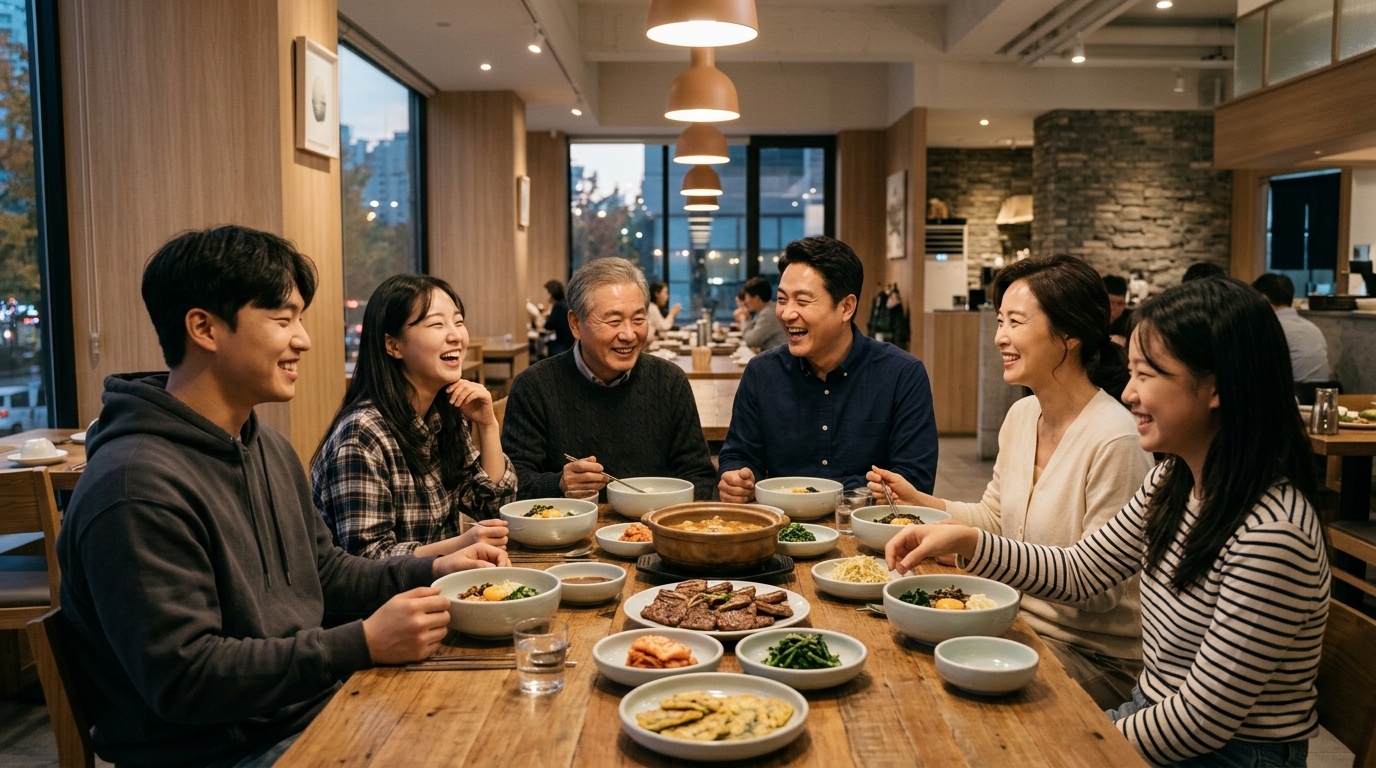
In recent years, more households are simplifying or skipping the ritual table, choosing restaurants, delivery, or meal kits over hours in the kitchen. Many families say the time together matters more than cooking every dish from scratch. Ordering in or eating out during the holiday isn’t dodging family duty. It cuts prep work and grocery costs while keeping the point of gathering intact.
This particular survey, from Consumer Korea, covers travel plans, rest, and spending sentiment, not ritual practice directly, so its numbers shouldn’t be mixed with separate data on charye simplification published by other organizations. What it does show is how much people now customize their holiday hours. Going home doesn’t obligate anyone to a full ceremony, and staying put doesn’t mean family matters less.
From Rigid Duty to a Modular Holiday
The financial strain of the holiday remains real. Survey respondents projected spending an average of 728,630 won for Chuseok this year, with 60.8% describing holiday expenses as “very burdensome.” When cash gifts for parents, festive food, transit tickets, and lodging expenses collide all at once, budgets get stretched thin. The desire to spend meaningful time with loved ones hasn’t changed, but how people act on it has to fit what their household budget can handle.
None of this is simple individualism. Shorter breaks, long travel distances, smaller households, tighter budgets, and a real need to rest are all shaping people’s choices at once. Someone who goes home might keep the stay short, while someone who doesn’t can call, video chat, or plan a dinner on another weekend instead. The old question of preserving or discarding tradition is giving way to a more practical one: what actually keeps a family connected.
Go back to that opening household: parents visited on day one, rest at home after. Another family might take a short weekend trip, or simply stay in touch over a meal and a video call. Neither is the new rule. What the 2026 numbers show is that the old idea that staying home means failing your parents is losing its grip, replaced by a holiday each family assembles for itself out of time with relatives, personal rest, travel limits, and budget.
Sources: Consumer Korea Press Release on the “2026 Chuseok Consumer Perception Survey,” September 14, 2026; Segye Ilbo, September 14, 2026.