
Table of Contents
A night of heavy crowds in Hongdae and Itaewon, without major incidents
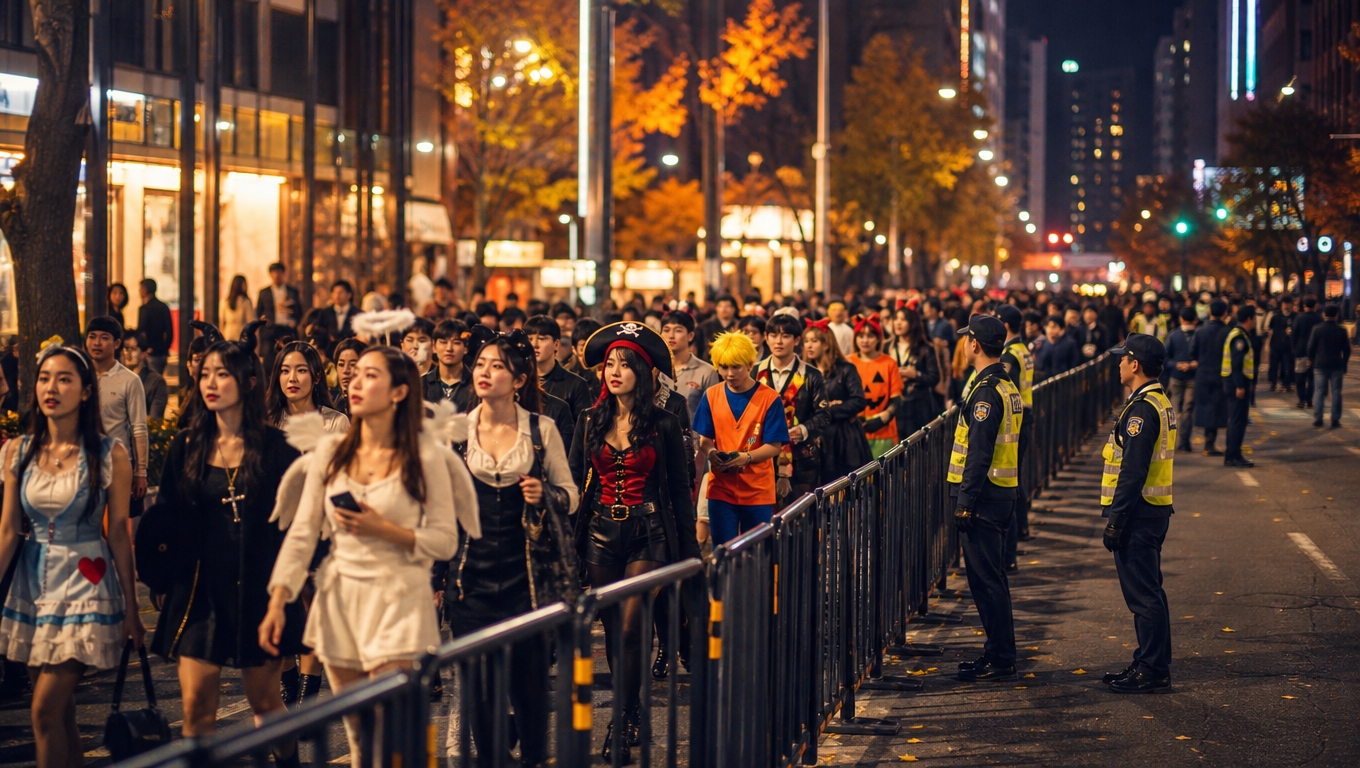
On the night of Saturday, October 31, about 160,000 people filled Seoul’s Hongdae and Itaewon districts, and authorities received no reports of significant incidents through the early hours of November 1. It was the first time Halloween itself had fallen on a weekend since the Itaewon crowd crush of October 29, 2022. Foot traffic slowed in a few narrow alleys, but police stepped in and the slowdowns never turned into serious disorder.
Seoul’s real-time city data put the Hongdae area at about 120,000 to 125,000 people at 10 p.m., rated “very crowded.” The Itaewon Special Tourist Zone had about 30,000 to 32,000 people, rated “crowded,” and people in their 20s made up 50.6 percent of the Itaewon crowd. As lines stretched along the streets and outside bars in both districts, fences split some sections into one-way lanes.
Yongsan Police Station said there were no notable incidents. The 119 command post set up in Hongdae and the Yongsan Fire Station’s situation room said they handled nothing beyond complaints such as a sore wrist or a sprained ankle. In Hongdae, someone reported being handed candy laced with drugs, but no drugs were detected and the report was confirmed as a false alarm. This year’s approach combined two things: responding as crowds built up, and widening walking space before they arrived.
A special safety period that began October 23
The Seoul Metropolitan Government named October 23 to November 1 a special Halloween safety period, with October 30 to November 1 set as the most intensive stretch. The plan covered 14 locations in 10 districts and focused on spreading out crowds in busy nightlife areas and keeping people moving in narrow streets. A total of 3,271 safety staff were assigned to the field.
Eight of those locations were designated priority zones: the Itaewon and Hongdae Special Tourist Zones, Ikseon-dong, Myeong-dong, the Seongsu-dong cafe street, the Konkuk University food street, Gangnam Station and Apgujeong Rodeo Street. Each had a joint field command post staffed by the Ministry of the Interior and Safety, the Seoul city government, district offices, police and firefighters. Instead of each agency reading the situation on its own, they worked from the same information and linked crowd control directly to emergency response.
The national crowd-density alert stayed at the “caution” level through November 1. Police sent about 7,800 officers to 28 priority areas nationwide, 14 of them in Seoul. Emergency 112 calls about crowding were classified as “Code 1” or higher, the tier that calls for immediate dispatch. Kim Jong-chul, acting commissioner general of the Korean National Police Agency, inspected Itaewon on October 30 and laid flowers at the memorial on the “October 29 Path of Memory and Safety.” Minister of the Interior and Safety Yoon Ho-jung also checked safety preparations in Hongdae ahead of Halloween.
Watching the crowds on screens and on the street
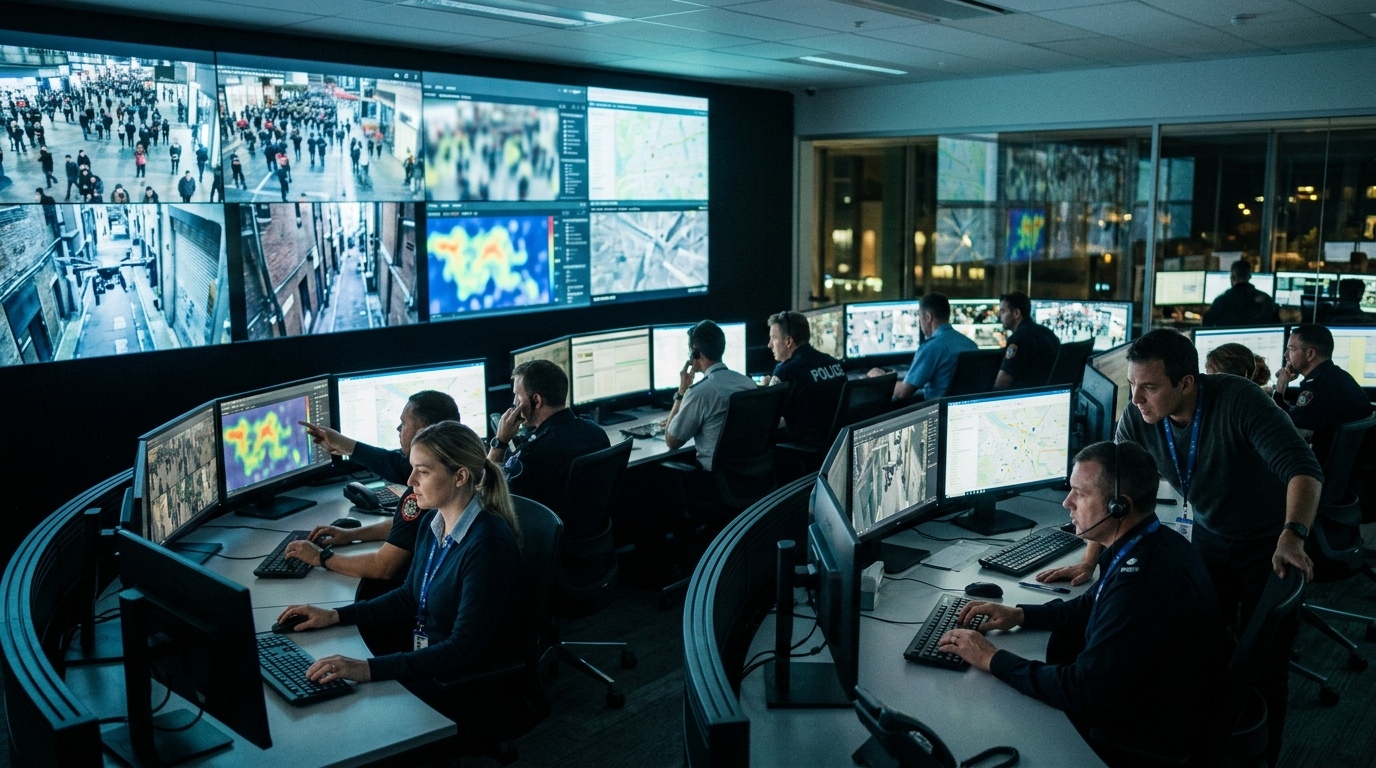
Seoul has 1,094 crowd-detection CCTV cameras, and for Halloween the city focused on the 361 installed in the 14 managed locations. When density reached the “severe” level of five to six people per square meter, an alert went automatically to the city, district, police and fire situation rooms. That gave staff on the ground a basis for redirecting foot traffic or spreading people out.
The city also used Seoul Real-Time City Data, which estimates crowds from mobile base station signals. The city data showed congestion across a whole district, while the cameras showed people bunching up in specific stretches of street. Drones flew over Hongdae, Seongsu-dong and Gangnam Station to spot bottlenecks that were hard to see from the ground. Together, these tools covered both the neighborhood-wide picture and alley-level detail.
A mobile “disaster safety field command bus” was parked at Noksapyeong Square. It carried special communications equipment, a video conferencing system and high-powered external loudspeakers, so agencies could share information and direct operations close to the scene, and it could also be used to guide an evacuation. In Itaewon, police special operations armored vehicles and police dogs were deployed as a precaution against stabbings and terrorism. Police also cracked down on fake police uniforms and warned people carrying imitation firearms or weapons, a step aimed at both crowd safety and crime prevention on streets full of people in costume.
At 6 p.m., the road became a walkway
On Halloween, Itaewon-ro, from the Itaewon 119 Safety Center to Noksapyeong Square, was closed to all vehicles from 6 p.m. Opening the road to pedestrians gave people far more room than the neighborhood’s narrow alleys could offer. Last year, authorities decided to close the road around 10:40 p.m. after seeing how crowded it had become. This year the closure was decided in advance, before the crowds built up.
Yonhap News Agency reported that when people later packed into the alleys, the open roadway drew much of the crowd and helped spread it out. In Hongdae’s club district, one traffic lane was closed and used as extra walking space. In the alleys, one-way guide lines and folding dividers separated the flow of people, and belt barriers kept queues for popular clubs and bars from blocking the path. The aim was to keep people walking and people waiting from competing for the same strip of pavement.
Subway service was adjusted late in the night. From 11:47 p.m. until the last train at 11:59 p.m., Line 6 trains passed through Itaewon Station without stopping, to limit how many more people arrived at an already crowded area. The Hongdae Special Tourist Zone, which held about 130,000 people earlier in the night, had thinned to 86,000 to 88,000 by midnight on November 1.
Mourning and celebration on the same street
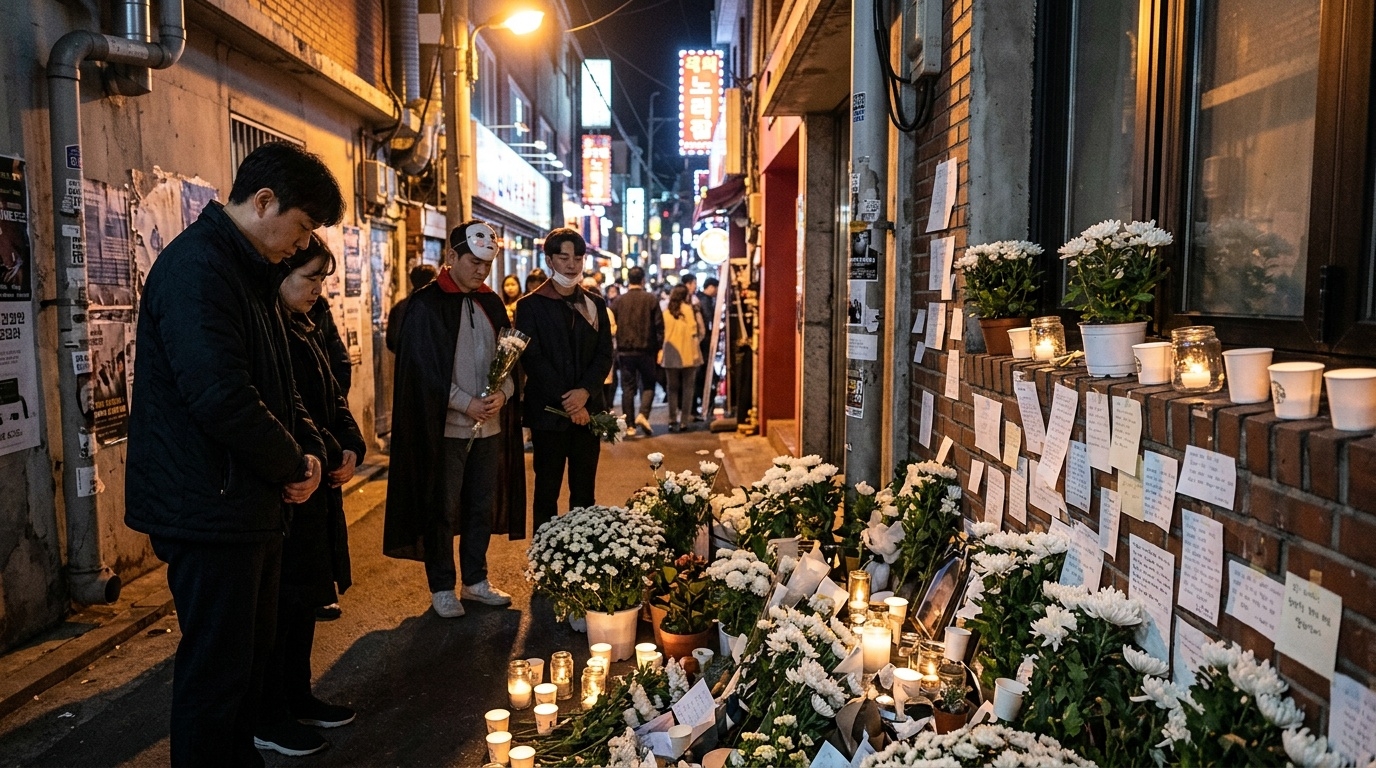
In Itaewon, Halloween crowds moved through the same streets as people who came to remember the victims. Visitors left flowers and messages at the memorial space in the alley where the crush happened. The name “October 29 Path of Memory and Safety” reflects what the alley has become: a place of mourning that is also an ordinary neighborhood street. Safety management this year had to work with both of those roles at once.
From 9 p.m. on October 31, groups including “Pumpkin Lanterns Remembering Itaewon” held the “October 29 Itaewon Disaster 4th Anniversary Halloween Action” at Noksapyeong Square. After a memorial program, participants marched through the Quy Nhon Street area until 11 p.m. People in costume and people marching in remembrance were out on the same night, in the same neighborhood.
The flowers in the alley and the gathering in the square kept the disaster in view in different ways. At the memorial space, people paid tribute with flowers and written notes, while marchers gathered in the square and then walked the surrounding streets. The mourning did not stay in one spot; it moved through the streets crowds were using that night. For foreign visitors too, Itaewon was both a nightlife district for watching Halloween costumes and a place where the disaster is remembered. People came to the area that night for different reasons, and that mix shaped the mood of the streets.
Why visitors’ own movement matters
Seoul’s safety guidance starts before people leave home: check how crowded a place is and plan the route in and out. Once there, keep to the right and avoid stopping suddenly or changing direction, since people walking against each other in a tight space is what creates dangerous pressure. Fences and one-way signs were there to keep everyone moving in the same direction, not to offer the shortest way to a destination.
The guidance also says to leave an area right away if walking slows to a crawl or you find yourself pressed against other people. Call 112 or 119 if you feel unsafe, and never bend down to pick up something you dropped in a dense crowd. This Halloween’s outcome came from road closures decided in advance, real-time monitoring and traffic management on the street working together. The open question for future years is how early authorities can spot the signs of dangerous crowding and turn that warning into actual space for people to move.
Sources: Yonhap News Agency, November 1, October 31 and October 30, 2026; Yonhap News TV, October 30, 2026; Seoul Metropolitan Government, “Seoul in My Hand,” October 22, 2026.