
Table of Contents
A Tenth Season That Started With a Korean Qualifier
Global esports is usually associated with PC titles like League of Legends or Counter-Strike. But Korean game company Com2uS has run a world championship on a single mobile role-playing game for ten consecutive years. The “Summoners War World Arena Championship 2026,” or SWC2026, entered a roughly three-month run on August 8 with the Korea Open Qualifier.
The opening round was staged as an offline tournament without spectators, with every match played best-of-five, single elimination. The winner of the Korean qualifier earns a direct bid to the World Finals in Seoul this November. Other participants who meet the World Arena season performance requirements get a second chance through the Korea bracket of the Asia-Pacific regional qualifiers. A single loss doesn’t automatically end a player’s season.
From Hamburg to Toronto and Bangkok
SWC2026 isn’t a single-region national tournament that wraps up in one place. It’s a multi-stage event that runs qualifiers across Europe, the Americas, and Asia-Pacific, then funnels into regional cups. A European Cup is scheduled for September in Hamburg, Germany, alongside regional cups in Toronto, Canada, and Bangkok, Thailand. Players who survive those rounds compete for the tenth world championship at the Seoul World Finals in November.
The European qualifier began the same weekend as the Korean opener, on August 8 and 9. It runs on a double-elimination format, where two losses mean elimination, and the eight players who advance take the Hamburg stage on September 26. Every match is broadcast in multiple languages across several channels, including the official YouTube. It’s an operating model that ties mobile game users together as both regional qualifier participants and online viewers at the same time.
A Ban Rule That Stacks Up to Eight Monsters
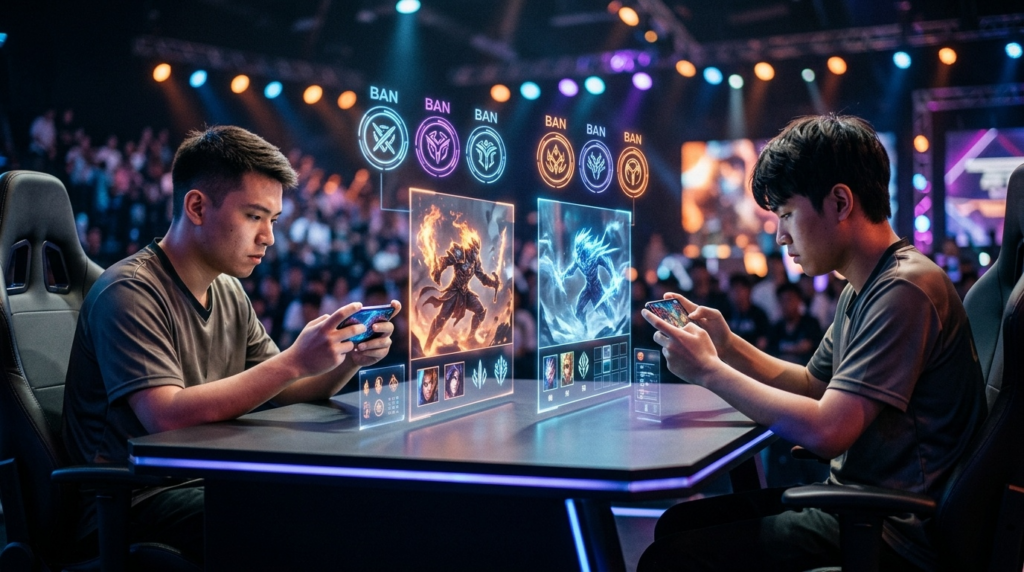
The biggest rule change this season is the “stack ban.” A ban is a procedure that blocks an opponent from picking a specific monster. Under the new rule, monsters designated as free bans accumulate as a match progresses, building up to as many as eight. Instead of repeating the same powerful combination set after set, players now have to prepare a wider monster roster and backup strategies.
The change can be read as an attempt to turn one of Summoners War esports’ weaknesses into a strength. The sheer number of monsters and combinations can be a barrier to entry for first-time viewers, but for longtime players, it becomes a basis for comparing account depth and adaptability. Once bans accumulate, a choice made in one set carries into the next. Designing an entire series matters more than winning a single match.
A Single Mobile IP That’s Lasted a Decade
SWC held its first World Finals in Los Angeles in 2017 and hasn’t skipped a year since, later holding finals in major cities including Seoul, Tokyo, Bangkok, and Paris. It kept the tournament running online even through the COVID-19 pandemic — the 2020 World Finals drew a peak of roughly 260,000 concurrent viewers. That’s a different pattern from the usual approach of running a tournament only in a game’s early years and cutting it once marketing budgets shrink.
Com2uS’s strategy doesn’t treat the tournament purely as a standalone entertainment product. It links match predictions, broadcast coupons, and in-game rewards to keep viewers coming back to the game itself. Coupons revealed during matches earn SWC2026 emblems, and accumulating enough of them unlocks rewards like exclusive summoning scrolls. The tournament’s core purpose isn’t just viewership — it’s reactivating the community of players around an aging game.
A Different Kind of Globalization Than League of Legends
PC esports grew up around regional leagues, franchised teams, and long seasons. SWC’s structure is different. Individual players, rather than pro teams, compete under their own accounts, and the tournament travels through the regions where the mobile game is popular, stringing together short regional cups. Where esports in North America and Europe are typically built around large arenas, SWC starts from the game’s own competitive mode and online broadcasts.
A tenth anniversary alone doesn’t guarantee the tournament’s future. Whether the new rule actually produces more varied strategies, and whether regional-cup viewers follow through to the November Seoul finals, are the more important indicators. Still, it means something that a single Korean mobile game has carried a pandemic and is now crowning its tenth world champion. It’s evidence that Korean game companies’ global esports strategy isn’t explained by PC leagues alone.
Source: Com2uS press release, August 6, 2026; Roh Hee-joo, Etoday, August 6, 2026; Shim Jae-min, Newspim, August 6, 2026.