Table of Contents
Same T-Shirt, Five or Six Colors at Once
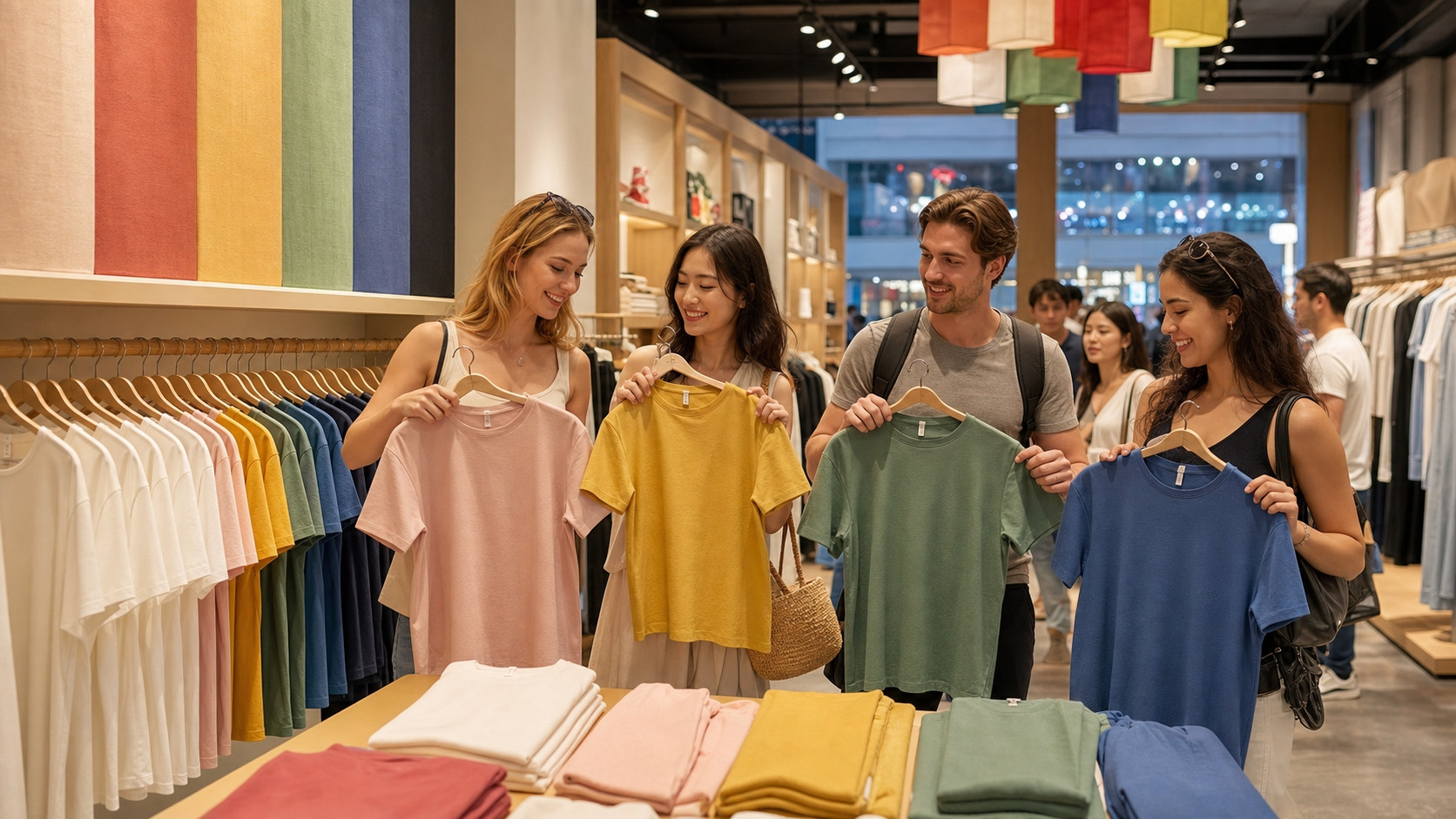
At Space H Seoul, the Hedges flagship store in Seoul’s Myeongdong shopping district, it’s not unusual to see a customer pick up the same T-shirt design in several different colors at once. According to LF, foreign customers who buy the store’s flagship “Iconic” T-shirt line purchase an average of three at a time. Store staff say some customers buy five or six in a single visit.
“Foreign customers rate the quality of the fabric and design, and the range of options, highly,” a store official said. “Lately more of them are also buying gifts for family and friends while traveling in Korea.” Korean shoppers have a name for this: kkal-byeol guemae, buying a favorite item in every available color. Kkal is Korean slang for color.
The same pattern shows up in department stores. At the Shinsegae Department Store flagship, about 40 percent of customers who bought the Iconic line purchased the same item in two or more colors.
Six Out of Ten Customers Are Foreign
What looks like an isolated scene turns into a clear trend once it’s put in numbers. LF says foreign-customer sales at Space H Seoul rose 70 percent year over year from January through July this year, and that foreign customers made up about 64 percent of all buyers in the first half of 2026 — meaning more than six out of every ten customers were tourists or foreign residents.
The growth didn’t start this year. Foreign-customer sales at the store also rose 20 percent in 2025 compared to the year before, and are now 2.2 times what they were in 2023. This has been building for three years.
By nationality, Greater China — mainland China, Taiwan, and Hong Kong — accounts for roughly half of these customers. The other half is spread broadly across Southeast Asia, Japan, the United States, the Middle East, and Europe, which means the store isn’t relying on tourism demand from any single country.
An Obangsaek T-Shirt Made the Travel Gift List
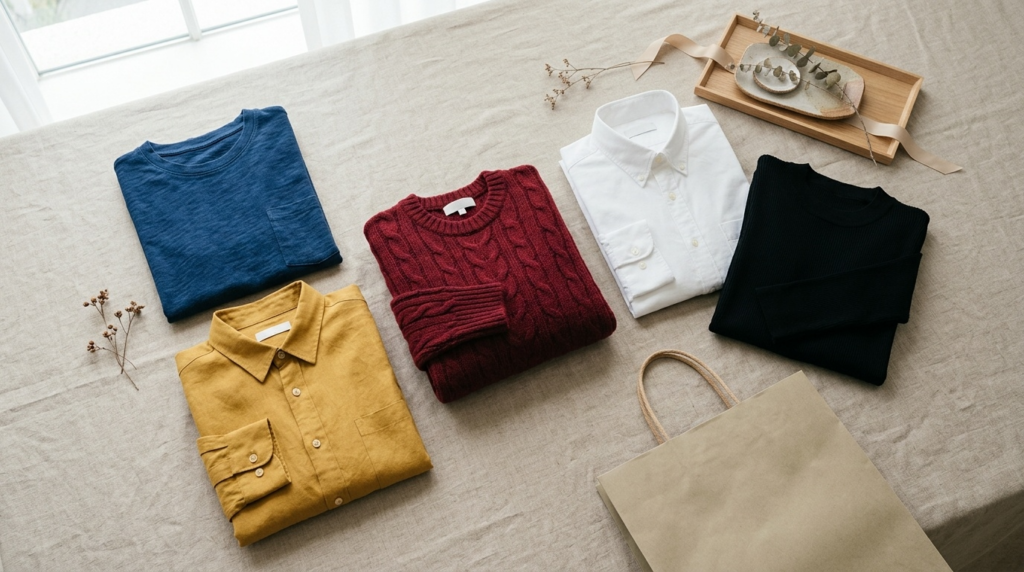
The best-selling line is Iconic, a modern reinterpretation of color combinations inspired by obangsaek, Korea’s traditional five-color scheme built around blue, red, yellow, black, and white, each traditionally tied to a cardinal direction and a season. Alongside the Iconic T-shirts, cable knits and seersucker short-sleeve shirts sold well as gifts this summer.
Preferences also diverge by nationality, and that’s worth noting. LF says Chinese customers tend to gravitate toward bold, colorful designs; Japanese customers toward clean, basic styles; and North American and European customers toward bright colors and oversized fits. In other words, different markets are consuming the same brand for different reasons.
Content played a role in driving that traffic. From April to June, Hedges ran the first season of its “Hedges TikTok Crew” with foreign creators based in Korea; in the months after, foreign visitors and sales at the store each more than doubled compared to the previous three months, and the brand’s official TikTok following grew 56 percent. The second season has scaled up to 40 creators from across Asia, Europe, and Africa, producing content about Seoul travel, culture, and lifestyle.
Past Cosmetics and Ramyeon, Into Premium Fashion
What makes this significant is that the shopping list foreign tourists bring to Korea appears to be shifting. Until recently, tourist spending concentrated on cosmetics, food, household goods, and inexpensive fast-fashion brands. Higher-priced domestic premium fashion brands rarely made it into a traveler’s shopping cart.
Industry observers see this as a stage where the brand itself — carrying a distinctly Korean sense of color and taste — becomes a destination in its own right. Shoppers aren’t visiting because something is cheap; they’re visiting for a design they believe they can only get in Korea. Buying the same item in multiple colors fits that reading.
The Industry’s Second-Quarter Earnings Turned the Same Way
What looked like a story about a single store in Myeongdong shows up in the industry’s earnings too. The second quarter is typically considered a slow season for fashion, since consumption skews toward lower-priced summer clothing, but this year major companies reported revenue and operating profit growth in lockstep.
Samsung C&T’s fashion division posted second-quarter revenue of 593 billion won, up 16.3 percent year over year, while operating profit rose 63.6 percent, from 33 billion won to 54 billion won. The company said sales grew evenly across in-house brands like Beanpole and 8Seconds and imported labels like Lemaire, Ami, and Maison Kitsuné. Kolon Industries’ FnC division posted revenue of 310.8 billion won, up 4.9 percent, with operating profit of 15.8 billion won — more than double the prior year, recovering far more sharply than revenue did.
Shinsegae International reported revenue of 291.6 billion won, up 15.1 percent, and swung to an operating profit of 7 billion won. Looking only at its own business, excluding subsidiaries, revenue rose 27.6 percent to 242.8 billion won, and operating profit flipped from a 4.1 billion won loss last year to a 10.5 billion won profit. A 31.8 percent jump in revenue from imported fashion brands sold in department stores drove the improvement. LF has yet to report second-quarter results, but its first-quarter revenue and operating profit both rose, and the industry expects offline demand for its core brands, including Hedges and Daks, to support its numbers as well.
Department Stores Became K-Shopping’s Front Door
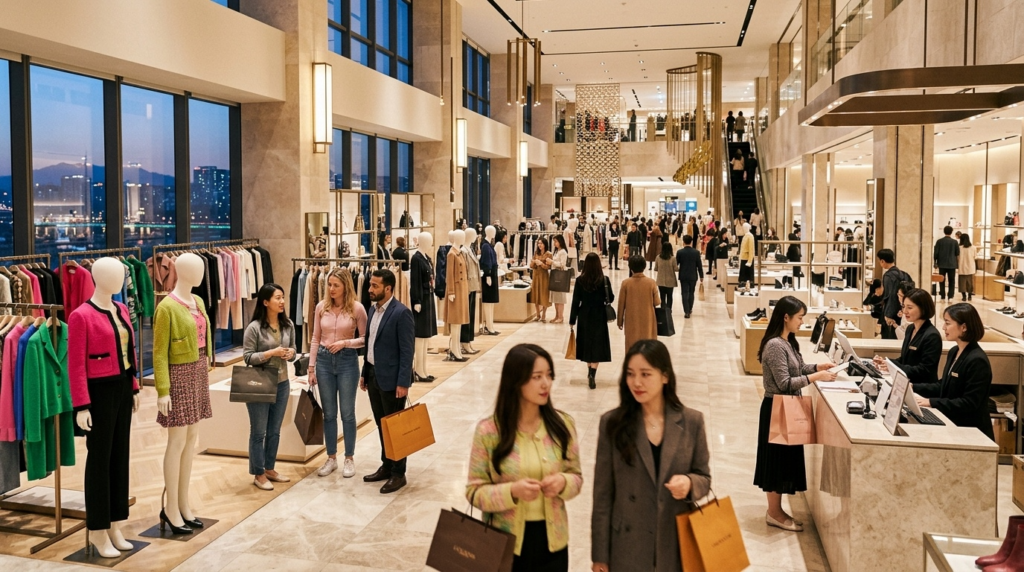
The statistics point the same direction. According to Statistics Korea, the second-quarter apparel retail sales index stood at 122.1 (2020 = 100), up 8.5 percent year over year. Within that, the department-store apparel sales index jumped 14 percent, from 120.9 to 137.8, while specialty apparel stores rose 11.9 points to 126.8. The department-store channel’s gain stands out.
In practice, Shinsegae Department Store’s fashion category revenue rose 10 percent in the second quarter, and Hyundai Department Store’s rose 13 percent. Analysts read this as department stores emerging as so-called K-shopping landmarks, functioning as the channel that converts foreign interest into actual purchases. A weak won that has kept Korean shoppers from traveling abroad to shop also propped up domestic spending.
Some caution against calling this a structural recovery too soon. Fashion is sensitive to the economy, weather, and consumer sentiment, and the industry as a whole struggled through the third and fourth quarters of last year amid slowing apparel spending and unusual weather. Samsung C&T’s fashion division itself has flagged the possibility of weaker consumer sentiment in the second half as a risk factor.
Back to Myeongdong
A tourist buying five colors of the same T-shirt is, on its own, a small scene. But it’s worth noting that this scene emerged at the same time as the industry’s earnings rebound. Two forces — a domestic consumption recovery and a wave of foreign visitors — overlapped, and that’s what bent the earnings curve for Korean fashion companies.
The industry’s next task is carrying this demand outside Korea. Samsung C&T’s fashion division opened a new Juun.J store in Beijing this month, and Shinsegae Tomboy, a Shinsegae International affiliate, opened the first overseas standalone stores for Studio Tomboy and Bobb at Singapore’s Metro department store last month. The idea is to turn foreign consumers who first experienced the brand in Korea into local buyers back home.
The real question is whether interest that starts in Myeongdong ends as a one-time souvenir purchase, or turns into brand loyalty that follows customers home. Hedges is preparing experiential content built around the Iconic color palette and a “Hedges Blue” collection for the second half of the year. How much foreign sales can offset swings in domestic consumption looks set to be the thing to watch next quarter.
Source: Newspim, August 11, 2026; Bizwatch, August 12, 2026.