Table of Contents
Disney characters step into Korean folk art
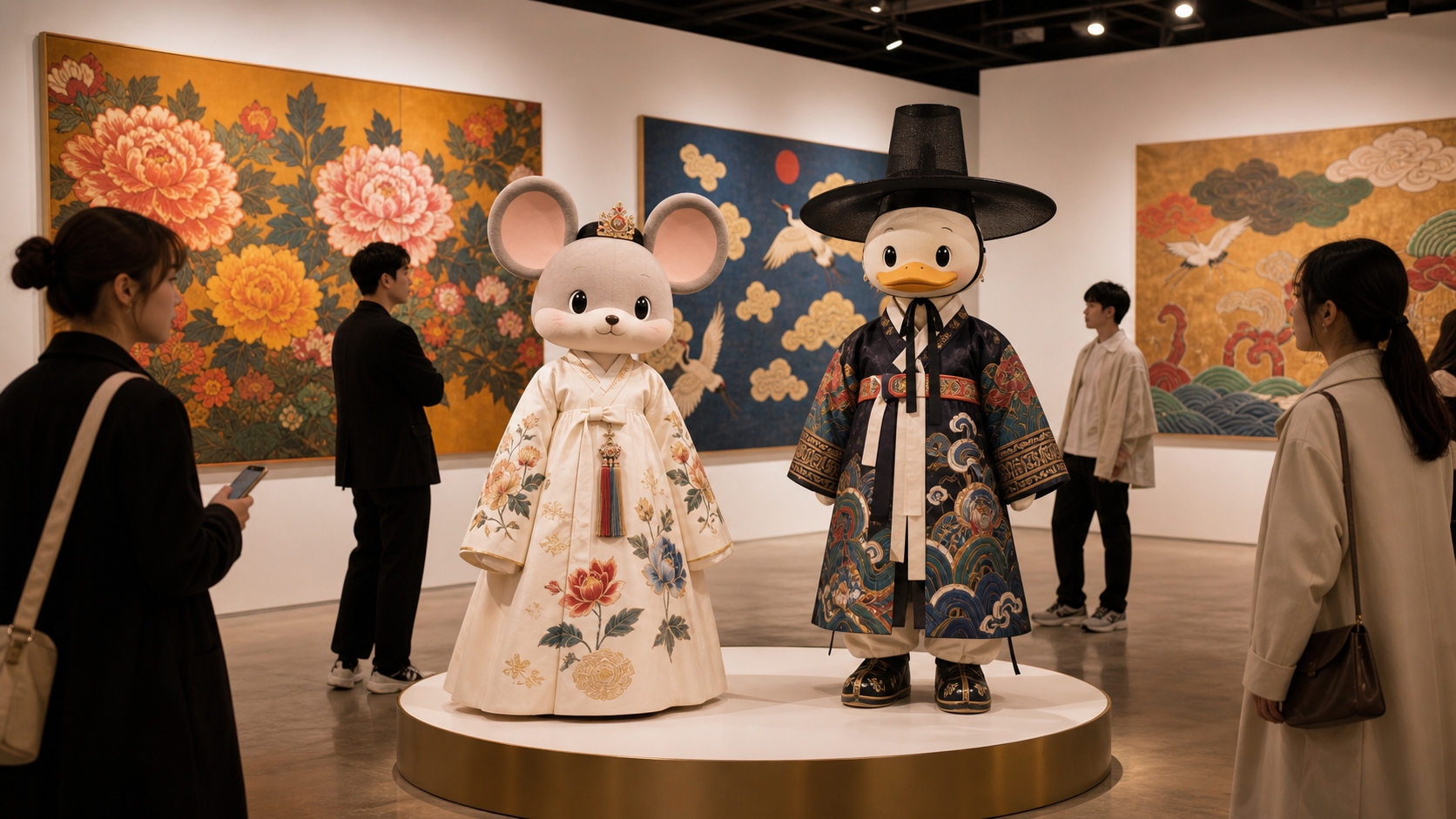
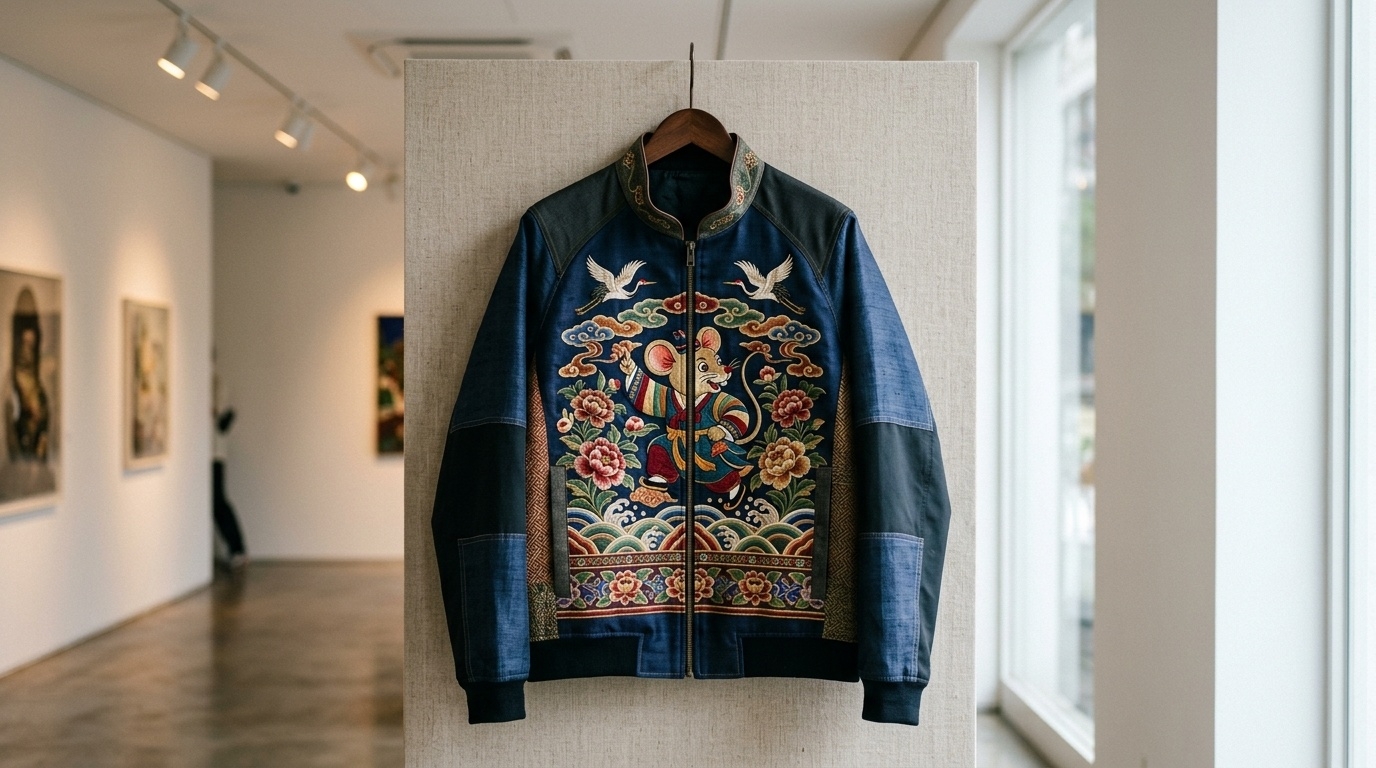
At Yosae Dosan in Gangnam, Seoul, Disney’s characters appeared in a look that was both familiar and new: Donald Duck in a gat and hanbok, and Mickey Mouse redrawn in the style of Korean minhwa. It was a scene where characters born in the United States met the colors of traditional Korean painting, giving international visitors an entry point into Korean dress and art through characters they already knew.
Behind the scene is a capsule collection from The Walt Disney Company Korea and Korean designer label SONGZIO. Rather than printing cartoon figures onto clothing, the collaboration works minhwa’s sensibility and visual language into Mickey Mouse’s design. Minhwa is Korea’s everyday folk painting, distinct from the formal court paintings made by trained artists; it renders ordinary wishes and symbols in warm colors and inviting compositions. In this collaboration, Korean culture was not decoration added to localize a foreign character. It was the starting point for a new design.
The collection was unveiled at the “Disney Korea Franchise Showcase 2027,” held by The Walt Disney Company Korea on September 16 under the slogan “Global icons, at the heart of the K-wave.” The event was not only about individual products. It set out a consumer products strategy built on taking ideas and fandoms that started in Korea and connecting them to a global market.
Where Korean creativity meets Disney’s scale
Disney Consumer Products runs a retail business worth about $63 billion, or roughly 87 trillion won, with partners in more than 180 countries. The division turns stories from film and animation into clothing, toys, household goods and events. Its foundation is well-known characters, familiar stories and a distribution network spanning many countries. Intellectual property, in this context, means the characters, names, images and story worlds a creator holds rights to.
Disney Korea’s pitch centers on Korea’s ability to mix music, fashion, beauty and storytelling and turn that mix into fandoms with global reach. By linking Korea’s speed and creative execution to Disney’s characters and worldwide distribution, the company wants collaborations built in Seoul to scale abroad. In this framing, Korea is no longer only a market where finished products are sold. It is also a place where new collaboration models are made.
The showcase floor reflected that pitch. Across two levels, a highlight zone traced milestones from Disney, Pixar, Marvel, “Star Wars” and “Frozen,” leading into an archive zone built around Mickey Mouse. A K-pop zone nearby showed how the older characters meet Korean fandom today. The layout moved visitors from Disney’s history toward the collaborations it is building with Korean creators.
K-pop and global fandoms
The first of Disney Korea’s three strategies is K-pop. Disney is working with Kakao Entertainment to set up a tentative “K-Culture Fund” and plans about ten collaborative projects over the medium to long term. Instead of one-off merchandise, the goal is an ongoing set of projects linking different artists and characters, bringing music fandoms and character fans together around shared products and experiences.
Disney is working with SM Entertainment to connect the Marvel universe with the concept worlds of its artists, and is in early planning with agencies including HYBE and Starship Entertainment. K-pop artists often carry their own recurring visual concepts and story arcs built with fans, which gives Disney’s storytelling and an artist’s own world a natural point of connection.
An earlier project, G-Dragon’s fashion label PEACEMINUSONE with “Toy Story,” showed that an artist’s own style could work alongside Disney characters. The new plan extends that kind of project into longer, larger collaborations with entertainment companies. Disney gets access to active fan communities in Korea; Korean partners get access to Disney’s characters and stories.
Minhwa and Korean heritage
The second strategy, K-Heritage, pairs Korean cultural heritage with Disney characters. The SONGZIO collection, with its hanbok, gat and minhwa-style Mickey Mouse, is the clearest example. The traditional elements are not background details; they shape the silhouette, mood and texture of the design, while the character stays recognizable.
Disney Korea has built up collaborations with Korean designer brands including SONGZIO and Marithe Francois Girbaud over time. SONGZIO released a 22-piece “Iconography” collection on March 20 that reworked classical art motifs. The new minhwa collection continues that pattern, connecting Korean design to a global retail network. The emphasis has shifted from licensing a character’s image to how a Korean brand reinterprets it.
The aim of K-Heritage goes beyond making products with Korean imagery. International audiences get an introduction to Korean dress and art through characters they already recognize, and Korean fashion labels get access to Disney’s retail reach abroad. Each side uses the other’s cultural material and distribution to reach a wider audience.
Running, concerts and fandom combined
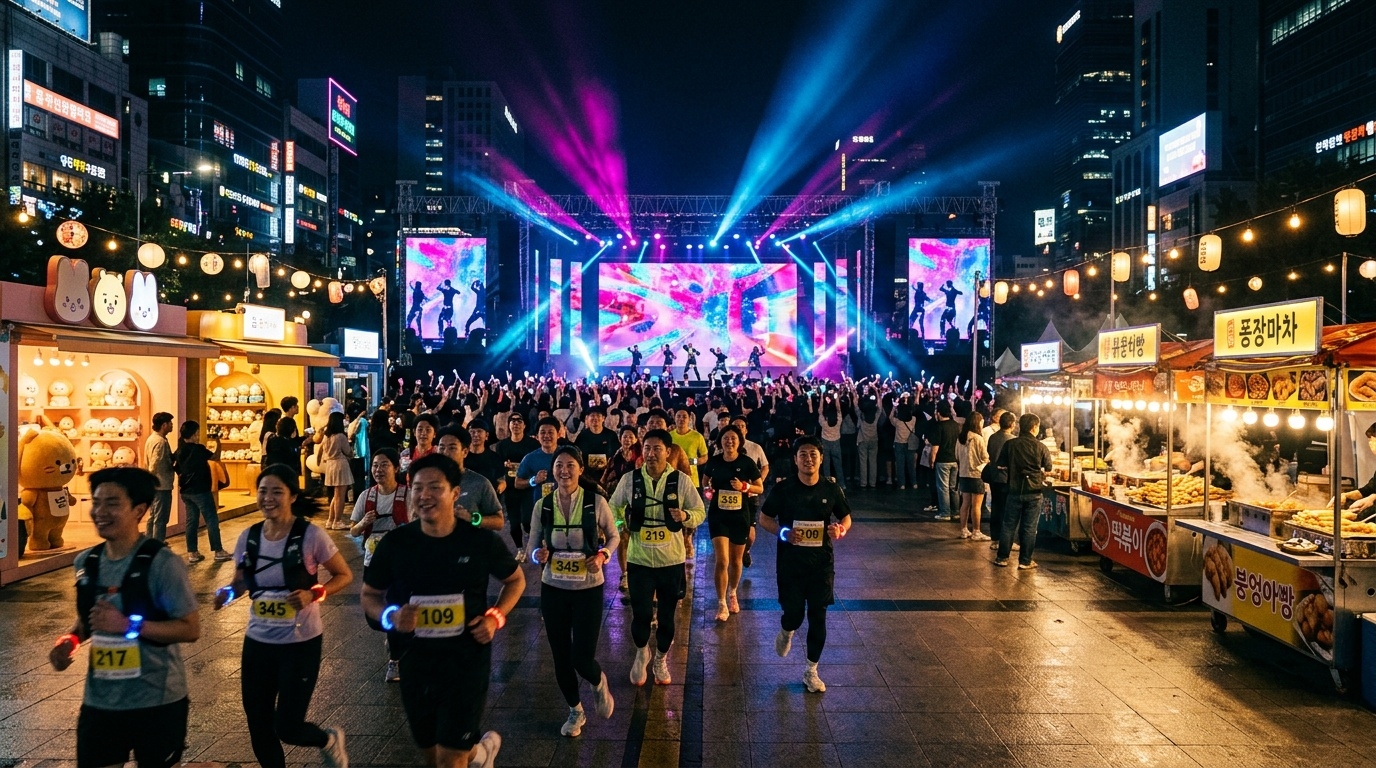
The third strategy, K-Fandom Mix, brings separate fan activities into single events. Disney Korea plans to turn its October “Disney Run” and “Marvel Run” from ordinary races into festivals combining K-pop performances, pop-up stores and food, including a special stage by the group ILLIT. The idea is for runners to spend time with the characters and content beyond simply finishing a race.
Crossovers between Korean and Disney characters are also expanding, including “Catch! Teenieping” with the Disney Princesses and Kakao Friends with Mickey Mouse. Bringing these separate fan bases together lets them meet around shared stories and products. Fandoms around Korean shows, including the Disney+ original series “The Remarried Empress,” will also extend into consumer products and events.
The goal is an experience that moves from watching a show to music, fashion, food, wellness and collectibles built around the same characters, mixing Disney’s existing fan base with Korean fandoms around K-pop, K-dramas and local characters.
Taking a Korean model abroad
The system supporting all three strategies is called “Super Serve.” Disney Korea said it will use its global network to support Korean partner brands from product planning and marketing through distribution and overseas expansion. The plan is not to stop at selling in Korea, but to help local brands expand abroad, with Korean companies supplying ideas and design and Disney supplying the route to international markets.
Kim Hyun-jin, who leads consumer products at The Walt Disney Company Korea, called Korea a special and strategic market for combining K-culture’s originality and global reach with Disney’s storytelling. She said the goal is a new kind of collaboration that connects Korea’s soft power with Disney’s intellectual property, storytelling and global network.
The minhwa-style Mickey Mouse and Donald Duck at the showcase are the starting point of that plan. Kim summed it up as “starting in Korea, going global with Disney.” What remains to be seen is whether collaborations built on Korean visual culture and fandom turn into lasting business for Korean partners abroad, rather than a one-time show.
Sources: The Walt Disney Company Korea announcement, The Korea Economic Daily, September 16, 2026; Sports Kyunghyang, September 17, 2026.