
Table of Contents
Why the Focus Could Stay on Product and Customer Experience
For RSSC, one of the Korean fashion brands taking part in a pop-up store in Shanghai, the first challenge wasn’t just introducing its clothes to a new market. It also had to build up knowledge and experience in the Chinese market and handle the administrative work that comes with distribution on its own. For small and mid-sized brands preparing to go abroad, there are regulatory and logistical hurdles to clear that have nothing to do with how good the product itself is.
An RSSC representative said that because Musinsa handled the pop-up’s operations from start to finish, the brand could focus more on its products and the customer experience, and present its strengths to local shoppers more effectively. That comment captures what the Shanghai pop-up is really about. Rather than a short-term display where Korean products are simply shown in one place, it functions more like a joint effort to solve the kind of market-entry problems that a single company would struggle to handle alone.
The smaller the brand, the more limited its staff and budget for opening a store abroad or negotiating with local distributors. If a brand has to shoulder certification procedures and sales logistics on top of marketing its products, its expansion can slow down. RSSC’s experience shows that outside support isn’t simply a cost subsidy. It changes what a brand’s team gets to spend its time on.
10,000 Visitors in the Heart of Shanghai
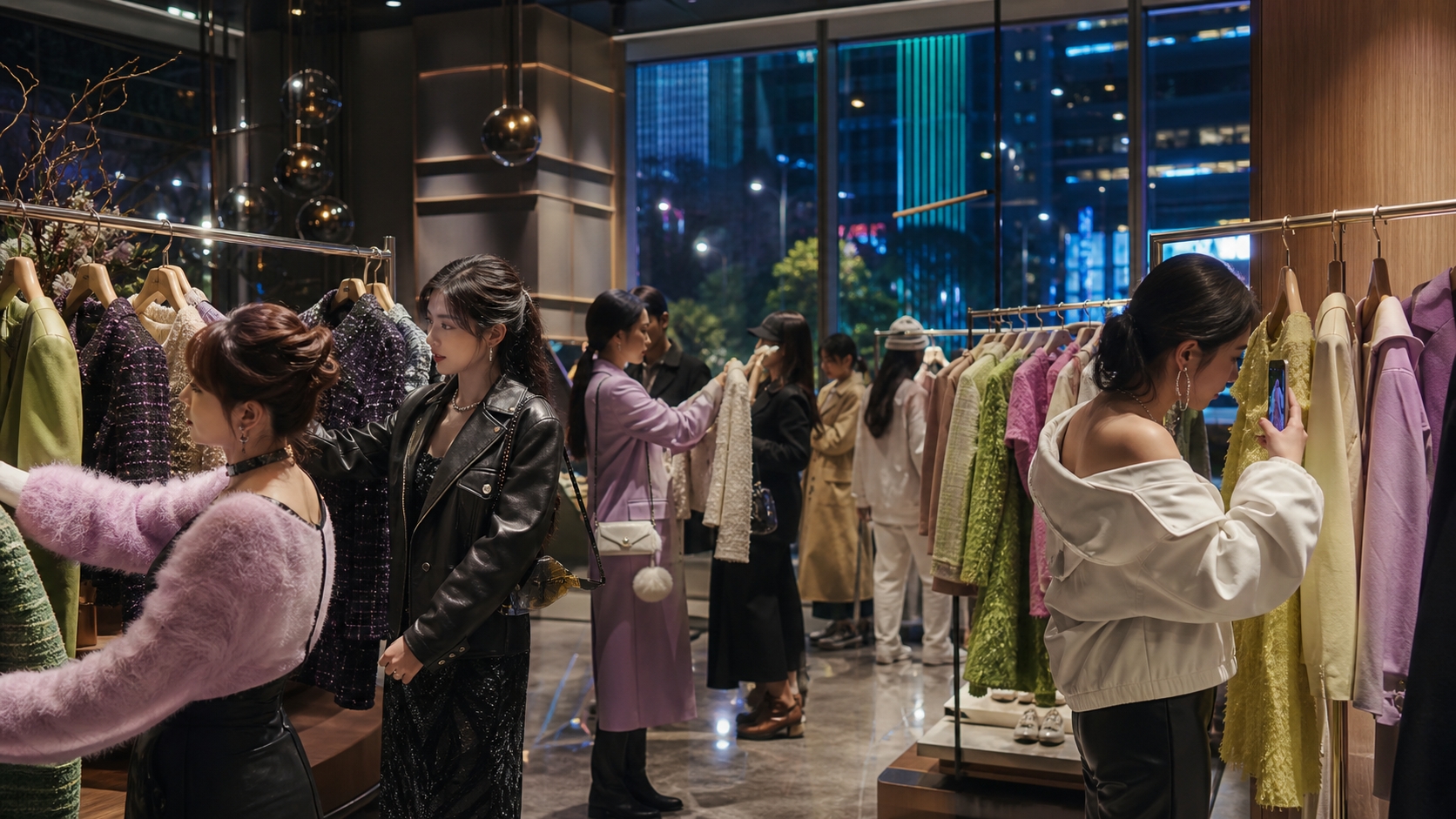
Since August 21, 2026, Musinsa has been running the ‘Musinsa Shanghai Pop-Up Store 2026’ at the Jing’an Kerry Centre on Nanjing Road in Shanghai. The event runs through November 30. It gives small and mid-sized Korean fashion brands a temporary retail space in the middle of one of Shanghai’s core shopping districts, where they can meet Chinese consumers directly and gauge the market’s response.
Nanjing Road is one of Shanghai’s signature shopping streets, home to flagship stores for many global brands. A flagship store is a company’s primary retail location, designed to present its identity and signature products in depth. The Jing’an Kerry Centre, where the pop-up is located, is a mixed-use commercial complex near Jing’an Temple Station, served by subway lines 2 and 7, giving it strong foot traffic and accessibility.
Fifteen brands are taking part, including LOOKAST, LEBA, and TILL EIDER. Musinsa selected them based on demand and preferences it identified in the Chinese market. Rather than relying purely on brand recognition or sales performance in Korea, the lineup was built around brands more likely to resonate with Chinese consumers. Bringing multiple brands together in one space also lets shoppers compare the designs, prices, and personalities of different Korean labels side by side.
Early results are already showing. According to Musinsa, cumulative visitors passed 10,000 as of September 21, one month after opening. A visitor count alone doesn’t guarantee long-term sales or a lasting foothold in the Chinese market, but for brands that otherwise struggle to reach overseas consumers, testing their products and brand identity in front of 10,000 people in a single month is a meaningful starting point.
China’s Market Entry Begins Outside the Store
The challenge of entering China isn’t limited to making a good product or securing retail space. To distribute a product officially, it has to meet local requirements such as the Chinese National Standards (GB). These standards cover the technical and quality benchmarks applied to products sold in China, and meeting them is a basic step for legal distribution in the market.
Preparing for certification and building a local distribution network takes dedicated funding and staff. For small and mid-sized brands without much experience doing business in China, understanding the relevant regulations and completing the necessary procedures on their own isn’t easy. Even with a retail space secured, a brand can’t move to actual sales if certification or distribution isn’t in place, which is why the groundwork outside the store becomes the real barrier to entry.
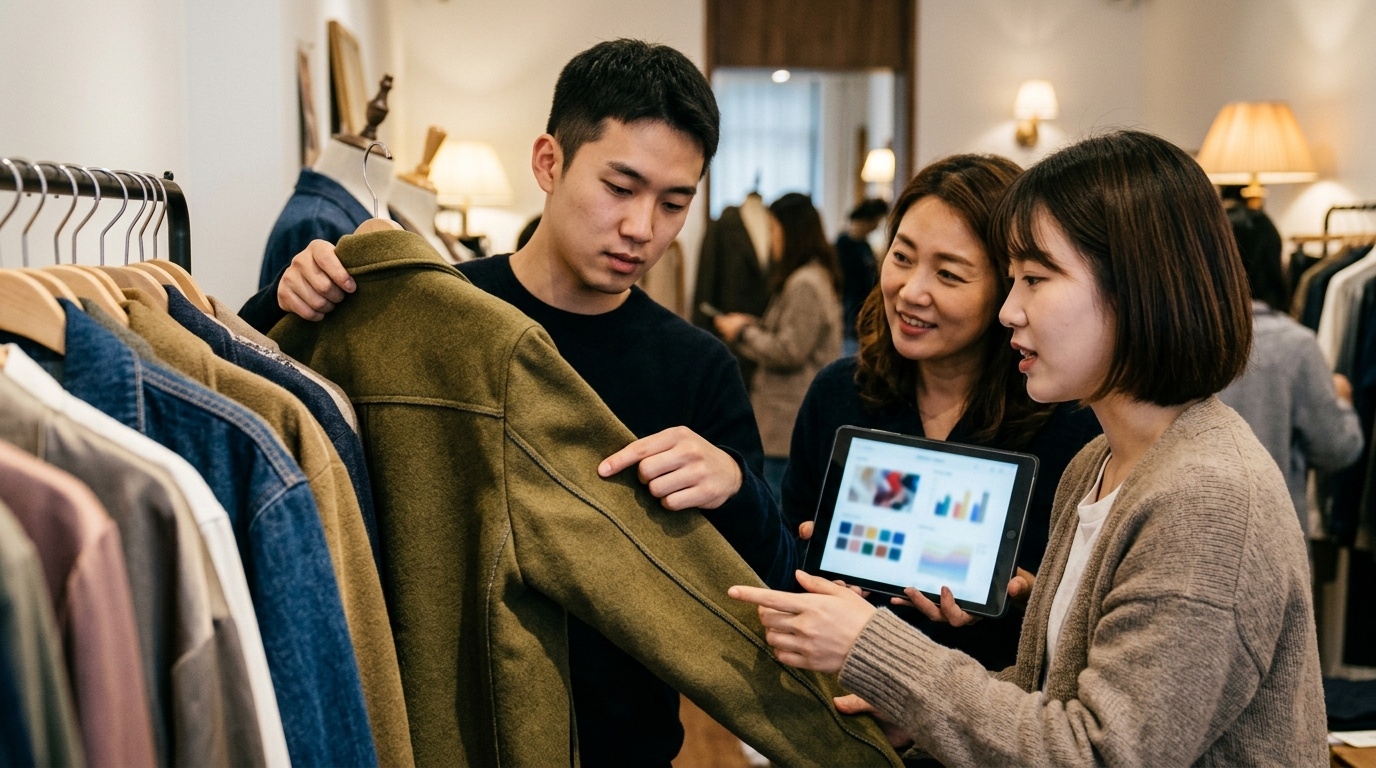
That’s why what matters most about this pop-up isn’t the size of the venue but the scope of support behind it. Musinsa backs participating brands through the entire process, from product certification to offline sales in Shanghai. Rather than simply renting out space and leaving brands to handle the rest, the structure connects the steps a product needs before entering the Chinese market with the point where it reaches consumers.
With that kind of support in place, participating brands can put their limited staff and budget toward product planning, merchandising, storytelling, and customer experience. It also gives them more room to observe, on the ground, which products draw interest and which brand messages land. That’s the backdrop for RSSC’s comment about being able to focus on product and customer experience.
Turning Visitor Data Into the Next Move
A pop-up store is, by nature, a temporary space that runs for a shorter stretch than a permanent shop. It has the advantage of surfacing consumer reactions quickly, but that point of contact can disappear once the event ends. That’s why what matters more than the headline number of 10,000 visitors is how the experience and data gathered during this window get used in China going forward.
Musinsa plans to use the data collected at the pop-up to help participating brands shape their next moves in China. Brands are chosen based on local demand and preferences, and the reactions seen in the actual store then feed back into business decisions, a kind of feedback loop. Knowing which brands and products drew attention helps reduce uncertainty when brands weigh formal distribution deals or follow-up pop-ups.
For small and mid-sized brands, it’s a chance to test demand in one of Shanghai’s core commercial districts before committing to build out distribution across all of China. Rather than jumping straight into large-scale investment, they can meet consumers through a pop-up first and make decisions in stages. The event’s success should be measured not only by short-term sales but by how much usable information participating companies walk away with for their next decision.

Government Support Meets Platform Expertise
This initiative was carried out with support from South Korea’s Ministry of Trade, Industry and Energy and the Korea Trade-Investment Promotion Agency (KOTRA) under their ‘Overseas Expansion Support Project for Distribution Companies.’ It’s a public-private effort in which the government and a public agency support the groundwork for overseas expansion while Musinsa contributes its local distribution infrastructure and operational know-how. The support is aimed less at simply holding an event abroad than at genuinely lowering the barriers small Korean brands face entering the Chinese market.
Musinsa has said China is a market where interest in K-fashion runs high, but where significant investment is also needed to secure product certification and local distribution. That interest alone isn’t enough to translate into sales and ongoing distribution without more support. This pop-up, which pairs government backing with a private platform’s ability to select brands and run operations on the ground, is an attempt to close that gap.
In this structure, Musinsa’s role goes beyond that of a curator bringing multiple brands together. It selects brands based on Chinese consumer demand, connects certification with sales, and helps translate data from the ground into future business decisions. For small and mid-sized brands, it amounts to a shared foundation that reduces the trial and error and early costs of entering an overseas market.
A Longer Test Continues at Anfu Road
The Shanghai pop-up isn’t Musinsa’s first foothold in China, either. The company opened ‘Musinsa Store Shanghai Anfu Road’ last December. That space has hosted pop-ups for brands including Lonlon, Sculptor, and Standoil, giving Korean labels a chance to build local awareness and see how real consumers respond.
Starting October 30, 2026, the Anfu Road store will also host a month-long pop-up for Find Kapour. It’s a structure where the Jing’an Kerry Centre event introduces 15 brands together while Anfu Road spotlights individual brands one at a time. A space for comparing multiple brands and a space for experiencing one brand in depth create different kinds of contact points with local consumers.
Rather than betting on a single event’s results, consistently showing different brands and products over time lets Musinsa gauge the market’s response more than once. For the Shanghai pop-up to avoid being a one-off promotional push, this kind of link between an existing local space and follow-up programming is necessary. The Anfu Road store can serve as a proving ground where participating brands get another shot at meeting Chinese consumers.
What to Watch After the 10,000-Visitor Mark
Ten thousand pop-up visitors is an early sign of interest from Chinese consumers. But the longer-term value of this initiative depends on whether participating brands can build up certification and distribution experience, and keep local sales opportunities alive once the pop-up ends. A pop-up isn’t the finished product of overseas expansion so much as a step toward testing whether formal market entry is possible.
That’s also the backdrop for RSSC’s comment about being able to focus on product and customer experience. For small and mid-sized brands to compete abroad, they need more than design and product quality; they need a foundation that connects certification, sales, and local operations. When companies share government support and a platform’s infrastructure instead of handling every step alone, the burden of entry gets lighter.
Whether the Shanghai pop-up, running through November 30, translates into real distribution gains and follow-up sales is the next thing to watch. If participating brands apply what they learn on the ground to their products and sales strategy, and go on to meet consumers again in the Chinese market, this event could stand as a concrete case of lowering the cost of overseas entry for small Korean fashion brands.
Sources: Musinsa; Korea Textile News, September 28, 2026.