
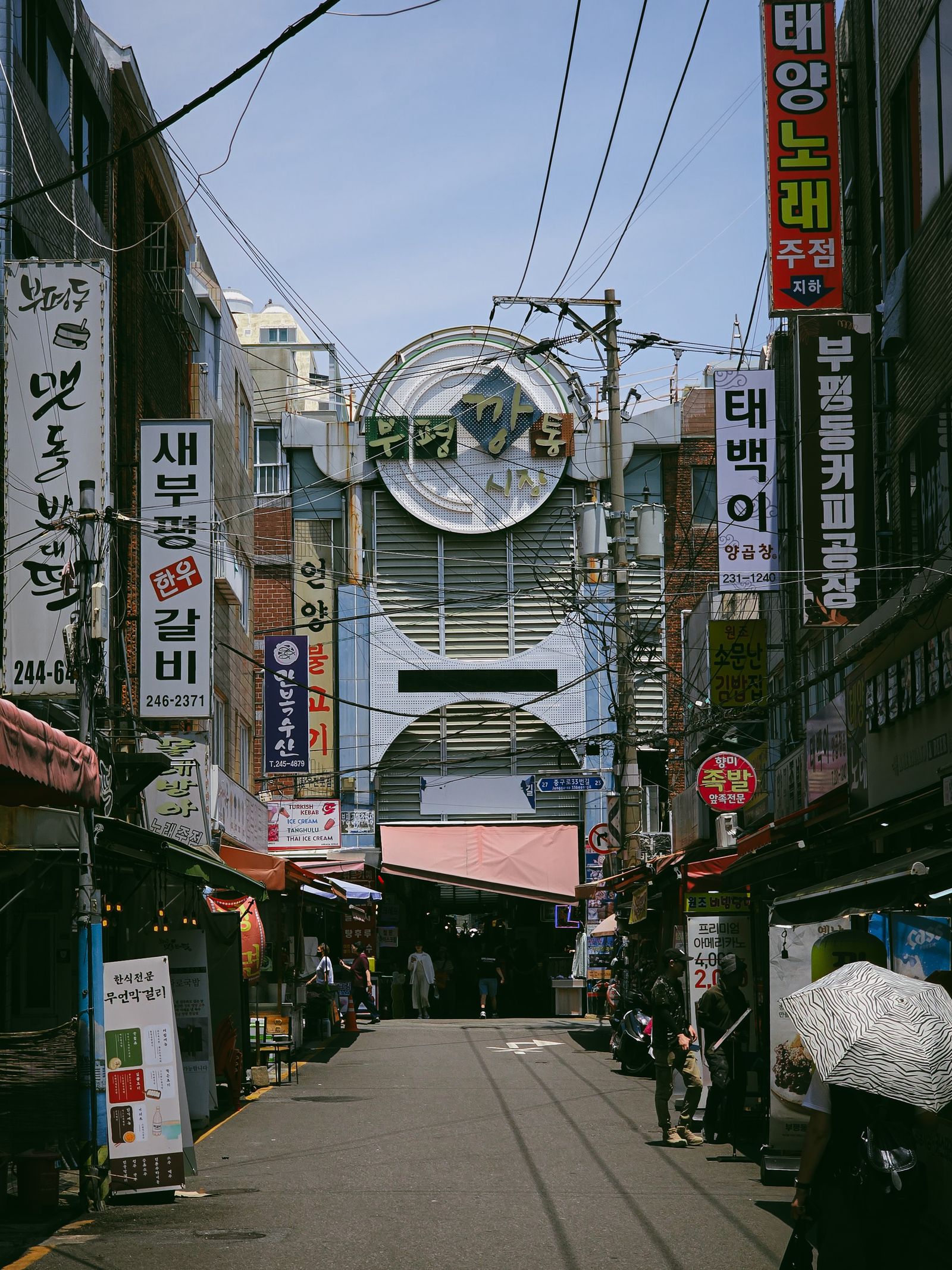
Two subway stops from Hongdae, Mangwon-dong offers a version of Seoul that increasingly feels rare: a neighborhood that still mostly belongs to the people who live there.
Before 1984, when Seoul’s Subway Line 6 didn’t yet reach the area, Mangwon-dong was simply a quiet residential pocket of Mapo District, its daily rhythm set by Mangwon Market rather than by any outside attention. Even as Hongdae’s rents climbed through the 2000s and neighboring Yeonnam-dong filled with cafes, Mangwon-dong stayed largely unchanged — home to small supermarkets, snack shops and old Chinese restaurants rather than the “complex cultural spaces” reshaping other Mapo neighborhoods.
Change arrived quietly. Around 2015, a handful of small cafes began opening near Mangwon Market — not the elaborately designed “complex cultural space” cafes found in Yeonnam-dong or Seongsu-dong, but modest neighborhood spots where locals stopped for coffee after shopping for groceries. In 2017, the redevelopment of Mangwon Hangang Park and its bike paths drew a wave of weekend picnickers, walking the ten minutes from Mangwon Station to the river, often stopping in the market for kimbap and fruit along the way. A turning point came in 2019, when Mangwon Market was designated an “Excellent Market” by the Seoul city government and underwent a renovation — cleaner floors, brighter lighting — that drew in younger merchants without displacing the older ones. The grandmothers still sell from their market stalls; the smell of grilled yukjeon (meat pancakes) and tteokgalbi hasn’t changed.
What crystallized after the pandemic, according to a 2026 neighborhood guide published by travel outlet LetSeoul, is Mangwon-dong’s identity as what locals and visitors alike now call “the most neighborhood-like neighborhood” in Seoul — not a “hot place” like Hongdae, and not a tourist destination like Yeonnam-dong. As one visitor quoted in the guide put it: “It’s not loud like Hongdae, and it doesn’t feel like a tourist spot like Yeonnam-dong. It feels like drinking coffee among real locals.”
Even with more than 30 cafes now operating in the neighborhood, the resident-to-visitor ratio remains roughly 7:3, according to the guide — a figure locals point to as evidence the area hasn’t tipped over into the kind of full commercial takeover that reshaped Seongsu-dong or Ikseon-dong. Market stalls still empty out by early evening as residents head home for dinner, and most of the neighborhood’s cafes lean toward quiet, understated interiors over the elaborately styled, photo-ready spaces that define Seoul’s more Instagram-driven commercial districts.
For visitors willing to skip the more heavily trafficked neighborhoods, Mangwon-dong offers something increasingly hard to find in central Seoul: a full day built around market shopping, quiet coffee, a walk along the Han River, and an early dinner among people who actually live there — rather than a backdrop optimized for photographs.
Source: Park Ji-hoon, LetSeoul, January 23, 2026.