Table of Contents
Korean Web Novels: From Domestic to Global
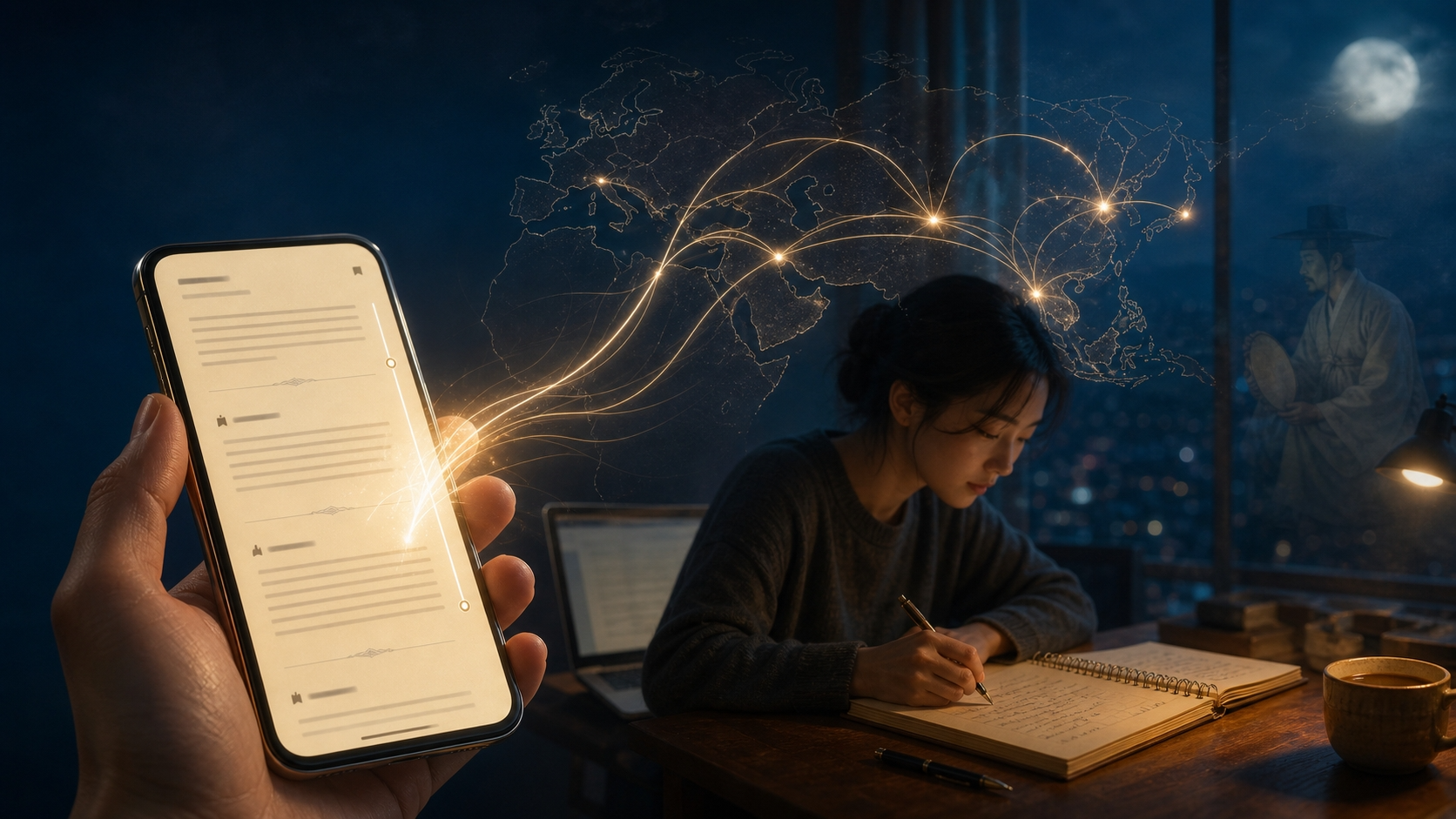
In the early 20th century, storytellers on street corners held audiences captive with nothing but their wit. That knack for leaving listeners desperate to know what happened next has, over time, migrated to serialized installments on smartphone screens. Korean web novels began that way in the early 2000s—read by the chapter, paid for in small sums, with readers waiting for the next release. For over 15 years, no matter how entertaining these stories were, they rarely crossed borders. Webtoons, with their illustrations, carved a path to Hollywood deals early on, but text-only web novels lingered long before the wall of translation. This year, that wall suddenly lowered.
The Contest Revealing Industry Priorities and Calculations
Naver Webtoon and Munpia announced the ‘2026 Greatest Web Novel Contest’ in April 2026. The prize money alone signals something extraordinary. The total prize pool is 380 million won, up from 330 million won in 2025. The submission period ran from May 13 to June 21, with winners announced on July 22. The grand prize winner receives 100 million won, and three excellence award winners each get 30 million won. A striking addition this year is the newly established muhyeop (武俠, martial arts) special category, where up to five works each receive 10 million won. Accepted genres include fantasy, martial arts, modern fiction, sports, and alternate history; adult-only content is excluded.

The path for winning works is already mapped out. Grand prize and excellence award winners will be automatically adapted into webtoons on Naver Webtoon, and all winning entries will be first published on Munpia’s platform, then cross-promoted on Naver Series. The moment a novel wins an award, it jumps onto a conveyor belt leading to webtoon adaptation, video production, and global distribution.
AI Translation Rewriting the Economics of Publishing
What truly set this conveyor belt in motion is not the prize money but a shift in translation technology. As of July 2026, AI-based translation has reduced the cost per chapter by over 90%. This figure is documented in a 2026 report by AI translation service provider OpenL. Just a few years ago, translating a web novel into another language required human effort for each installment, meaning significant cost and time. An analyst at OpenL noted, “A 90% cost reduction fundamentally changes the economics of web novel translation. Instead of betting millions on an unproven work, publishers can now use a portfolio strategy, testing dozens of titles to find a hit.”
Genres Chosen by Southeast Asian Readers
Cases of major works being simultaneously released in Thai, Filipino, and Turkish are increasing. The hybrid AI model ‘Aurora,’ developed by HiveMind, is particularly noteworthy: it enables a revenue-sharing model instead of requiring publishers to pay large upfront licensing fees before entering overseas markets. The establishment of the muhyeop special category is not unrelated to this trend. Muhyeop has long been a relatively overlooked genre in the Korean web novel market compared to fantasy or modern romance, but the situation differs internationally. Elements like hyeopgaek (俠客, chivalrous knights), naegong (内功, internal energy), and rivalries between martial arts schools seem to resonate naturally with Southeast Asian readers.
According to the Korea Publishing Culture Industry Promotion Agency’s market report for the first half of 2026, Korean novel sales rose 19.3% year-on-year. The publishing industry expects that 8 to 10 works from this contest will become globally distributed titles by the end of 2026.

The Next Trajectory of Winning Works in the International Market
However, this optimistic picture is not without shadows. Critics worry that while AI translation is efficient, it may miss the cultural nuances and emotional resonance unique to Korean narratives. The risk is that subtle emotional layers—like jeong (情, deep affection) or han (恨, unresolved sorrow)—which are hard to convey directly outside the Korean context, might be flattened in a race for speed. A more fundamental objection also exists: some traditional writers argue that this push to foreground collaborative, platform-dependent, serialized web novels sidelines the solitary, independent literary tradition that has recently earned Korea recognition at international literary awards.
Still, the winning works to be announced on July 22 will serve as an intriguing test bed. Just as webtoons did, web novels are now finding their way from a few lines of text on a screen to readers in different languages and cultures. The street-corner storyteller’s role may now be filled by algorithms and translation engines, but that old knack for making you crave the next chapter still depends on the story itself.
Sources: Naver Webtoon and Munpia press release, April 2026; Contest regulations, May 2026; OpenL industry report, July 2026; Korea Publishing Culture Industry Promotion Agency first-half 2026 market report.
Korean Original Version
한국어 원문 보기 / 원작 저자의 톤 비교(클릭하여 확장)
저자: Joon-ho Baek
한국어 원문 영어 번역에서 드러나지 않은 한국 문화의 뉘앙스와 저자의 고유한 표현 스타일을 보여드립니다.
국내에서 세계로 나선 한국 웹소설
20세기 초 이야기꾼들은 저잣거리에서 입담 하나로 청중을 붙들어 앉혔다. 다음 이야기가 궁금해 자리를 뜨지 못하게 만드는 그 재주는, 세월이 흘러 스마트폰 화면 속 회차별 연재물로 옮겨왔다. 한국의 웹소설은 2000년대 초 그렇게 시작됐다 — 한 회씩 끊어 읽고, 소액을 결제하고, 다음 화를 기다리는 방식으로. 그리고 15년 넘게 이 이야기들은 아무리 재미있어도 국경을 잘 넘지 못했다. 삽화가 있는 웹툰은 할리우드 계약으로 이어지는 길을 일찌감치 뚫었지만, 글자로만 이루어진 웹소설은 번역이라는 벽 앞에서 오래 머물렀다. 올해, 그 벽이 갑자기 낮아졌다.
공모전이 드러낸 산업의 우선순위와 셈법
네이버웹툰과 문피아는 2026년 4월 ‘2026 지상최대 웹소설 공모전’을 발표했다. 상금 규모부터 예사롭지 않다. 총상금은 3억8천만원으로, 2025년의 3억3천만원에서 늘었다. 공모 기간은 5월 13일부터 6월 21일까지였고, 수상작은 7월 22일 발표된다. 대상 1편에 1억원, 우수상 3편에 각 3천만원이 돌아간다. 눈에 띄는 대목은 올해 신설된 무협(武俠) 특별부문으로, 이 부문에서는 최대 5편이 각 1천만원을 받는다. 채택 장르는 판타지, 무협, 현대물, 스포츠, 대체역사이며 성인전용 콘텐츠는 제외된다.
수상작의 이후 경로도 이미 설계돼 있다. 대상과 우수상 수상작은 네이버웹툰에서 자동으로 웹툰화되고, 모든 수상작은 문피아 플랫폼에 우선 게재된 뒤 네이버시리즈로 교차 홍보된다. 소설 한 편이 상을 받는 순간, 웹툰·영상화·해외 유통까지 이어지는 컨베이어벨트에 올라타는 셈이다.
AI 번역이 다시 쓰는 출판 경제학
이 컨베이어벨트를 실제로 돌아가게 만든 것은 상금이 아니라 번역 기술의 변화다. 2026년 7월 기준, AI 기반 번역은 챕터당 번역 비용을 90% 이상 절감시켰다. 이 수치는 AI 번역 서비스 업체 OpenL의 2026년 보고서가 문서화한 것이다. 불과 몇 년 전만 해도 웹소설 한 편을 다른 언어로 옮기려면 사람이 회차마다 손으로 번역해야 했고, 이는 곧 상당한 비용과 시간을 뜻했다. OpenL의 한 분석가는 이렇게 짚었다. “90%의 비용 절감은 웹소설 번역의 경제학을 근본적으로 바꿔놓았다. 검증되지 않은 작품에 수백만원을 걸기보다, 출판사들은 이제 수십 편을 시험해 흥행작을 찾는 포트폴리오 전략을 쓸 수 있다.”
동남아 독자가 선택하는 웹소설 장르들
주요 작품들이 태국어, 필리핀어, 터키어로 동시에 다국어 출시되는 사례가 늘었다. 하이브마인드가 개발한 하이브리드 AI 모델 ‘오로라’는 특히 주목할 만한데, 이 모델은 출판사가 해외 진출 전에 거액을 선불로 지불하는 라이선스 방식 대신 수익을 나누는 방식을 가능하게 한다. 앞서 언급한 무협 특별부문의 신설도 이런 흐름과 무관하지 않다. 무협은 오랫동안 한국 웹소설 시장에서 판타지나 현대 로맨스에 비해 상대적으로 덜 주목받은 장르였지만, 국제 시장에서는 사정이 다르다. 무협이 담고 있는 협객(俠客)과 내공, 문파 간의 대결 같은 요소들이 동남아 독자들에게도 낯설지 않게 받아들여지고 있는 것으로 보인다.
한국출판문화산업진흥원의 2026년 상반기 시장 보고서에 따르면 올해 상반기 한국 소설 판매는 전년 동기 대비 19.3% 증가했다. 출판업계는 이번 공모전에서 나온 작품 가운데 2026년 말까지 8편에서 10편이 글로벌 유통되는 타이틀이 될 것으로 예상하고 있다.
수상작들이 그릴 국제 시장의 다음 궤적
다만 이 낙관적인 그림에 그림자가 없는 것은 아니다. 비평가들은 AI 번역이 효율적이기는 하지만 한국 서사 특유의 문화적 뉘앙스와 정서적 울림을 놓칠 수 있다고 우려한다. 정(情)이나 한(恨) 같은, 한국어 문맥 밖에서는 곧바로 옮기기 어려운 감정의 결이 속도전 앞에서 뭉개질 위험이 있다는 것이다. 더 근본적인 반론도 있다. 일부 전통적 작가들은 협업적이고 플랫폼에 종속되며 연재 형식을 따르는 웹소설을 이렇게 전면에 내세우는 흐름이, 최근 한국이 국제 문학상에서 인정받아온 고독하고 독립적인 순수문학 전통을 주변으로 밀어낸다고 주장한다.
그럼에도 7월 22일 발표될 이번 공모전 수상작들은 흥미로운 실험대가 될 것이다. 웹툰이 그랬듯, 웹소설도 결국 화면 속 몇 줄의 텍스트에서 시작해 다른 언어, 다른 문화의 독자에게 가닿는 길을 찾고 있다. 저잣거리 이야기꾼의 자리를 지금은 알고리즘과 번역 엔진이 대신하고 있을 뿐, 다음 화를 궁금해하게 만드는 그 오래된 재주는 여전히 이야기 자체에 달려 있다.
출처: 네이버웹툰·문피아 보도자료, 2026년 4월; 공모전 규정, 2026년 5월; OpenL 산업보고서, 2026년 7월; 한국출판문화산업진흥원 2026년 상반기 시장 보고서.