Table of Contents
People Who Search for Travel After Watching a Drama
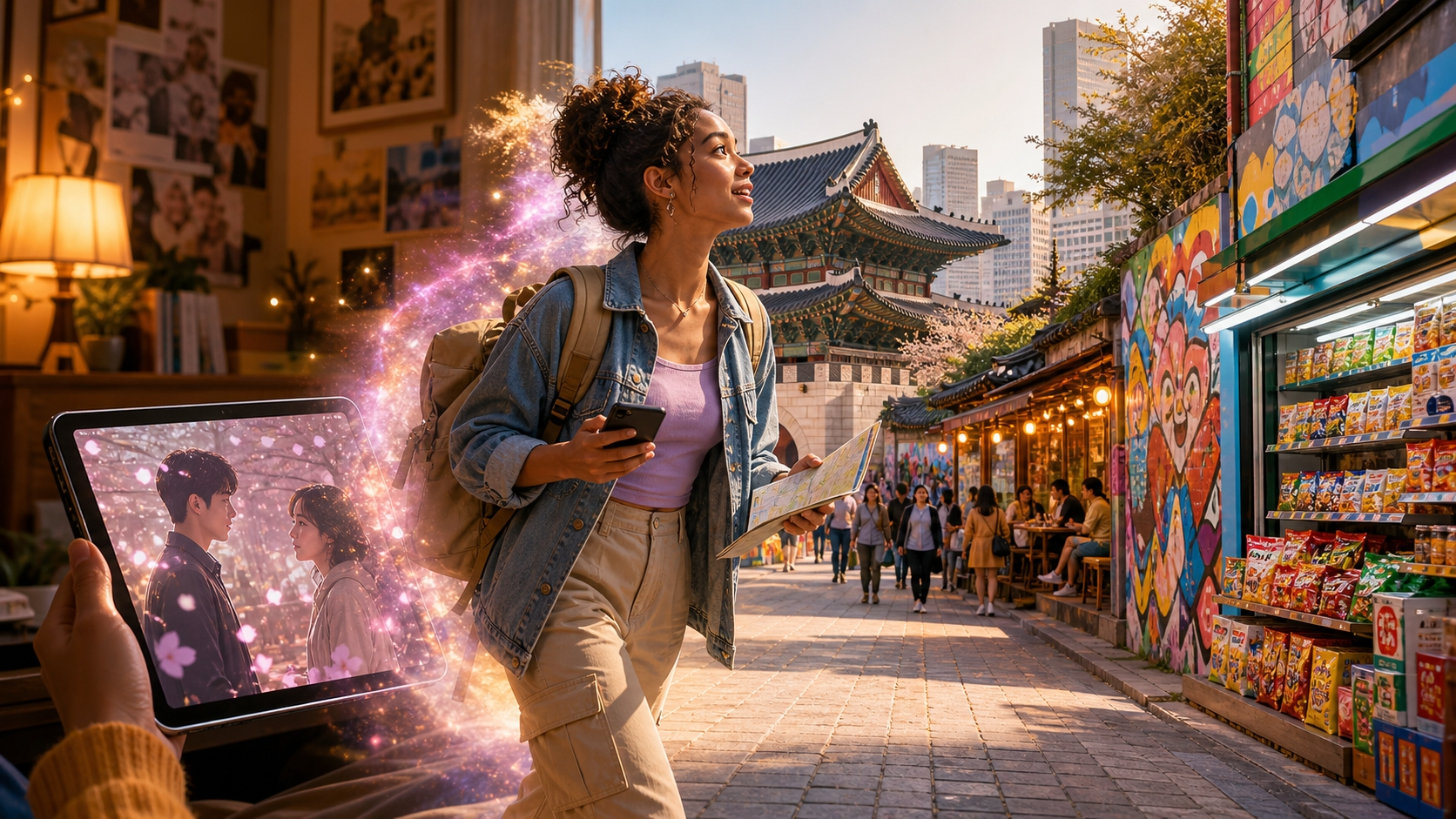
Have you ever thought about visiting Korea after watching Korean content? Netflix, the Korea Tourism Organization, and the Ministry of Culture, Sports and Tourism are zeroing in on that exact moment with their global tourism campaign. The idea is that a viewer who sees Seoul’s alleys, beaches, convenience stores, and palaces on screen and searches “Where is that?” could become an actual traveler. In a survey released by Netflix, 72% of Korean content viewers expressed interest in visiting Korea—nearly double the 37% among those who don’t watch Korean content.
Looking at those numbers, it’s easy to assume content directly creates tourists. But the reality is a bit more complex. A drama or variety show sparks interest, but flight prices, visas, transportation, language, safety, and travel information ultimately decide whether someone actually visits. That’s why the collaboration between Netflix and the Korea Tourism Organization isn’t just about promoting dramas—it’s about designing the middle step that turns a viewer’s curiosity into a travel plan.
‘Screen Tourism’ Isn’t Just About Visiting Filming Locations
It’s nothing new that international fans want to follow the places they love in Korean content. From the beach scene in ‘Goblin’ to the streets of ‘Itaewon Class’ and the familiar Korean spaces created by ‘Squid Game,’ productions have always added new meaning to locations. But today’s screen tourism goes beyond just checking in at a filming spot. It spreads to the food, music, neighborhood vibes, and everyday scenes—like subways and convenience stores—that appear in the work.
This is both an opportunity and a point of caution for tourism promotion. The places in dramas are spaces polished by lighting, editing, and narrative. Real neighborhoods are also living spaces where people reside and work. When fans flock all at once, it can lead to noise, trash, and privacy issues. Some filming locations see a surge in tourists that boosts local businesses, while others become a burden on residents. Good screen tourism should guide visitors not just with “Take a photo here” but also with “How can we stay here respectfully?”
That’s exactly why the Korea Tourism Organization and Netflix have put together a large-scale global campaign. To show international viewers that Korea isn’t just a distant backdrop but a place they can actually visit, you need to connect the emotions of the content with practical travel information. Someone intrigued by what they see on screen needs tips on getting around different regions, seasonal travel advice, and booking details. And for those who already know Korea, unexpected regions and cultures can become reasons for their next trip.
Pink from ‘Squid Game’ Has Become a Language of Tourism
In the early campaigns of their collaboration, Netflix and the Korea Tourism Organization rolled out global ads and experiential events using ‘Squid Game.’ They translated the show’s iconic pink masks and tense atmosphere into tourism promotion. ‘Squid Game’ isn’t really a series that introduces specific tourist spots—it’s a show that proved how powerful Korean content can be as a universal language worldwide. So instead of pushing a single filming location, the campaign tapped into a broader curiosity: the desire to experience Korea firsthand.
This strategy is pretty practical. Not every international viewer who loves Korean content wants the same places. Some seek Seoul’s nightlife and shopping, others Busan’s beaches, and still others local city markets and traditional culture. Content is a common starting point, but travel splits off into personal tastes. What a tourism campaign needs to do is show those diverging paths more richly.
Fandom culture plays a big role too. Fans don’t just search alone after watching a show. They share map links, create review videos of cafes and restaurants, and help each other plan travel routes. In this process, local recommendations, commercial ads, and misinformation can get mixed up. That’s why it’s surprisingly important for official tourism agencies to provide accurate information. Especially for first-time visitors to Korea, tiny details—like how to use a transit card or local operating hours—can dramatically change their travel satisfaction.
What’s Needed Between Content Popularity and Local Life
For a tourism campaign to succeed, it’s not enough to just boost view counts and visitor numbers. The interest sparked by popular content needs to spread beyond a few parts of Seoul to diverse regions. And rather than a structure where locals just passively handle tourists, there needs to be one where local shops, cultural spaces, and transportation systems all benefit together. As international visitors increase, basic infrastructure—like multilingual guides, reservation systems, waste management, and accessibility—becomes even more critical.
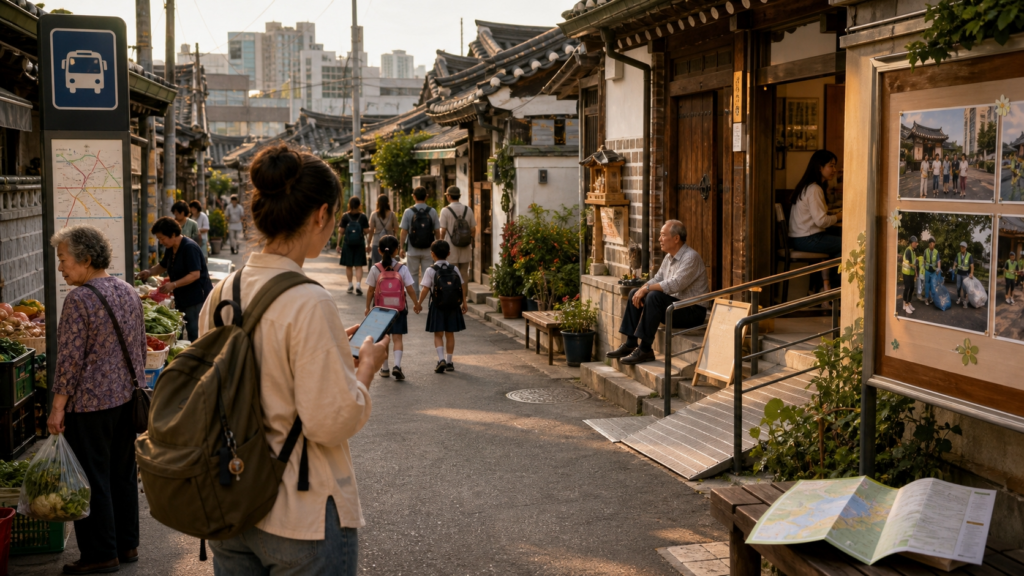
Here, the strength of Korean content is that it doesn’t just show perfectly curated landscapes. Dramas and variety shows feature bustling areas, but also neighborhood restaurants, bus stops, alleyways, and convenience stores on rainy days. For international viewers, these ordinary scenes can actually make Korea feel closer. But the moment you turn everyday life into a tourism product, you have to draw a line. You need an attitude that doesn’t consume someone’s living space like a stage set.
So the phrase ‘from virtual to reality’ isn’t just about technology. It’s also about the process where someone moved by what they see on screen finds the real place, transforming from a fan of the work into a responsible visitor. Even if you want to recreate a favorite scene, it means not blocking traffic, following local rules, and if you visit a small shop, staying in a way that respects that space. Fandom passion is powerful, but for that passion to become good memories, it needs a relationship with the local community.
The Next Trip Starts with a Question After ‘Where Did I See This?’
The collaboration between Netflix and the Korea Tourism Organization is a case of officially acknowledging Korean content’s impact on tourism. Before, filming locations often got belated attention after a drama’s success. Now, there’s a push to connect content’s global release with travel information earlier. This approach won’t have the same effect everywhere, but at least it can make the way international viewers imagine Korea more concrete.
If you’re a fan planning a trip, you don’t have to focus solely on retracing a single scene. Look into the other stories of the neighborhood where it was filmed, the operating hours of a nearby market, or walking paths recommended by locals—your trip will stretch much further. The Korea on screen is usually a backdrop for a story, but the real Korea keeps moving as someone’s daily life. Next time you’re watching a favorite Korean drama or Netflix series and search for a location, ask not just “Where did I see this?” but also “How can I stay there well?” That question is where better screen tourism begins.
Source: Netflix, Korea Tourism Organization, and Ministry of Culture, Sports and Tourism global tourism campaign announcement, June 12, 2025.