Table of Contents
South Korea’s Quest for Back-to-Back Titles Just Eight Days Before the Games Begin
The 2026 Aichi-Nagoya Asian Games open in Japan on September 19. With eight days left as of September 11, the South Korean League of Legends (LoL) national team is aiming for a second consecutive title, led by Lee “Faker” Sang-hyeok. The overall games run until October 4. Months after the roster announcement, attention has shifted from who made the cut to how the team is actually preparing and building chemistry.
The opening day of the Games and the start of the LoL events are two different dates. The opening ceremony takes place on September 19, but the LoL matches run from September 30 to October 2 at the Aichi Sky Expo. That gives the national team extra time even after the Games begin to fine-tune their strategy before the first match.
Led by head coach Kang Dong-hoon, the squad features top laner Choi “Zeus” Woo-je, jungler Kim “Canyon” Geon-bu, mid laners Lee “Faker” Sang-hyeok and Kim “Zeka” Geon-woo, AD carry Lee “Gumayusi” Min-hyung, and support Ryu “Keria” Min-seok. The roster brings together three players from Hanwha Life Esports, two from T1, and one from Gen.G, putting club rivals under one national team banner.
A Roster Built on Recent Pro Performance
The Korea e-Sports Association (KeSPA) announced the roster for the Aichi-Nagoya Asian Games. Rather than relying on a single winner-takes-all qualifier, the LoL squad was formed by evaluating recent tournament results, individual player form, and potential team synergy, favoring players who have shown consistent performance over time rather than a single strong result.
Looking at a broader picture of recent pro results fits the specific needs of picking a national team. Focusing purely on a brief hot streak can overlook a lack of consistency, while relying too much on past achievements can miss a player’s current form. Evaluating performance across different timeframes balances veteran experience against present-day sharpness.
Beyond individual mechanics, national team players have to sync up quickly with teammates from different clubs. Because a limited roster has to adapt to varied in-game scenarios, finding the strongest individual for each role matters as much as making sure those five players can move as one unit.
Shaping the Positional Dynamic with Six Players
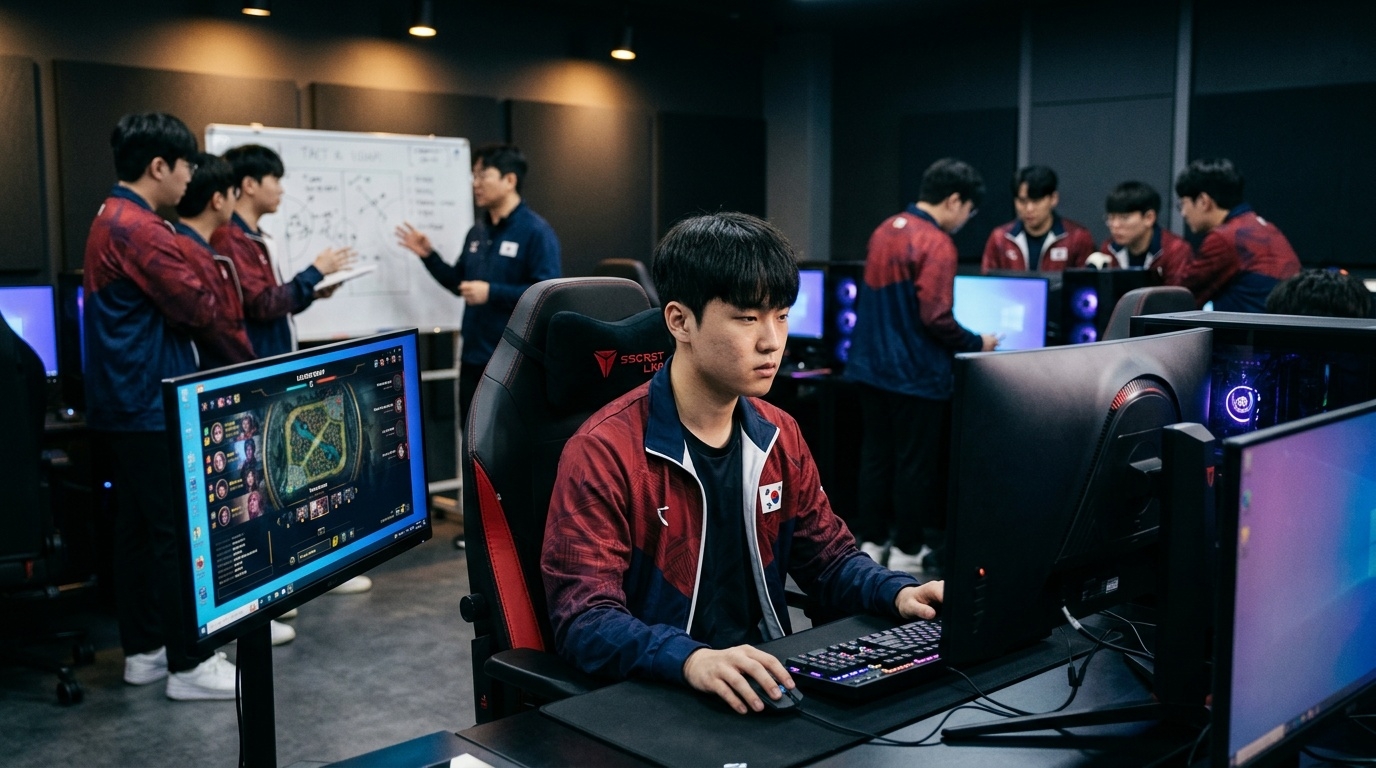
Zeus holds the top lane, while Canyon roams the map as jungler, influencing every lane. Faker and Zeka share the mid lane. Gumayusi plays AD carry, with Keria at support backing up the team and setting the pace of the game. Each role carries distinct responsibilities, so no single player’s stats fully capture the team’s overall strength.
Having two mid laners widens the strategic options available to the team. Coach Kang can field either Faker or Zeka depending on the opponent, the match context, and the planned macro strategy. Having that option also means the team has to practice the specific synergy each configuration requires. Even when the starting mid laner changes, the other four players need to stay aligned with the team’s overall direction.
By club, Hanwha Life Esports has three spots with Zeus, Zeka, and Gumayusi. T1 brings Faker and Keria, and Gen.G rounds out the roster with Canyon. The chemistry each player already has with their home team is a starting point, but the national squad has to build a shared strategy across all six players rather than leaning on any single club’s usual style.
Three Players Bridging the Hangzhou Gold Medal Experience
Zeus, Faker, and Keria are the three players on this roster who won gold at the 2022 Hangzhou Asian Games. That event actually took place in 2023 due to the pandemic, but it officially retains the 2022 name. These three bring that national team experience directly into Aichi-Nagoya, meaning half the team already knows what the preparation and pressure of the Games actually feel like.
Canyon, Zeka, and Gumayusi, on the other hand, are making their Asian Games debut. The roster splits evenly between three gold medalists and three newcomers to this international stage. It’s neither a team resting on past results nor a full rebuild. That mix of experience and new energy is what defines this year’s squad.
Having gold medal experience means more than having won before. It means these players know how to adapt to the specific conditions of representing their country: tight preparation windows and a tournament schedule that looks different from a standard pro league. How well the veterans pass that on to the newcomers will shape the team’s stability, and blending that experience with the newer players’ instincts is a key part of the preparation.
Gumayusi and Keria Reunite on the National Team
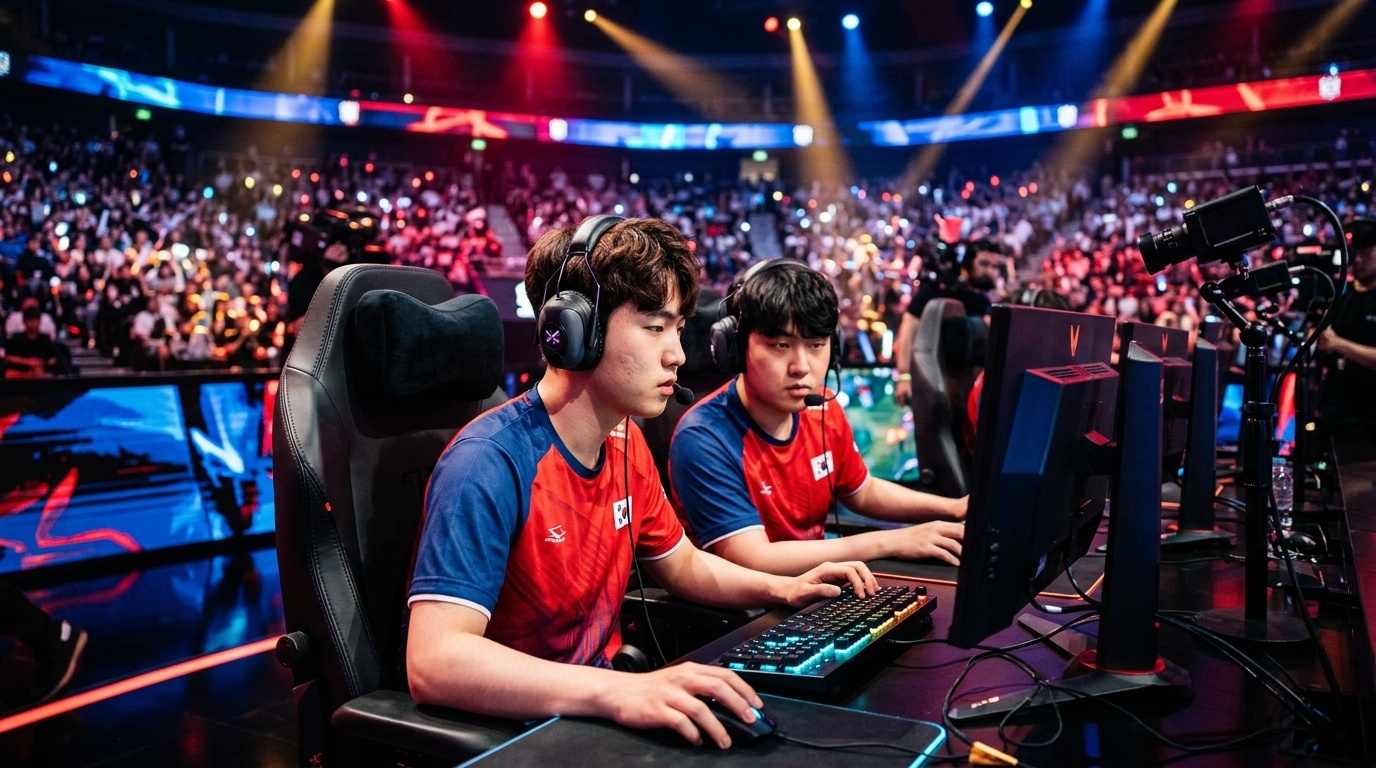
One of the most talked-about pairings on this roster is Gumayusi and Keria. The two previously played the bot lane together as a duo for T1. Since the AD carry and support move in tandem through the early game, understanding each other’s decision-making and combat habits closely matters. Reading each other’s intentions from the briefest of pings is a real advantage in moments where split-second calls decide a fight.
After Gumayusi’s transfer to Hanwha Life Esports, the two ended up on different teams in the pro circuit. But their national team selection puts them back on the same side. Their shared history is useful for a national squad that has to build teamwork on a tight schedule, and for fans, it’s also a familiar duo reuniting on the international stage.
Still, the national team isn’t simply trying to recreate a past T1 lineup. That bot lane chemistry has to connect with the macro play of Zeus, Canyon, and either Faker or Zeka. For the reunion to work, they need to adjust their past synergy to fit the current squad rather than treat it as a shortcut around communicating with the rest of the roster.
Chovy’s Absence and Remaining Variables
Gen.G’s Jeong “Chovy” Ji-hoon was widely discussed as a national team candidate but did not make the final roster. According to KeSPA, players fulfilling military service requirements were excluded from the draft pool due to injury treatment and mandatory service duties. Reports indicated Chovy needed to focus on treating a hip injury. In the end, mid lane duties fell entirely to Faker and Zeka.
This is different from losing out in a competitive tryout or stepping down voluntarily. He was excluded from the draft pool specifically because of his injury treatment and mandatory service. With that settled, the national team has to build its game plans around the confirmed six members, and public attention naturally shifts from who was left out to how the selected players will use their skills.
Star power on the roster doesn’t guarantee a gold medal on its own. Compared to their domestic clubs, the national team has far less time to practice together, so players have to reconcile different tactical habits learned at their own clubs quickly. International experience and the memory of Hangzhou gold are real strengths, but what matters on game day is how fast and consistently the five players on stage can move as one. Handling unexpected shifts in momentum takes real collective decision-making.
South Korea’s goal is to win at Aichi-Nagoya and secure a second straight title, following its win in Hangzhou, where esports was recognized as an official medal event for the first time. What to watch is how Faker and Zeka split mid lane duties, how Canyon controls the map, and what the reunited Gumayusi and Keria bring together. How the team uses the gap between the opening ceremony and the actual LoL matches is another factor. The real question isn’t the star power of the names involved, but whether these six players can function as one team.
Source: KeSPA National Team Selection Announcement; Aichi-Nagoya Asian Games Schedule; Yonhap News, May 18, 2026; Kookmin Ilbo, May 18, 2026.