
Table of Contents
Burnout hits 52.7% of unemployed youth
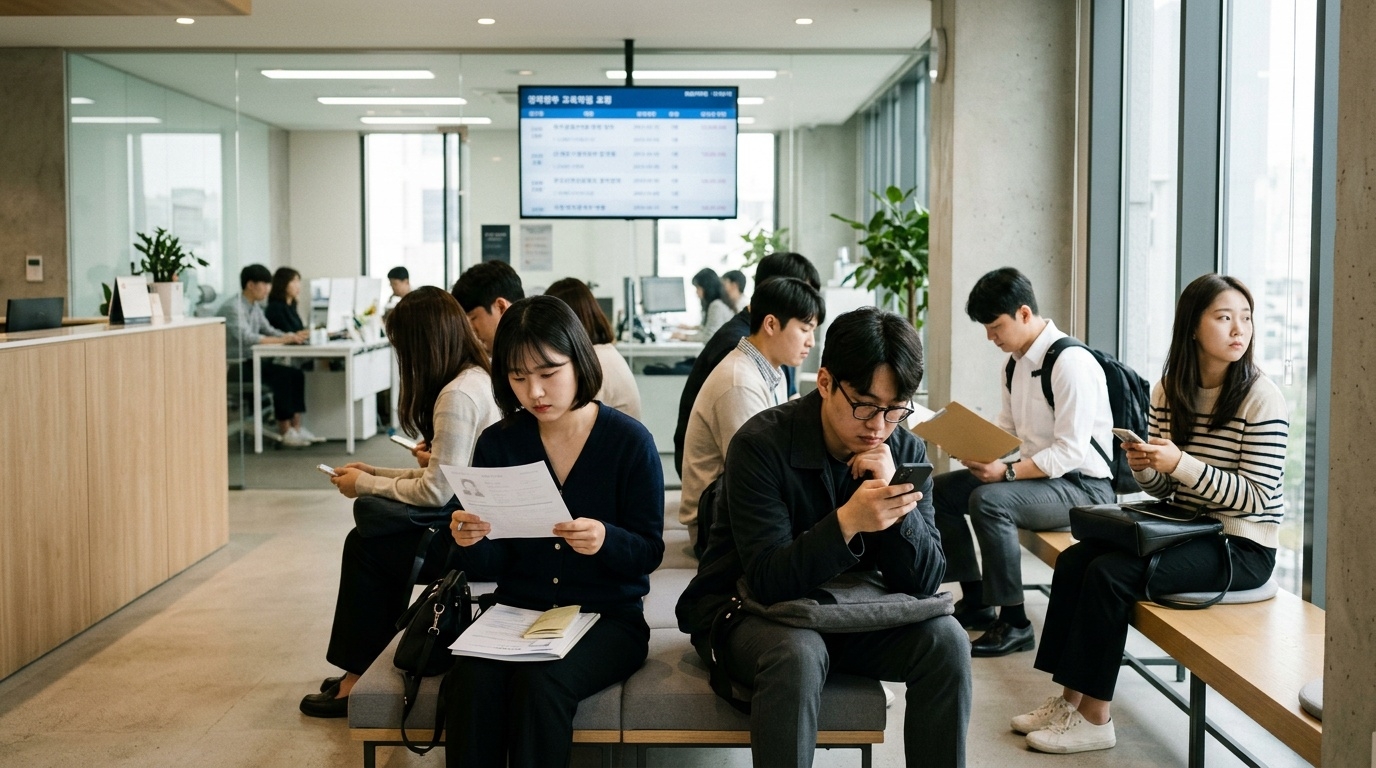
More than half of the young people looking for work in South Korea have experienced burnout. According to an analysis of the Office for Government Policy Coordination’s “2024 Youth Life Survey” microdata released by the Federation of Korean Industries on September 7, the burnout rate among unemployed youth aged 19 to 34 was 52.7%. This is roughly 1.6 times higher than the 32.4% rate among their employed peers, clearly showing how employment status heavily influences the level of physical and mental exhaustion young people face.
Burnout here refers to a state of emotional depletion and loss of motivation for daily life caused by prolonged stress. In this analysis, unemployed youth pointed to “career anxiety” as the primary culprit. A striking 68.4% of those who had experienced burnout cited this as the cause. They aren’t just tired from having too much to study or a packed prep schedule; rather, the sheer uncertainty of not knowing when or what kind of job they might land is at the very core of their exhaustion.
Burnout rates jump to 61.8% after a year of job hunting
The length of the job search proved to be a major variable in predicting burnout. For young people who had been looking for work for over a year, the burnout rate climbed to 61.8%, noticeably higher than the average for all unemployed youth. In the early stages of a job hunt, it’s easier to focus on concrete tasks like drafting resumes, studying for exams, or preparing for interviews. But as rejections pile up, waiting periods stretch out, and the timing of the next opportunity becomes impossible to predict, maintaining the drive to keep preparing becomes incredibly difficult.
A prolonged job hunt takes a toll on more than just a person’s time; it impacts their entire life. Even without an income, expenses for test prep, transportation, and other job-search necessities continue to mount. Watching peers successfully land jobs can deepen a sense of falling behind. As the conviction that hard work yields results begins to fade, focusing on the job search gets harder. This reduced activity can then make the prospect of getting hired feel even more remote, creating a vicious cycle.
These figures don’t directly prove a strict cause-and-effect relationship between the duration of unemployment and burnout. Other factors, such as personal health, financial situations, and family support, also play a role. However, the distinctly high burnout rate among long-term job seekers, coupled with the fact that a large majority of unemployed youth point to career anxiety as the root cause shows how closely the two issues are tied together.
The wait for that first paycheck is getting longer
The time it takes for young people to initially enter the labor market is also increasing. The average period from graduation or dropping out to landing a first paid job grew from 12.6 months in 2020 to 13.5 months last year. While averages don’t capture every individual’s story, this shift signals that the transition from school to the workplace is nowhere near as seamless as it used to be.
When that first job is delayed, it postpones not only the start of a career but also subsequent life milestones like living independently and securing housing. Job seekers in South Korea often feel pressured to stack their resumes with certifications, language scores, specialized training, and internships, on top of their academic degrees. The longer the preparation takes, the more they feel the need to accumulate additional experiences, funneling even more time and money into the process.
Unlike a school exam with a set test date, job hunting lacks a predictable finish line. Every company demands different qualifications, and hiring outcomes are ultimately out of the applicant’s control. The fact that career anxiety so overwhelmingly outpaces other causes of burnout suggests young people are overwhelmed not just by their current exhaustion, but by not being able to see a clear path forward.
Even after finding work, the type of employment matters
Securing a job doesn’t magically erase the risk of burnout. The burnout rate for young adults in temporary or daily wage jobs sits at 41.1%, roughly 1.4 times higher than the 29.6% rate for those in stable, regular employment. Jobs with short contract periods, irregular schedules, or fluctuating incomes often force workers to prepare for their next gig while still actively working. This is why simply dividing young people into “employed” and “unemployed” falls short of capturing the full scope of their anxiety.
The root causes of burnout also vary by employment status. While 68.4% of unemployed youth and 57.0% of temporary or daily workers cited career anxiety as their biggest stressor, those in stable employment might struggle more with internal workplace issues like heavy workloads or a lack of work-life balance. When employment is unstable, worrying about the next month’s rent or the next job contract naturally takes priority. Even within the same generation, the nature of burnout shifts depending on where someone stands in the labor market.
The gap between training institutions and the actual workplace
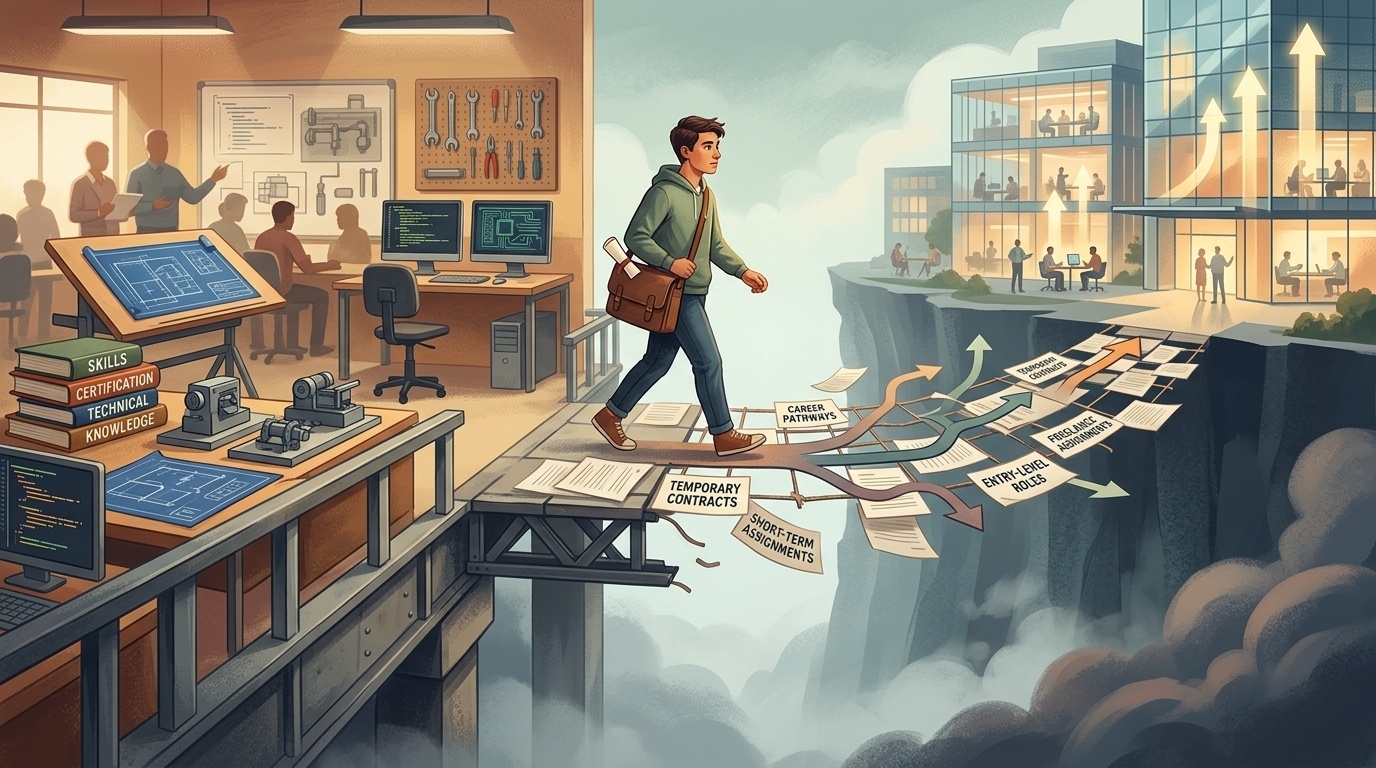
The structure of vocational training has also been highlighted as a systemic issue. In South Korea, institution-based training accounts for 82.1% of total vocational training expenditures, well above the OECD average of 67.4%. In stark contrast, on-the-job training at companies or actual work sites makes up just 1.5%, falling drastically short of the OECD average of 11.7%. This means that even when resources are poured into training programs, they rarely translate into practical work experience.
Institutional education is certainly necessary for systematically building foundational knowledge and skills. The catch comes when companies demand separate practical experience even after the training is complete. Young job seekers might undergo training specifically to get hired, only to find themselves hunting for internships or short-term gigs because they supposedly lack “field experience.” As companies increasingly favor candidates who can hit the ground running on day one, the gulf between training and hiring only widens.
Expanding on-the-job training is often proposed as a bridge for this gap. If companies actively participate in the educational process and offer more opportunities to experience real work environments, young people can gauge whether a role actually suits them before committing. Likewise, companies can assess a candidate’s capabilities through hands-on tasks. But the content and quality of these programs need careful oversight, so they aren’t just exploited as a source of cheap, short-term labor.
Burnout solutions need to tie into labor market entry pathways
When asked what kind of support they need most, unemployed youth pointed to financial assistance for job preparation, vocational training, and employment counseling. This highlights that behind their psychological exhaustion lies a heavy mix of financial burden, a lack of information, and hazy career paths. Counseling and emotional support matter for easing burnout, but they alone can’t conjure job opportunities or shorten the job hunt. That is exactly why support systems must be directly linked to entering the workforce.
For high-risk groups like long-term job seekers and temporary workers, generic job information isn’t enough; they need tailored support that aligns with their specific career stage. It shouldn’t just stop at recommending which courses to take. It needs to clearly map out how that education leads to specific roles and companies. The clearer the bridge between preparation and hiring becomes, the more we can chip away at the career uncertainty plaguing young people.
This analysis makes it clear that youth burnout cannot be brushed off as a lack of willpower or poor stress management. The 52.7% overall experience rate, and the 61.8% rate among long-term job seekers, point to structural flaws in a labor market that keeps dragging out the job hunt. Rather than simply telling young people to prepare harder and longer, the core task ahead is building reliable pathways where that preparation actually leads to a stable first job.
Sources: Federation of Korean Industries Press Release, September 7, 2026; Kyunghyang Shinmun, September 7, 2026.