
Table of Contents
Choosing to plan your Chuseok palace outing in advance
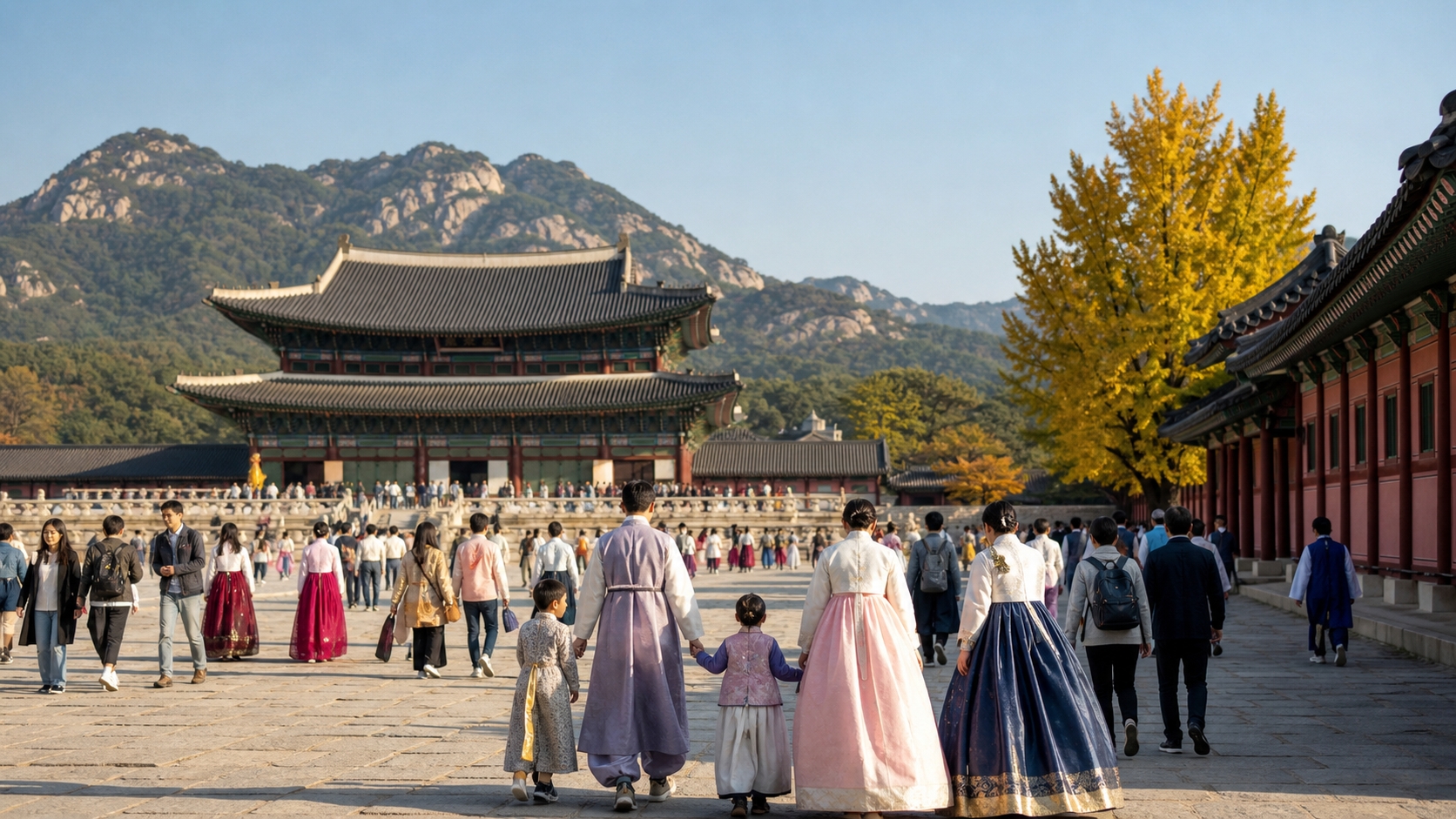
Families visiting Seoul during the 2026 Chuseok holiday might want to plan an outing to the historic palaces, touring Gyeongbokgung, Changdeokgung, Deoksugung, and Changgyeonggung. This year’s holiday runs for four days, from Thursday, September 24th to Sunday, September 27th. During this time, Seoul’s four grand palaces, Jongmyo Shrine, and the Royal Tombs of the Joseon Dynasty will be open to the public for free. To be on the safe side, it’s best to double-check the exact details of the free admission through the Korea Heritage Service’s Royal Palaces and Tombs Center before you go. It’s a great itinerary that allows families to explore national heritage sites, which usually charge an admission fee, while also learning about the cultural backdrop of Chuseok.
Chuseok, falling on the 15th day of the 8th lunar month, is one of Korea’s most important holidays, a time when families gather to give thanks for the year’s harvest and honor their ancestors. While the tradition of returning to one’s hometown is at the heart of the holiday, many families also take advantage of the long weekend to experience traditional culture at palaces and museums. For overseas Koreans visiting the motherland, it’s a meaningful chance to share the spirit of the holiday with their children. For international travelers, it offers a fantastic window into both the royal and everyday cultures of Korea.
Choosing which palace to visit and mapping your route
While Seoul’s four grand palaces are all tied to the Joseon royal family, each has a distinct historical role and atmosphere. Gyeongbokgung was built as the primary palace of Joseon, representing the heart of the dynasty. Its major halls are arranged along a grand axis, making it an excellent place to grasp the official political arena of the royal court. If it’s your first time visiting a palace during the holidays, you can start by exploring the central spaces where coronations and state ceremonies were held.
Changdeokgung is celebrated for its architectural layout that harmonizes with the natural topography, serving as the primary residence for many Joseon kings over the centuries. Changgyeonggung is closely connected to the living quarters of the royal family. Meanwhile, Deoksugung offers a glimpse into the late Joseon and Korean Empire periods, uniquely blending traditional pavilions with modern Western-style architecture in a single space. Knowing these differences before you go helps you appreciate the buildings as more than just similar-looking old palaces.
Rather than trying to cram all four into a single day, it’s much more realistic to pick one or two based on your historical interests and travel distance. The distances between the halls and courtyards inside the palaces are quite long, and the grounds can get crowded during the holiday weekend. If you’re traveling with young children or elderly family members, factoring in walking times and rest spots is essential. Instead of overpacking your schedule just because admission is free, taking the time to fully explore one location will give you a much richer understanding of its heritage.
Jongmyo Shrine and the Royal Tombs serve a different purpose
Jongmyo is the royal shrine where the spirit tablets of Joseon kings and queens are enshrined and ancestral rites were performed. If the palaces were lively spaces where the royal family lived and governed, Jongmyo was a solemn sanctuary for preserving the dynasty’s memory and conducting rituals. Its architecture stands out for its restrained elegance and sweeping, elongated spatial design rather than flashy decorations. Connecting this to the Chuseok tradition of honoring ancestors makes it easier to understand the symbolic role Jongmyo played in the royal court.
The Royal Tombs of the Joseon Dynasty are the burial grounds of kings and queens, scattered across the country with a heavy concentration in and around the Seoul metropolitan area. If you treat a tomb visit like a quick downtown palace trip, you might find the travel time much longer than expected, so it’s wise to check the location and transportation options beforehand. By exploring the palaces, Jongmyo, and the royal tombs together, you can compare how spaces for daily royal life, state rituals, and posthumous remembrance were distinctly separated yet deeply connected.
Free admission simply means the basic entry fee is waived. It doesn’t necessarily mean that areas requiring separate reservations or special programs are automatically free. To avoid any hiccups, check the operating hours, last entry times, and reservation requirements for each palace, shrine, or tomb via the Korea Heritage Service’s Royal Palaces and Tombs Center just before your trip. Keep in mind that traffic and on-site wait times might be longer than usual during the holiday weekend.
Experiencing Chuseok through folk games and holiday food
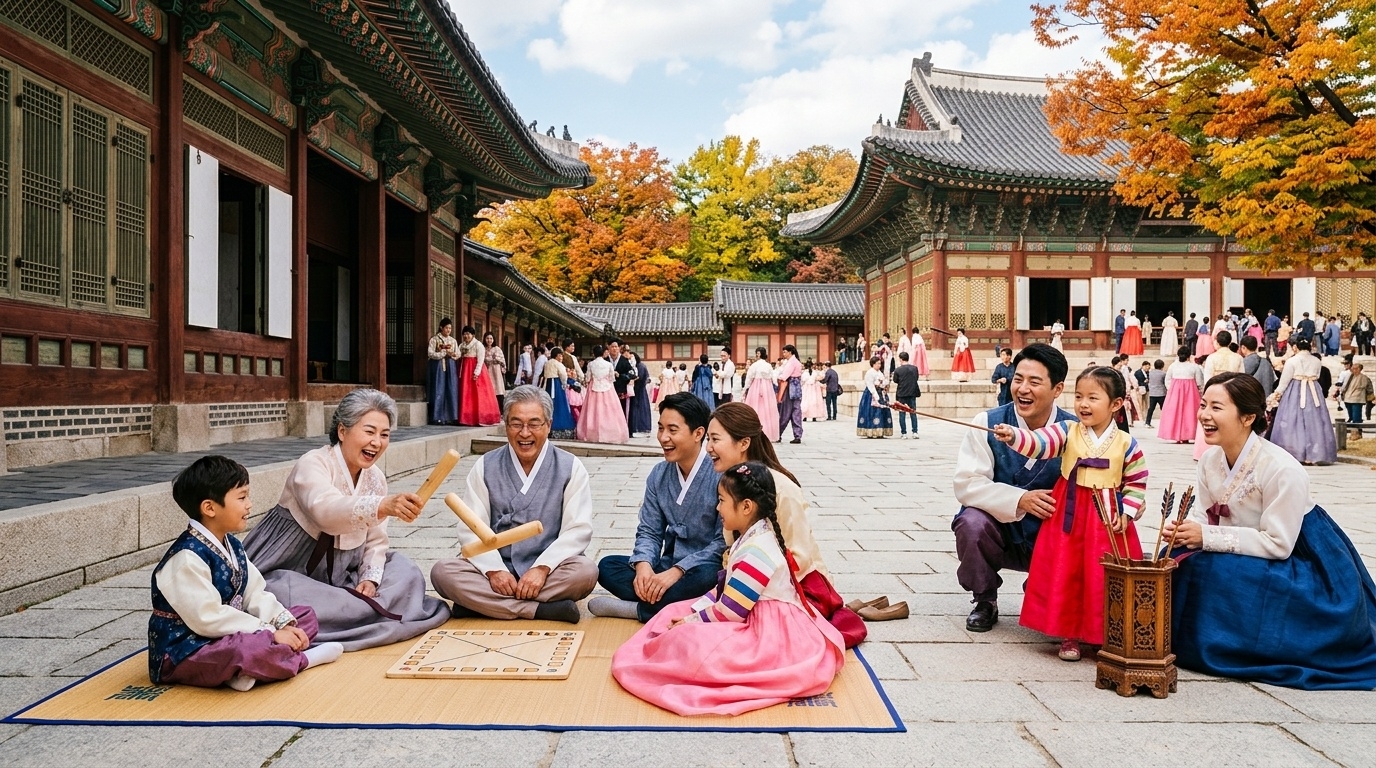
During the holiday, palaces and affiliated cultural facilities offer hands-on experiences with traditional folk games like tuho (pitch-pot), jegichagi (hacky sack), and yutnori (a board game). Tuho involves throwing arrow-like sticks into a jar from a set distance, while jegichagi is a game of keeping a paper shuttlecock in the air using only your feet. Yutnori is a traditional board game where players move tokens based on the outcome of tossing four wooden sticks. The rules are fairly straightforward, making it incredibly easy for visitors unfamiliar with Korean holidays to jump right in.
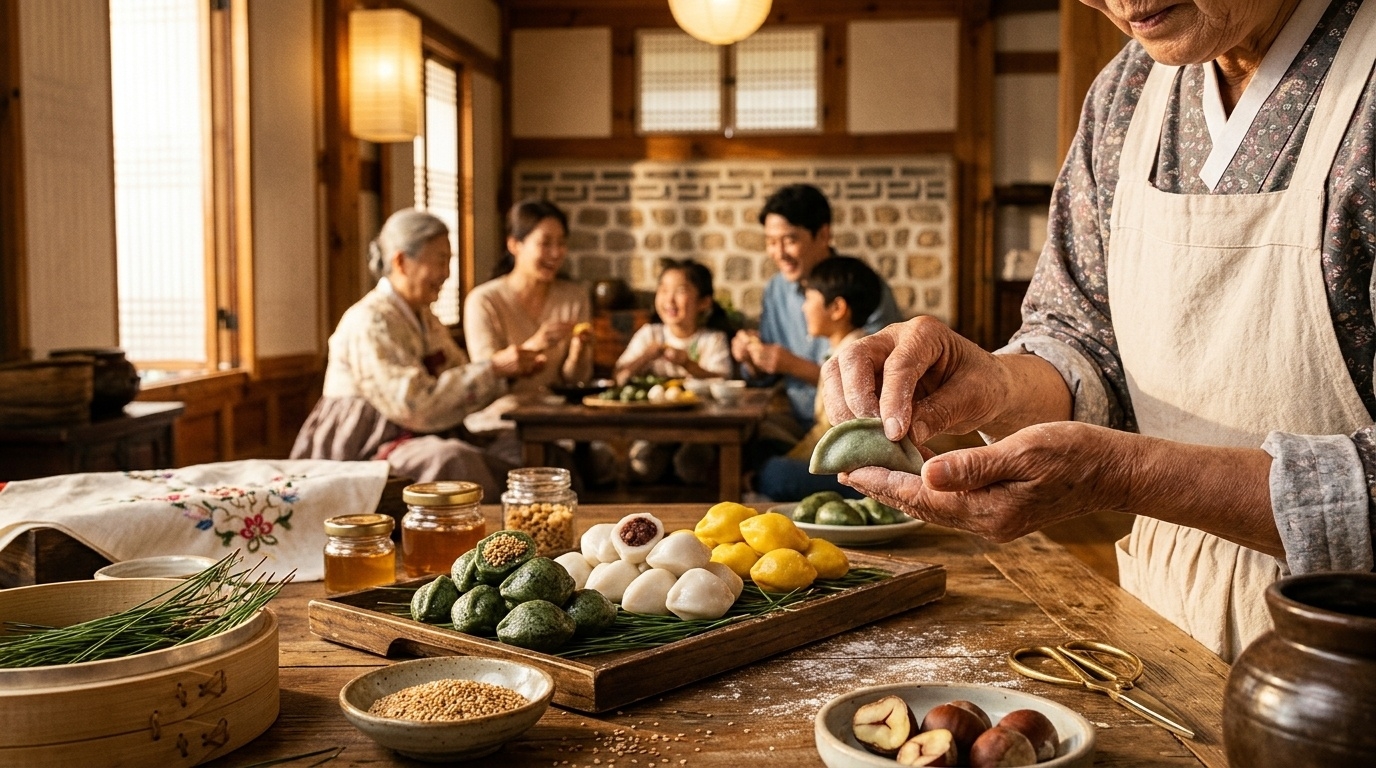
The National Folk Museum of Korea runs holiday food programs during Chuseok, including tteokme-chigi (pounding rice dough) and making songpyeon (half-moon rice cakes). Tteokme-chigi is the process of striking steamed grains with a heavy wooden mallet to create chewy rice cakes, while songpyeon, made by stuffing rice flour dough with sweet fillings, is the signature food of Chuseok. Getting your hands dirty making these foods offers a tangible sense of how Chuseok has always been a time for sharing the harvest with family and neighbors.
These museum programs add a wonderful slice-of-life perspective to an itinerary focused on royal architecture and history. The palaces show the holidays and rituals of the royal court, while the food experiences at the folk museum show how everyday people prepared for and celebrated Chuseok. Since operating hours and participation methods for these programs can vary, and some museums might close on the actual day of Chuseok, it’s always a good idea to check official announcements before heading out.
The Chuseok free admission and the autumn festival are separate events
If visiting Seoul during the Chuseok holiday isn’t feasible, or if you want to dive deeper into curated palace programs, the Autumn Royal Culture Festival running from October 7th to 11th is a fantastic alternative. Gyeongbokgung, Changdeokgung, Deoksugung, Changgyeonggung, and Jongmyo Shrine will host a full lineup of performances, exhibitions, hands-on experiences, and historical reenactments. While the free admission during Chuseok leans more towards casual sightseeing and family outings, the Royal Culture Festival is a highly curated event designed around the specific history and character of each site.
Gyeongbokgung will feature programs spotlighting hanbok and royal attire, while Changdeokgung will host exhibitions blending palace architecture with traditional crafts. At Deoksugung, you can engage with programs exploring the historical context of the Korean Empire, and at Changgyeonggung, events will make use of the palace’s unique spaces and stories. Jongmyo Shrine will also offer programs to help visitors understand its architecture and royal rituals, allowing you to easily compare the distinct roles of each heritage site.
Some festival programs require advance reservations or separate tickets, and there will be dedicated opportunities for international visitors to participate. So it’s important not to confuse the free Chuseok opening with the Royal Culture Festival. Check the dates and participation requirements for each separately. A great strategy is to explore the basic layout and history of the palaces during the free admission period, then return later to enjoy the festival’s themed events.
From preserved heritage to modern cultural spaces
Opening the palaces for free during Chuseok turns these national heritage sites from distant monuments into lived-in spaces where families can walk and talk together. The pavilions, shrines, and royal tombs display the systems and rituals of the Joseon court, while the folk games and food experiences illustrate the holiday culture of the everyday people who lived during the same era. When you view both perspectives together, Korean tradition is no longer a story divided between royalty and commoners, but an interconnected history.
For families of overseas Koreans, a palace outing can be an interactive field trip, offering a natural way to explain Chuseok and Korean history to their children. International visitors who arrive knowing the purpose of the spaces and the rules of the games will find the palaces to be more than just pretty photo spots, places that hold the memory of Korean society. Nailing down which locations to visit, picking out the programs you want to try, and verifying official operating details is the perfect starting point for making the most of the four-day Chuseok weekend.
Sources: Ministry of Finance and Economy, “2026 Chuseok Livelihood Stabilization Measures,” September 1, 2026; Korea Heritage Agency Press Release, September 2, 2026; National Folk Museum of Korea Event Guide, accessed September 2026.