
Table of Contents
Architecture and Jajangmyeon: Exploring the Incheon Open Port on a single trail
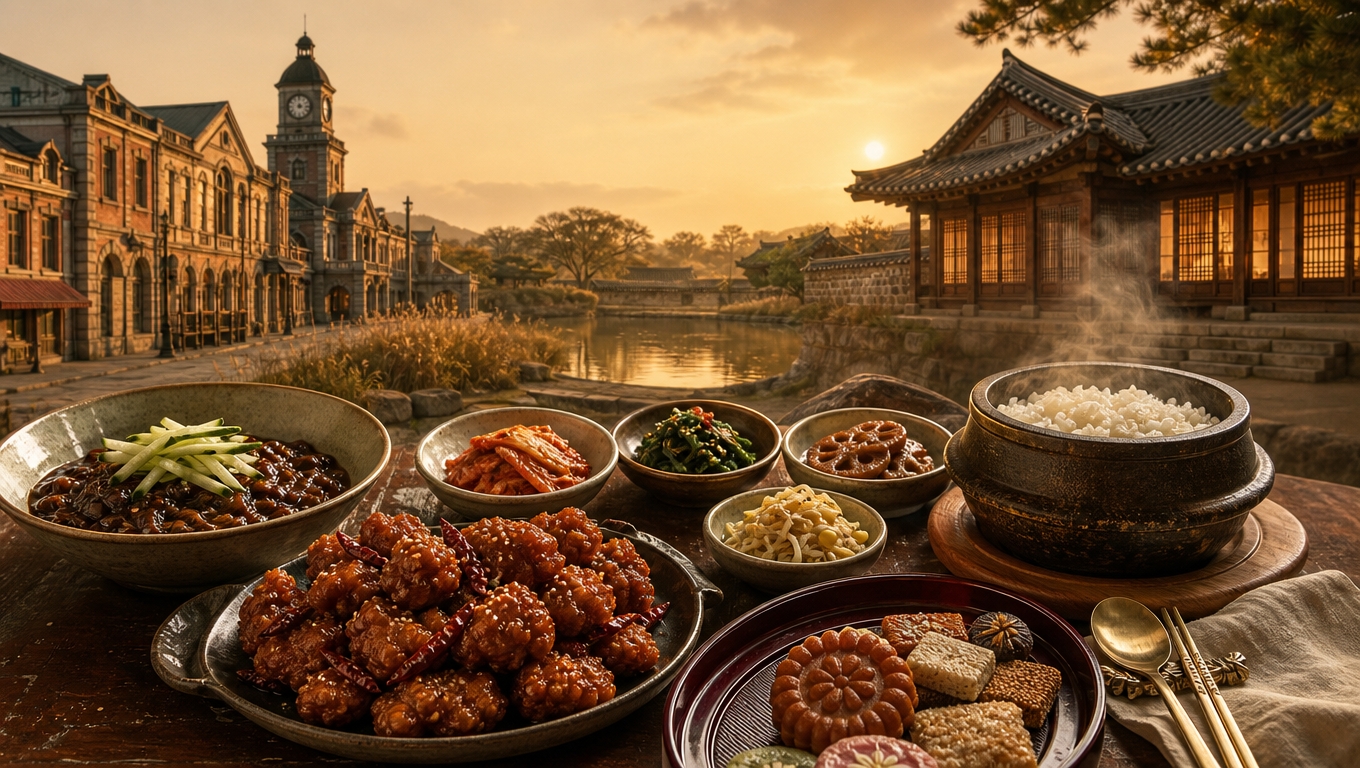
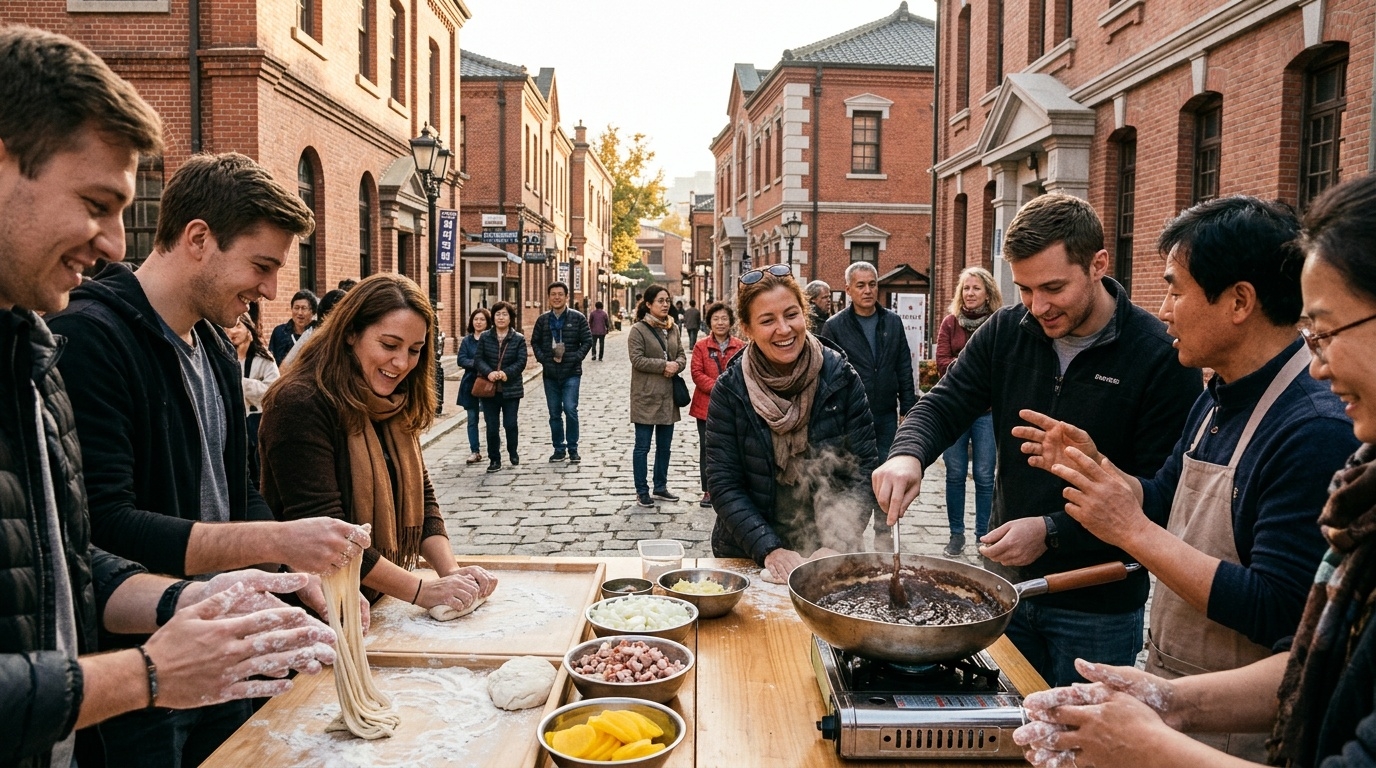
Participants visiting the Incheon Open Port first tour modern architectural heritage sites like the former Incheon branch of the First Bank of Japan and the former Incheon branch of the Nippon Yusen Kaisha. Then, they get hands-on experience making Jajangmyeon and Dakgangjeong (sweet and crispy fried chicken). Rather than a typical tourist course where you view buildings and then move to a separate restaurant, this experience is designed to help visitors understand, through food, Incheon’s lifestyle history as shaped by the flow of people and culture since the port’s opening.
This program is titled ‘A Delicious National Heritage Journey, Incheon’s Full Table.’ It connects the process of various cultures flowing into Incheon and the establishment of new foods after the port opened in 1883 with its modern architectural heritage. Instead of introducing Jajangmyeon simply as a popular everyday dish, it interprets it as a cultural outcome reflecting the transformation and exchanges of a bustling port city.
The Incheon program is one of five regional specials during the ‘2026 National Heritage Week,’ which runs throughout October. This year, the focus is ‘Hansik (Korean food) culture.’ By letting people experience the history of the sites where national heritage resides alongside local cuisine, the event elevates heritage from something you merely look at into a living culture you can make, taste, and hear stories about.
The third National Heritage Week featuring 16 local governments nationwide
The Korea Heritage Service, together with the Korean Association of Cultural Heritage Utilization, is hosting the 2026 National Heritage Week from October 1 to 31 across five regions and 16 local municipalities. Now in its third year, this event consolidates regional heritage programs into a focused period, allowing people to experience the value of these historical assets closer to their daily lives.
Five regions (Seoul/Gangwon, Gyeonggi/Incheon, Chungcheong, Jeolla, and Gyeongsang) each feature a special program centered around Korean food culture. These are linked with 380 ‘Local Heritage Utilization Programs’ happening nationwide, along with a mobile stamp tour. Rather than just visiting a single flagship event in one area, the scope has been broadened so visitors can explore multiple heritage programs tailored to their residence or travel routes.
For international visitors, this setup offers a perfect chance to understand the regional contexts of Korean cuisine. Even within Hansik, dishes born from the exchanges of a port city, the rice culture tied to ancient agricultural irrigation, and the heirloom recipes passed down through a noble family’s tradition of hosting guests all carry distinct histories. National Heritage Week treats food as more than a finished meal, exploring the places it was created and the lifestyles of the people who made it.
Seoul and Incheon: Flavors born in spaces of exchange
The Seoul/Gangwon special, ‘Yanghwanaru Night Breeze, Awakening the Taste of Hanyang,’ takes place at the historic ‘Yanghwanaru and Jamdubong Relics.’ Yanghwanaru was a hub of logistics and commerce during the Joseon Dynasty. Participants can take a historical walk to learn about the functions of the old port and discover how the movement and trade of that era left their mark on the local food culture.
The hands-on experience features salted shrimp (saeujeot), an ingredient from Mapo mentioned in the ‘Dongguk Sesigi,’ a historical book recording traditional seasonal customs. Participants can make and taste dishes using salted shrimp, alongside traditional Samhaeju liquor and sticky rice cakes filled with seasonal fruits. Traditional music performances, including Gayageum singing, add to the atmosphere, offering a modern recreation of the food and entertainment that merchants and artists at the port would have enjoyed.
In Incheon, the modern architecture of the Open Port, Jajangmyeon, and Dakgangjeong share a single table. The common thread between these two regions is how they interpret spaces where goods and people gathered through the lens of food. If Yanghwanaru illustrates the distribution networks of Hanyang (old Seoul) during the Joseon Dynasty, the Incheon Open Port reveals how contact with foreign cultures during the modern era transformed the city’s lifestyle and dining tables.
Local lifestyles passed down through Cheongju’s recipe book and Gimje’s rice
In the Chungcheong region, ‘Recreating Cheongju’s Dining Table from 100 Years Ago with Our Own Hands’ is underway. The core material here is ‘Banchan Deungsok,’ a historical book recording traditional local foods and recipes of Cheongju. Participants discover what was served on dining tables about a century ago and how those recipes were documented and passed down. The history and value embedded in regional traditional liquors and temple cuisine are also covered.
A recipe book offers a window into the past that differs from architecture or artifacts. The names of ingredients, cooking sequences, and table-setting methods reflect the resources and living conditions available to people at the time. By connecting ‘Banchan Deungsok’ with direct hands-on activities, the contents of old texts can be felt and understood through a modern lens. It’s an approach that closes the gap between documentary heritage and living culture.
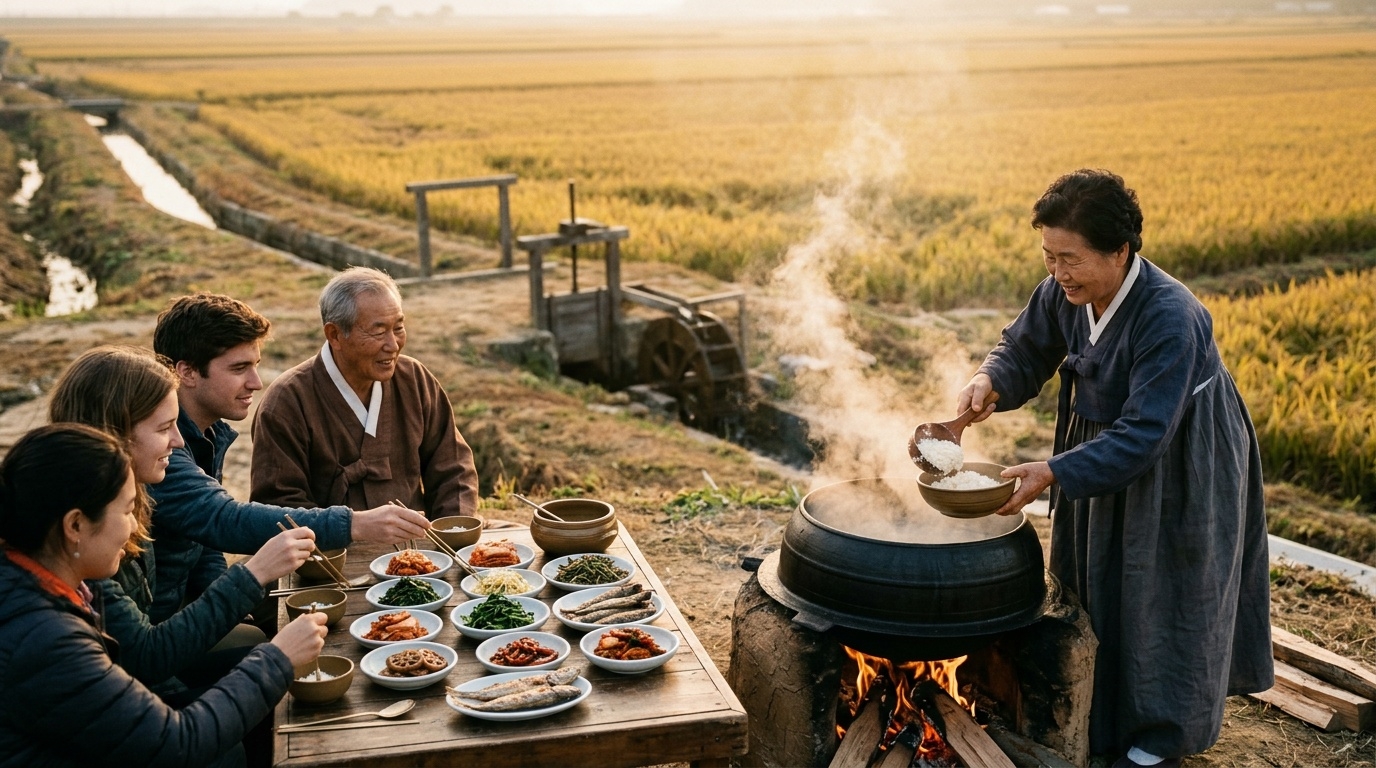
The Jeolla region’s ‘National Heritage Bapsim (Rice Power)!’ is set against the backdrop of Gimje Byeokgolje. Byeokgolje is an ancient irrigation facility built during the Three Kingdoms period, and it reflects the region’s long history of agriculture and water management. After listening to a curator’s explanation, participants cook rice in a traditional cauldron (gamasot) using Gimje’s famous Horizon Rice, prepare side dishes with seasonal ingredients, and make fruit punch (hwachae) to share a meal together.
Here, cooking rice is more than just a culinary activity. It’s a medium that demonstrates how facilities for storing water and managing farmland were directly tied to the foundation of life: producing grain. By cooking rice after understanding the structure and history of Byeokgolje, visitors can tangibly feel the long historical thread connecting national heritage to the dining tables of today.
Learning hospitality and heirloom recipes at the Gyeongju Choi Clan Estate
The Gyeongsang region special, ‘Gyeongju Choi Clan, A Precious Guest Has Arrived,’ is a nighttime program held at the Gyeongju Choi Clan Estate, a designated National Folklore Cultural Heritage. The Choi family is famous for a long history of practicing sharing and coexistence. The program highlights the culture of ‘jeopbin’ (welcoming and serving guests with heartfelt sincerity) through the estate’s historical spaces and its food.
After touring the traditional house with a cultural guide, participants make ‘Myeongtae Bopuragi’ (fluffed dried pollock), an heirloom recipe passed down through generations of the family. They then relax in the sarangchae (guest quarters) to the sounds of Gayageum and Daegeum performances while enjoying a dinner featuring these family recipes, along with traditional sweets and nuruk sikhye (sweet rice beverage). The household’s culture of brewing traditional liquor at home (gayangju) is also introduced.
This program illustrates that the meaning of food goes far beyond its recipe. What was made, who it was shared with, and how guests were received in a specific space are all integral parts of food culture. That is exactly why the experience is designed so participants can absorb the food, music, and customs of hospitality together within the authentic setting of a historic home.
Free advance reservations and what to check before visiting
All five special programs are completely free but require advance booking. Reservations opened sequentially by region on the official National Heritage Week website. Applications started on September 14 for Seoul/Gangwon, the 15th for Gyeonggi/Incheon, the 16th for Chungcheong, the 17th for Jeolla, and the 18th for Gyeongsang. Since spots are filled on a first-come, first-served basis, anyone planning an October visit should check remaining availability and detailed schedules for their desired sessions in advance.
Even if the special programs are fully booked, the wider National Heritage Week is far from over. With 380 local utilization programs running nationwide until October 31, you can still find other events that fit your location and dates on the official website. The mobile stamp tour is also active, which is a great tool for planning a route that takes you across multiple heritage sites.
The Korean food at the 2026 National Heritage Week isn’t a single standardized menu. It is a layered culture of varying times and lifestyles, seen through the Jajangmyeon of the Open Port, an old recipe book in Cheongju, cauldron-cooked rice in Gimje, and heirloom dishes in a Gyeongju estate. An October trip is less about noting what you ate and more about understanding why that food took root in that particular region.
Source: Korea Heritage Service Press Release, September 9, 2026.


