
Table of Contents
Plans for Charye drop from 40.4% to 27.3% in just one year
Only 27.3% of South Korean households plan to observe charye (ancestral rites) during Chuseok in 2026. This is a 13.1 percentage point drop from the 40.4% recorded in last year’s survey. Conversely, 65.3% responded that they have no plans to hold the ritual. This means nearly two out of three households will not be preparing a charye table this Chuseok. The number of people opting out is now more than double the number of those keeping the tradition.
The Korea Rural Economic Institute conducted a web survey of 1,000 consumers nationwide from August 21 to 26. While the survey was initially designed to understand fruit demand and consumption habits during the peak Chuseok season, the responses regarding charye shed light on how rapidly Korean holiday rituals are shrinking. The survey captured families’ actual preparation plans right before the holiday.
The sharp 13.1 percentage point decline over just a single year is particularly striking. Rather than a slow shift in demographics between those who observe the ritual and those who don’t, it highlights that more households are now viewing holiday rituals as entirely optional. For international observers who have long associated Chuseok with massive ancestral tables, this data proves that the reality inside Korean homes is evolving much faster than conventional wisdom suggests.
Even half of those observing the ritual are simplifying the table
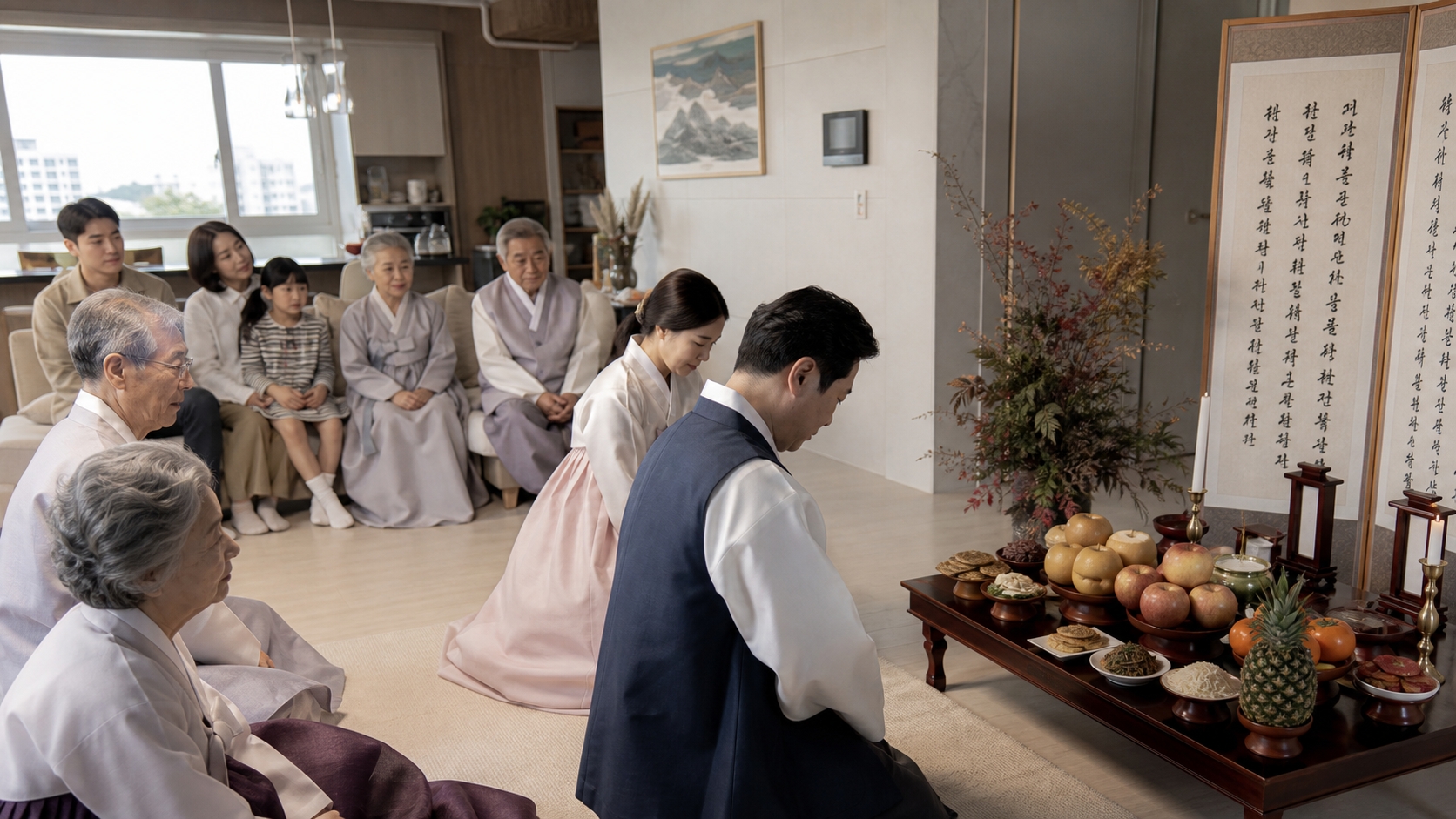
Charye is a Korean family ritual where food is offered to ancestors on the morning of Seollal (Lunar New Year) or Chuseok. Similar to jesa (memorial rites), it is distinct in that it takes place on major holidays. Traditionally, families prepared an array of foods including fruits, jeon (savory pancakes), namul (seasoned vegetables), and meat. Because there is a specific etiquette dictating what types of food to serve and how to place them, the preparation itself has long been considered an important part of the holiday experience.
However, this recent survey reveals a clear trend of easing the burden of preparation, even among those who maintain the ritual. Among the households planning to hold charye, 50.9% stated they would “simplify the food while keeping to traditional etiquette.” Essentially, half of the households still performing the rites are choosing to scale back the size of the table spread.
These results illustrate that the shift in charye culture isn’t a simple binary of doing it or skipping it. While some households omit the ritual entirely, others preserve the spirit of honoring their ancestors while reducing the amount of food or the scope of preparation. Rather than a stark choice between perfectly preserving or entirely discarding tradition, families are redefining their practices to suit their current lifestyles.
Imported fruits make their way onto the traditional apple and pear table
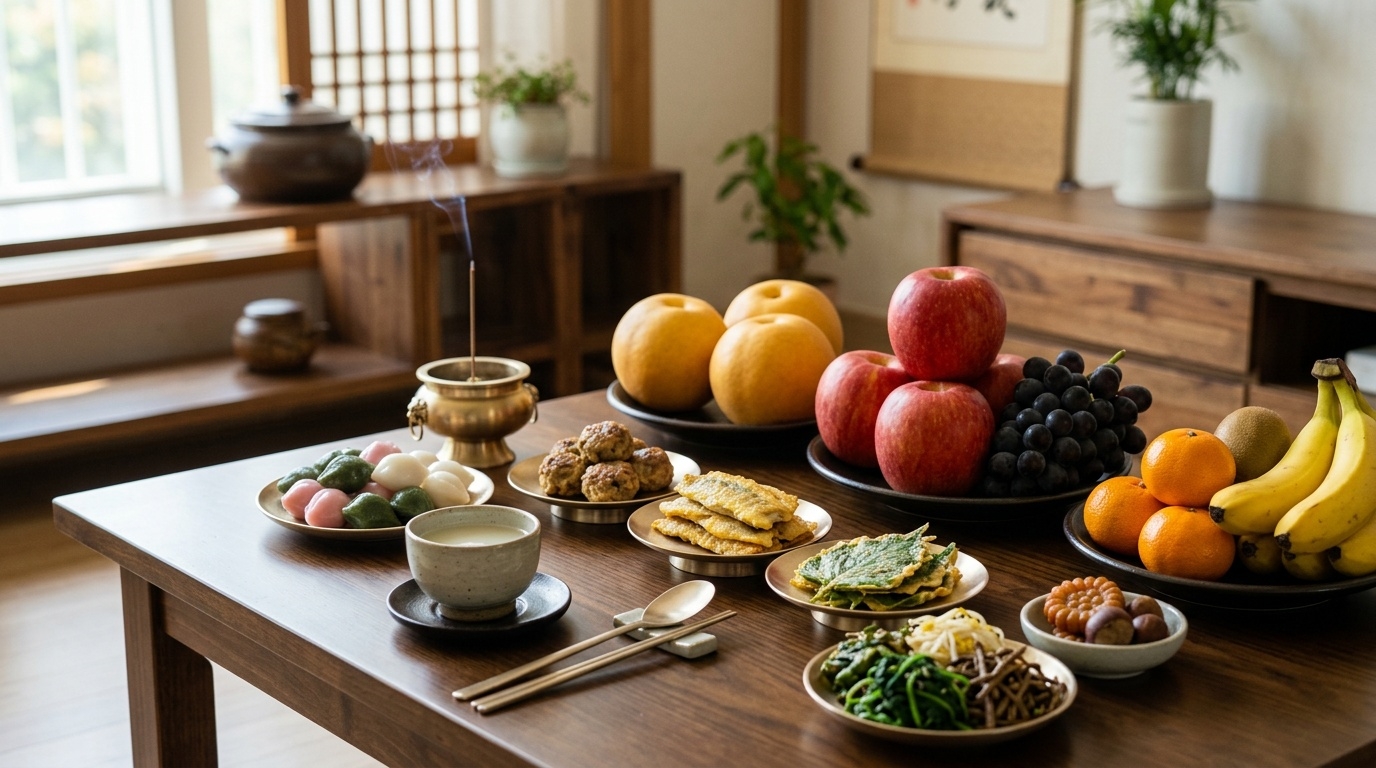
The trend toward simplification is also evident in how families choose their fruit. While the custom of centering the table around domestic fruits like apples and pears remains, 38.8% of respondents said they would include imported fruits on their charye table. With nearly four in ten households embracing this change, the variety of fruits used for the ritual is no longer restricted to traditional domestic produce.
This figure highlights a shift from following a strict, fixed list of items to making practical choices based on actual shopping conditions. Many households now feel comfortable introducing other fruits alongside the staple apples and pears. It is fascinating to see the broadening of fruit choices happening right alongside the overall simplification of the ritual spread.
Fruit shopping is expected to peak just before Chuseok. Over half of the respondents (55.7%) plan to buy their fruit two to four days before the holiday. Even as the size and composition of the charye table evolve, the consumer habit of grocery shopping close to the holiday to ensure freshness remains deeply ingrained.
A recalibration of rituals rather than a disappearance of tradition
For this year’s peak Chuseok season, apple shipments are projected to increase by 19.3% and pear shipments by 6.5% compared to last year. Although the expected jump for apples is larger, both items are projected to see a boost in supply. However, since these are estimates based on production and shipping conditions rather than finalized post-holiday figures, they may not perfectly match the actual distribution volume.
If supply increases as expected, the financial burden on families buying holiday fruit will likely ease up compared to last year. Yet, an increase in fruit supply does not automatically translate to an increase in charye demand. The far more prominent shift in the survey is the sharp drop in households observing the ritual over just one year. The changes on the supply side and the declining demand for ritual offerings are two distinct trends.
A majority of households are now skipping charye, and about half of those holding on to the ritual are choosing to simplify it. Add in the willingness to use imported fruits, and it becomes clear that changes are happening not just in whether the ritual takes place, but across the entire scale and composition of the food. For international readers, the familiar image of every Korean family gathering around a massive ancestral table every holiday is quickly drifting away from reality.
Source: Korea Rural Economic Institute, “Purchasing Behavior and Supply Outlook for Major Fruits during the 2026 Chuseok Peak Season,” September 16, 2026.