
Table of Contents
Two shows return in November with family as the audience
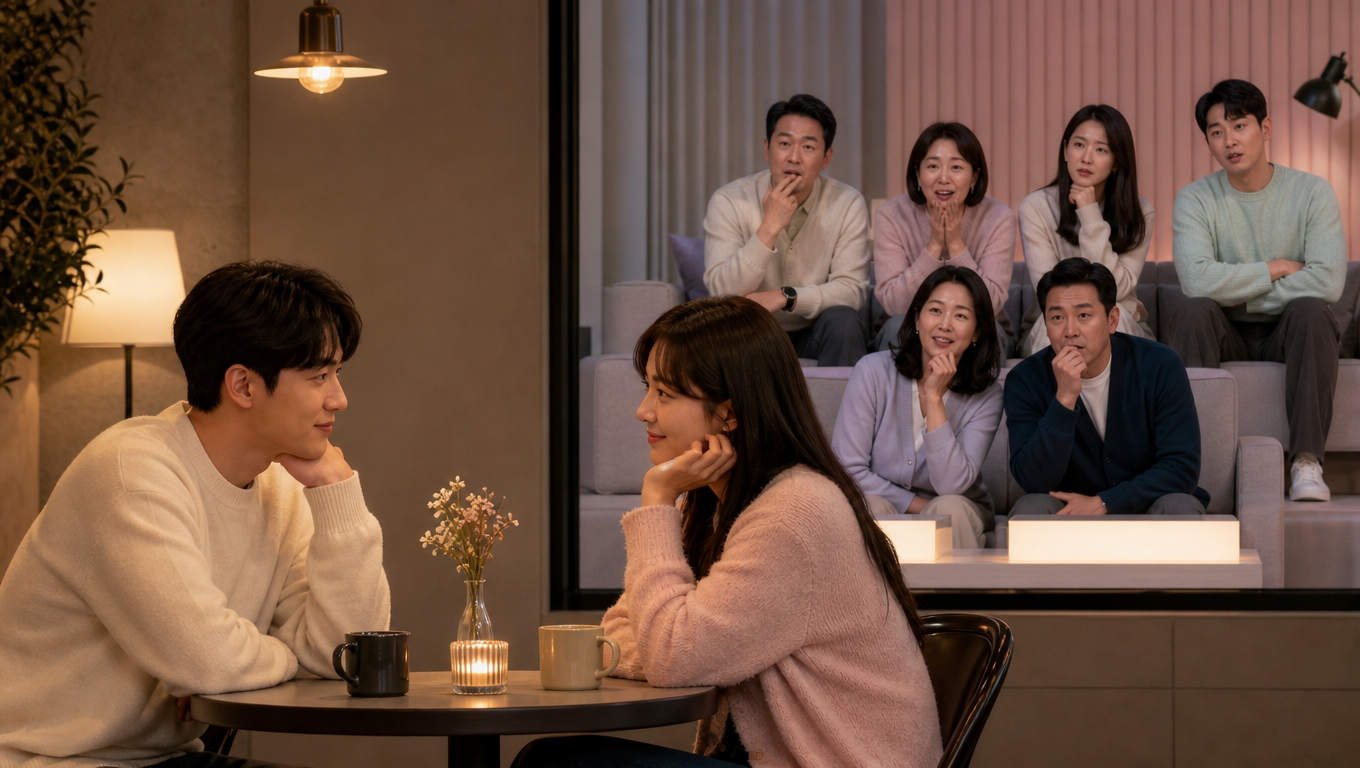
My Kid’s Romance 3 premieres on Wednesday, November 11, at 8 p.m. on tvN STORY and E Channel (T-cast), and it will also stream on TVING. Co-produced by the two channels, the show seats parents in a studio to watch their adult children date. Also in November, Wavve will release its original series Siblings’ Romance 2, in which brothers and sisters watch each other look for love. Both shows build the family’s point of view into the story of the people dating.
The family is more than a line in the cast introductions. In My Kid’s Romance, the parents’ reactions to their children’s choices are part of what viewers tune in for. In Siblings’ Romance, siblings watching each other is the basic setup of the show. The story of a new romance runs alongside the story of how close family members take it in. Viewers see who likes whom, and they also see the gap between the person a family knows at home and the person who shows up on a date.
The format fits a familiar idea in Korea: that marriage joins two families as well as two people. According to Wavve, the first season of Siblings’ Romance was its top driver of new weekend paid subscriptions for its whole run, which is a measure of success on that one platform. The new season’s trailers and cast interviews show how the family’s gaze adds another layer to a dating story.
Season 1’s couple leads to their younger siblings meeting
Promotion for the new season of My Kid’s Romance started with family ties from the earlier season. The second teaser, released on October 23, showed the first meeting between Lee Jun-su, son of actor Lee Jong-hyuk, and Jeon Ji-woo, daughter of basketball coach Jeon Hee-chul. They are the younger siblings of Lee Tak-su and Jeon Su-wan, who ended Season 1 as a couple. Viewers watching the new pair are reminded of the old one, and the family link carries the story from one season to the next.
Watching the scene, MC Kim Sung-joo joked, “Are we looking at double in-laws here?” Korean has an everyday word, sadon, for the relationship between two families whose children have married, and a “double sadon” is when the same two families are joined by a second marriage. That a first meeting prompts this joke says something about a common assumption: if dating leads to marriage, you are also entering a relationship with the other person’s family. A kinship term turned into light commentary on a brand-new romance.
The moment matters because the family becomes part of how the relationship is read, not just a cheering section. A story about two people who like each other picks up a second layer, the idea of two households becoming connected. The show uses a joke to bring in the view of marriage as a union of families. The teaser itself only goes as far as a first meeting, but the language used to talk about it is already thinking about families.
Nov. 2: a parent’s marriage becomes a child’s model
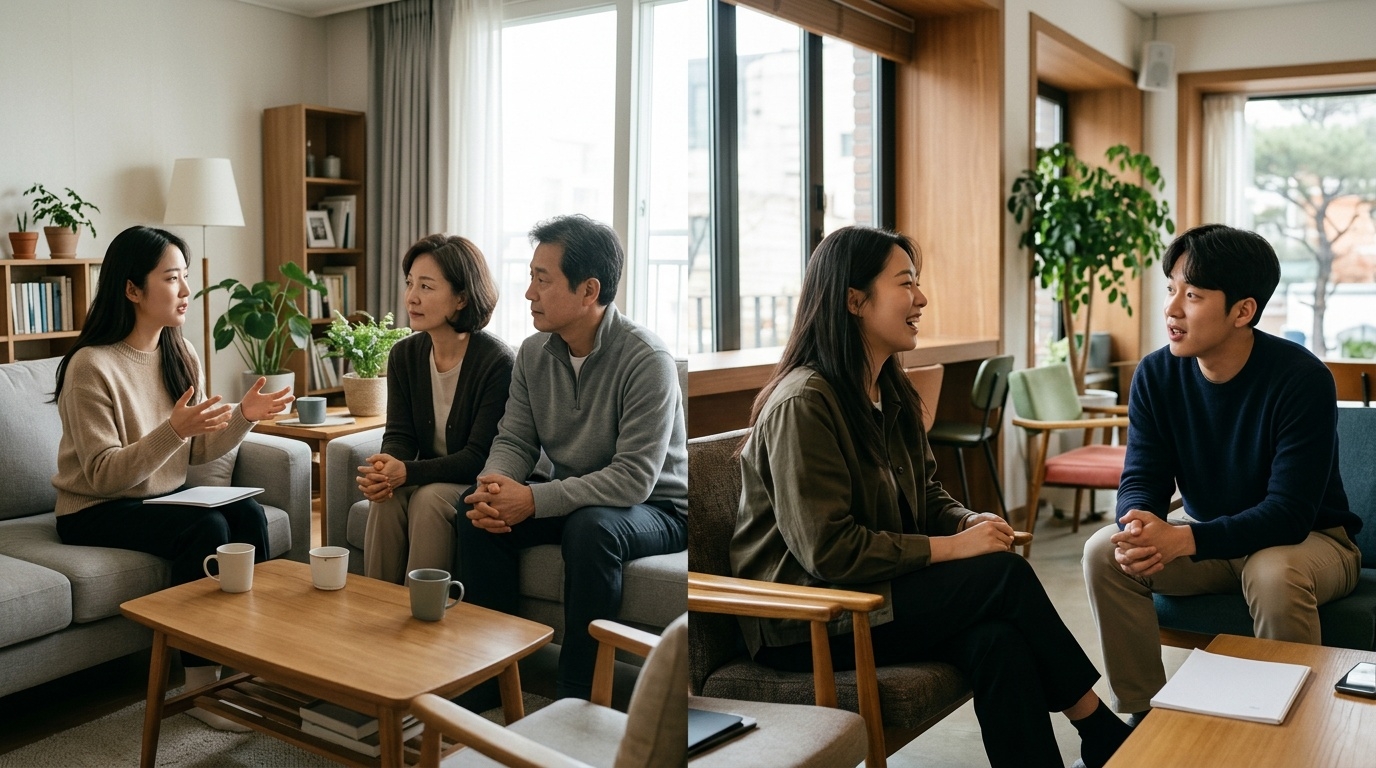
Pre-show interviews released on November 2 showed the tension in the family-watching format more directly. Former soccer player Lee Dong-gook, ahead of his daughter Lee Jae-a’s appearance, said, “I don’t have the confidence to watch my daughter date.” Lee Jae-a is returning to a variety show for the first time in about three years, after her time as a tennis player. In her interview she said she was not going on the show just for fun and intended to take dating seriously. Father and daughter talked about the same appearance in very different ways.
Lee Jae-a also said she hopes to meet a good person, date for a long time and then marry, the way her parents did. Here the family is both an outside observer of her love life and the example she points to when she describes her own future. A parent’s experience and a child’s hopes sit in the same interview. Marriage came up as her own wish, not as a condition set by her parents. Family enters the story as a model as well as an audience.
The sequence captures a parent’s worry and a child’s own will at the same time. Watching his daughter date feels uncomfortable to Lee Dong-gook, while for Lee Jae-a her parents’ relationship is the standard she wants to meet. In this setting, family involvement in dating does not have to mean judging a partner or controlling a choice. It can mean that the relationship you grew up watching shapes what you hope for, and that you end up explaining your choices to your family. The show lets viewers listen in on those conversations.
Nov. 4 teaser: a confession cut together with parents’ reactions
The highlight reel released on November 4 put a direct confession, “For me, it’s you,” right next to the reactions of the watching parents. It also included Lee Dong-gook saying, “I can’t watch this.” The editing sets the moment a child expresses feelings beside the moment a parent takes it in. One gesture is watched for what it means to the person being courted and for how it looks to the family. That double view is what the family-watching format is built on.
Six adult children appear this season: Lee Jun-su; Choi Sang-moon, son of actor Choi Dae-chul; Jung Min-jae, son of actor Jung Hee-tae; Jeon Ji-woo; Lim Hye-in, daughter of comedian Lim Hyuk-pil; and Lee Jae-a. Each is introduced alongside a parent. People the public knew mainly as someone’s child now appear as the ones making their own romantic choices, and the parents move to the observer’s seat. That reshuffling is at the center of the show.
Siblings’ Romance 2 belongs to the same family-watching genre but changes who does the watching. Instead of a parent and child a generation apart, it uses brothers and sisters. The season is co-directed by PDs Lee Jin-ju and Shin Hye-won, with Han Hye-jin, Code Kunst, Miyeon, Jonathan and Patricia on the panel. Wavve’s November lineup announced Season 2, but the reports did not give a premiere date. Both shows rely on family involvement; one draws on the gap between generations, the other on the closeness of siblings.
Watching dating shows sparks talk about conflict, money and in-laws
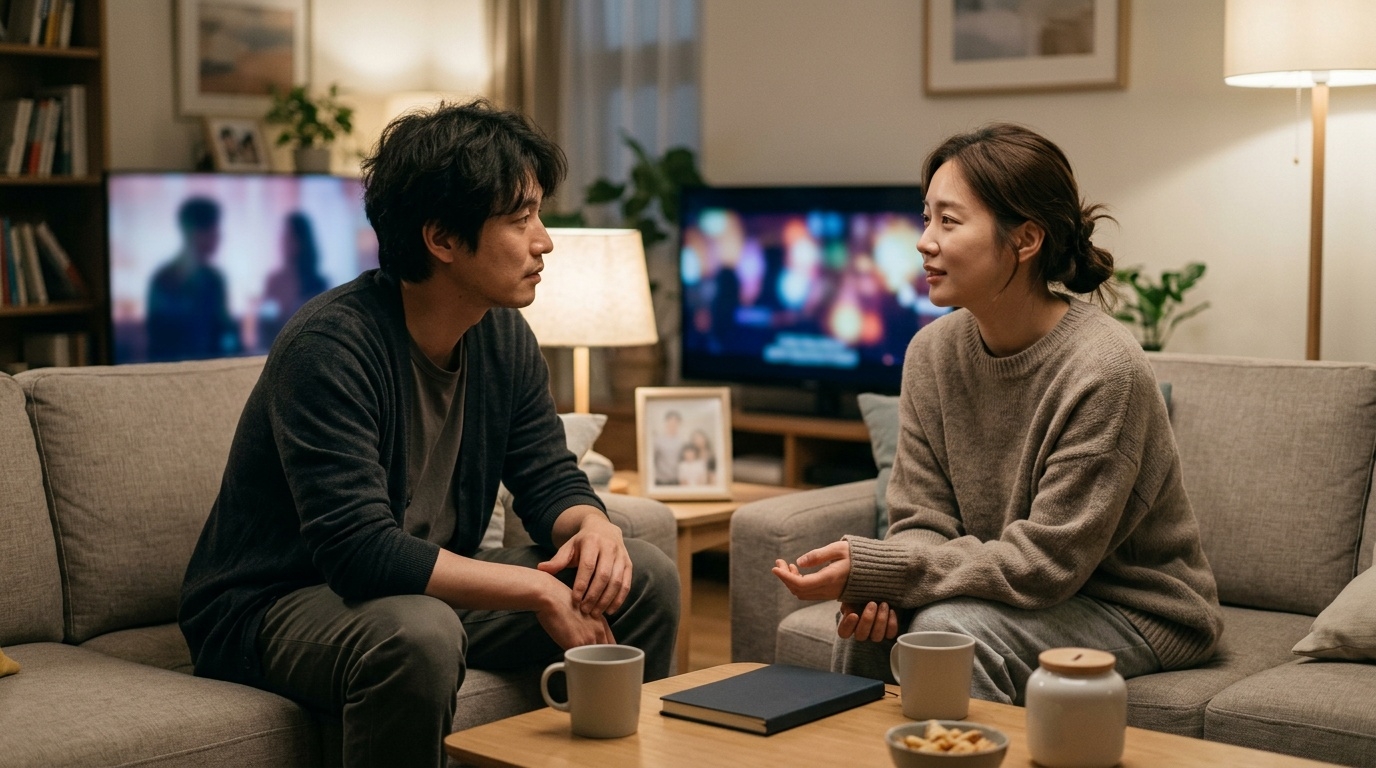
Survey data from the matchmaking company Duo shows on-screen romance feeding into real conversations. Duo, working with the research firm Macromill Embrain, surveyed 1,000 unmarried people aged 25 to 39 who were in relationships, from October 7 to 12. Of them, 79 percent said they had watched dating or marriage reality shows with their partner or talked with their partner about them. Using strangers’ choices on TV as a starting point for sharing your own views was common among the people surveyed.
Asked what these shows led them to talk about most, 41 percent named how to resolve arguments and disagreements, and 22 percent named attitudes toward money and how to manage it. Another 10 percent named family relationships, including the husband’s family (sidaek) and the wife’s family (cheoga). The conversations these shows start go well past flirting and confessions to how a couple would live together, handle money and deal with each other’s families.
Overall, 49 percent of respondents said the shows helped them understand their partner’s values. Among those who had watched them, 46 percent said their thinking about dating and marriage had changed, and 57 percent said the shows made them think more carefully about getting married. The survey covered dating and marriage shows in general, not the family-watching format specifically. Still, the finding that these shows prompt couples to talk about their standards lines up with why the broadcasts write family reactions into the story.
A relationship the family welcomes together
In Korea, when dating moves toward marriage, it is often seen as a relationship the whole family takes on. The word sadon for the bond between two households, a daughter naming her parents’ marriage as her model, and couples talking about how they will get along with each other’s families all make that idea concrete. The family-watching format turns it into television. By putting family reactions next to a participant’s choices, the shows show how one person’s private relationship reaches out to the people closest to them.
That is why putting parents or siblings on screen is more than a way to get reaction shots. While watching a confession, viewers can picture how they would feel as the person being asked out and how they would react as the parent or sibling. The survey’s list of topics, from handling conflict to money to family relationships, reflects that same shifting point of view. The shows do not assume a family has to agree. Their material is how people with different expectations take in the same relationship.
The thing to watch in the new seasons is not just how big the family reactions get, but how the participants explain and follow through on their own choices in the middle of them. Lee Jae-a said she would date seriously while looking to her parents as an example, which suggests family influence and personal will can sit side by side. The two shows leave a question open: can they make a convincing story of a family facing one person’s choice together, without the family making that choice for them?
Sources: Newsen, Oct. 23, 2026; iMBC Entertainment, Nov. 2 and 4, 2026; YTN Star, Nov. 2, 2026; The Korea Daily (U.S. edition), Oct. 15, 2026, on the Duo survey of dating and marriage reality shows.


