
Table of Contents
The Opening Scene of Autumn Dates: Walking Together Through Fallen Leaves
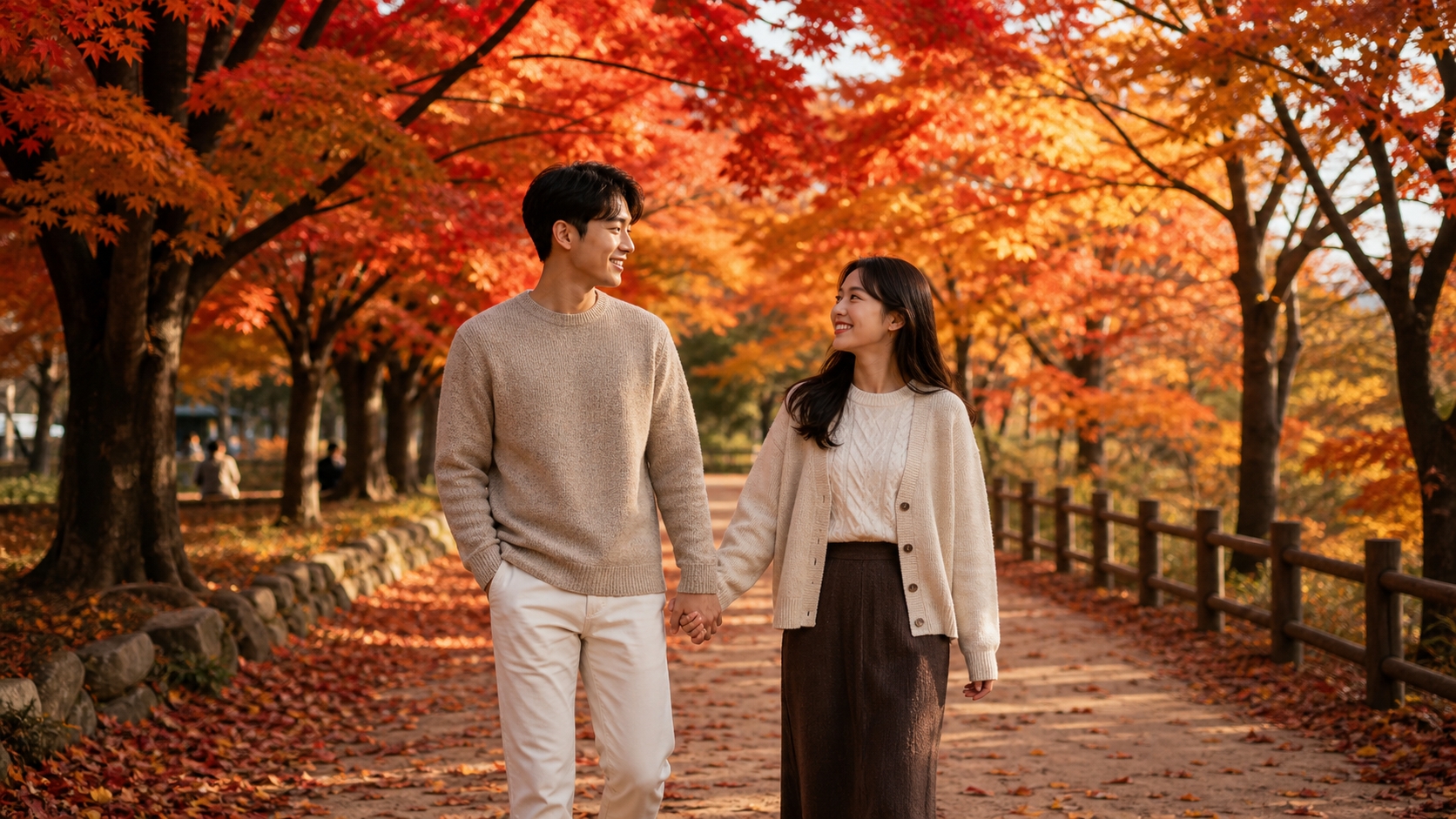
Walking side by side with a partner down a tree-lined path in full autumn color is the activity most Korean singles say they want to try this season. In a survey by matchmaking company Duo, “visiting a maple-viewing spot” topped the wish list at 29 percent. Rather than following a fixed show schedule or an elaborate itinerary, the date respondents wanted most was simply moving at their own pace while taking in the scenery together. In this survey, autumn romance begins with time spent outdoors, side by side.
Watching the leaves change shows how dating spots and activities shift with the season. Walk the same path and the colors of the leaves alter what there is to look at and what there is to talk about. The act of pausing in front of a view that catches the eye, or simply looking around while walking, becomes the itinerary itself. A maple walk is both a way to admire nature and a date that fills shared time without needing any separate event.
This preference lines up with other answers in the survey. The biggest appeal of autumn was “cool, pleasant weather,” and the behavior respondents found most heart-fluttering was a partner “naturally holding hands or linking arms.” Outdoor settings and everyday intimacy stood out in each of these questions. Trace the autumn dating preferences through the survey and a clearer picture emerges: what singles want isn’t one particular famous spot, but a chance to share an activity and a connection amid comfortable weather.
93 Percent Welcomed the Season, and Weather Was the Biggest Reason
According to an October 6 report by AP Shinmun, 93 percent of respondents in Duo’s survey said autumn is a good season for dating. Fifty-two percent answered “strongly agree” and 41 percent “somewhat agree.” The survey, conducted through Macromill Embrain from September 23 to 27, 2026, polled 1,000 single men and women nationwide aged 25 to 39 who had dating experience. The results capture what this group finds appealing about autumn and what kind of dates they hope for.
When asked about autumn’s biggest appeal, “cool, pleasant weather” came out on top at 80 percent. In dating, weather is more than a backdrop: it shapes how time together is spent. Plans that involve walking outside or sitting and resting are directly affected by the surrounding environment. The strong preference for comfortable weather reflects not just a wish to be outdoors, but an expectation of being able to stay together without rushing.
It also helps to understand this result alongside the fact that several outdoor plans, from maple walks to camping and picnics, filled the top of the activity rankings. Autumn’s appeal lies in the overlap between the pleasure of viewing scenery and the comfort of spending time within it. Moving the date outdoors instead of choosing something to do indoors lets walking, resting, and moving around combine freely. In this survey, weather was the foundation beneath that choice.
Camping and Glamping at 21 Percent, Picnics at 13 Percent: Dates That Linger in Nature
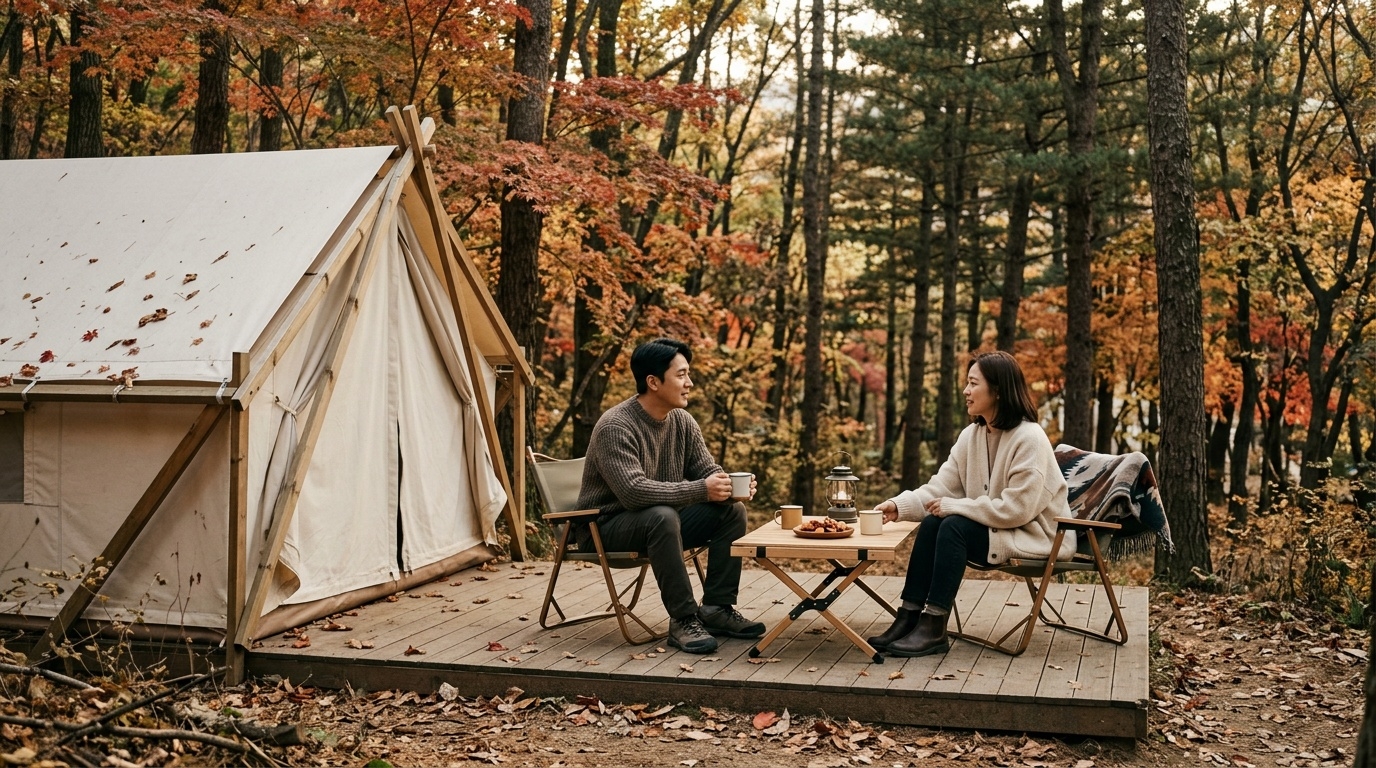
After maple walks, the second most wanted autumn date was camping or glamping, chosen by 21 percent of respondents. Glamping refers to a style of camping equipped with lodging and amenities. Grouped together with camping, this option lets people spend time in nature while choosing freely how to stay there. Unlike a stroll that moves along with the scenery, settling into one spot and taking in the surroundings drew the next-highest level of interest.
What defines a camping-style date is the ability to carry several activities forward in a single space. Looking out at the scenery, sharing a meal and a rest, and talking together become the center of the itinerary. The weight falls less on watching something or reaching a destination than on the process of simply staying together. The high ranking for camping and glamping shows that, in autumn dating, the preference isn’t just for a brief glimpse of nature but for time actually spent within it.
Outdoor picnics tied for third at 13 percent. It’s an activity that requires less time outdoors than camping and connects easily with a walking itinerary. On a picnic, time spent sharing a meal or snacks meets the outdoor scenery. If a maple walk centers on movement and camping expands the experience of staying put, a picnic focuses on rest. All three of the top activities point toward nature, but each offers its own way for two people to spend their time.
Festivals, Performances, and Drives: Different Ways of Sharing an Experience
Watching a festival or performance also recorded 13 percent, tying with outdoor picnics. Unlike a walk or a picnic, where the couple fills the itinerary themselves, festivals and performances come with a program already laid out to watch together. Taking in the atmosphere of the venue, watching the same stage, and sharing impressions afterward becomes the substance of the date. For someone who prefers quiet time together and someone who wants to enjoy new sights side by side, the way they’d choose to spend autumn differs accordingly.
Drives followed at 9 percent. A date built around driving includes not just the destination but the time spent moving there. Couples can talk while taking in the passing scenery, then continue on foot or rest once they arrive. A maple walk and a drive use different means of movement but share a common point: experiencing the season’s scenery. Watching a performance, by contrast, centers the itinerary on a shared program rather than on scenery itself.
Looking down the rankings in order makes clear that autumn dating can’t be reduced to a single scene. Walking, staying, resting, watching, and moving were each chosen in different proportions. What matters in understanding Korea’s autumn dating preferences isn’t a custom of visiting one particular place, but the way people choose an activity to experience the season together. Among the many options in this survey, maple walks and camping or glamping took the lead.
A Shift in the Mood for Romance, Felt by 62 Percent
Autumn turned out to be not just a season for changing up date spots, but one in which interest in romance itself grows. Sixty-two percent of respondents said their desire to date increases more than usual once autumn arrives. Beyond rating autumn as a good season for dates, more than half also felt a shift in their own mood. Both the anticipation of comfortable outdoor activities and the wish to have someone to share them with appeared together in this survey.
By gender, 65 percent of men and 58 percent of women said their desire for romance grows in autumn. The share was higher among men, but majorities in both groups answered in the same direction. A notable commonality in the survey is that a substantial share of both men and women felt their interest in romance rise with the season. The seasonal shift expressed itself not only in the dating environment but in expectations around relationships themselves.
According to AP Shinmun, a Duo representative explained that cool weather and autumn’s particular mood appear to heighten anticipation for dates and interest in romance alike. That reading connects naturally with the flow of the survey, given that autumn is a season that makes it easy to picture shared activities like a walk or a picnic. These results don’t tally actual new relationships forming. They capture what respondents hope for. That hope takes on more concrete shape in the questions that follow, covering gestures, scenery, and gifts.
Hand-Holding at 52 Percent, Sweaters and Cardigans at 25 Percent: Moments of Closeness and Gifts
The gesture respondents found most heart-fluttering during a date was “naturally holding hands or linking arms,” chosen by 52 percent, a clear majority. What drew the top pick wasn’t a grand event but an intimate touch shared while moving together. If location and program form the outer frame of a date, hand-holding and linking arms are how two people connect within it. Set alongside the preference for walking, the weight that everyday closeness carries in autumn dating becomes clear.
The word “naturally” is also key to understanding this choice. It evokes a moment of growing closer within the flow of simply being together, rather than a scene staged in advance. Matching a partner’s pace or moving side by side carries both conversation and the intimacy expressed through small gestures. In this survey, excitement wasn’t found only in the pleasure of discovering a new place. A partner’s familiar, small gesture received just as much recognition for making a date feel special.
The top autumn gift respondents hoped to receive was a “sweater or cardigan,” at 25 percent. Both items are clothes suited to the season and useful in everyday life. It’s a choice where the memory of a date meets practical use. If weather topped the list of autumn’s appeal, clothing that evokes the season also led the gift rankings. The mood of autumn carries through not only in the time shared but in the objects left behind afterward.
Watching a Sunset, Then Returning to the Maple Path
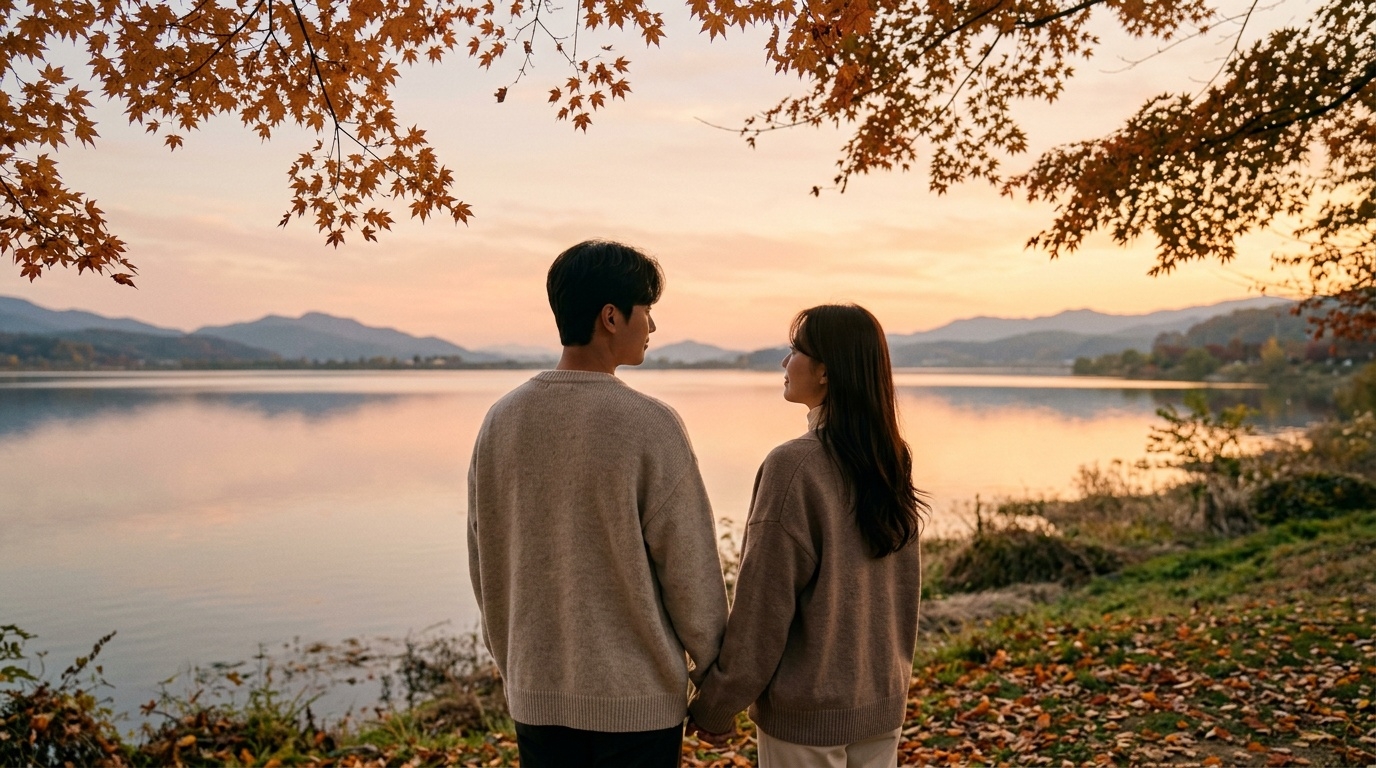
Among scenery respondents wanted to watch with a partner, “a sunset sky” was the top choice at 30 percent. A sunset doesn’t call for moving to a new spot or finding a new program. It evokes time spent simply looking at the same view side by side. If maple leaves show the change of season, a sunset shows the change within a single day. With time set aside to watch the sky together between walking and resting, this survey’s picture of autumn dating preferences takes on yet another texture.
Taken together, maple walks, camping and glamping, hand-holding, sunsets, and sweaters and cardigans reveal the ingredients respondents hope for in a date: an environment suited to outdoor activity, time spent staying together, a gesture of closeness, and a gift that fits the season. Each question asks about a different preference, but the larger pattern emphasizes autumn’s setting together with connection between two people. It’s a picture in which several small experiences make up an encounter, rather than one elaborate plan.
Returning to the maple path where this story began, the 29 percent who said they want to walk it need not be read as a choice aimed only at the beauty of the leaves themselves. It’s also a way of spending time together: talking while walking, looking around, and resting for a moment. This survey shows both why anticipation for autumn dates runs high and what shape that anticipation takes. What remains to be seen is how that hope plays out in each person’s own plans and experiences going forward.
Source: AP Shinmun, October 6, 2026. https://www.apnews.kr/news/articleView.html?idxno=3051607