
Table of Contents
The last step of the Halloween party
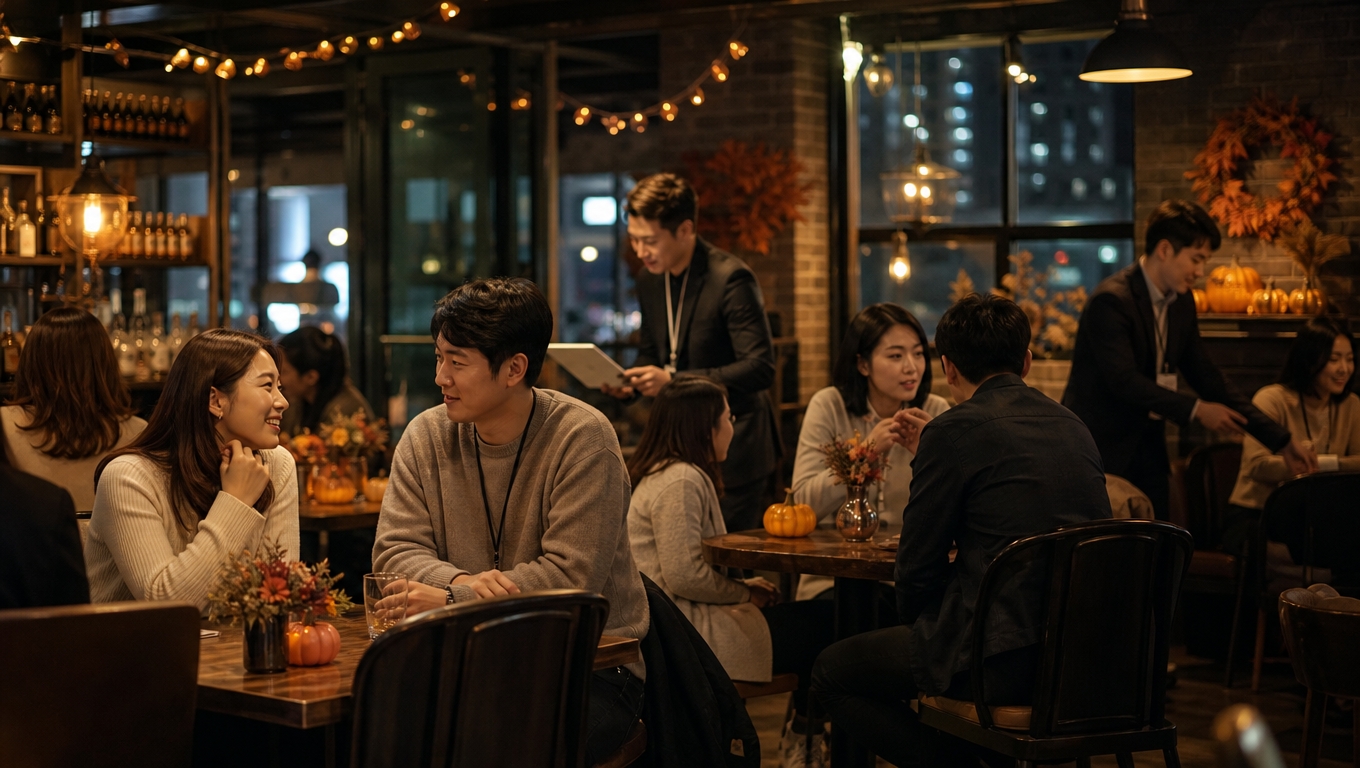
Before the Halloween party ended, each participant wrote down the names of people they wanted to see again, up to three of them. If someone on that list had also written their name, both would get the other’s phone number by text message afterward. That was how the 27th and 28th rounds of “Solomon’s Choice Season 2” closed on October 24 and 25 at Tap Public Pangyo in Seongnam, in Gyeonggi Province. Whether a conversation at the party turned into a second meeting depended on that mutual pick. The organizer that set up the dates, checked who had chosen whom and passed along the numbers was not a private matchmaking agency. It was the city of Seongnam.
The city, led by Mayor Shin Sang-jin, announced on October 28 that the two events produced 54 matched couples. Each round had 50 men and 50 women, so 200 people took part over the two days. Strangers were not simply seated across from each other for one-on-one talks. The evening moved in stages, mixing group time with individual conversations, all under a Halloween theme, and at the end everyone handed in their choices privately. The city’s job ran from booking the room to connecting the phone numbers.
A private search for a partner, run as public policy
In Korea, a sogaeting is a blind date set up through someone you know. What stands out in Seongnam’s version is that the local government does the introducing. The city started Solomon’s Choice in July 2023 to give unmarried young adults a chance to meet and to encourage marriage. The relationships are personal, but the program comes with a public goal attached: responding to Korea’s low birth rate. The bet is that more chances to meet people will, at least sometimes, lead to marriage and children.
That is why the organizer and its purpose matter more here than the party format. Rotating one-on-one chats are just a way for strangers to get to know each other. What makes this a public program is that the city runs the event and then counts the results as policy outcomes. Its announcement listed the matches made that weekend, and it also listed later marriages and births. The city is following what happens to these couples after the party is over.
Group games first, then one-on-one
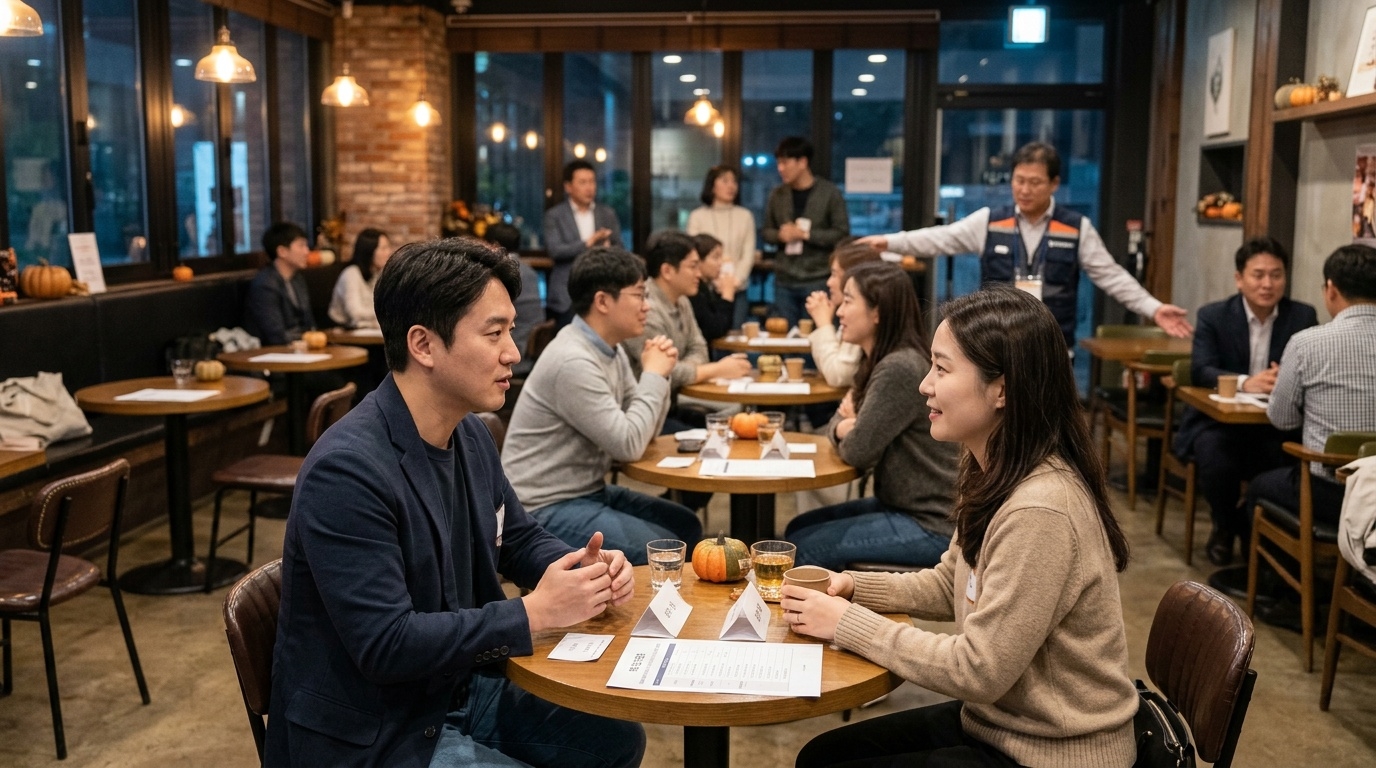
Getting in was competitive. Applicants for the 27th and 28th rounds faced odds of about seven to one. Once inside, participants started with icebreakers, then moved into small groups, then rotated through one-on-one conversations and couple games. Mixing the formats meant people saw each other in more than one setting. In a small group, they talked as part of a crowd. In the one-on-one rounds, they could ask each other direct questions. The format kept changing so that people had more to go on before they made their final picks.
The final step was the “sseom matching” sheet. In Korean slang, sseom describes the stage when two people are clearly interested in each other but are not yet dating. Each participant listed up to three people, and the city sent contact details only when the interest went both ways. One-sided interest got no one’s number. When the city reports a “match,” this is what it means: two people chose each other and now have a way to reach out and meet again.
What the 54 percent figure says about the weekend
The 27th round on October 24 produced 29 couples, a 58 percent match rate. The 28th round the next day produced 25 couples, or 50 percent. Together they averaged 54 percent, which the city reported as 54 couples, or 108 people. The venue and the theme were the same both nights, but the results differed with the people in the room. The figure measures how many participants agreed, by mutual choice, to stay in touch.
Across the whole program, the city has held 28 events between July 2023 and the 28th round. By its count, 1,360 pairs have taken part, with each pair being one man and one woman, and 683 of those pairs matched. That puts the cumulative match rate at 50.2 percent. A “pair” here is a counting unit for attendees. It does not mean people came in as couples. The cumulative figure records how many attendees found mutual interest at the events, not how many existing couples signed up.

683 matches, 29 weddings
So far, 29 couples have told the city they got married, and those couples account for eight births or pregnancies. A lot has to happen between a mutual pick at a party and starting a family. Two people swap numbers, maybe meet again, maybe keep dating, and only later decide whether to marry. A match is confirmed within one evening. Marriage and children come much later, in people’s own lives, well after the event.
The distance between 683 matches and 29 weddings is the obvious place to start when judging the program. But the wedding count only includes couples who chose to tell the city, so dividing it by total matches does not give a real marriage rate. Couples who met at the first events have also had much longer to get there than those who met at the most recent ones. What the data does show is that many people found mutual interest at these events, and that the city knows of a number of marriages and births that followed.
What caught the foreign press’s eye was City Hall
According to Seongnam, the program has been covered by The New York Times, Bloomberg TV, the BBC, The Guardian, Reuters, France 2 and the Swiss daily Neue Zürcher Zeitung. The city says these outlets presented it as an example of a local response to the low birth rate. For readers outside Korea, the unusual part is a city government standing at the very start of a romance. Seongnam does not stop at saying it wants more marriages. It keeps holding events where people actually show up, talk and find out if the interest is mutual, and that gave foreign reporters a concrete story to tell.
Media attention aside, the program is best judged by how the events run and what happens to the relationships afterward. The competition ratio shows demand. The match rate shows choices made on the night. The marriage count shows relationships that went further later on. One press release bundles numbers from very different points in time. For a public program, the hard part is explaining how the short-term result of introducing people connects to the long-term goal of marriage and births. Seongnam’s figures cover the first step and some of what came after.
The question after the next round
Seongnam plans to hold the 29th round at Tap Public Pangyo on November 7, the last of eight events scheduled this year. French broadcaster M6 is expected to attend that day to report on the city’s matchmaking policy and film the event. Once again, the city will bring people together, they will talk, and they will hand in their choices. Beyond the next match count, the thing to watch is what kind of relationships these couples build after they leave. That is where a city-run introduction shows whether it works.
The names written down at the end of the Halloween party were not marriage proposals. They meant “I’d like to get to know you.” Seongnam passed on phone numbers only when two of those wishes matched, and at that point the city’s program hands off to two individuals. Between 683 cumulative matches and the 29 weddings reported to the city lies a stretch of time that public figures cannot fully account for. The next question is how many couples the city can match, and also how well it can keep track of what happens to them afterward and explain it.
Source: Seongnam City press release (Vision Seongnam), Newsis, October 28, 2026