
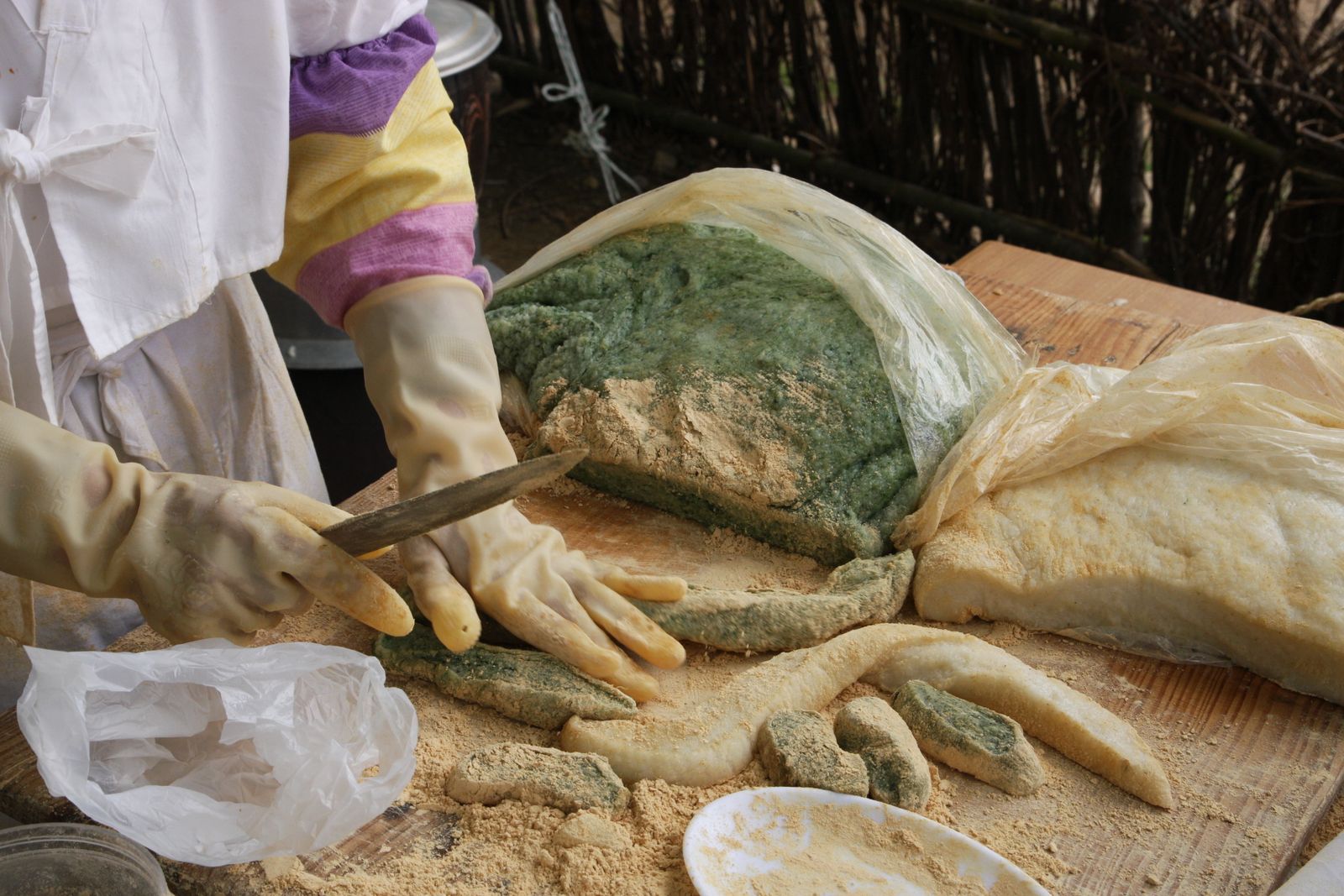
I’d seen the same shot on Instagram a dozen times before I actually went looking for it: a small bakery window in Seongsu, a hand-lettered sign, and a line of people standing in the cold before opening time for a little golden disc of rice cake. Butter tteok, everyone was calling it — crispy on the outside, chewy in the middle, dusted with the kind of savory-sweet butter flavor that made it feel like a “must try before it disappears” moment. So I went. And by the time I got there, the line was gone. Not because it was too late in the day — because the trend itself had already moved on to something else.
That’s not a one-off. According to Seoul Economic Daily, citing industry sources and Naver Data Lab search data, South Korea’s food trends are now rotating roughly every two weeks. Dujonku — a chewy cookie dessert — peaked in search interest on January 10 before fading. Bomdong bibimbap took over and hit its highest point on March 2. Butter rice cake followed on March 13. Then came Chang-eok tteok on March 19. Each trend claimed the top search spot for about fifteen days before the next one pushed it out, in what the paper describes as a relay rather than a series of unrelated fads.
When I actually tracked down butter tteok at its peak, it lined up with what the Korea Times reported back in March: small cafes in Seongsu-dong and Hongdae selling individual rice cakes for 2,000 to 3,000 won (about $1.30 to $2), often selling out by early afternoon, with bakeries like Jaja Bakes credited as early movers on the look that ended up everywhere on TikTok. It really was that good — crisp shell, chewy center, butter doing exactly what butter does. It just wasn’t going to last, and nobody pretended otherwise.
The churn isn’t free for the people selling the food, either. Seoul Economic Daily reported that when dujonku was at its peak, the price of kadayif — a key ingredient in the dessert — jumped about 68.3%, from 18,900 won to 31,800 won, according to Korea Price Information Corp. Finished product prices more than doubled. Then the trend faded, demand dropped, and shops started posting “price cut” promotions just to move stock they’d overcommitted to. Sookmyung Women’s University consumer economics professor Lee Hong-ju told the paper that on social media, “food trends are driven by exposure, not taste” — once people have posted about trying something, they’ve effectively already consumed it and have no reason to keep chasing it.
So here’s what I’d actually tell you if you’re planning a trip around Seoul’s food scene: stop trying to time the viral thing. By the date you read this, butter tteok has probably already been replaced by whatever’s peaking on Naver search this week — when I last checked, it was pumpkin injeolmi from a heritage rice cake shop in Gwangju, driven by mentions from singers and YouTubers rather than anything happening in Seoul itself. Chasing the current peak means you’re chasing a moving target that resets every two weeks. What doesn’t reset are the steady, unglamorous neighborhood spots — the bakery that’s been making the same tteok for twenty years, the BBQ place with no Instagram presence — that the trend cycle keeps washing past. Go find the line if you want the experience. But don’t be surprised, like I was, if it’s already gone by the time you get there.
Sources: Seoul Economic Daily, “Korea’s Food Fads Now Fade in Two Weeks as SNS Drives Rapid Trend Cycles” (Kim Do-yeon, Mar. 27, 2026); The Korea Times, “The next Dubai chewy cookie? Butter rice cakes go viral” (Kim Sur-hyun, Mar. 10, 2026).