
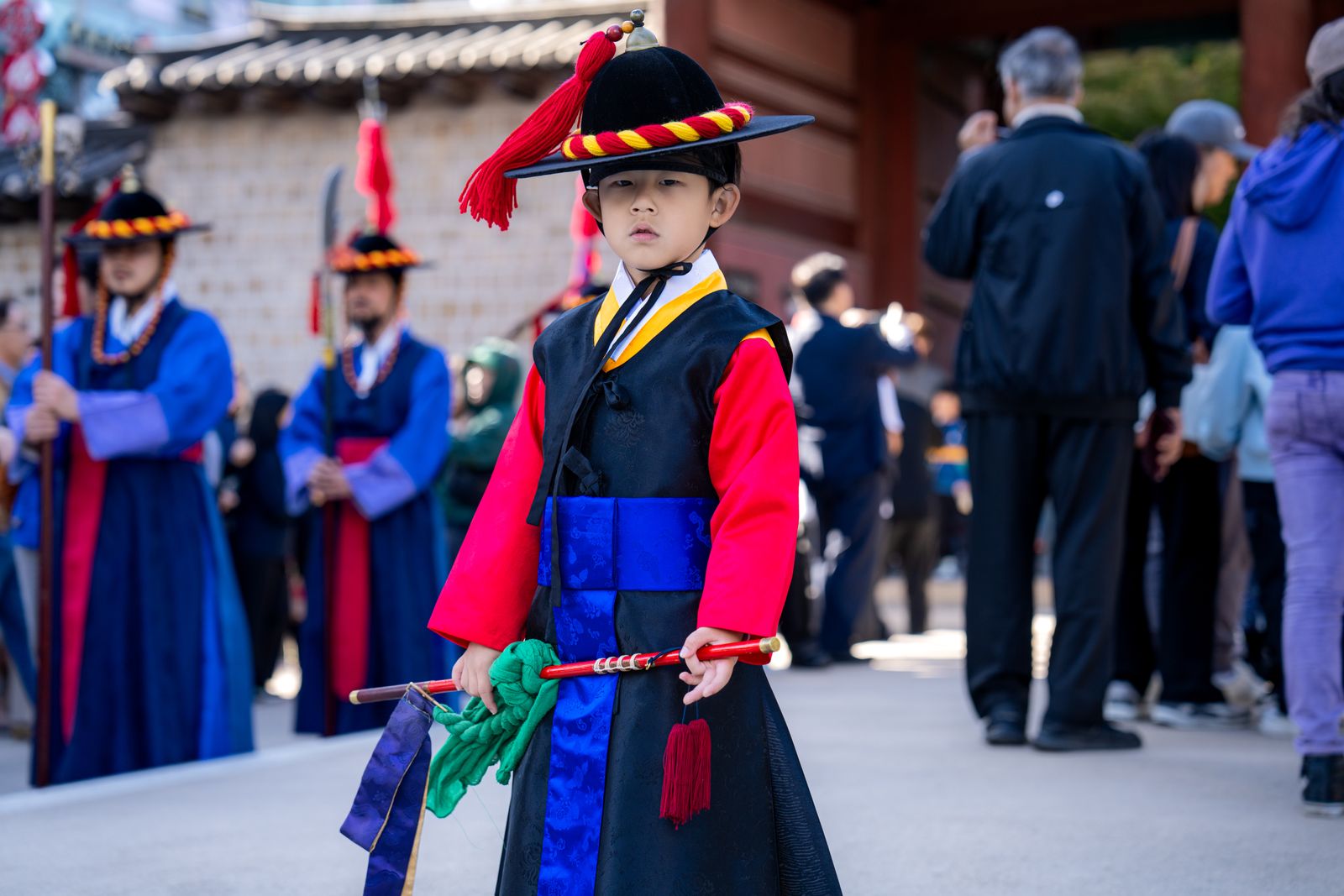
Down by Namdaecheon Stream in Gangneung last week, the dress code wasn’t really enforced so much as rewarded: show up in hanbok and you got 10% off at the festival’s food court, plus a souvenir badge for the “Danoje experience village.” It sounds like a minor perk, but it’s a deliberate nudge — organizers want as many visitors as possible actually dressed for the part at a festival that’s been running, in one form or another, for roughly a thousand years.
That festival is Gangneung Danoje, and it ran through June 22 this year, timed to Dano — one of Korea’s three major traditional holidays alongside Seollal (Lunar New Year) and Chuseok, falling on the fifth day of the fifth lunar month, June 19 in 2026. Dano marks the point in the calendar where yang, the positive force in Korean traditional cosmology, is considered at its strongest — practically speaking, it’s the holiday associated with bracing for and overcoming the coming summer heat. The festival itself is recognized as both a UNESCO Intangible Cultural Heritage of Humanity and a Korean National Intangible Cultural Heritage, and this year’s theme, “Unfolding the Spirit of Dano,” centered on shamanic rituals meant to help participants relieve sorrow and wash away misfortune using water mixed with iris leaves — a specific, centuries-old practice, not just a poetic description.
According to Korea.net, the festival packed roughly 70 events into its run: ancestral and shamanistic rituals, traditional performing arts, folk games, and hands-on experiential programs, including shamanistic rituals drawn specifically from Korea’s eastern and southern coasts and from Jindo-gun County in Jeollanam-do — different regional traditions placed side by side rather than flattened into one generic “Korean ritual” performance. Performing arts troupes from the Philippines, Thailand, Japan, China, and Mongolia joined as well, which says something about how Gangneung is positioning Danoje: not as a sealed-off heritage reenactment, but as a festival actively recruiting an international audience, complete with a revamped English-language website and expanded foreign-language guided tours this year.
If a thousand-year-old festival sounds like something you observe rather than attend, Danoje is built to push back on that. Bring or rent a hanbok, wash your hands in the iris water if it’s offered, sit through one of the shamanistic rituals from a region you’ve never heard of, and you’ve done more than watch — you’ve done what generations of people in Gangneung have done on this exact date for a very long time. Mark next year’s date now: Dano shifts with the lunar calendar, so it won’t land on June 19 again, but Namdaecheon Stream will be just as ready for you in hanbok regardless of when it falls.
Sources: Korea.net, “Gangneung Danoje Festival celebrates 1,000 years of tradition” (Charles Audouin, Jun. 16, 2026).