
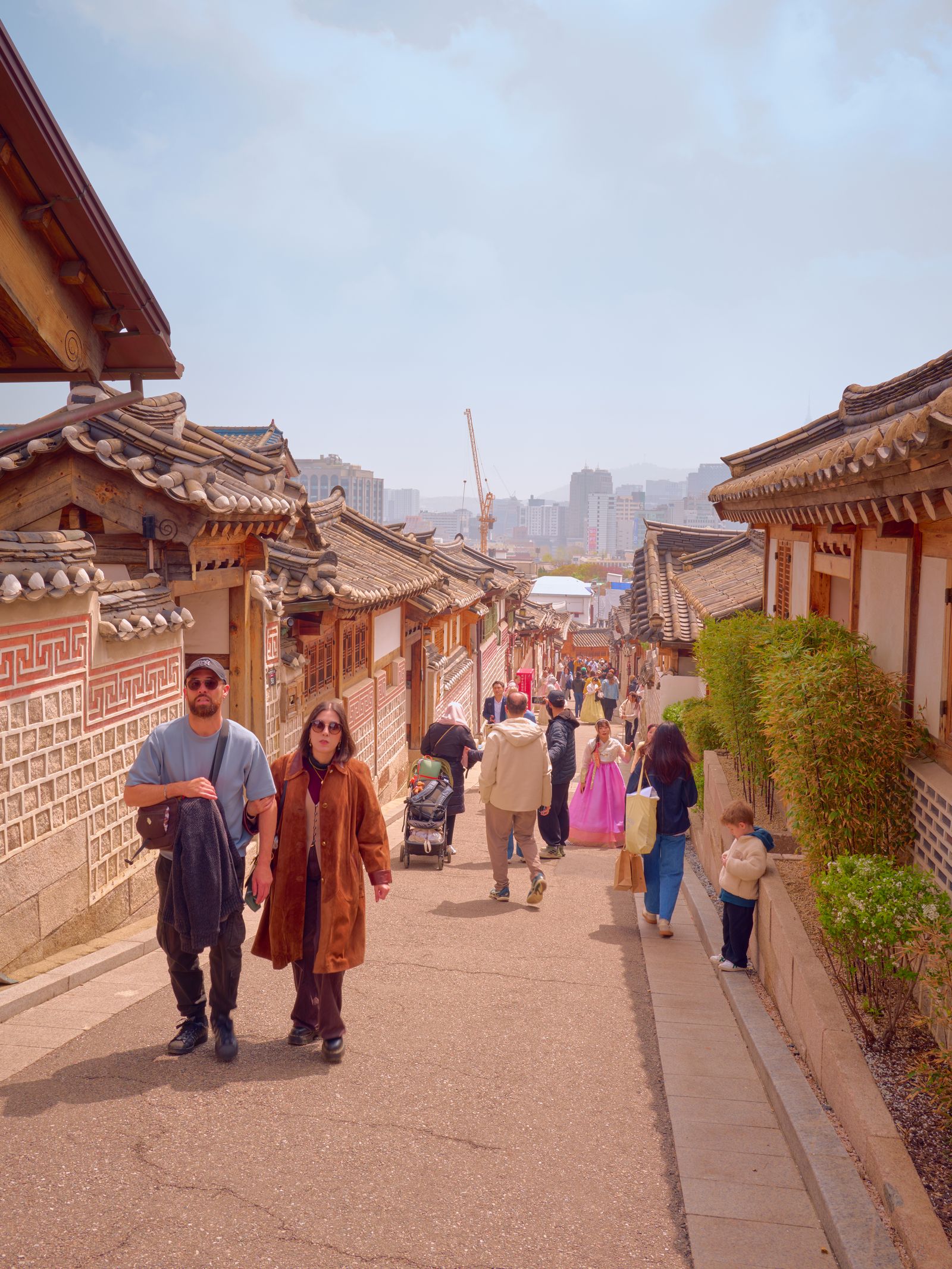
Tourists are no longer content to just watch a K-drama’s back-alley chase scene or its quiet riverside finale — increasingly, they want to stand in it.
According to the tourism industry and reported by Digital Daily on June 27, the Korea Tourism Organization recently signed a memorandum of understanding with production powerhouse Studio Dragon to jointly develop tourism content built around drama filming locations. The two organizations plan to build a “Hallyu Olle-gil” connecting Jeju’s famous Olle walking trails with nearby filming sites, and to co-develop K-drama experience programs and promotional content for both domestic and international visitors.
Screen tourism is already a familiar concept abroad — New Zealand turned “Lord of the Rings” filming locations into a global tourism product, and the United Kingdom has built sustained tourist traffic around “Harry Potter” sites. Korea has its own track record: Japanese tourist visits to Nami Island surged after “Winter Sonata,” while Gangwon Province’s Jumunjin — a filming location for “Goblin” — and Changwon’s zelkova tree from “Extraordinary Attorney Woo” have each driven local tourism booms. According to the Korea Culture and Tourism Institute’s 2024 survey of foreign visitors, 38.3 percent of respondents cited Korean pop culture content as a factor influencing their decision to visit Korea.
The trend has accelerated further following the box office success of the historical film “The Man Who Lives with the King,” which has driven a sharp rise in visitors to the open film set at Mungyeong Saejae. According to Korea Tourism Data Lab, total tourism spending in Mungyeong this year rose 13.8 percent year-on-year, with 27.4 percent of culture-and-tourism-motivated visitors specifically choosing to visit its “theme park” set.
Interest is spreading beyond filming locations into the historical settings depicted on screen. Cheongnyeongpo, in Yeongwol, Gangwon Province — where the exiled boy-king Danjong once lived — drew 128,325 visitors in the first quarter of this year, a 640 percent jump from just 17,336 visitors in the same period last year. Nearby Danjong Jangneung, his royal tomb, saw visitors climb from 9,985 to 85,120 over the same period — a 752 percent increase.
Industry analysts note that screen tourism boosts local economies as visitors spend at nearby restaurants, cafes and lodgings and tend to stay longer than typical day-trippers. But the effect can be fleeting: Songdo, the filming location for “My Love from the Star,” largely faded from the tourist map once its associated pandemic-era travel slump hit, and many regional film-set theme parks around the country sit underused and deteriorating once a show’s popularity cools.
Jung Ran-soo, a tourism professor at Hanyang University, pointed to Nami Island’s survival strategy as a model: rebranding itself as the fictional “Naminara Republic” with family-oriented, longer-stay content rather than relying solely on drama nostalgia. “Local history, food and hands-on cultural content need to be built up alongside the drama’s popularity,” he said, “so that tourists keep coming even after a show’s buzz fades.”
Source: Jang Ju-young, Digital Daily, June 27, 2026.