
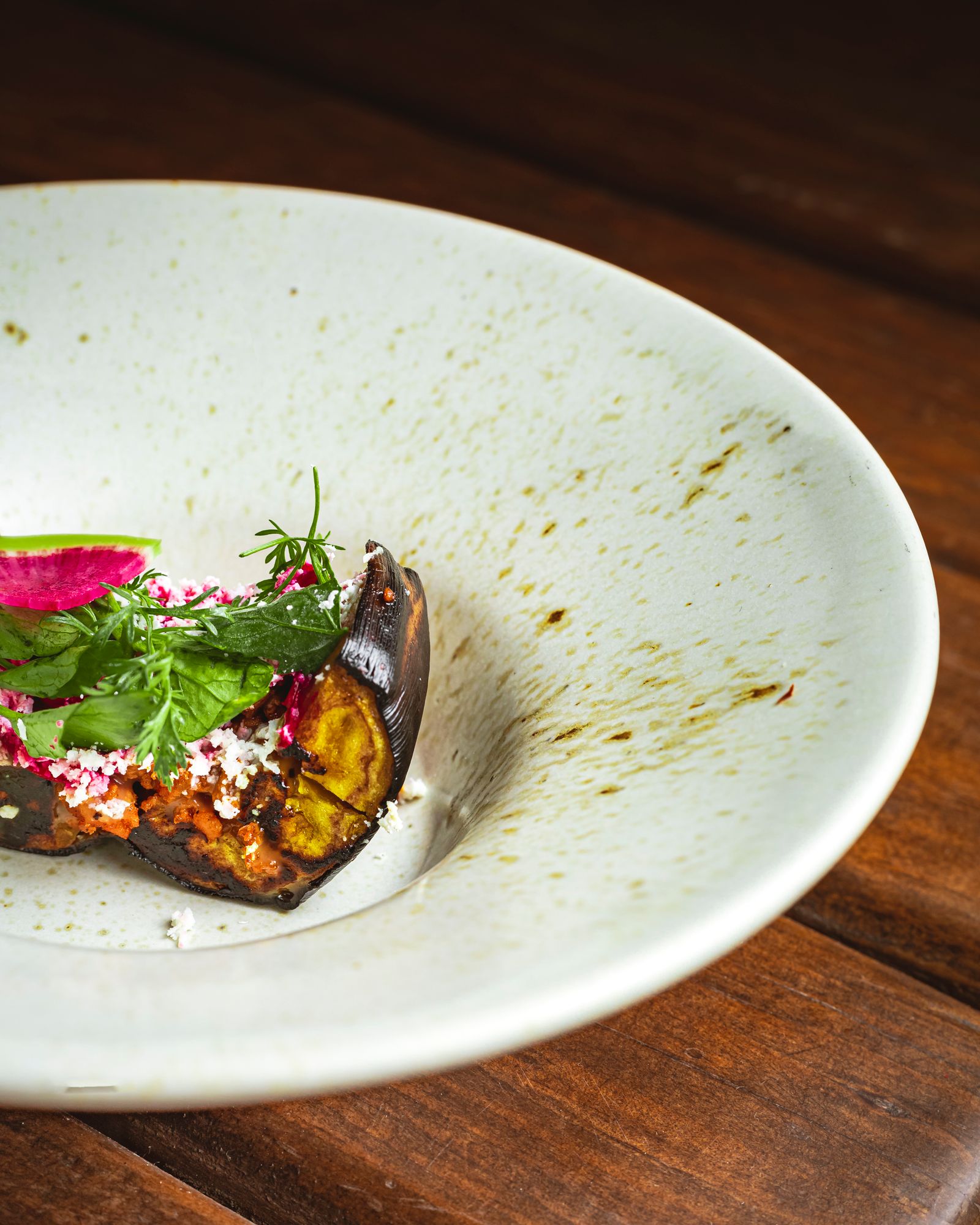
At most fine-dining restaurants, a tomato skin is trash. At Doori, a small Seoul restaurant recognized in the 2026 Michelin Guide, it becomes a tart or a soup.
According to the official Michelin Guide, Doori (두리) is one of two Seoul restaurants newly awarded a Michelin Green Star in 2026 — a distinction separate from the traditional star rating, given specifically to restaurants that combine culinary excellence with sustainable, environmentally conscious practices. Doori builds its Korean-rooted menu around a zero-waste philosophy, pushing every ingredient to its absolute limit rather than treating trimmings as byproducts to be discarded.
The restaurant’s signature dish, called “Today’s Zero Waste,” distills the philosophy into a single course: whatever ingredient scraps were generated that day are dried, roasted and simmered down into a stock-based dish, turning kitchen leftovers into the meal’s most conceptually ambitious plate. The seasonal menu changes regularly, built around whatever Korean produce is in season at the time, with the kitchen finding secondary uses — like transforming tomato skins into tarts or soups — for parts of ingredients that would typically be discarded elsewhere.
Doori’s recognition arrives as part of a broader 2026 Michelin Guide Seoul selection that industry observers describe as spanning a wide spectrum, from restaurants experimenting with the outer limits of Korean cuisine to those built entirely around seasonality and sustainability. Other newly highlighted restaurants in this year’s guide include San, led by chef Cho Seung-hyun, which pairs modern cooking techniques with traditional Korean ingredients to highlight seasonal flavor, and Giwagang, helmed by one-Michelin-star chef Kang Min-chul, which reinterprets the essence of Korean cuisine through a contemporary lens while keeping Korean aesthetic sensibility at its core.
The broader Korean dining industry, meanwhile, has coalesced around what trend forecasters are calling “local-core” — treating regional specialties and seasonal ingredients not as one-off marketing gimmicks, but as the organizing principle behind an entire dining experience, from sourcing through menu design.
For Doori, that philosophy isn’t a garnish on the concept — it’s the whole point: a tasting menu where sustainability and craft are treated as inseparable rather than in tension with each other.
Source: Michelin Guide, official Seoul restaurant selection, 2026.