
Table of Contents
The conventional wisdom around Netflix’s “Culinary Class Wars” was that a global streaming platform would screen its contestants more carefully than any Korean terrestrial network could. That assumption did not survive the last week of January. Reporting from The Korea Times and Xportsnews showed that Im Seong-geun, one of the show’s most talked-about second-season contestants, had four separate drunk driving convictions dating back to 1999. Netflix’s Korean unscripted division confirmed it had verified only one of the four incidents before casting him, a gap between what platforms claim to check and what they actually catch that has become the central question hanging over Korean reality television this year.
The Unraveling: How a Celebrity Chef’s Past Destroyed Multiple TV Shows
The numbers were specific. On September 21, 1999, Im was caught driving in Incheon with a blood alcohol content of 0.153 percent, above the 0.1 percent threshold that then triggered license revocation, and was fined five million won. That offense came eighteen months after a March 1998 traffic conviction that had already earned him a suspended prison sentence and a fine. A fourth infraction, in 2020, was the only one Netflix says it confirmed during casting. In its public statement, the company said it had not been informed of, and could not verify, the earlier penalties.
What followed was a cascade. MBC pulled Im’s completed footage from “Jeonjijeok Chamgyeon Sijeom,” a program built around behind-the-scenes access to celebrities’ daily lives. The YouTube variety show “Salon Deurip” scrapped an entire episode featuring him. SBS’s marital program “Dongsang Imong 2” re-edited around him, shifting focus to a co-star comedian rather than shelving the episode. “Hangout with Yoo,” “Stars’ Top Recipe at Fun-Staurant,” and “Knowing Brothers” withdrew booking offers or dropped him from schedules. Im announced a full suspension of his broadcast activities. For one casting decision to force changes at four networks and a streaming platform in one month says less about one chef than about how thin the verification layer has become.
The Vetting Illusion: Consent Forms and Contracts That Don’t Hold
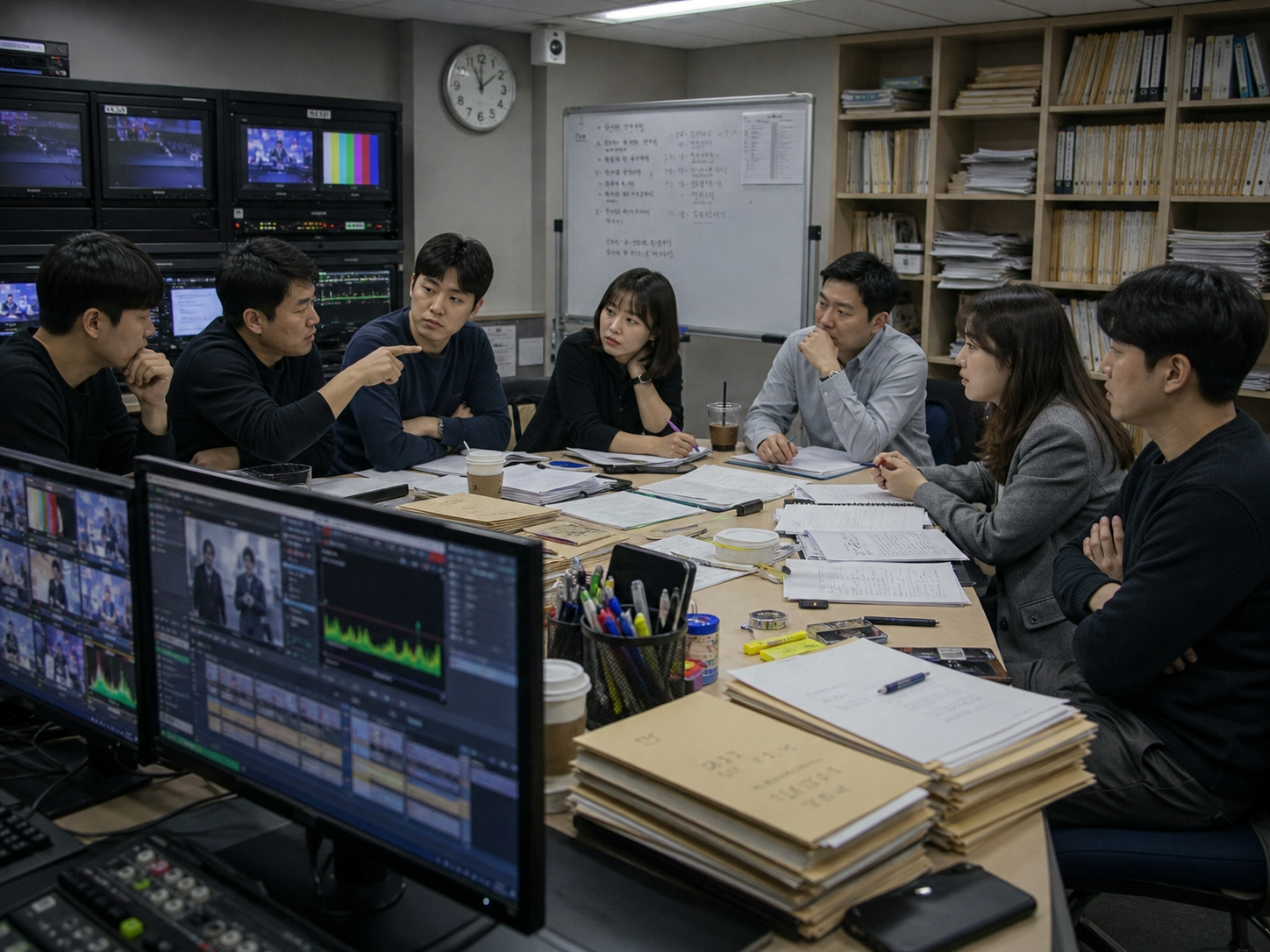
Ask a Korean production company how it screens a noncelebrity contestant, and the answer usually involves a signed declaration rather than an independent check. Producers have applicants attest, in writing, to having no criminal record, no drug use, no infidelity, and no history of school violence. Contracts attach penalty clauses for false statements, giving broadcasters grounds to edit or remove a contestant later. What they lack is legal standing to compel a criminal background check the way an employer might. A Netflix executive overseeing the platform’s Korean unscripted content said as much at a January 21 press briefing: “We also struggle with this and find it very challenging. We try to check histories to the fullest extent permitted by law, but issues still emerge that we couldn’t detect.”
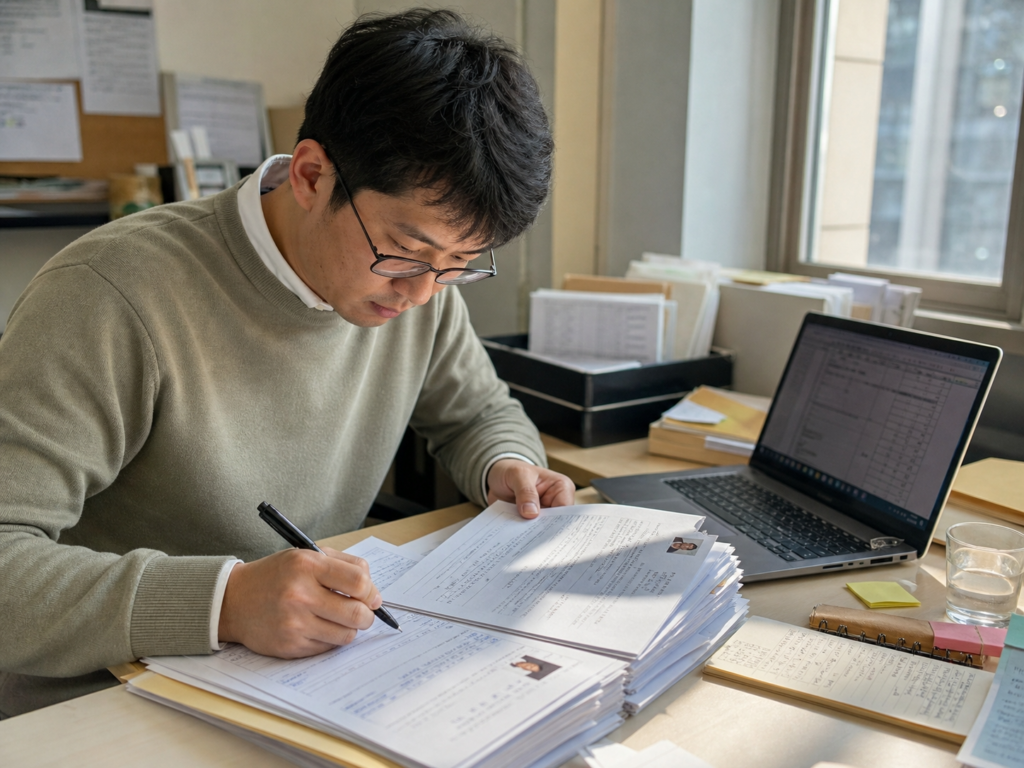
The contrast with American reality television, where networks routinely contract private investigators to run multi-state criminal and financial background checks before a contestant appears on camera, is instructive rather than damning, a practice born of past lawsuits and scandals. Korean production houses, working with a smaller investigative industry and stricter privacy statutes, have leaned instead on self-disclosure. That model works when applicants are honest. It offers little defense when they are not.
The Pattern: A Recurring Crisis Across Korean Reality TV
Im Seong-geun was not an isolated case this year. A contestant on an SBS matchmaking program had, in 2022, lost a civil suit over an affair and been ordered to pay 300,000 won in damages, a judgment that predated her appearance on the show. Once allegations surfaced that she had been involved with a married man with children, she said the claims were “somewhat different from the facts” and indicated she would pursue legal action of her own. SBS responded by cutting her footage from every remaining episode, rewriting the back half of the season around her absence.
The pattern repeated in June. The newest season of the dating franchise “Heart Signal” drew fresh controversy on June 6 after a post on a workplace community platform alleged that a female cast member was involved with a married man, precisely the kind of moral-screening failure production teams are meant to catch before casting. The broadcaster’s response, that it was still confirming the facts and weighing how to proceed with that contestant’s remaining airtime, echoed almost verbatim the language used months earlier in the SBS case. That repetition, more than any single scandal, suggests the industry has not found a fix.
The Legal Gray Zone: Adultery, Privacy Laws, and Broadcasters’ Impossible Position
Some of the blame assigned to broadcasters may not entirely hold up under legal scrutiny. South Korea decriminalized adultery in 2015, a constitutional court decision that moved infidelity out of the criminal code and into civil liability, meaning it now surfaces only through a private lawsuit rather than a record a production company could request. Legal analysts point to that shift as one reason producers had no formal record to check even had they wanted one. A pending or quietly settled civil suit leaves no public trace unless a contestant discloses it voluntarily.
There is also a defamation risk that cuts the other way. Once a contestant is named in enough detail for viewers to identify them, a broadcaster acting on unverified allegations risks its own liability. Attorneys reviewing these cases note that penalty clauses give broadcasters legitimate grounds to edit or remove a contestant once a dispute emerges, a different question from whether the network could have caught the problem earlier. Korean broadcasters are not investigative bodies and were never granted the authority of one, even as the genre depends on the appearance of having verified everyone in the room.
Beyond Vetting: Can Moral Screening Ever Work?
Where responsibility lands, according to a culture critic who spoke to Yonhap News after the scandal broke, is the incentive structure inside production houses, not any single legal gap. Broadcasters are not law enforcement agencies and face real limits on how aggressively they can investigate an applicant, the critic argued, but some of this also stems from being so absorbed in ratings that rigorous vetting gets skipped. Producers, the critic added, need to accept that a contestant’s past may simply disqualify them going forward.
That leaves an open question rather than a tidy resolution. Reality television, in Korea and the United States alike, sells itself on the premise that the people on camera are who they claim to be. Neither self-declaration forms nor penalty clauses can fully close the gap between that promise and what a legal system built around privacy and civil remedy allows broadcasters to know in advance. Whether Korean networks respond with costlier vetting infrastructure, by accepting more scandals as a cost of the genre, or by seeking narrower legal exceptions for limited background checks, is worth watching over the next several casting cycles. The ratings for whichever shows air next will likely say more about the industry’s real priorities than any statement issued after the fact.
Source: Ko Ga-hye, Yonhap News (Korean-Vibe), Jan. 25, 2026; Xportsnews via The Korea Times, Jan. 23-24, 2026; KbizoOm, Jan. 21, 2026; Lee Joo-in, Daily Sports, June 12, 2026.