
Table of Contents
When you hear “cosmetic ingredient award,” you probably picture a shiny trophy for the fanciest-sounding extract. That is not what happened in Seoul this month.
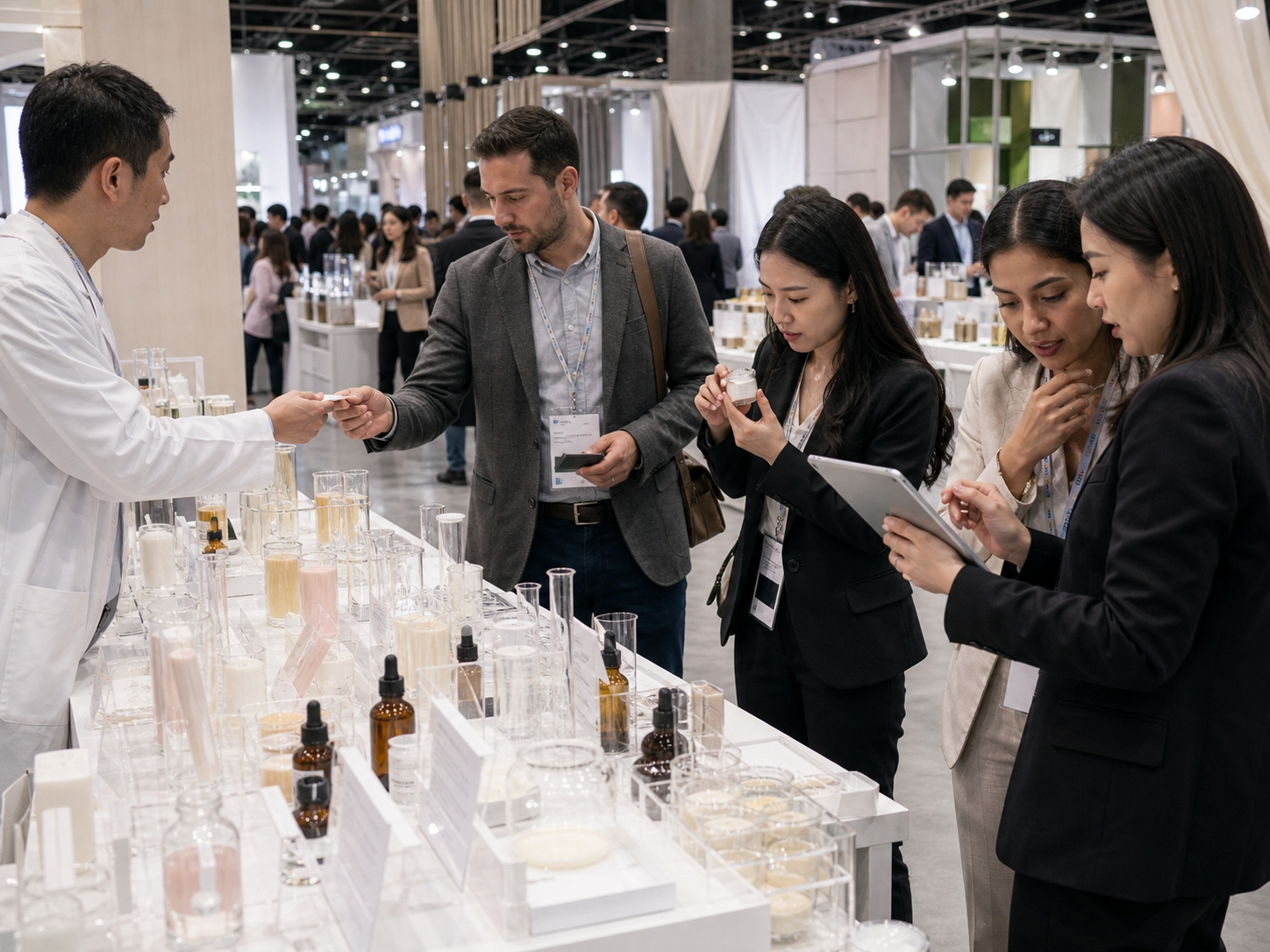
In-cosmetics Korea 2026 ran July 1 to 3 at COEX, and it drew roughly 20,000 attendees, a 47 percent jump from the year before. About 390 raw-material companies, labs, and testing institutes filled the floor. International visitors made up 18 percent of the crowd, the highest share the show has ever recorded.
Here’s the headline, though: this year, organizers handed out a brand-new prize called the K-Innovative Ingredient Award, the first of its kind. Eleven domestic manufacturers submitted entries. A panel of 12 experts, including Hwang Jae-sung, a professor at Kyung Hee University and head of the Korean Society of Cosmetic Scientists, judged the field. The winner was announced at a ceremony on July 1 in front of about 100 people.
If you have ever wondered whether Korean ingredient makers are just repackaging plant extracts with prettier names, this award is a signal that the answer is shifting. The industry wants to be judged on lab-grade science, not marketing copy.
What Exactly Is Korea’s First Ingredient Award?
The K-Innovative Ingredient Award exists to spotlight domestic raw-material innovation specifically, separate from the show’s broader international prizes. It’s a small detail, but it matters: Korea is telling the world it wants credit for the science behind the bottle, not just the finished product on the shelf.
The Winning Ingredient Targets “Zombie Cells,” Not Just Wrinkles
The first K-Innovative Ingredient Award went to LABIO for something called BIO-Placenta target. Don’t let the name confuse you — this isn’t a straightforward placenta extract. It’s a blended material built around five different growth factors, which are protein signals that tell your skin cells to repair and multiply.
What makes it different is the addition of NMN and carnosine, two compounds credited with a senolytic effect. Here’s the plain-English version: senolytic means “clearing out senescent cells” — skin cells that have stopped dividing but refuse to die off. Researchers sometimes call these zombie cells, because they linger in tissue and pump out inflammatory signals that speed up visible aging around them.
That is a genuinely different target than most anti-aging ingredients you have shopped for. A common myth in skincare is that more collagen-stimulating ingredients automatically means younger-looking skin. But if your skin is full of these lingering, dysfunctional cells, piling on more growth factors is a bit like renovating a house while ignoring a leaking pipe. Clearing out the non-functional cells first, then supporting the healthy ones, is the more targeted approach LABIO is pitching.
LABIO also built the ingredient using its own liposome technology — think of a liposome as a tiny fat-based capsule that shuttles active ingredients through skin’s outer barrier instead of leaving them sitting on the surface. According to a company representative, the goal was to improve “stability of the active ingredients and skin delivery efficiency,” which in practice means the formula holds up better before use and actually reaches where it needs to work.
Why the Whole Ingredient Market Is Going Cellular
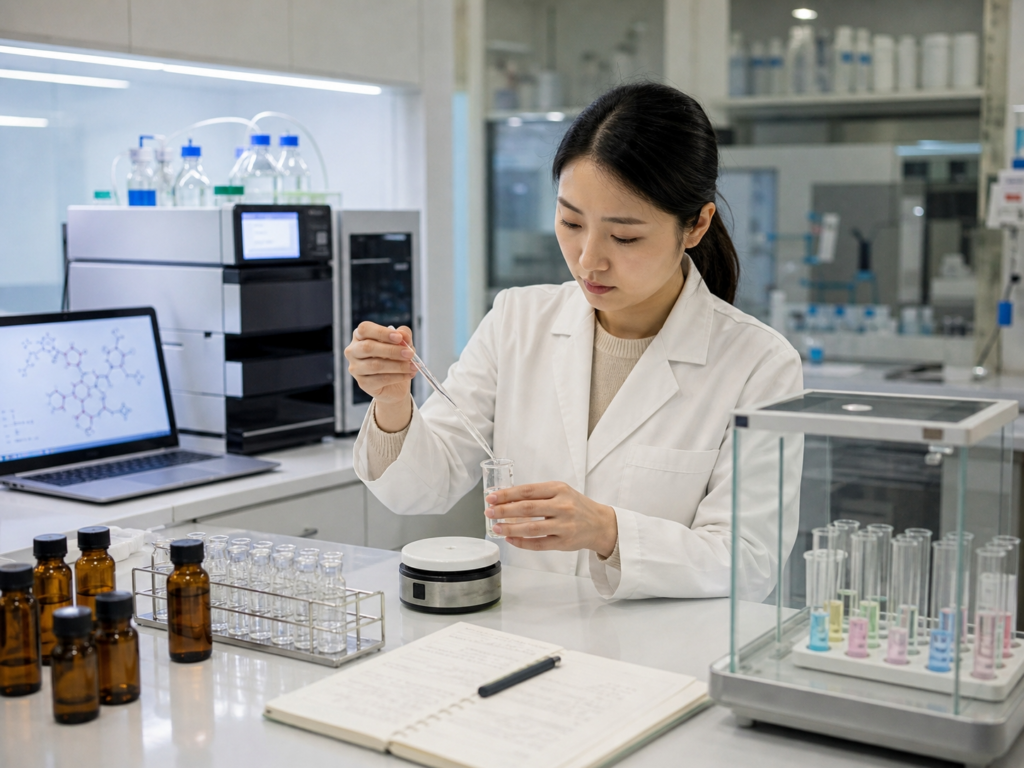
LABIO’s award-winner reflects a bigger pattern across the show. This year’s Innovation Zone displayed 64 new ingredients launched in just the past eight months — a fast clip for an industry that used to measure launches in years, not months.
You’ll also want to know about SeraSense RBS from KCC, the only Korean-made ingredient to win a silver in the functional category of the Innovation Zone’s Best Ingredient Award. In the K-Beauty Standout Award, the gold went to Exometics G from ALGAKTIV.
Across the floor, a few technical terms kept coming up, so let’s translate them. PDRN stands for polydeoxyribonucleotide, a DNA-fragment ingredient originally derived from salmon that is used to support skin repair. Exosomes are tiny messenger particles that cells release to communicate with each other, now being isolated and used as skincare actives. Peptides are just short chains of amino acids — the building blocks of protein — that act like instructions telling skin cells what to do. Add in fermentation-based ingredients and microbiome science, and you get a picture of an industry moving from “what’s in the jar” to “what happens inside your cells.”
One judge, Hwang Jae-sung, noted that AI-driven ingredient development — using computational modeling to search for effective molecules — has moved from experimental to essential in this cycle. That is worth remembering next time a brand markets something as “natural”: a lot of what’s inside was actually found or refined with a computer model first.
The Real Competition Isn’t Innovation. It’s Paperwork.
Here’s the part that rarely makes it into the celebratory headlines. Coming up with a clever ingredient is one battle. Getting it legally sold overseas is another, arguably harder one.
Exporting into the European Union means clearing REACH, CLP, and CPR — a set of chemical safety and cosmetic product regulations that can require anywhere from thousands to well over a million euros in safety documentation per new ingredient, depending on complexity. In 2026, the EU’s Packaging and Packaging Waste Regulation (PPWR) adds a fresh layer of packaging compliance. China’s updated new-chemical-substance rules and Indonesia’s expanding halal certification requirements add still more friction for smaller suppliers trying to sell abroad.
So if you’re picturing Korean ingredient houses breezing into every market on the strength of innovation alone, that’s the myth worth correcting. Regulatory readiness, not raw lab talent, is often what decides whether a promising ingredient like BIO-Placenta target actually reaches a shelf in Paris or Jakarta. Smaller Korean manufacturers, in particular, still depend heavily on imported base materials, which adds another layer of cost and exposure to these same rules.
What This Means for the Next Few Years
The launch of a homegrown award is a symbolic but real shift: Korea is trying to position itself as an ingredient innovator, not just a supplier of finished K-beauty products with famous packaging. Industry voices at the event argued that keeping this edge will require government-backed R&D funding directed specifically at domestic raw-material companies, since that’s where the import dependency and compliance costs hit hardest.
Expect more ingredients built around senescent-cell management, exosome delivery, and fermentation science over the next few product cycles, alongside continued AI-assisted formulation work. None of that guarantees smooth access to every global market — the regulatory bottleneck isn’t going away in 2026.
If you’re a consumer, this mostly plays out slowly, in ingredient lists a year or two from now. If you work in sourcing or product development, the practical takeaway is blunter: budget for regulatory documentation as seriously as you budget for the ingredient itself, because in this market, one doesn’t move without the other.
Source: Multiple reporters, Cosmetic Journal Korea / Cosin Korea / Cosmorning / Happi, July 2026.