Table of Contents
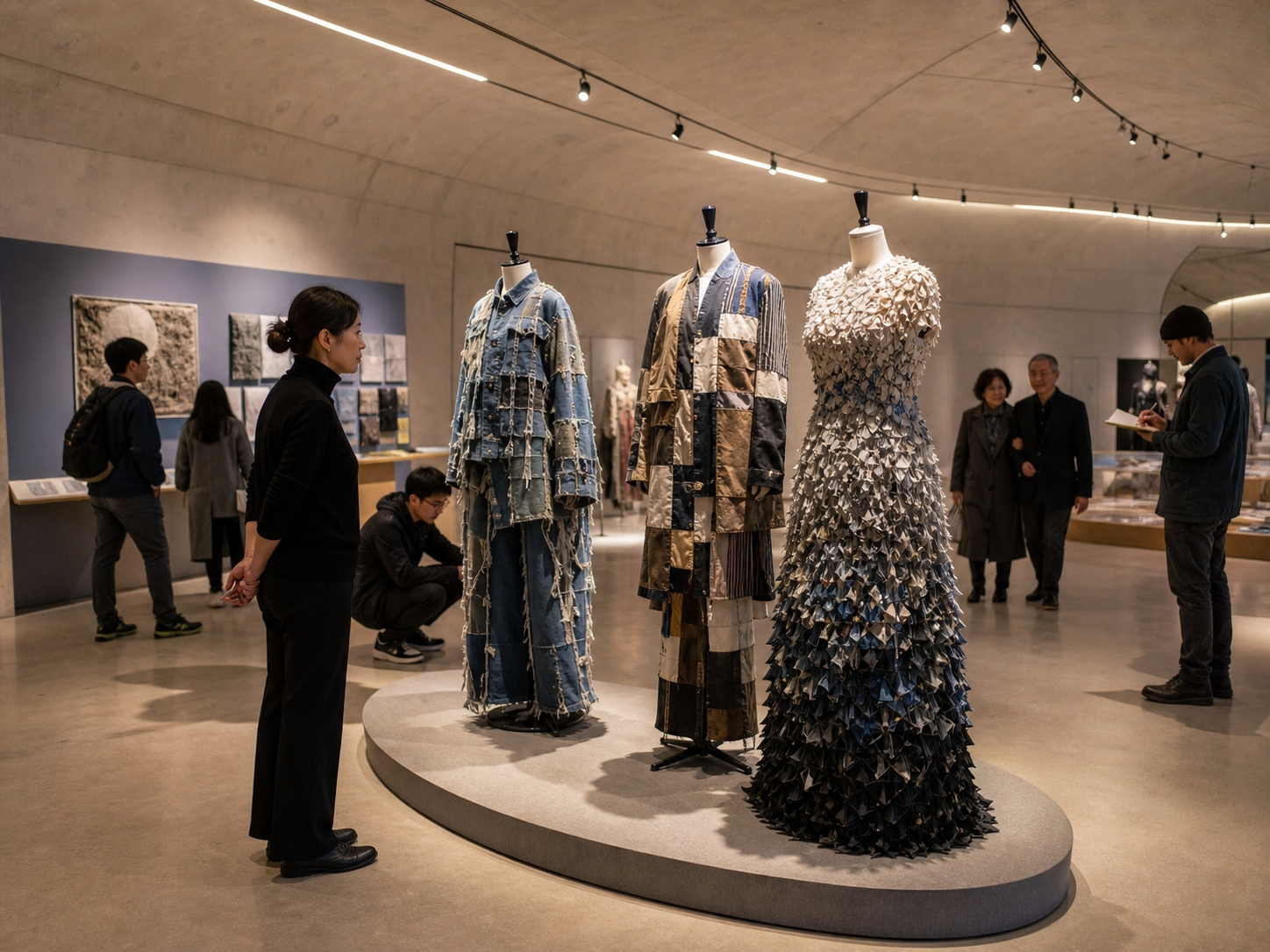
If you walked past Dongdaemun Design Plaza (DDP) in Seoul this week, you might have caught a member of the British royal family touring a fashion exhibit built almost entirely out of clothes nobody bought. That’s not a metaphor. It’s the actual premise behind UK-Korea Fashion Futures, an exhibition that opened July 15 and runs through July 25 at DDP’s Igansumun Gallery. If you care about where your clothes end up after you stop wearing them, this show is worth understanding — not just visiting.
The Opening — A Royal Endorsement
The exhibition opened with real institutional weight behind it. A member of the British royal family attended during an official visit to Korea on July 14 and 15, and the opening night included a sustainable fashion show staged by a Korean designer known for creating stage costumes worn by internationally famous musicians. That’s a lot of star power for a show about textile waste.
The venue choice matters too. Igansumun Gallery sits inside a restored Joseon-era water gate, a structure that once let water flow into the old city walls. You don’t need to know Korean architectural history to get the symbolism: water moving through, and out, and back again is exactly the metaphor organizers wanted for a show about circular design — clothes that get reused instead of dumped.
If you’re planning to go, admission is free, and the gallery is open daily from 10 a.m. to 8 p.m. through July 25.
What UK-Korea Fashion Futures Actually Is
Here’s a common misunderstanding worth clearing up first: “sustainable fashion exhibition” doesn’t always mean a rack of secondhand clothes with an eco label stapled on. This one is structured more like two connected research projects.
The first section, called “New Landscapes,” is run by University of the Arts London’s (UAL) Centre for Sustainable Fashion. Think of it as the lab-coat side of the show — it covers bio-based materials (fabrics grown or derived from organic sources instead of petroleum), natural dyeing techniques, textile recycling methods, and supply chain innovation. If you’re the type who wants to know how a fabric is actually made, not just how it looks, this is the section for you.
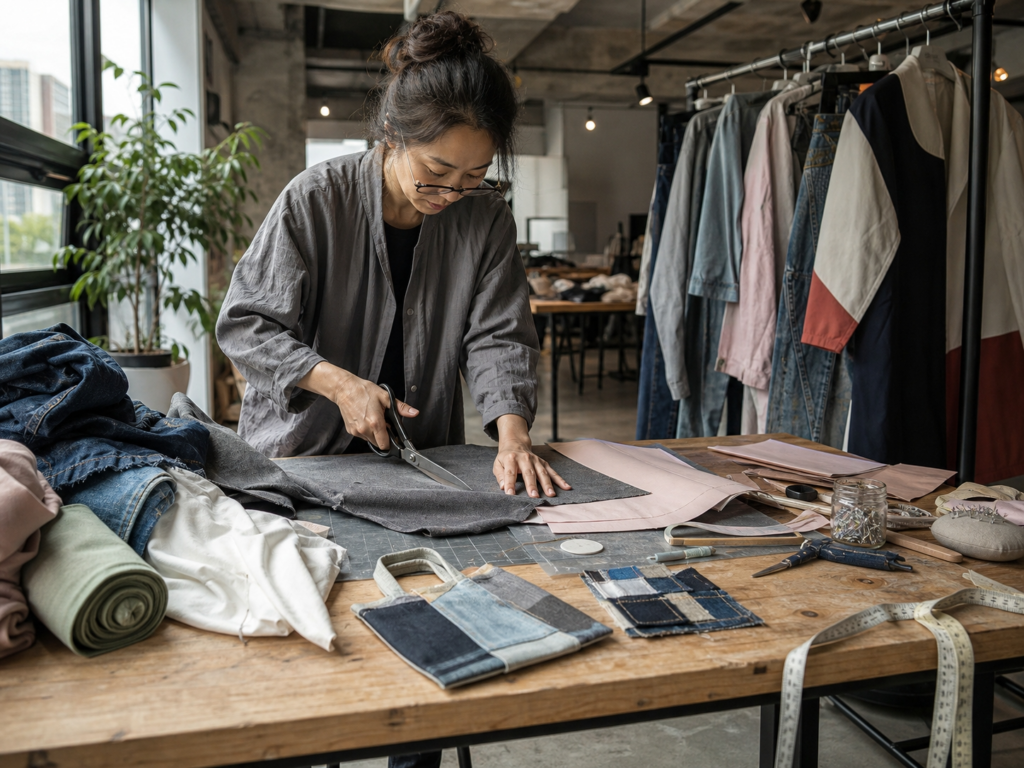
The second section, “Circle Back; Connect. Wear.,” is where the design work lives. Twenty UAL graduates were given unsold clothing supplied by Samsung C&T’s fashion division — inventory that would otherwise sit in a warehouse or get destroyed — and turned it into original upcycled pieces. Graduates of London College of Fashion and several multimedia artists also contributed work exploring regeneration and creative transformation as themes.
The exhibition is jointly organized by the British Embassy Seoul and British Council Korea, with UAL, Seoul Design Foundation, and London College of Fashion as partner institutions. For Seoul Design Foundation specifically, this exhibition fits into a broader push to position sustainable design as a cultural priority for Korea, not just an import from London.
Why Now — The Korean Market’s Sustainability Pivot
You might assume an exhibition like this is mostly ceremonial — a nice cultural exchange with no real market pressure behind it. The timing says otherwise.
Korea’s fashion market is shrinking. It peaked at an estimated 48.4 trillion won in 2023 and has declined for three straight years, with 2026 projected at around 44.5 trillion won. At the same time, consumer search interest and attention around sustainable fashion trends spiked sharply in early 2026, according to trend analytics tracking. Put those two facts together and you get an industry where sustainability isn’t a marketing extra anymore — it’s one of the few growth signals left.
Global brands are reading the same signal. H&M, Zara, and Uniqlo have all accelerated investment in sustainable materials and expanded consumer take-back and recycling programs. If you shop these brands, you’ve probably already noticed more in-store collection bins or “conscious” product lines — that’s this pressure playing out in real time.
Korea’s textile recycling market is projected to grow at a compound annual rate of 4.53% between 2025 and 2033. On paper, that’s a healthy trajectory. In practice, as the next section explains, the numbers behind that growth are shakier than they look.
The Awkward Reality Check
Here’s the part of this story that doesn’t make it into most exhibition press releases: Korea currently cannot accurately count how much textile waste it produces or how much of it actually gets recycled. Waste monitoring systems in the country are, by most accounts, seriously underdeveloped.
Think about what that means practically. You can build a beautiful exhibition around circular design principles, stage a royal visit, and put twenty upcycled garments on display — and none of it tells you whether Korea’s actual textile waste problem is getting better or worse. There’s no reliable baseline to measure against. Collection and sorting infrastructure for post-consumer textiles is also fragmented, which makes it harder for discarded clothing to reliably reach a recycling stream in the first place, rather than a landfill.
This is where you should be skeptical of exhibitions like this one, however well-intentioned. Twenty upcycled garments made from Samsung C&T’s unsold stock are a meaningful gesture. They are not, on their own, a structural fix for a 44.5 trillion won market that’s been contracting for three years running. Symbolic culture events and systemic industrial change are two different things, and it’s easy to mistake progress on the first for progress on the second.
What Comes Next
None of this means the effort is pointless — it means the policy layer matters more than the exhibition layer. Korea is currently implementing an Extended Producer Responsibility (EPR) system, which requires manufacturers to take financial or logistical responsibility for what happens to their products after consumers discard them, alongside a “K-eco design” initiative under the country’s third basic plan for resource circulation. These are the structural levers that could actually move the needle on waste data and recycling rates, not just gallery attendance numbers.
Samsung C&T’s fashion division, for its part, has committed its 99 partner companies to sustainability principles covering human rights and environmental protection — a supply-chain-level commitment that extends well beyond donating unsold stock to an art show.
So what should you actually take away from this. If you’re a shopper, treat brand recycling bins and “conscious” collections as a start, not a finish line — the infrastructure to track where your donated clothes actually end up is still being built. If you work in Korean fashion or textiles, watch EPR enforcement and K-eco design rollout over the next year — that’s where the real industry shift will show up, not in exhibition calendars. And if you’re simply curious, UK-Korea Fashion Futures is free, runs through July 25, and is worth an hour of your time — just don’t mistake it for the whole story.
Source: Anna J. Park, The Korea Times, July 10, 2026.