Table of Contents
In 1443, or so the court records tell us, King Sejong shut himself away for months, testing the shapes his own tongue and teeth made against paper, until he had built an alphabet simple enough that a clever man could learn it before breakfast and a foolish one within ten days. This was Hunminjeongeum (훈민정음) — “the correct sounds to instruct the people” — built, the story goes, because too many of his subjects could not write down their own debts or grievances. Nearly six centuries later, in a convention hall a subway ride from the palace where he once worked, that same restless desire to make Korean legible to more people, faster, drew 547 language teachers from around the world into one room. Only this time, the problem was not that the alphabet was too hard. It was that too many people, in too many countries, wanted to learn it — and Korea did not have enough teachers to go around.
The Unexpected Language Boom
Something has shifted in how the world relates to the Korean language, and the numbers make the shift hard to dismiss as a passing enthusiasm. Applications for TOPIK, the Test of Proficiency in Korean, broke past 550,000 for the first time, with testing now expanding into Nepal, Laos, Bahrain, and India. “The growing popularity of the Korean language has led to over 550,000 people taking this year the Test of Proficiency in Korean,” Korea.net noted, adding that domestic test centers and the countries offering the internet-based exam will expand further next year. Meanwhile the King Sejong Institutes — the government-run classrooms that have become Korea’s answer to the Alliance Française — now operate 273 locations across 89 countries, and in 2025 enrollment across them hit an all-time high of 239,020 students. None of this was engineered by diplomats in a conference room. It arrived, largely, on the back of K-pop choruses, K-drama subtitles, webtoons, and video games with Korean voice acting — an appetite for the culture that turned, almost as an afterthought, into an appetite for the language underneath it.
Seoul’s First Global Educator Summit in Nine Years
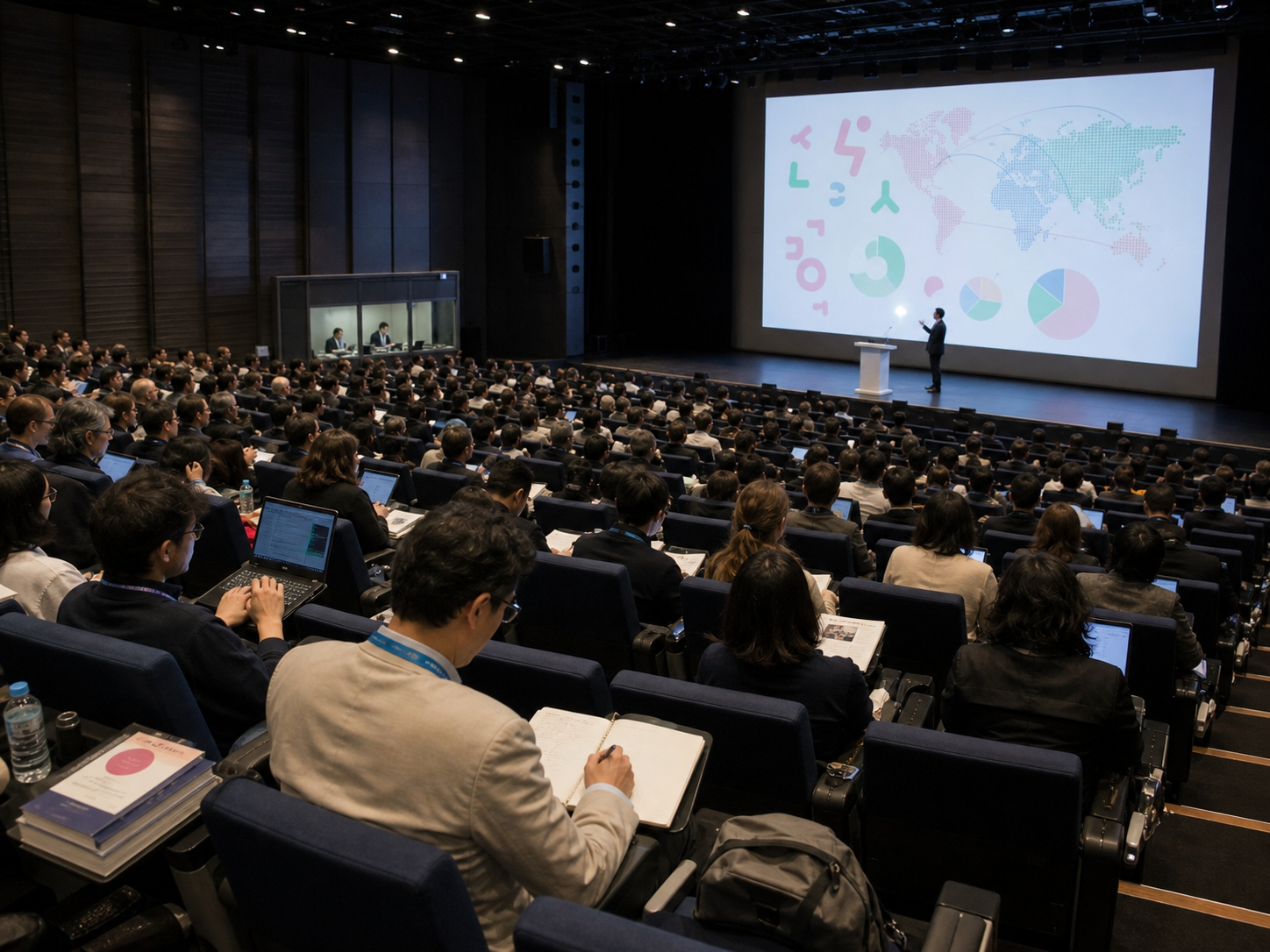
It was against that backdrop that four government bodies — the Ministry of Culture, Sports and Tourism, the Ministry of Education, the Ministry of Foreign Affairs, and the Ministry of Overseas Koreans — convened the “2026 World Korean Language Educator Integrated Training” at COEX in Gangnam-gu on July 13. It was the first time in nine years that Korea had brought its scattered corps of Korean-language teachers together under one roof: 211 educators from the Sejong Institutes, 43 teachers working inside regular overseas school systems, 30 university professors, and 263 teachers and principals from Korean-language schools serving ethnic Korean communities abroad. The whole event was streamed live through the YouTube channels of the Sejong Hakdang Foundation, the Ministry of Overseas Koreans, and the Korea Foundation, so that teachers who could not make the trip to Seoul might still watch. What the 547 attendees represented, more than a training session, was something closer to a census: this is, more or less, the entire visible population of people qualified to teach Korean abroad. It is a number that fits inside a single exhibition hall. The demand it is meant to serve does not.
Waitlists and the Widening Gap
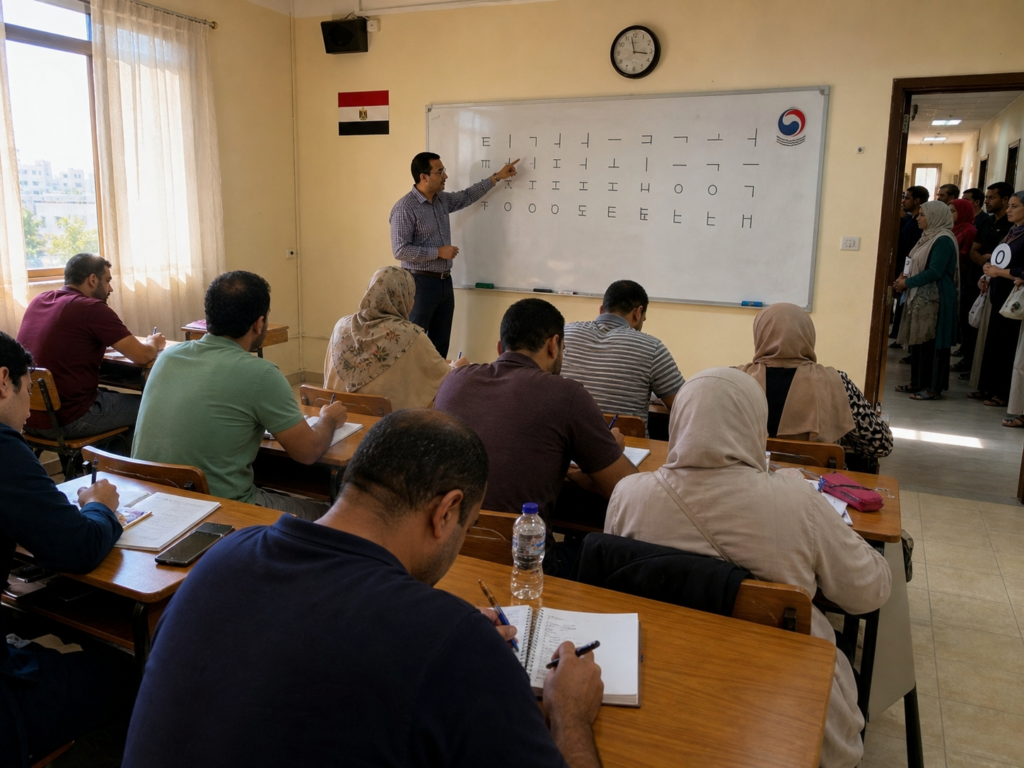
Nowhere is that mismatch more visible than in Cairo, where the single King Sejong Institute long serving all of Egypt built up a waitlist exceeding 1,200 students — a queue long enough that the government has now opened new centers at Ain Shams University and Alexandria University simply to relieve the pressure. Egypt is not an isolated case; it is the clearest illustration of a pattern repeating itself worldwide. In 2026 alone, the ministry and the King Sejong Institute Foundation designated 29 new institutes across 23 countries, including first-time openings in Greece, Rwanda, and Sri Lanka, and nine universities — Seoul National University among them — joined the network as institutional hosts for the first time. The appetite to open new branches has outpaced the government’s own five-year record: 102 organizations across 45 countries applied this year. As The Korea Times summarized it, quoting a ministry official, “Reviewing the record number of applications this year made it clear just how intensely the demand for Korean language learning is growing globally. The government intends to continuously scale the network to match the expanding footprint of Korean culture abroad.” The ambition, reportedly, is to grow past 350 institutes by 2030 — a target that would require several hundred additional qualified teachers within four years, drawn from a pipeline that, as the COEX gathering itself demonstrated, currently produces a few hundred a year at most.
A Year Named for Hangul
There is a reason Korea chose 2026, of all years, to stage this reunion of its teaching corps. This year marks the 580th anniversary of the promulgation of Hunminjeongeum in 1446, and the 100th anniversary of Hangul Day itself, first established in 1926 — a double centennial the government has designated the “Year of Hangul.” The National Hangeul Museum has built a full calendar around it: exhibitions opened around Gyeongbokgung Palace in May to mark King Sejong’s birthday, with further exhibitions planned for October and November and a commemorative publication due in December. The museum is also running twelve distinct educational programs this year, tailored for preschoolers, elementary students, teenagers, families, and people with disabilities, and is expanding distribution of its Hangeul teaching materials abroad. The centerpiece will likely be the “Hangeul Hanmadang” festival, staged at Gwanghwamun Square in October. What all of this amounts to is a deliberate reframing: Hangeul is being presented not merely as a writing system a student memorizes, but as a carrier of cultural identity — a phrase that would not have sounded foreign to Sejong himself, who invented the script precisely so that identity and grievance alike could be written down by people who had previously been unable to write at all.
Can This Last?
It would be a mistake, though, to treat this boom as simply Sejong’s dream finally realized at global scale. A more sober reading is available. The demand driving TOPIK registrations and Sejong Institute waitlists is concentrated among K-pop and K-drama audiences — demographics that can shift their enthusiasm elsewhere within a few years, the way any cultural wave eventually crests. The 547 educators who gathered at COEX are close to the entire professionally recognized population of Korean-language teachers working internationally, and no credible pipeline yet exists to produce the several hundred additional instructors the government’s own 2030 targets will require. Geography compounds the problem: of the 89 countries hosting a Sejong Institute, most have only one to three locations, and vast stretches of Africa, Central Asia, and Southeast Asia remain unserved despite this year’s additions in Greece, Rwanda, and Sri Lanka. Sejong built his alphabet for people who had no way to write; his 21st-century successors are now discovering that writing systems, however elegant, still depend on someone patient enough to stand in front of a classroom and teach them, one waitlisted student at a time.
Source: News1/Daum, Korea.net, The Korea Times, Seoul Economic Daily, and Asia Business Daily, July 2026.