Table of Contents
The Teenager and the Ghost Brush
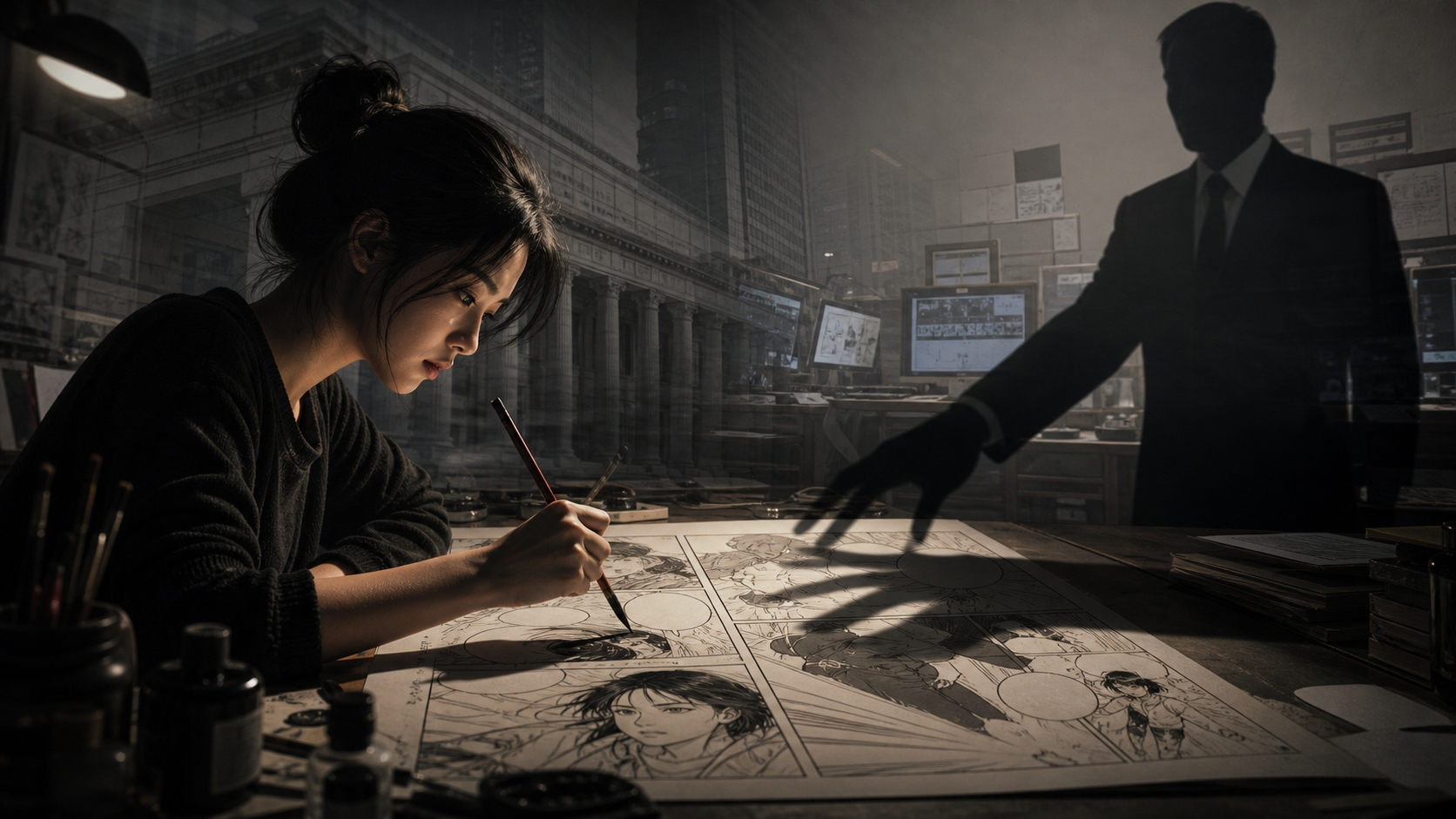
For centuries, the Korean literary tradition tolerated a peculiar arrangement known as daepil, or “ghost brush”: a nobleman with standing but no gift for prose would commission a struggling scholar to draft his memorials and letters, and the finished work would carry only the patron’s name. The scholar’s brush moved, but the patron’s seal pressed the wax. Status, not authorship, decided whose name survived. It is tempting to think such arrangements belong to a vanished world, yet in 2013 something remarkably similar occurred in Korean webtoons, when a seventeen-year-old artist known as Pito was offered a serialization contract by Han Hee-sung, chief executive of Lezhin Comics.
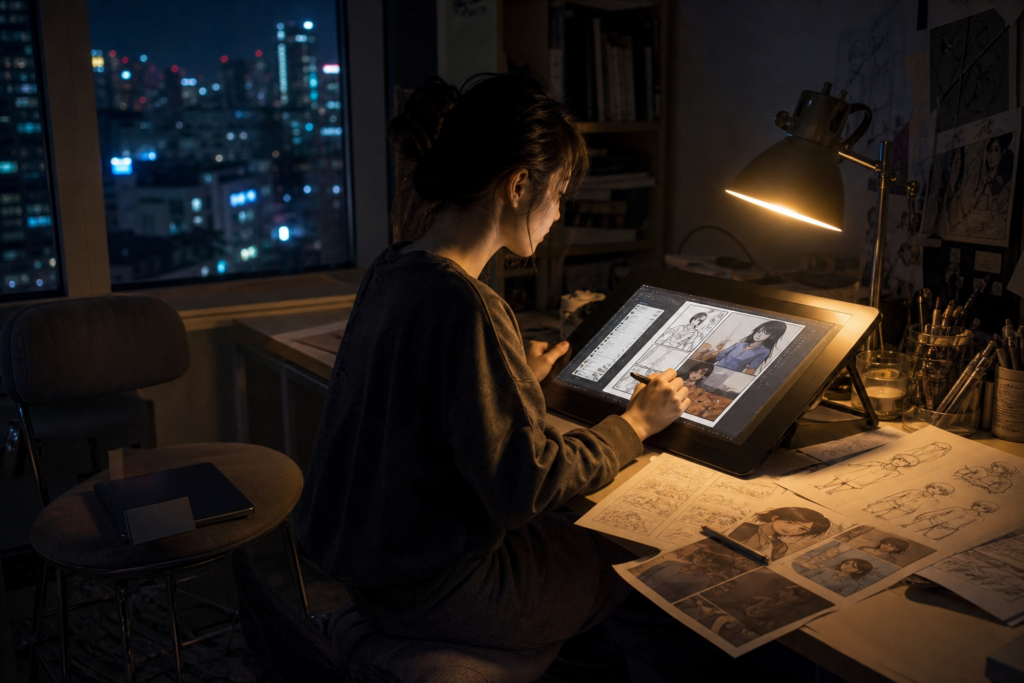
Pito wrote and drew every panel of her debut series, “My Pleasure,” from first sketch to final inked page. Yet when the work was published, Han’s pen name, “Lezhin,” appeared in the credits as “story writer,” and he collected between fifteen and thirty percent of the copyright revenue for a contribution he had not, in any concrete sense, made. Pito later said she felt distress each time her own story appeared under her employer’s name, a complaint she raised and saw dismissed inside the company. It was the daepil arrangement inverted: instead of a patron paying for another’s labor, a platform attached its own name to a minor’s imagination and called it collaboration.
Five Years in Court
The arrangement held until 2017, when Pito discovered her revenue was being distributed abnormally and asked to terminate her contract. Lezhin’s response was a settlement agreement wrapped in a non-disclosure clause, the standard instrument by which grievances in Korea’s content industries are quietly sealed rather than resolved. Pito refused to sign. On December 18, 2018, she walked into the Gangnam Police Station in Seoul and filed a criminal complaint against Han, setting in motion a process that would not reach its final word for more than seven years.
The proceedings tested more than legal argument. Han retained attorneys from a major law firm who argued that Pito “could never have debuted without Han’s creative contribution,” and who, by her own account, subjected her to what she called secondary victimization by questioning aloud whether she “looked like a victim.” That phrase is worth pausing on: it reveals the toll such cases exact even when the facts are not seriously in dispute, forcing a young woman who had already proven her craft to perform her own suffering before the law would recognize it. Through two trials and a Supreme Court review, the case moved at the grinding pace typical of Korean litigation, and Pito lived inside that pace through her early and mid-twenties.
Why Ideas Are Not Authorship
In January 2023, the Seoul Central District Court delivered the first ruling, and its language would echo through everything that followed: “merely proposing ideas or themes does not constitute creative contribution” under Korean copyright law. Han was fined ten million won, roughly 6,700 US dollars. His legal team had failed to submit any material documenting the creative work he claimed to have performed, while the record showed Pito had already mastered storyboarding, character design, and editing before the project began. It is the difference between the architect who draws the blueprint and the client who mentions, over dinner, that he’d like a house with a nice view; only one of them can sign the deed.
The appellate court upheld the verdict on March 15, 2023, adding a pointed observation: “Given Han’s experience, knowledge, and social position in webtoon and comics, it is difficult to imagine he did not understand the concept of joint authorship.” In other words, the court found it implausible that a veteran executive simply misunderstood collaboration; he knew, and claimed the title anyway. On February 26, 2026, South Korea’s Supreme Court dismissed Han’s final appeal, closing the case and reaffirming the underlying principle: copyright belongs to those who make substantive contributions to the concrete expression of a work, and providing ideas or planning participation, however involved it feels to the person doing it, does not by itself earn a claim to joint authorship.
The Industry the Ruling Exposes
None of this unfolded in a vacuum. Korea’s webtoon industry now generates billions of dollars annually and ranks among the country’s most successful cultural exports, yet its growth rests on a structure in which platforms control distribution, revenue splits, and adaptation rights, while young and early-career creators frequently sign take-it-or-leave-it contracts. Han’s defense had a coherent shape, in fairness: his lawyers argued that his creation of the genre framework, character concepts, and narrative structure amounted to joint authorship, and pointed to years of Pito’s respectful demeanor toward him as evidence against coercion. The courts rejected this as legally baseless, but it gestures toward a genuine gray area — the territory between offering advice and performing authorship — that will likely keep generating disputes.
The non-disclosure settlement Pito rejected in 2017 is itself a window into industry practice: such clauses are commonly offered to keep power imbalances between platforms and creators from reaching daylight, and many young creators, lacking her resolve, accept them. The Korea Cartoonist Association welcomed the final ruling as historic, stating it “clearly demonstrates that abuse of position and unjust coercion cannot be justified under the guise of creative collaboration,” and calling it “a significant precedent for the industry” in which “a minor and rookie creator successfully defended their rights against the head of a major platform.” Pito herself, reflecting on the appellate victory in 2023, said she hoped the ruling would become “a stepping stone for creators fighting over copyright,” and that there was meaning in knowing that “even if you sign a contract with toxic clauses and formally agree to copyright surrender, courts can still examine the actual act of creation.”
What the Precedent Leaves Behind
Industry observers have already begun asking what the ruling will change in practice. It offers a judicial rejection of the logic that has quietly protected platform executives for years — that proposing a theme entitles one to a share of authorship over whatever a young artist later builds from it. That logic does not vanish because a court in Seoul said so, but it now carries less legal cover, and contracts drafted in its shadow may need rewriting. In May 2026, months after the Supreme Court’s decision, Korea’s Fair Trade Commission opened a formal probe into practices across the webtoon and web novel industries, a regulatory echo of the precedent Pito’s case had set.
It is worth returning, in closing, to the ghost brush and its silent scholars. What made daepil bearable, to the extent it was bearable at all, was that everyone inside the arrangement understood the fiction for what it was — a matter of rank, not truth. What makes Pito’s case matter beyond one contract and one company is that a modern institution finally refused that same fiction when a teenager’s imagination sat on the other side of the ledger. The seal, this time, was not pressed into the wax of the more powerful name. It went, after seven long years, to the hand that had actually held the brush.
Source: Joon-ho Baek, koreaupclose.com, July 21, 2026.
Korean Original Version
한국어 원문 보기 / 원작 저자의 톤 비교(클릭하여 확장)
저자: Joon-ho Baek
한국어 원문 영어 번역에서 드러나지 않은 한국 문화의 뉘앙스와 저자의 고유한 표현 스타일을 보여드립니다.
10대와 대필자
수백 년간 한국 문학 전통에는 대필(代筆)이라는 독특한 관행이 있었다. 지위는 있지만 글솜씨가 없는 양반이 가난한 선비에게 상소문이나 편지를 대신 쓰게 하고, 완성된 글에는 후원자의 이름만 남았다. 붓을 든 것은 선비였지만, 도장을 찍은 것은 후원자였다. 신분이 저자를 결정했지 실제로 쓴 사람이 결정한 게 아니었다. 이런 관행이 사라진 세상의 이야기처럼 들리겠지만, 2013년 한국 웹툰 업계에서 놀랍도록 비슷한 일이 벌어졌다. 당시 17세였던 ‘피토’라는 필명의 작가가 레진코믹스 대표 한희성으로부터 연재 계약을 제안받았다.
피토는 데뷔작 ‘마이 플레저(My Pleasure)’의 첫 스케치부터 마지막 잉크 작업까지 모든 컷을 직접 쓰고 그렸다. 그러나 작품이 공개됐을 때, 한씨의 필명 ‘레진’이 “스토리 작가”로 크레딧에 올랐고, 그는 자신이 사실상 기여하지 않은 부분에 대해 저작권 수익의 15~30%를 챙겼다. 피토는 훗날 자신의 이야기가 고용주의 이름으로 게재될 때마다 고통을 느꼈다고 밝혔으며, 회사 내부에 이의를 제기했지만 묵살당했다고 말했다. 이는 대필 관행이 뒤집힌 형태였다 — 후원자가 남의 노동에 대가를 지불하는 대신, 플랫폼이 미성년자의 상상력에 자신의 이름을 붙이고 이를 ‘협업’이라 부른 것이다.
7년의 법정 싸움
이 계약 관계는 2017년까지 이어졌다. 피토는 자신의 수익 배분이 비정상적으로 이뤄지고 있다는 사실을 발견하고 계약 해지를 요청했다. 레진 측은 비밀유지조항(NDA)이 포함된 합의서로 대응했다 — 이는 한국 콘텐츠 업계에서 불만이 해결되기보다 조용히 봉인되는 표준적인 수단이다. 피토는 서명을 거부했다. 2018년 12월 18일, 그는 서울 강남경찰서를 찾아 한씨를 상대로 형사 고소장을 제출했고, 이는 7년 넘게 이어질 절차의 시작이었다.
재판 과정은 법적 공방 이상의 것을 시험했다. 한씨는 대형 로펌 변호사를 선임해 “피토가 한씨의 창작적 기여 없이는 데뷔할 수 없었을 것”이라 주장했고, 피토 본인의 증언에 따르면 그가 “피해자처럼 보이는가”라는 질문까지 받으며 2차 가해를 겪었다고 한다. 이 대목은 짚어볼 가치가 있다 — 사실관계가 크게 다투어지지 않는 사건에서조차 이런 소송이 요구하는 대가를 보여주기 때문이다. 이미 실력을 입증한 젊은 여성이 법이 그를 인정하기도 전에 자신의 고통을 증명해야 했다. 1심과 2심, 대법원 심리를 거치며 사건은 한국 소송 특유의 더딘 속도로 진행됐고, 피토는 20대 초중반을 그 시간 속에서 보냈다.
아이디어는 저작권이 아니다
2023년 1월, 서울중앙지방법원은 첫 판결을 내렸고, 이후 모든 절차를 관통하는 문장을 남겼다. “단순히 아이디어나 주제를 제안하는 것만으로는 창작적 기여로 볼 수 없다”는 것이 한국 저작권법상의 판단이었다. 한씨는 벌금 1천만 원을 선고받았다. 그의 법률팀은 자신이 수행했다고 주장한 창작 작업을 뒷받침할 어떤 자료도 제출하지 못했던 반면, 기록에는 피토가 이미 프로젝트 시작 전부터 콘티, 캐릭터 디자인, 편집 능력을 갖추고 있었음이 드러났다. 이는 설계도를 그리는 건축가와, 저녁 식사 자리에서 “전망 좋은 집이었으면 좋겠다”고 말한 의뢰인의 차이와 같다 — 오직 한 사람만이 등기에 서명할 수 있다.
항소심 재판부는 2023년 3월 15일 원심을 확정하면서 날카로운 지적을 덧붙였다. “한씨의 경력과 지식, 웹툰·만화 업계 내 사회적 지위를 고려할 때, 그가 공동저작의 개념을 이해하지 못했다고 보기는 어렵다.” 즉 재판부는 베테랑 경영자가 협업의 의미를 단순히 오해했다는 설명을 받아들이지 않았다 — 그는 알고 있었으면서도 타이틀을 취했다는 것이다. 2026년 2월 26일, 대한민국 대법원은 한씨의 마지막 상고를 기각하며 사건을 종결했고, 저작권은 작품의 구체적 표현에 실질적으로 기여한 사람에게 귀속되며, 아이디어나 기획 단계 참여만으로는 아무리 당사자가 깊이 관여했다고 느끼더라도 공동저작권 주장의 근거가 되지 않는다는 원칙을 재확인했다.
판결이 드러낸 업계의 민낯
이 사건은 진공 속에서 벌어진 일이 아니다. 한국 웹툰 산업은 이제 연간 수십억 달러 규모로 성장해 한국의 가장 성공적인 문화 수출품 중 하나로 꼽히지만, 그 성장은 플랫폼이 유통과 수익 배분, 각색 권리를 통제하고 젊고 경력이 짧은 창작자들이 사실상 선택의 여지 없는 계약에 서명해야 하는 구조 위에 서 있다. 공정하게 말하자면 한씨의 변론도 일관성은 있었다 — 그의 변호인단은 장르 설정, 캐릭터 콘셉트, 서사 구조를 만든 것이 공동저작에 해당한다고 주장했고, 피토가 그동안 보여온 정중한 태도를 강압이 없었다는 증거로 제시했다. 법원은 이를 법적 근거가 없다고 기각했지만, 이는 조언을 제공하는 것과 저작 행위를 수행하는 것 사이의 진짜 회색지대를 시사하며, 앞으로도 유사한 분쟁을 계속 낳을 가능성이 크다.
피토가 2017년 거부했던 비밀유지 합의는 그 자체로 업계 관행을 들여다보는 창이다 — 이런 조항은 플랫폼과 창작자 사이의 권력 불균형이 밖으로 드러나지 않도록 흔히 제시되며, 그만한 의지가 없는 많은 젊은 창작자들은 이를 받아들인다. 한국만화가협회는 이번 최종 판결을 역사적이라고 환영하며 “지위 남용과 부당한 강요가 창작적 협업이라는 명목으로 정당화될 수 없음을 명확히 보여준다”고 밝혔고, “미성년이자 신인 창작자가 대형 플랫폼 대표를 상대로 자신의 권리를 성공적으로 지켜낸, 업계에 중요한 선례”라고 평가했다. 피토 본인은 2023년 항소심 승소 당시 이번 판결이 “저작권 다툼을 벌이는 창작자들에게 하나의 디딤돌이 되길 바란다”고 말했으며, “독소 조항이 담긴 계약서에 서명하고 저작권 양도에 형식적으로 동의했다 하더라도, 법원은 실제 창작 행위 자체를 들여다볼 수 있다는 사실을 아는 것에 의미가 있다”고 덧붙였다.
이 판례가 남긴 것
업계 관계자들은 벌써부터 이 판결이 실제로 무엇을 바꿀지 묻고 있다. 이 판결은 오랫동안 플랫폼 경영진을 조용히 보호해온 논리 — 주제를 제안하는 것만으로 젊은 작가가 이후 만들어낸 결과물에 대한 저작권 지분을 주장할 수 있다는 논리 — 를 사법적으로 거부한 것이다. 서울의 법원이 그렇게 판단했다고 해서 그 논리가 곧바로 사라지지는 않겠지만, 이제는 법적 보호막이 예전만큼 두텁지 않으며, 그 그늘 아래 작성된 계약서들도 다시 쓰여야 할 수 있다. 대법원 판결 몇 달 뒤인 2026년 5월, 한국 공정거래위원회는 웹툰·웹소설 업계 전반의 관행에 대한 공식 조사에 착수했다 — 피토의 사건이 남긴 선례의 규제적 메아리라 할 수 있다.
마지막으로, 대필과 그 침묵하는 선비들의 이야기로 다시 돌아가 볼 만하다. 대필을 견딜 만하게 만들었던 것은 — 견딜 만했다고 할 수 있는 한도 내에서 — 그 관행 안의 모든 사람이 그것이 진실이 아니라 신분의 문제라는 허구를 이해하고 있었다는 점이다. 피토의 사건이 한 건의 계약, 한 회사를 넘어 의미를 갖는 이유는, 한 10대의 상상력이 저울의 반대편에 놓였을 때 현대의 한 기관이 마침내 그 허구를 거부했다는 데 있다. 도장은 이번에는 더 힘 있는 이름의 밀랍 위에 찍히지 않았다. 7년이라는 긴 시간 끝에, 그것은 실제로 붓을 쥐었던 손에 돌아갔다.
출처: 준호 백, koreaupclose.com, 2026년 7월 21일.