
Table of Contents
The conventional wisdom about literary contests is that they are marketing exercises, a way to generate a headline before the entries fade into an archive nobody revisits. The numbers behind Naver WEBTOON and Munpia’s newly announced 2026 “World’s Largest Web Novel Contest” suggest something more deliberate. The two companies are putting up 380 million won, or roughly 258,000 US dollars, in prize money, a 15 percent jump from last year’s 330 million won pool. That is not pocket change for a segment often treated as a farm league for webtoon and drama.
Submissions open May 13 and close June 21, 2026, with winners announced July 22. Eligible genres span fantasy, martial arts, contemporary fiction, sports, and alternative history, while 19-plus rated adult content is excluded outright. The grand prize winner takes home 100 million won, and three excellence award winners receive 30 million won each. Altogether, the contest will recognize as many as 39 works this year, up from 34 in 2025. In a market where most writers self-publish into a sea of competing titles with no editorial gatekeeping, a contest this well-funded functions less like a lottery and more like an industrial pipeline.
The Contest Setup
What makes this year’s version notable is not just the size of the purse but what happens after a winner is announced. The grand prize winner and the three excellence award recipients are guaranteed webtoon adaptation on Naver WEBTOON, and every winning entry, regardless of category, is first serialized on Munpia before distribution through Naver Series with promotional placement. All winning works are also flagged for priority consideration in film, television, and other media adaptation, an approach the industry shorthands as OSMU, or One Source Multi Use.
For an American reader used to thinking of writing contests as prestige exercises, this is a different animal. The prize is not primarily validation. It is a guaranteed slot in a production pipeline already built and tested, with distribution, editorial support, and adaptation rights bundled into the win itself. That distinction changes what the contest actually selects for. Judges are not just looking for good prose. They are looking for premises that will translate into a visual medium and, ideally, into a script.
Korea’s Web Novel Ecosystem
To understand why a single publisher-platform contest carries this much institutional weight, it helps to look at the scale of the industry underneath it. Korea’s web novel sector generated approximately 1.2 trillion won in 2023 across major platforms including Kakao Page and Naver Series, according to industry data. Electronic publishing platforms broadly expanded revenues by 12.1 percent year over year in 2024, with operating profits climbing 25.6 percent, a growth rate that would be unusual in almost any mature publishing market in the United States or Europe.
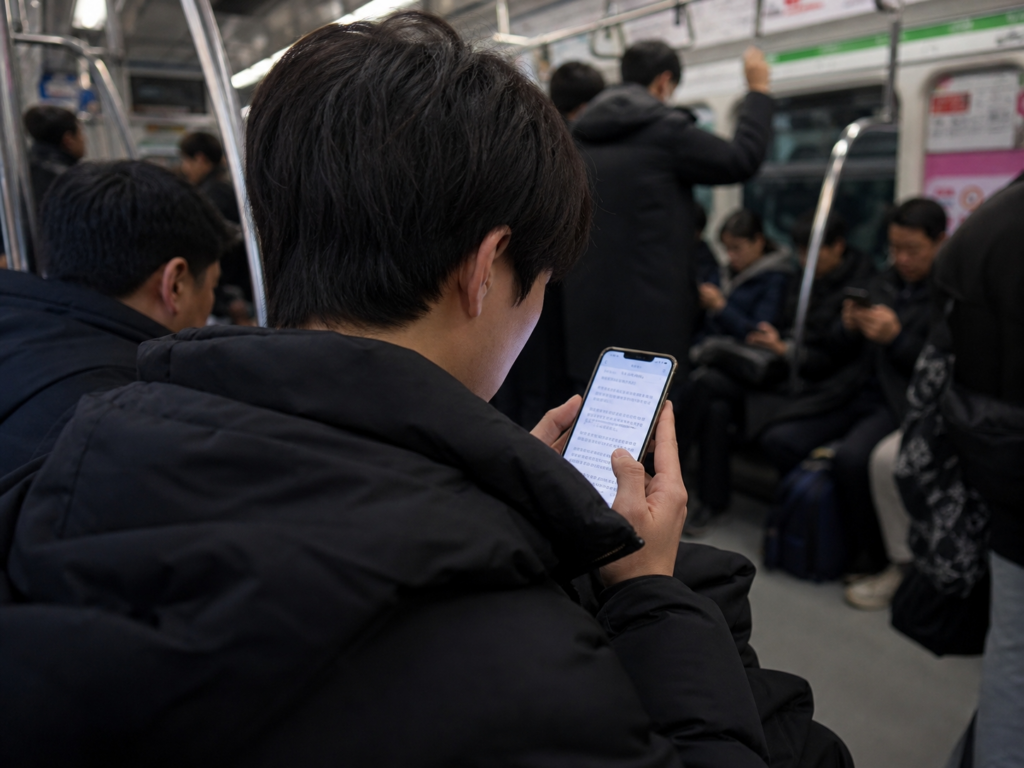
Naver WEBTOON and Kakao Entertainment together control 67.5 percent of global webtoon revenue across both webtoon and web novel formats, according to industry trackers. That concentration matters. Unlike the fragmented American self-publishing landscape, where platforms such as Amazon’s Kindle Direct Publishing host millions of independent titles with no coordinated adaptation strategy, Korea’s web novel market is organized around a small number of vertically integrated platforms that treat text, webtoon, and screen adaptation as one continuous production line. The “wait-to-read-free” model, in which readers access chapters free after a delay or pay to unlock them immediately, has funded that integration. Combined with mobile-first reading habits among the MZ generation and improving machine translation, this has pushed Korean web novels into English-language markets at a scale unworkable a decade ago.
From Contest to Adaptation: The Success Stories
The reason Munpia and Naver WEBTOON can make adaptation promises with a straight face is that the model has already produced hits. Titles discovered through prior contests, including “Chaebol’s Youngest Son” and “Omniscient Reader’s Viewpoint,” moved from web novel to webtoon to drama and film, generating revenue across each format. Son Je-ho, CEO of Munpia, framed this year’s contest as a continuation of that mission, saying the company’s goal is “to continuously provide a platform where web novel creators can realize their dreams,” and that the new martial arts category is meant to “foster diverse works that blend tradition and fusion, expanding the foundation of the martial arts genre.”
Jeong Young-seok, who leads Naver’s web novel division, pointed to the same two titles as evidence of what a contest win can become, saying the platforms hope “many excellent creators with their own unique worldviews will apply and inject fresh vitality into the web novel market.” Read against the revenue figures, this is not simply promotional language. It describes a repeatable process, one where a contest functions as the intake valve for a system built to convert narrative IP into multiple revenue streams over several years.
The Martial Arts Special Award and Genre Revival
The contest’s newest category, a Martial Arts Special Award recognizing up to five works that preserve or reinterpret traditional martial arts themes, is a smaller line item financially, with each winner receiving 10 million won, or about 6,800 dollars. But its inclusion signals something about how these platforms think about genre cycles. Martial arts fiction, or muhyeop in its Korean rendering, has a long history in East Asian popular literature but had become a comparatively niche category in the mobile web novel era, overshadowed by fantasy, romance, and modern urban settings that translate more easily into contemporary webtoon art styles.
Reviving a genre through a dedicated prize category is a bet that audience appetite runs in cycles and that platforms can accelerate a genre’s return rather than wait for organic demand. It is also a hedge against oversaturation in the genres that currently dominate submissions. Whether martial arts fiction can find the same crossover success in Western markets as fantasy and romance is an open question, since its cultural reference points are less familiar to non-Korean readers than the reincarnation and system-based fantasy tropes already popular abroad.
Challenges: Plagiarism, Overwork, and the Oversaturation Problem
None of this addresses the harder problem sitting underneath the contest’s growth. Korean web fiction, particularly in modern romance and contemporary fantasy, has developed such a dense set of shared character archetypes and interchangeable premise setups that distinguishing genuine innovation from close imitation has become a matter of subjective judgment rather than objective screening. Critics argue that expanding the number of award slots, from 34 last year to 39 this year, does not necessarily improve the odds of surfacing original work if the underlying submission pool is dominated by variations on a handful of proven formulas.
There is a second, quieter concern. Writers who win contests are often early in their careers, and the OSMU pipeline that makes winning lucrative assumes a level of professional infrastructure, agents, adaptation negotiators, production timelines, that many newly discovered creators have not managed before. A win that comes with guaranteed webtoon adaptation also comes with obligations. Whether this year’s structure works as intended will likely show up less in July’s headline winners than in what those adaptations look like eighteen months from now, and whether the martial arts category produces anything with the crossover reach of the fantasy titles before it.
Source: Daniel Yoon, koreaupclose.com, July 21, 2026.