
Table of Contents
Cheongnyangni, Not Hongdae? Really?
Just a few years ago, if you asked about Seoul’s ‘hot neighborhoods,’ Hongdae or Sinchon would come up first. But lately, skimming through Seoul’s commercial district statistics, I’ve noticed some unfamiliar names catching my eye. Cheongnyangni, Jongno 3-ga, Suyu Traditional Market. These aren’t exactly places where young crowds flock—they’ve long been considered the daily life zones of middle-aged and older folks. But when I heard that these areas are far outpacing Hongdae and Sinchon in sales growth, I dug into the data myself.
According to the Seoul Metropolitan Government’s Commercial District Analysis Service, the numbers are striking. Sales at Cheongnyangni Station commercial area have jumped 228% over the past five years. Suyu Traditional Market saw a 302% increase in the same period. Jongno 3-ga grew by 71%. Meanwhile, Hongdae Station, once the poster child for the 20-something crowd, only managed a 16% rise, and Sinchon actually dropped 8%.
Cheongnyangni Station’s Growth: 34% Senior Spending
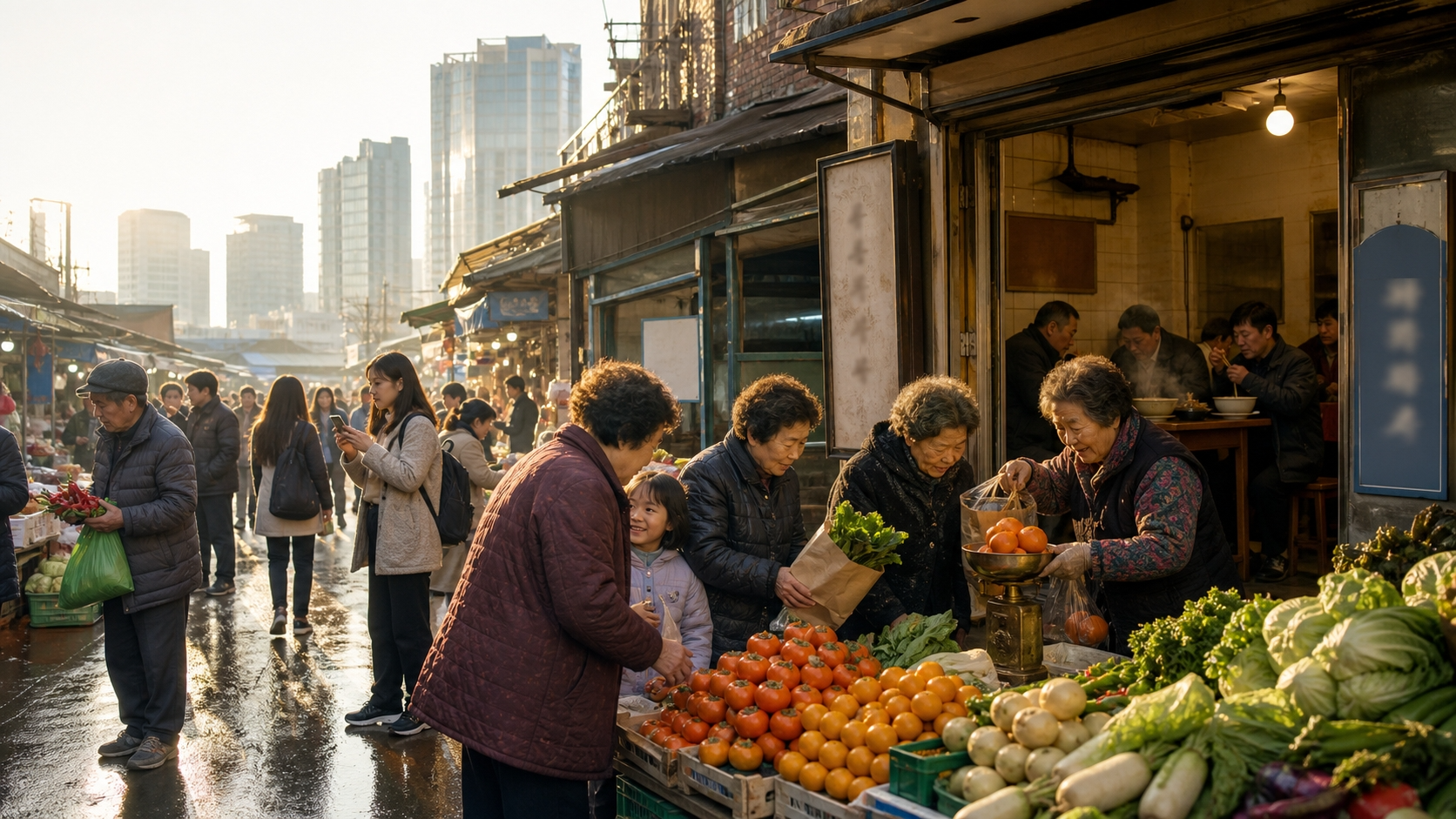
Walking around Cheongnyangni Station, you can vaguely sense why this shift is happening. Consumers aged 60 and over account for 34.1% of spending in the Cheongnyangni Station commercial area—the highest among the major districts analyzed. While it’s long been known as a zone with heavy middle-aged and elderly consumption, recent residential-commercial complex developments and expanded transit networks are pushing it into the spotlight as a key hub in northeastern Seoul.
Song Seung-hyun, head of Urban & Economy, explained it this way: “The 60-plus senior generation has accumulated years of experience using offline traditional markets, so they still maintain a consumption pattern of going out to buy, eat, and enjoy things in person.” Markets like Cheongnyangni Market and Gwangjang Market, which combine wholesale and retail, are regaining their competitive edge, he added.
Active Seniors Reshaping the Consumption Landscape
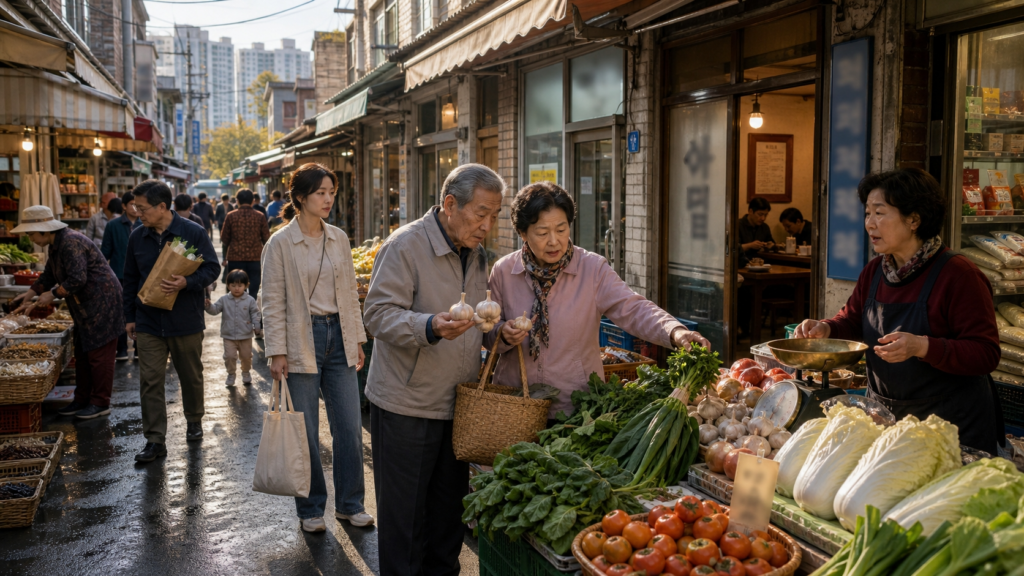
Behind this change lies a demographic shift. Over the past five years, Seoul’s population in their 20s has shrunk from 1.63 million to 1.49 million—an 8.6% decline. At the same time, as consumption has moved from offline to online, the card-based spending growth in youth-centered districts has also slowed. Conversely, as the baby boomer generation enters full-scale retirement, so-called ‘active senior’ spending is growing fast.
Places like Cheongnyangni, Jongno 3-ga, and Suyu Traditional Market share a common trait: they’re more than just retail spaces—they’re lifestyle consumption hubs where hospitals, pharmacies, traditional markets, restaurants, and daily services are all tightly packed together. This structure perfectly matches the senior consumption pattern of seeing and buying in person, patronizing regular stores, and taking care of medical, health, food, and dining needs in one trip.
Traditional Markets with a Retro Vibe
Here’s the interesting part: these districts aren’t filled only with seniors. Traditional markets, old eateries, and aging alleyway commercial zones that were once considered rundown and outdated are now being reinterpreted as ‘hip spaces’ among younger generations. Seniors’ steady spending keeps the commercial base stable, and when young visitors add to the mix, the whole district’s foundation broadens.
But not every old market automatically revives, I’m told. It takes transportation accessibility, a variety of business types, density of daily services, and nearby residential demand to back it up. Cheongnyangni benefited from station-area development and transit expansion; Jongno 3-ga has specialized industries like jewelry, medical services, and dining; Suyu Traditional Market is a strong traditional market that holds onto local neighborhood spending.
An Alley to Walk Next Time
Just because Hongdae and Sinchon aren’t what they used to be doesn’t mean they’ve lost their charm. Both still have a high proportion of visitors in their 20s and 30s. But the explosive consumption growth they once led seems to be fading. In contrast, Cheongnyangni, Jongno 3-ga, and Suyu Traditional Market are cases where long-standing daily-life commercial districts are getting a fresh spotlight, riding demographic shifts and development trends.
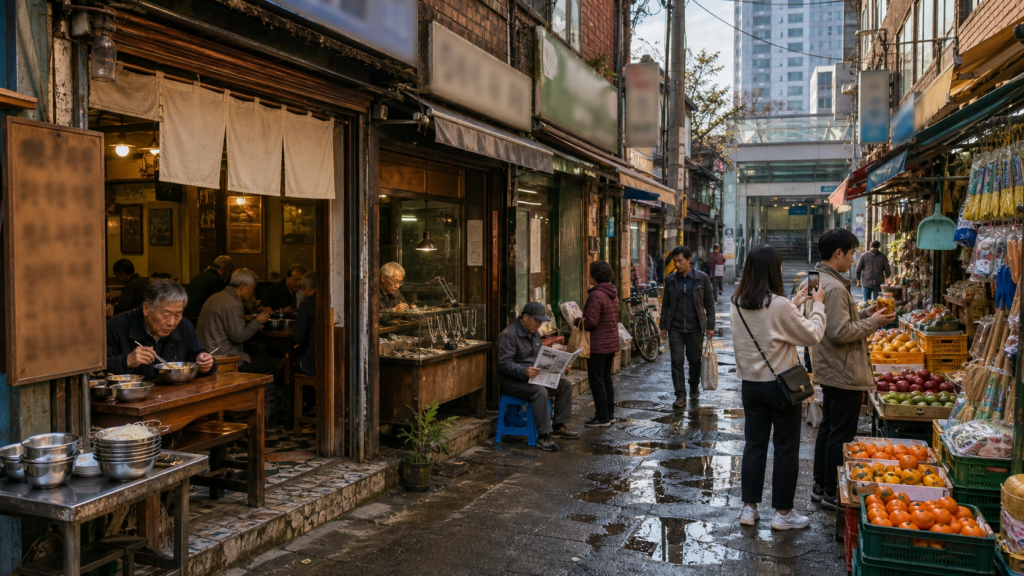
If you’re stuck on where to go this weekend, try walking through the market alleys around Cheongnyangni Station. Pass by the fruit and vegetable stalls, empty a bowl of noodles at an old noodle shop, and follow the path to the jewelry district at the end of the alley—it’s enough for a full day’s itinerary. If you want to avoid the crowds, I’d recommend heading out in the morning.
Source: Aju Economy, May 18, 2026 (citing Seoul Metropolitan Government Commercial District Analysis Service statistics).
Korean Original Version
한국어 원문 보기 / 원작 저자의 톤 비교(클릭하여 확장)
저자: Hana Suh
한국어 원문 영어 번역에서 드러나지 않은 한국 문화의 뉘앙스와 저자의 고유한 표현 스타일을 보여드립니다.
홍대 아니고 청량리라니
몇 년 전만 해도 서울에서 ‘뜨는 동네’ 하면 홍대나 신촌이 먼저 나왔어요. 그런데 요즘 서울 상권 통계를 보다 보니 낯선 이름들이 눈에 띄더라고요. 청량리, 종로3가, 수유전통시장. 젊은 층이 몰리는 동네도 아니고, 오히려 오랫동안 중장년층과 어르신들 생활권으로 여겨지던 곳들이거든요. 근데 이 동네들 매출 증가율이 홍대와 신촌을 훌쩍 앞지르고 있다는 얘길 듣고, 직접 자료를 들여다봤어요.
서울시 상권분석서비스 통계를 보면 놀라운 숫자가 나와요. 청량리역 상권은 최근 5년간 매출이 228% 증가했고요, 수유전통시장은 같은 기간 302% 늘었어요. 종로3가도 71% 성장했고요. 반면 한때 20대 상권의 대명사였던 홍대입구역은 같은 기간 16% 증가에 그쳤고, 신촌은 오히려 8% 감소했더라고요.
청량리역 상권, 시니어 소비 34%가 만든 성장
청량리역 일대를 실제로 걸어보면 왜 이런 변화가 일어나는지 어렴풋이 느껴져요. 청량리역 상권의 60대 이상 소비 비중은 34.1%로, 분석 대상 주요 상권 가운데 가장 높은 수준이에요. 오랫동안 중장년층과 고령층 소비가 많은 지역으로 꼽혀왔지만, 최근에는 주상복합 개발과 교통망 확충이 맞물리면서 서울 동북권 핵심 상권으로 떠오르고 있대요.
도시와경제 송승현 대표는 이 현상을 이렇게 설명했어요. “60대 이상 시니어 세대는 오랫동안 오프라인 전통상권을 이용해온 경험이 축적돼 있어 여전히 직접 가서 사고, 먹고, 즐기는 소비 패턴을 유지하는 특징이 있다.” 청량리시장과 광장시장처럼 도매와 소비가 동시에 가능한 구조를 유지한 상권들이 다시 경쟁력을 얻고 있다는 얘기더라고요.
액티브 시니어가 바꾸는 소비 지형
이 변화 배경엔 인구 구조 변화가 있어요. 지난 5년간 서울의 20대 인구는 163만명에서 149만명으로 8.6% 줄었거든요. 동시에 소비가 오프라인에서 온라인으로 옮겨가면서 젊은층 중심 상권의 카드 소비 기반 성장세도 함께 둔화됐고요. 반대로 베이비붐 세대가 본격적인 은퇴기에 접어들면서 이른바 ‘액티브 시니어’ 소비가 빠르게 커지고 있어요.
청량리·종로3가·수유전통시장 같은 곳은 단순한 소매 공간을 넘어 병원, 약국, 전통시장, 음식점, 생활서비스가 촘촘히 붙어 있는 생활형 소비 거점이라는 공통점이 있더라고요. 직접 보고 사고, 단골 점포를 이용하고, 의료·건강·식재료·외식 소비를 한 번에 해결하려는 시니어 소비 패턴과 딱 맞아떨어지는 구조예요.
레트로 감성을 입은 전통시장
흥미로운 대목은 이 상권들을 시니어만 채우고 있는 게 아니라는 거예요. 과거엔 낡고 촌스럽다고 여겨졌던 전통시장과 노포, 오래된 골목 상권이 요즘엔 젊은층 사이에서 ‘힙한 공간’으로 재해석되고 있거든요. 시니어 고정 소비가 상권 기반을 지키고, 여기에 젊은 방문 수요가 더해지면서 상권 저변 자체가 넓어지는 구조예요.
다만 모든 오래된 상권이 저절로 살아나는 건 아니래요. 교통 접근성, 업종 다양성, 생활서비스 밀도, 배후 주거 수요가 함께 뒷받침돼야 하거든요. 청량리는 역세권 개발과 교통망 확충이 결합된 경우고, 종로3가는 귀금속·의료·외식 등 특화 업종이 살아 있는 경우, 수유전통시장은 지역 생활권 소비를 붙잡는 전통시장 기능이 강한 경우라고 하더라고요.
다음에 걸어볼 골목
홍대와 신촌이 예전 같지 않다고 해서 이 동네들이 매력을 잃었다는 뜻은 아니에요. 두 곳 다 여전히 20~30대 방문 비중은 높거든요. 다만 예전처럼 폭발적인 소비 증가를 이끌어내는 힘은 예전만 못하다는 평가가 나오는 거예요. 반대로 청량리, 종로3가, 수유전통시장은 오랫동안 조용히 자리를 지켜온 생활 상권이 인구 구조 변화와 개발 흐름을 타고 새롭게 조명받는 사례고요.
주말에 딱히 갈 곳이 떠오르지 않는다면, 청량리역 주변 시장 골목을 한번 걸어보세요. 청과물 노점 사이를 지나 오래된 국숫집에서 한 그릇 비우고, 골목 끝 귀금속 상가까지 이어지는 동선이면 하루 코스로도 충분해요. 붐비는 시간대는 피하고 싶으면 오전 일찍 움직이는 걸 추천해요.
출처: 아주경제, 2026년 5월 18일(서울시 상권분석서비스 통계 인용).