
Table of Contents
People Who Google the Chef Before the Menu
Something’s shifted in how people pick a restaurant these days. A few years ago you’d search for “the best sushi place” or “a solid Korean set-course spot.” Now plenty of people search for the chef’s name and nickname from the TV show first. Photos of the food get tagged with the chef’s face, and reservation reviews talk as much about tone of voice and how the chef explains a dish as they do about taste. Restaurants have started to read like a stage for one person.
The show that made this shift impossible to miss was Netflix’s Culinary Class Wars, released in September 2024. According to Netflix, Season 1 became the first Korean variety show to spend three straight weeks at No. 1 on Netflix’s Global Non-English TV chart. Data released by Catch Table right after the broadcast showed that searches for restaurants run by the show’s chefs jumped 74-fold week over week, with average reservations up roughly 148%. Watching turned into restaurant-hunting fast.
Omakase Is Really an Order for a Relationship
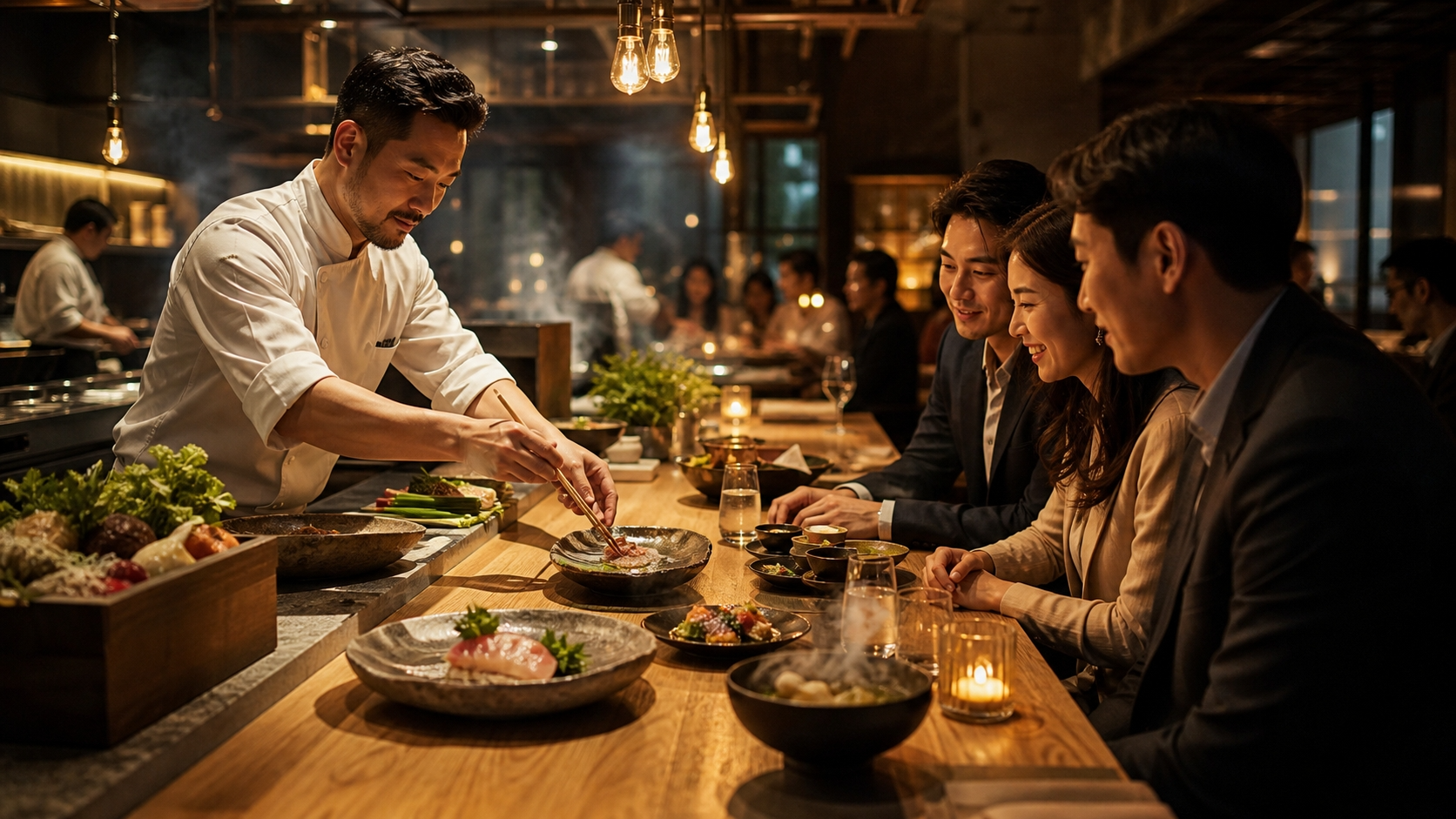
Omakase is Japanese for “I’ll leave it up to you.” The diner hands the menu decision to the chef, who then serves a sequence of dishes built around that day’s ingredients and rhythm. In Korea, it first spread widely as a high-end sushi course, then expanded to cover Korean beef, Korean cuisine, and even dessert. In Korean, it’s sometimes called “matgim-charim” (맡김 차림), or “an entrusted spread.”
What matters here isn’t just the price tag of the course. The diner gives up the authority to decide what to eat, and gets the chef’s judgment in return. Listening to the ingredients explained across the counter, watching the cooking unfold — that’s part of the meal too. In the end, what omakase really sells isn’t a fixed menu. It’s closer to the anticipation of “what’s this person going to serve me today.”
‘Imo-kase’ and Korea’s Own Version of the Trust-Fall Meal
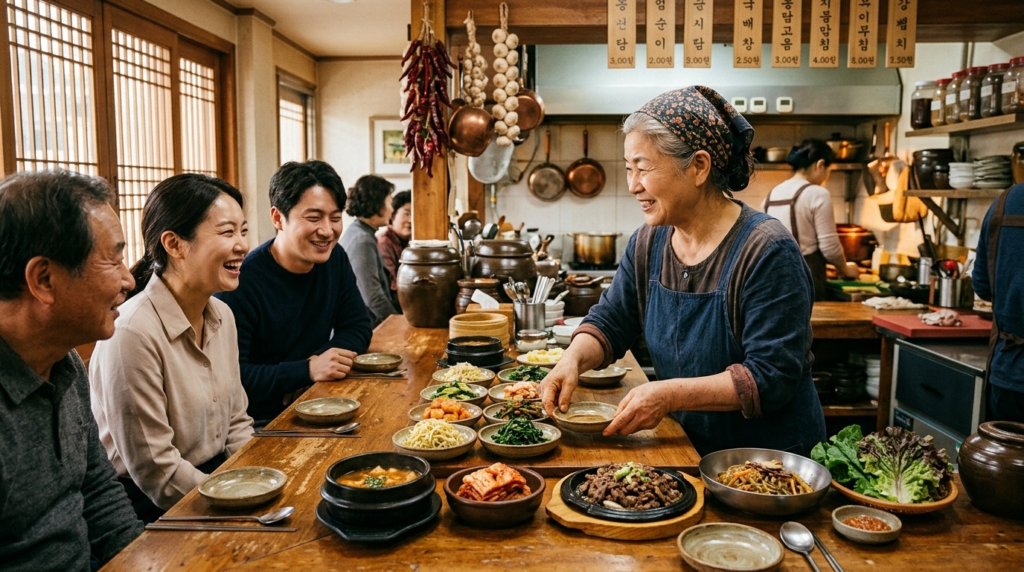
“Imo-kase” combines “imo” — a familiar, informal way to address a restaurant’s female owner or staff, literally “auntie” — with omakase. But the word didn’t start with Culinary Class Wars. JoongAng Ilbo had already written about the practice back in 2021, describing diners at an old-school neighborhood joint leaving the choice of side dishes to the “imo” running the place. The show didn’t coin the term; it took an existing word national.
The restaurant of chef Kim Mi-ryeong, who appeared on Season 1 as “Imo-kase No. 1,” is a good example of the format’s grammar. Instead of ordering a single dish off a menu, diners get a sequence of seasonal Korean dishes, and the chef leads the meal along, chatting with guests as she goes. At the time Kyunghyang Shinmun visited, the restaurant capped bookings at twenty people a day; after the show aired, reservations reportedly filled up within three minutes of opening.
So What Exactly Is ‘Samchon-kase’?
“Samchon-kase” can be read as the imo-kase grammar transplanted onto male cooks. “Samchon” means uncle, and online reviews use the word affectionately to describe a male owner or chef who chats easily with customers and just serves whatever’s good that day. Unlike imo-kase, though, it’s harder to call this a settled category in the restaurant industry. It reads less like an official genre and more like a nickname customers coin themselves.
That’s why it’s worth being careful about explaining the term through the chef’s gender or kitchen labor conditions. The point isn’t that there happen to be a lot of male chefs. It’s the combination of the warmth the word “samchon” carries, plus the image of a chef building a direct relationship with the guest. Like imo-kase, a single nickname does a lot of work — it lets you pre-imagine the price range, the service mood, and how intimate the meal will feel.
Are We Eating the Food, or Meeting the Person?
These names work so well partly because they tap into how Koreans already talk about restaurant staff. Customers call staff “imo” even when there’s no blood relation, and refer to an older male acquaintance as “samchon” or “hyung.” Add the loanword “kase” on top, and a familiar relationship and a new dining format meet inside a single word. It might feel a little unfamiliar if you’re not from Korea, but think of it as Korean-style intimacy operating inside a commercial space, and it clicks.
Social media fed this trend too. A photo of “what I ate” doesn’t stick in memory the way a story about “who picked it out for me” does. The chef’s explanations, the order dishes arrive in, the jokes traded with guests — all of it becomes content. The nickname is a shorthand for that whole, longer experience. That said, a fun name doesn’t automatically guarantee the quality or price of every matgim-charim meal — check the lineup and cost separately before you book.
What ties omakase, imo-kase, and the still-loose nickname samchon-kase together is, in the end, a person. Culinary Class Wars pulled not just technique but expression, philosophy, and life story out from behind the kitchen counter and onto the screen. Since then, “who’s making it” has become a bigger part of how people choose where to eat. Next time you book a matgim-charim meal, don’t just look at how many courses you’re getting — pay attention to how the person running it meets their guests, too.
Source: Netflix official newsroom, Netflix, October 14, 2024; Wonji Lee, The Electronic Times, October 7, 2024; Jeongyeon Roh, The Kyunghyang Shinmun, October 11, 2024; Jeongmin Seo, The JoongAng Ilbo, December 30, 2021.