
Table of Contents
I Opened a Freezer Door and There Was Kimbap
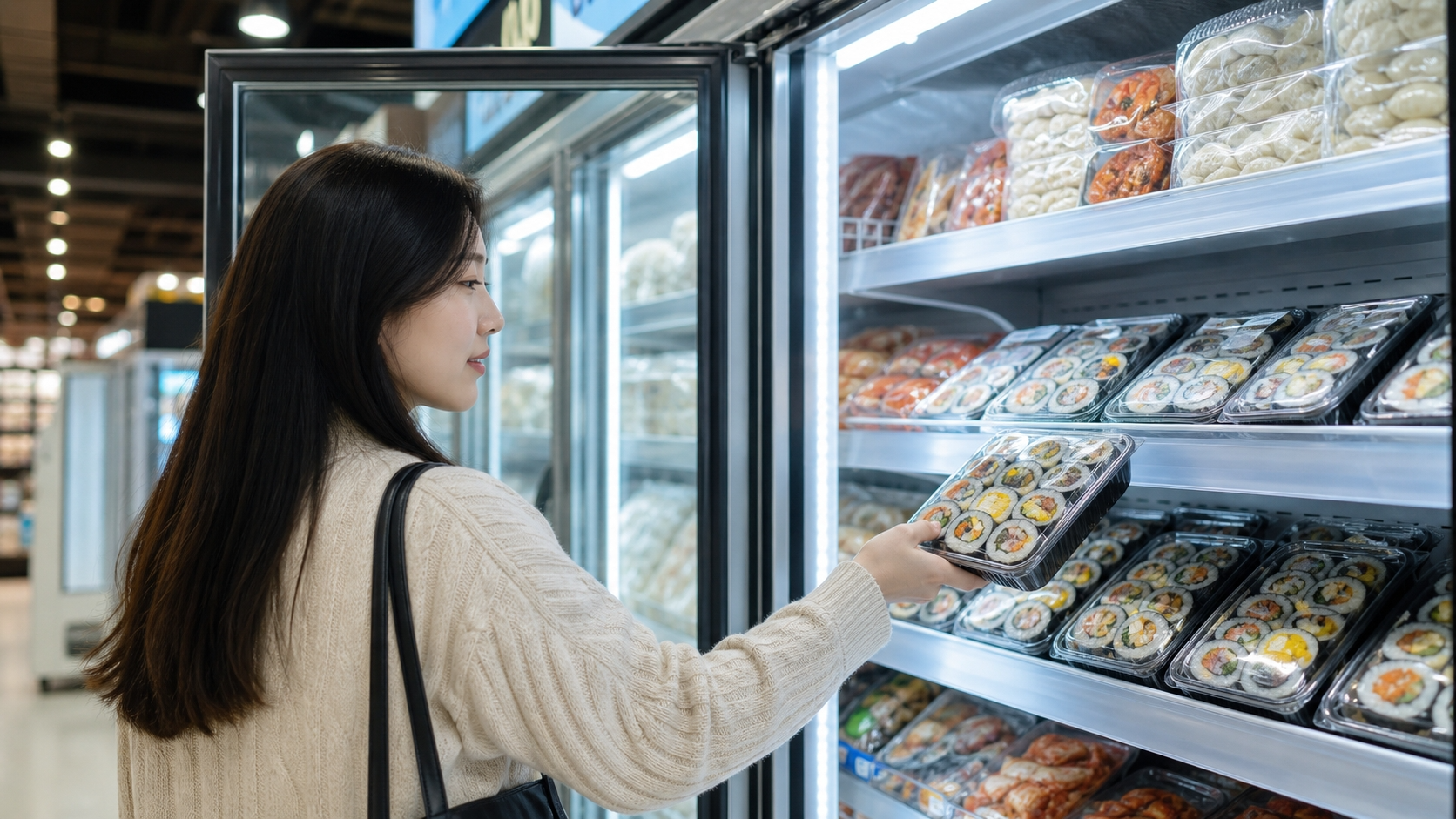
Finding kimbap in the frozen food aisle of a grocery store abroad feels a little strange at first. In Korea, we’re used to it being rolled in the morning and eaten by lunch, wrapped in foil for a picnic, sitting in the display case at a bunsik place. But now kimbap is waiting its turn inside a freezer. You microwave it or cook it however the package says, and it becomes a meal. That’s kimbap moving past the old idea that it only tastes good freshly rolled, and into the busy weeknight dinners of shoppers overseas.
According to the 2025 food industry performance figures released in May 2026 by the Ministry of Food and Drug Safety and the Food Safety Information Service, exports of certain ready-to-eat and convenience food categories that include frozen kimbap rose 180.9% year over year. Reading that number as the export growth rate for frozen kimbap alone wouldn’t be accurate, though — it’s a combined statistic covering several convenience-food categories. Still, that steep climb is real. It’s a sign that shoppers abroad are moving past a one-time restaurant experience of Korean food and into keeping it in the home freezer, pulling it out whenever they need it.
Why Kimbap Was an Easy Fit for the Freezer
Look closely at a single roll of kimbap and it actually has quite a few things going for it globally. Rice, seaweed, vegetables, and a protein are all packed into something you can hold in one hand. It’s not heavily spicy, so someone trying it for the first time can approach it fairly comfortably. It bends toward a vegetable-forward version for plant-based eaters, or toward bulgogi, tuna, or chicken filling for people who want meat or fish. It’s an everyday meal in Korea, but abroad it’s being read fresh, as a portable rice roll or a well-balanced convenience meal.
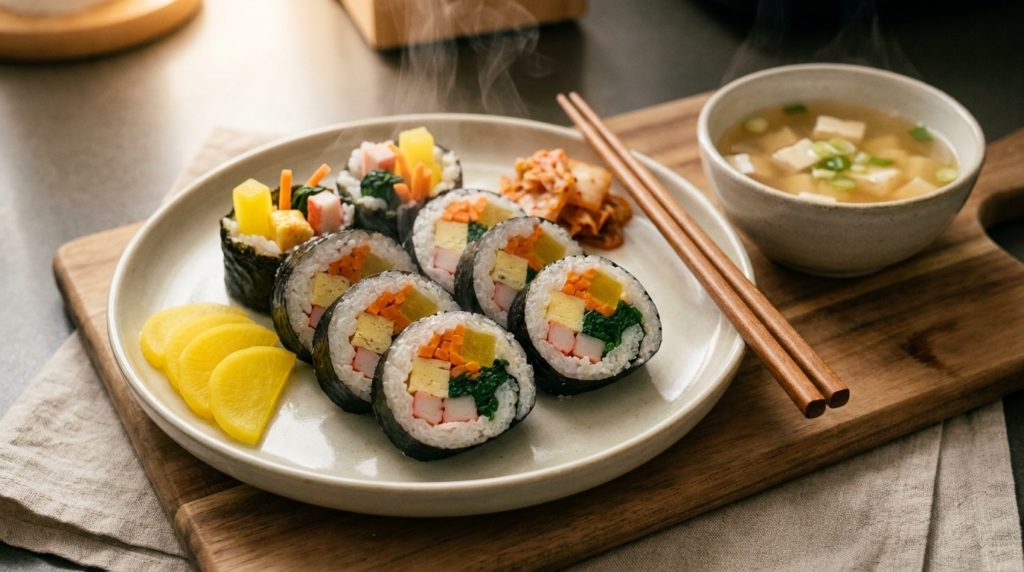
Freezing doesn’t solve every problem, of course. The texture of the rice really matters for kimbap. Heat it too long and the rice can go hard or the filling can dry out; heat it too little and the center stays cold. That’s why it’s worth checking the microwave wattage and thaw-and-heat instructions for each specific product. The time printed on the package isn’t there for nothing, it turns out. If you’re buying it for the first time, rather than tearing into a roll right away, heat it according to the recommended method first and check that the seaweed has softened enough.
What China’s Sam’s Club Confirmed
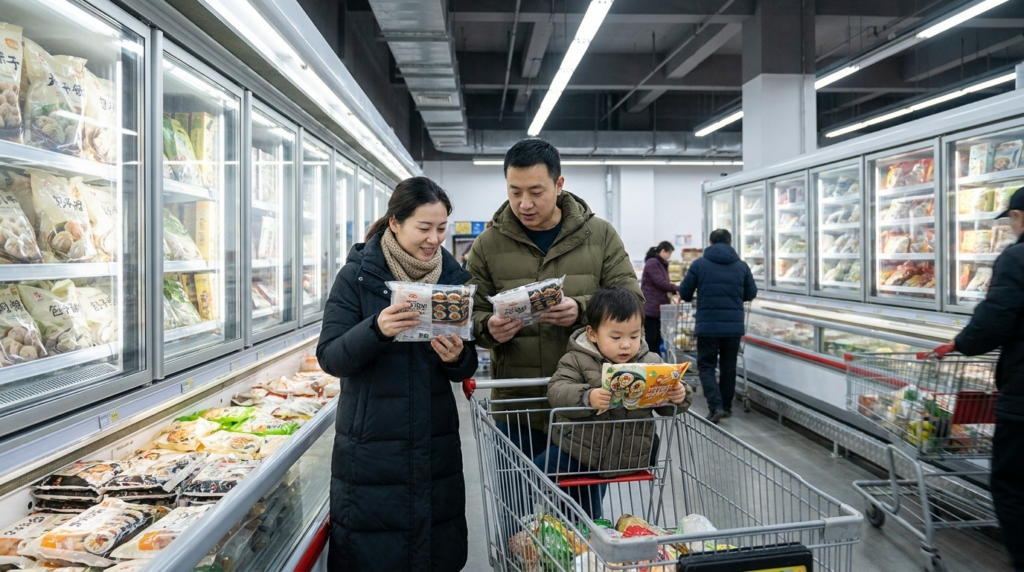
Pulmuone’s case in China shows that frozen kimbap can turn into actual purchases, not just a passing trend online. Pulmuone launched tuna frozen kimbap through the major Chinese retailer Sam’s Club in September 2025, and says it passed 2.5 million cumulative rolls sold in about 11 months. Local revenue came to roughly 10.4 billion won, and it exceeded the annual sales target the company had originally set. For shoppers who buy in bulk at a big warehouse-style store, frozen kimbap stopped being an unfamiliar restaurant dish and became something they could just stock in the freezer at home.
A result like this isn’t easy to explain by taste alone. The distribution network, the packaging, storage stability, and product explanations that local shoppers can actually understand all have to line up together. For a customer seeing kimbap for the first time, you have to tell them what’s inside, whether it’s eaten cold or heated, whether it’s a full meal or a snack — information so obvious in Korea that it’s easy to forget to spell out. Part of why Pulmuone is looking into local manufacturing partnerships and expanding its product lineup is to turn kimbap from something sold once into a category people buy again and again.
That ‘KPop Demon Hunters’ Kimbap Scene Was a Spark, Not the Whole Fire
A scene of a character eating kimbap in the Netflix animated film “KPop Demon Hunters” got talked about quite a bit online too. Clips of the character eating a whole roll in one go spread as short videos and memes, and social media filled up with posts of people trying to eat kimbap the same way. Food on screen often becomes the easiest entry point into an unfamiliar culture — think of a bowl of ramyeon in a drama, or convenience-store snacks in a variety show. This time, kimbap slipped naturally into view as just part of an animated character’s everyday life.
Still, it’s a mistake to draw a straight line of cause and effect between an online challenge and export statistics. Official figures show convenience food exports going up, but they don’t prove how much any single piece of content moved sales. The more accurate way to put it is that the content likely built curiosity around kimbap’s name and shape, and that curiosity spread further once it met a frozen-food distribution network that was already in place. When someone spots, in an actual store freezer, the food they saw on screen, that’s exactly the moment curiosity can turn into a purchase.
How to Make Frozen Kimbap Taste Better at Home
If you’re trying frozen kimbap for the first time, you don’t need to make a big production out of it. Heat it according to the package, add pickled radish, kimchi, and a warm bowl of soup on the side, and it turns into a much more substantial meal. If you like heat, mixing a little sesame oil and sesame seeds into gochujang for dipping works nicely too. Just don’t go heavy on the sauce right away, since the filling is already seasoned. Kimbap is built around a balance of rice, seaweed, and filling in every bite, and a strong sauce can easily bury that balance.
That’s ultimately why companies like Wooyang, which are pushing hard on both HMR production and overseas distribution for frozen kimbap, are getting attention. A single roll of kimbap looks small, but it packs in freezing technology, rice processing, packaging design, logistics, and research into local palates all at once. The real test going forward is moving past “I’ll try it because it’s Korean food” and becoming something people reach for naturally on a busy day. Whether a roll of kimbap pulled out of a freezer becomes an ordinary option on dinner tables abroad is something we’ll be able to gauge by watching the next round of sales data and new product launches.
Source: Ministry of Food and Drug Safety and Food Safety Information Service, 2025 Food Industry Production and Export Performance, May 29, 2026; Yonhap News Agency, May 29, 2026; The Korea Economic Daily, August 4, 2025.