Table of Contents
A Revenue Decline and a Major Investment, Announced Together
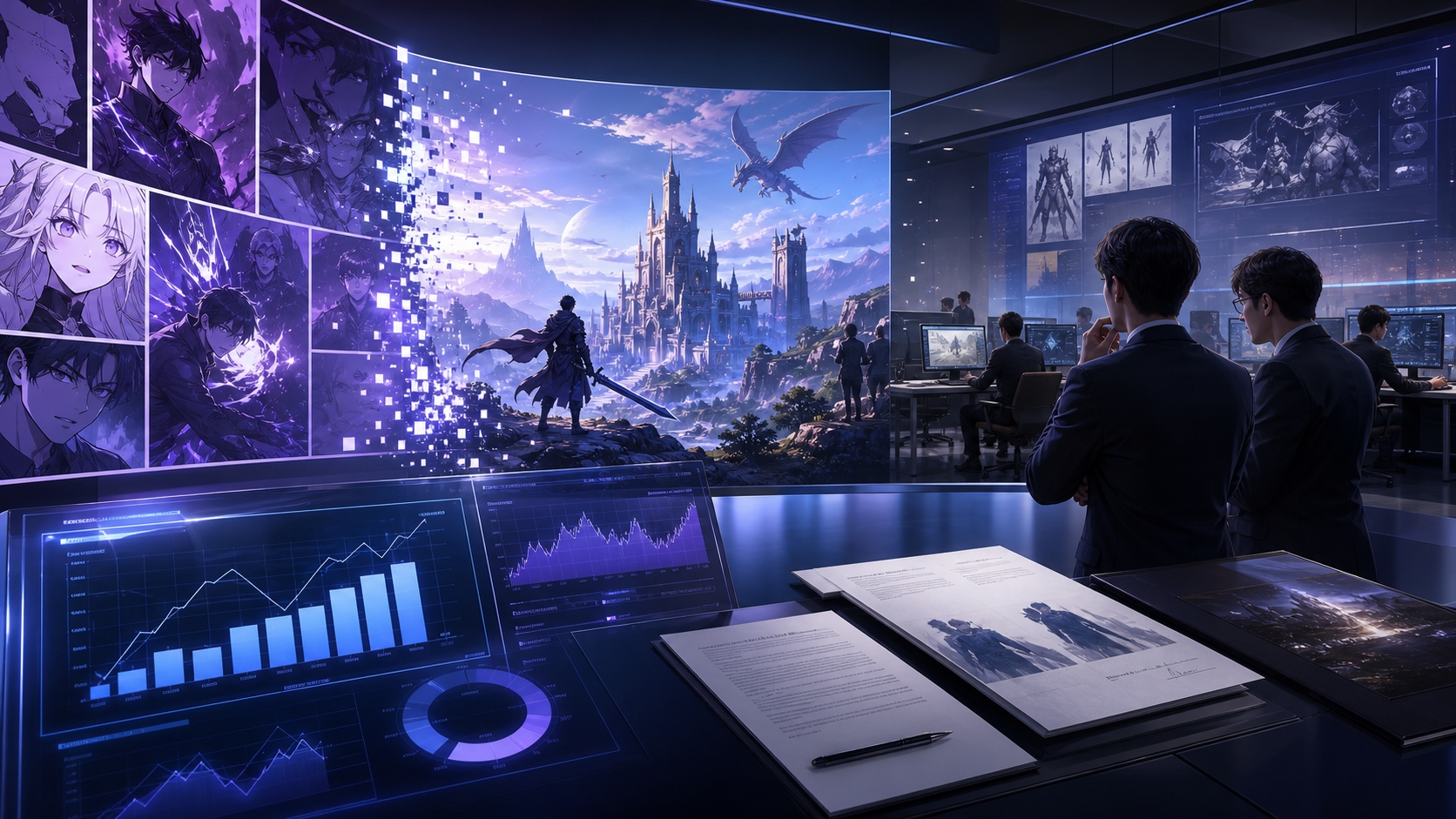
WEBTOON Entertainment announced a decline in second-quarter 2026 revenue and an operating loss of 23.4 billion won at the same time it unveiled an investment deal worth up to roughly 150 billion won to acquire a stake in a Korean game developer. Looking at short-term results alone, it appears the company chose a massive investment at a time when it should be cutting costs. But what the company is aiming for goes beyond webtoon distribution, toward a business structure that directly extends its original intellectual property into games and video.
WEBTOON Entertainment’s second-quarter revenue came to $338.465 million, or roughly 507.9 billion won, down 2.8% from the same period a year earlier. The operating loss stood at $15.568 million, about 23.4 billion won. Around the same time, the company announced a deal to acquire a stake in Korean game developer RIGames Holdings, building up to as much as 60% in stages. The total investment is about $100 million, roughly 140 to 150 billion won depending on the exchange rate applied.
Growth Hidden Behind Currency Swings, and a Real Loss
Currency exchange rates played a major role in the reported revenue decline. WEBTOON Entertainment operates across multiple markets, including Korea and Japan, but reports its results in U.S. dollars. Even if revenue in local currencies rose in each region, unfavorable exchange rate movements during dollar conversion can make the reported revenue appear to have fallen. The 507.9 billion won figure cited in Korean won is also a converted amount based on the quarter’s exchange rate.
The company said that on a constant-currency basis, excluding the effects of exchange rate fluctuations, second-quarter revenue actually rose 5.2% year over year to $366.4 million. Paid content revenue grew 4.3%, advertising 11.5%, and the IP expansion segment 4.2%. That’s why it’s hard to conclude, from the reported 2.8% decline alone, that user spending and every business segment contracted at the same time.
That said, not all of the weaker results can be blamed on currency alone. The operating loss widened from $8.763 million a year earlier to $15.568 million. Net loss also grew, from $3.883 million to $14.577 million. The company cited increased marketing investment as the main reason for the wider loss. In other words, once currency effects are stripped away, revenue trends grew, but the costs of running and expanding the business genuinely increased.

How the Company Can Pursue an Acquisition Despite the Loss
WEBTOON Entertainment posted adjusted EBITDA of $5.5 million in the second quarter. That was down from $9.7 million a year earlier, but it remained positive on an adjusted basis. Adjusted EBITDA is a supplementary metric that strips out interest, taxes, and depreciation to look at a business’s cash-generating power. Read alongside the accounting operating loss, it offers a fuller picture of how the core business is actually performing.
As of the end of June, cash and cash equivalents stood at roughly $583.1 million. The company said it carries no financial debt. That doesn’t mean the balance sheet has zero total liabilities from operations; it means there’s no burden from interest-bearing loans. Posting an accounting loss and lacking the cash to invest right now are not the same thing.
The roughly $100 million total investment is substantial compared to the company’s cash holdings, but it isn’t structured as a single lump-sum payment. The deal proceeds in two stages. WEBTOON Entertainment will first put in about 50 billion won to acquire a 20% stake in RIGames Holdings, then, once set commercialization conditions are met, invest an additional roughly 100 billion won to raise its stake to as much as 60%.
From a Pageview-Driven Platform to Direct Development
The webtoon industry’s traditional revenue structure has leaned heavily on paid content, where users pay to unlock the next chapter, and platform advertising. When popular titles were adapted into film, TV, or games, the industry also relied on licensing the IP to outside producers in exchange for fees. That structure reduces the cost and risk of failure that come with producing content directly, but even if the adaptation becomes a huge hit, the revenue the original platform can capture may be limited.
The reason WEBTOON Entertainment is pursuing a stake in a game developer is to change that limitation. By moving beyond a licensing-only relationship and taking direct part in game development and operation, the company can capture a wider share of the revenue generated by its original IP. It’s a strategy to treat a single webtoon not as a work consumed and finished within the platform, but as the starting point for multiple content businesses.
The investment in RIGames Holdings is less a purely financial investment than a bid to secure development capability. WEBTOON Entertainment is trying to build a direct business foundation for turning popular webtoons into games. The decision not to acquire the full 60% stake at once, but to add investment based on development progress and commercialization conditions, can also be seen as a mechanism to keep some control over the uncertainty inherent in the game business.
Games as a Way to Extend a Webtoon’s Lifespan
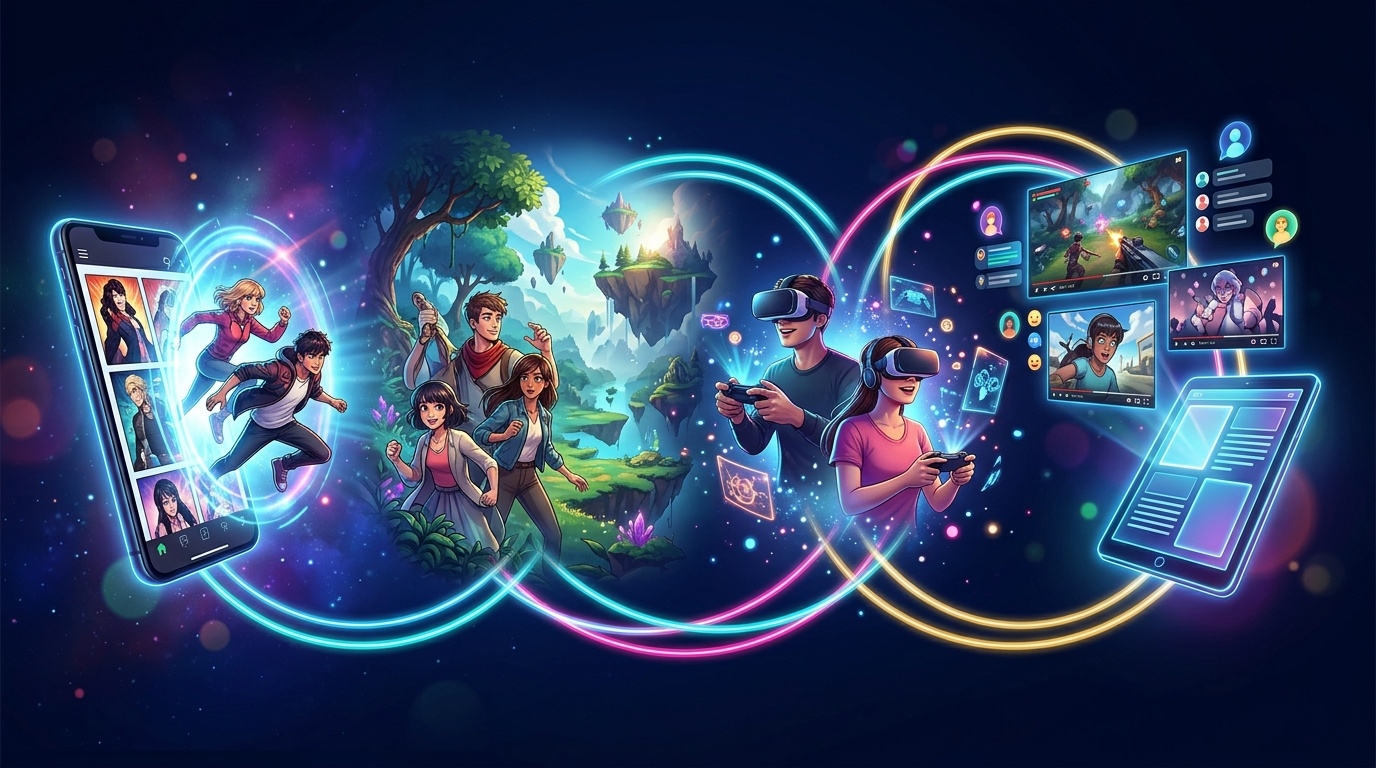
The purpose of expanding webtoons into games isn’t limited to game sales revenue alone. It can create a cycle in which readers of the original work play the game, and users who first encounter the story through the game move back to the webtoon platform. When the same characters and world extend across webtoons, games, and video, the touchpoints and length of time audiences spend with the work also grow.
In this structure, the long-term value of the IP matters more than the pageviews of a popular title. Even after a webtoon’s serialization ends, if games and video adaptations keep attracting new users, paid readership and advertising revenue for the original can rise again. Conversely, if the game falls short of expectations, development and marketing costs simply mount, with the risk of failing to convert the original’s fans into users of the new service.
Games are also produced differently from webtoons. Unlike a webtoon, where readers simply follow a fixed story, a game requires user input, repeat engagement, balance design, and long-term operation. That means a title’s popularity as a webtoon doesn’t automatically guarantee a game’s polish or commercial success. Behind WEBTOON Entertainment’s push to bring a developer directly in-house is an intent to connect that specialized expertise to its own business structure.
What Will Determine the Success of the 150 Billion Won Bet
It would be too simple to call this decision reckless expansion that ignores weak results, and too optimistic to call it an investment guaranteed to pay off in future growth. Excluding currency effects, all three business segments grew and cash reserves remain ample, but the operating and net losses both widened. If game development and marketing costs add up further, short-term profitability could come under even greater pressure.
In the end, the real test isn’t whether the total investment reaches roughly 150 billion won, but whether the company can deliver a game that meets its staged conditions. The direct-ownership strategy only proves its worth if original fans convert into game users, and game users flow back into webtoons and other content. This deal is a test of whether the webtoon industry can move beyond pageviews and per-chapter payments toward a model of directly developing and operating its own IP.
Source: WEBTOON Entertainment Q2 earnings disclosure, August 10, 2026; Electronic Times and Yonhap News Agency, August 11, 2026.