
Table of Contents
International Collaboration Leads to Arrests
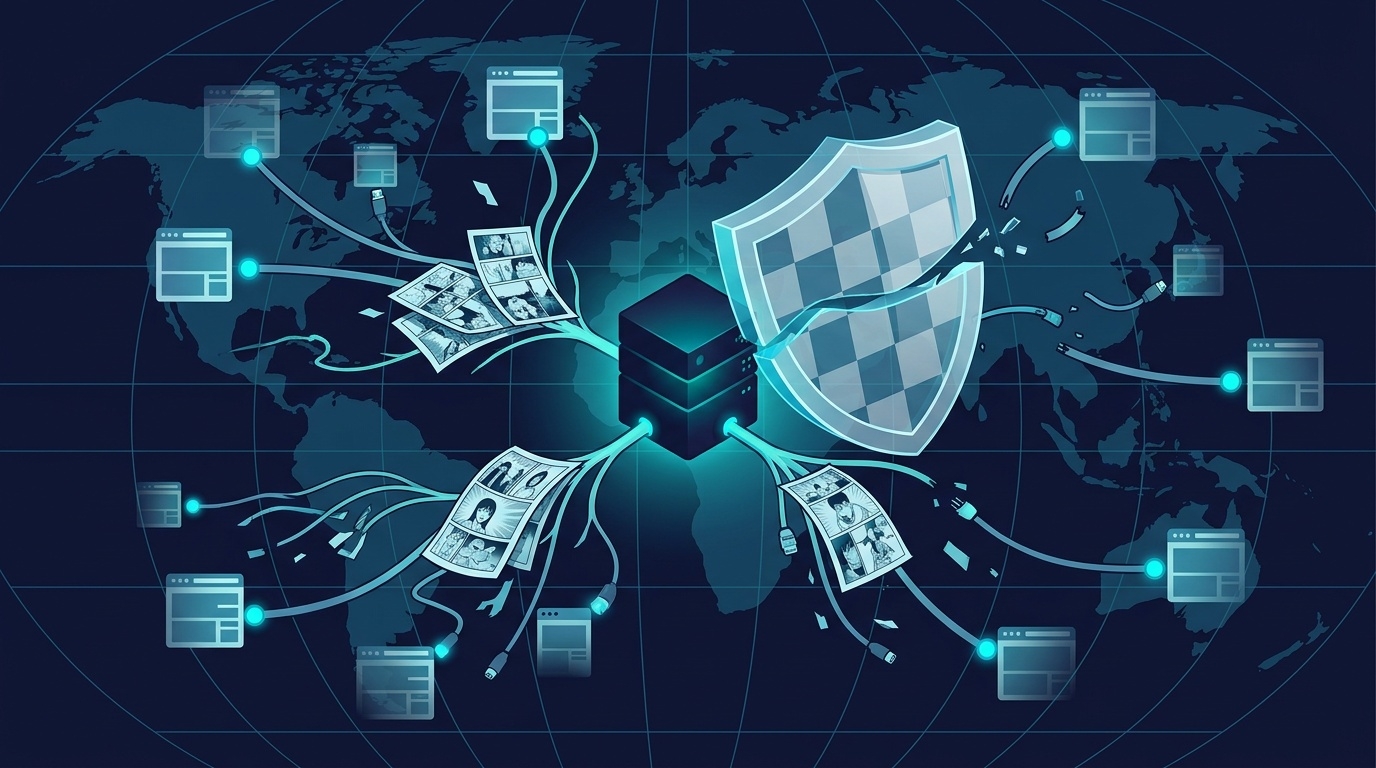
On August 13, 2026, Naver Webtoon announced the shutdown of three global, English-language illegal webtoon and comic distribution sites, along with the arrest of their operator. This was the result of a joint effort with South Korea’s Ministry of Culture, Sports and Tourism, Interpol, and North African law enforcement agencies. The operator is currently facing legal proceedings under local jurisdiction, and all three sites have been taken offline. Rather than simply blocking web addresses, this operation went further by tracking down the actual operator to hold them legally accountable.
These three sites were based in North Africa and managed by a single operator. They illegally distributed content, including Korean webtoons, targeting users in Western regions like the US and Europe. Investigations revealed that over 300 popular Naver Webtoon titles were scanned and translated without the copyright holders’ permission. The operator managed multiple sites simultaneously, creating a sprawling network that supplied pirated materials to a massive international audience.
A Primary Source with 130 Million Annual Visits
According to data analytics platform Similarweb, the three sites accumulated over 130 million visits annually. In just the last three months, they saw more than 20 million visits. Even among illegal distribution sites, this operation boasted significant traffic and continuously fueled the spread of pirated copies.
Notably, these weren’t just intermediary sites simply linking or reposting files found elsewhere. They acted as a primary source, directly scanning and translating works to upload the very first pirated copies. Because files released here were quickly siphoned off to numerous secondary piracy sites, shutting down this upstream source effectively disrupts the chain reaction of the same copies spreading across multiple addresses.
Because illegal sites can easily change URLs or re-emerge under new names, merely blocking access rarely solves the problem. This action targeted not just the three sites visible on the surface, but the core entity responsible for creating the initial copies and running the network. By severing the distribution chain at its very starting point, the operation helps protect the rights of creators.
Anti-Piracy Team Tracks Mergers and Name Changes
Naver Webtoon’s Anti-Piracy team, dedicated to combating illegal distribution, continuously monitored the operational structure and copyright infringement activities of these sites. They caught wind of attempts to evade crackdowns when several existing sites recently merged into a single new platform, changing their names and appearance. By tracking how these operational methods evolved, the team verified the connections between the sites and gathered clues pointing to a single operator.
During their monitoring process, Naver Webtoon collected operational clues, evidence of infringement, and damage reports, handing them over to relevant authorities. This data laid the groundwork for the joint operation between the Ministry of Culture, Sports and Tourism, Interpol, and North African law enforcement. It was a collaborative process where a private platform verified the infringement and organized the evidence, allowing government agencies, international organizations, and local police to use their respective jurisdictions to track and enforce the law.
Overseas illegal sites often have their operators, servers, users, and the affected creators and platforms scattered across different countries. Even if access is restricted in South Korea, the sites can continue operating abroad, and domestic companies cannot directly investigate local operators. By apprehending the operator and initiating legal proceedings through international cooperation, this effort successfully bridged the gap between jurisdictional limits and actual enforcement.
Protecting Creator Rights Following the Vietnam Takedown
Earlier in May 2026, Naver Webtoon successfully shut down three Vietnam-based global English webtoon and comic piracy sites, working closely with the Ministry of Culture, Sports and Tourism and the Vietnamese Ministry of Public Security. Those sites had a combined annual visit count exceeding 1.1 billion. The North African case serves as a powerful follow-up, demonstrating how collaboration with local law enforcement can dismantle massive illegal distribution networks in other regions as well.
Traffic to illegal sites doesn’t necessarily equate to an identical loss in paid revenue. However, unauthorized scanning and translation exploit the value of the works without permission, actively undermining the ability of official platforms to return profits to creators through views and subscription fees. Furthermore, as pirated copies spread across multiple sites, it becomes increasingly difficult to track down the original leaker and remove individual posts.
With this recent takedown, the scope of copyright enforcement has expanded from temporarily blocking individual addresses to actively tracking down both the sources and the operators. Since legal proceedings against the operator are ongoing, the final legal judgment remains to be seen. Still, repeated enforcement actions through international organizations and local police send a clear message: illegal distribution networks operating across borders can, and will, be held accountable.
Source: Naver Webtoon press releases, August 13, 2026; June 12, 2026.