
Table of Contents
Where 75,000 boxes of salted cabbage went
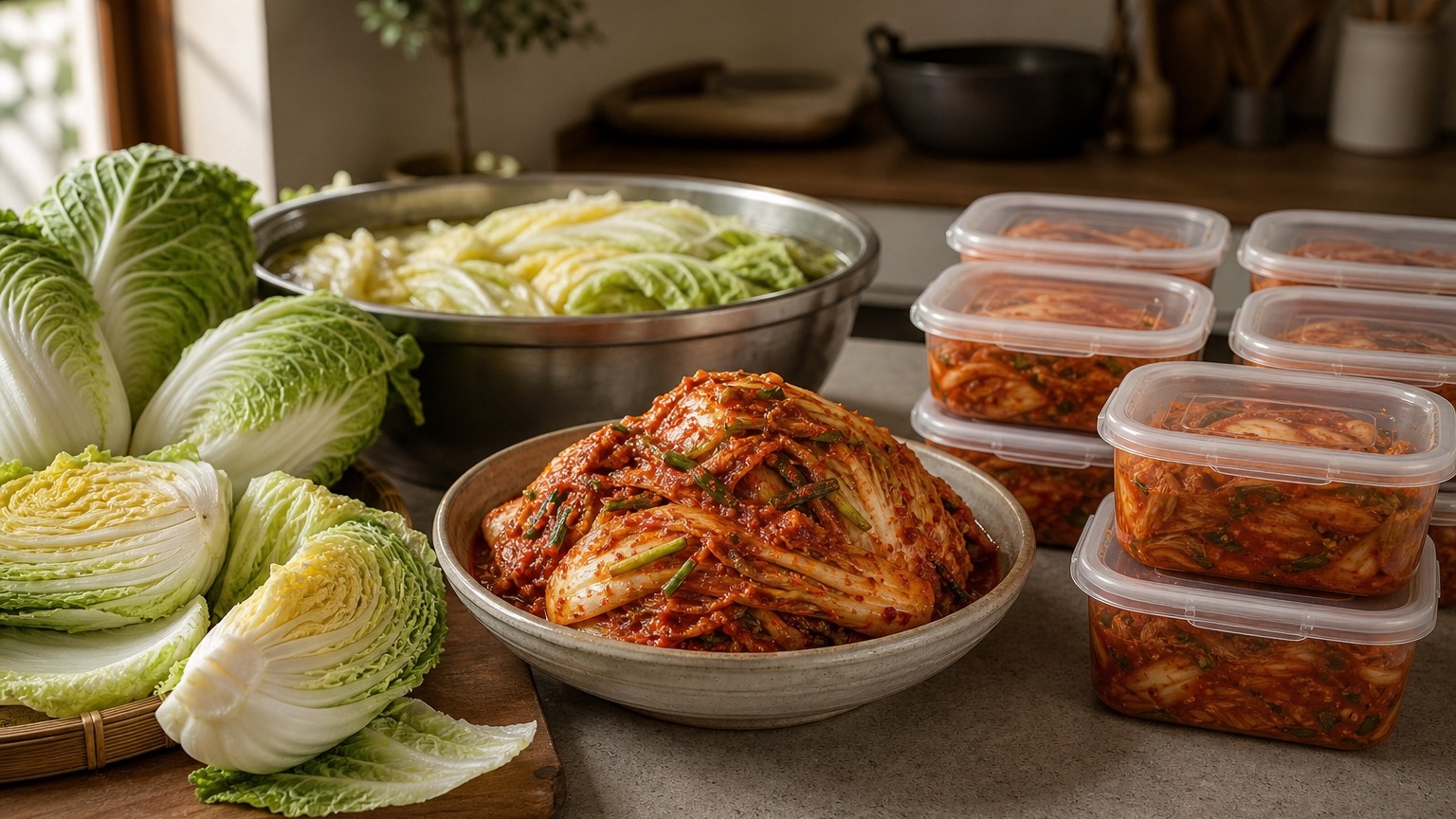
In early October, Lotte Mart and Lotte Super opened their first round of preorders for salted napa cabbage, and all 75,000 boxes sold out in six days. Demand surged as households got ready for winter ahead of kimjang season. What shoppers reserved was cabbage that had already been through the salting step. They still plan to make kimchi at home, but they are buying part of the prep work as a product. The order of kimjang tasks, which used to start with buying whole cabbages and salting them, is now changing at the shopping stage.
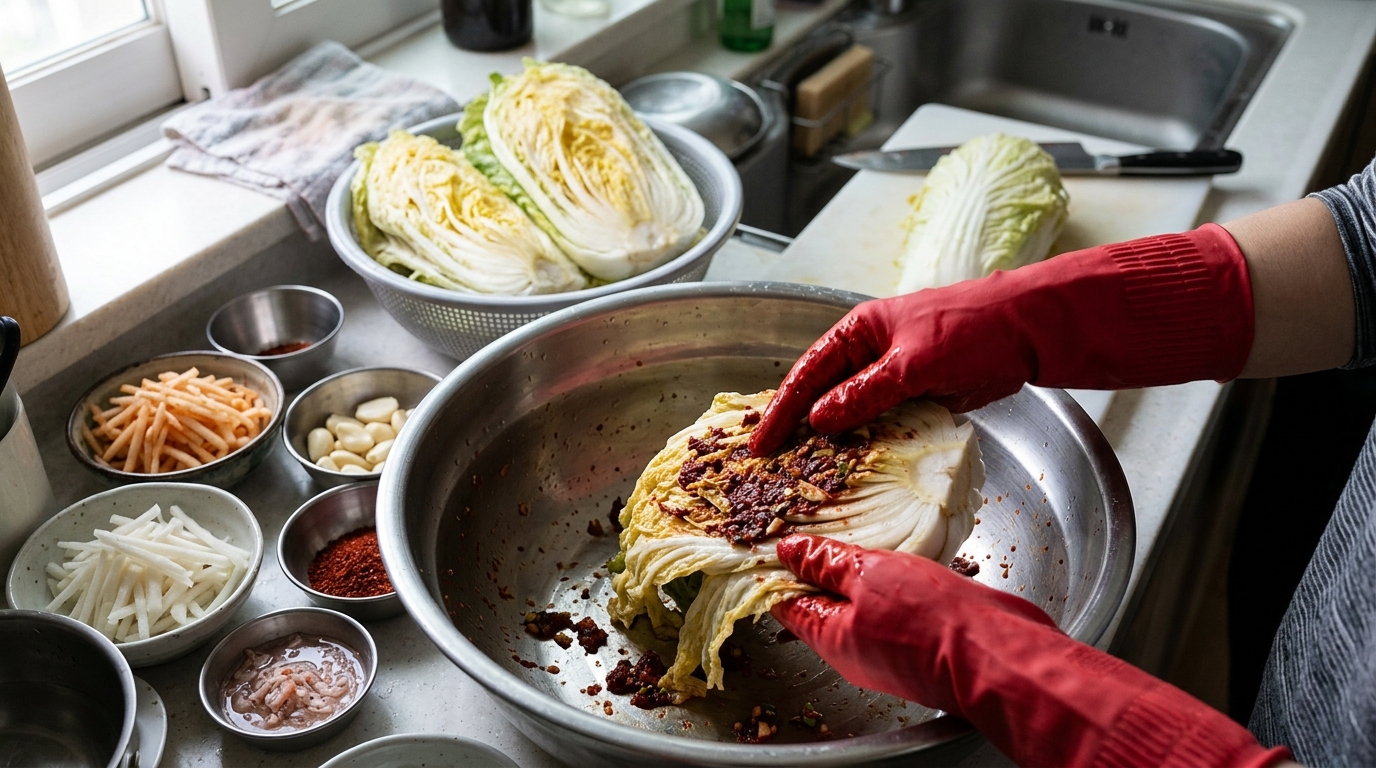
Kimjang is the Korean custom of making a large batch of kimchi at once to eat through the winter. The work runs from trimming and salting cabbage to mixing the seasoning paste and rubbing it in, and families often gather to split the labor. Deciding what to make and how much is also a way of dividing up a family’s time and hands. Ordering pre-salted cabbage takes the salting off the list. Families keep the taste of homemade kimchi while cutting the work it takes to get there.
This kimjang season brings lower cabbage prices and smaller kimjang batches at the same time. The autumn cabbage supply is expected to grow, and cabbage in stores costs less than last year. Meanwhile, retailers are selling more packaged kimchi and more small-size products. The preorder sellout fits the same pattern. Two choices are growing side by side: keep making kimchi at home with less work, or buy finished kimchi in the amounts needed. Alongside ingredient costs, time and effort have become part of the kimjang decision.
Cheap cabbage still leaves a seasoning bill
According to Aju Business Daily, citing the Korea Agro-Fisheries and Food Trade Corporation’s (aT) price data, napa cabbage sold at retail for 5,833 won a head on October 8, down 12.85% from a year earlier. Radishes fell 17.94% to 2,292 won each. That eases the cost of the main vegetables for families preparing kimjang. Buying the same amount of cabbage and radish costs less than last year, and households can feel the drop as soon as they shop for the amount their family will eat.
Seasoning ingredients moved the other way. On the same day, salted shrimp (saeujeot) cost 18,984 won per kilogram, up 23.43% from a year earlier and more than 15% above the usual level. Peeled domestic garlic rose 0.13% to 10,711 won per kilogram. Even after buying cheap cabbage, families still have to pay for fermented seafood and garlic. Those preparing kimjang end up weighing the savings on vegetables against the cost of seasonings in the same shopping basket.
When deciding how much kimjang to make, the cost of the whole preparation matters more than the price of a single cabbage. More cabbage means more radish and more seasoning to match. With prices for each ingredient heading in different directions, as they are this year, shoppers have to check where costs are falling and where they are rising. Then comes the time spent trimming vegetables and making the seasoning paste. That everyday reality is why news of cheaper cabbage alone gives families little reason to make a much bigger batch.
How a bigger autumn harvest changes the shopping picture
Cabbage prices are falling because supply is expected to rise. The Korea Rural Economic Institute forecasts this year’s autumn cabbage harvest at 1.222 million tons, about 19% more than last year and 3.2% above the average year. It expects October wholesale prices around 8,000 won per 10 kilograms. For families buying cabbage for kimjang, supply looks better than last year. When deciding how much to buy, they have more room to think about how much they will actually eat and how many hands they have, rather than about the price.
Cabbage was already cheaper in September. The average retail price that month was 5,929 won a head, 8.5% lower than a year earlier and 12.7% below the usual price of 6,790 won. Going into kimjang season, cabbage was already one of the lighter items on the shopping list. With lower prices as a base, shoppers can adjust how much to make themselves or compare the cost of pre-salted cabbage and finished kimchi. The main question shifts from buying lots of cheap cabbage to deciding how to get the kimchi the household needs.
For radishes, timing purchases around the kimjang date matters. The autumn radish harvest is forecast at 345,000 tons, up 3.2% from last year, but October shipments are expected to drop 4.7%. In September, radishes wholesaled at 15,230 won per 20 kilograms. Families who want to buy cabbage and radish on the same day need to watch the shipment schedule for both. As they pick a kimjang date and order what they need, the difference in when each crop reaches market shapes their buying plans.
Families are planning for less cabbage
Household kimjang plans have shrunk in size. In a Korea Rural Economic Institute survey, the number of cabbages a four-person household planned to buy for kimjang fell from 21.9 heads in 2020 to 18.3 last year. The baseline for how much kimchi a family prepares has gotten smaller. Less cabbage also scales down the trimming and seasoning work. It means fewer tasks to split among family members and kimjang planned around the amount a household can manage.
In last year’s survey, 62.3% of households said they make their own kimchi, down 2.2 percentage points from the year before. The share that buys store-made kimchi rose 3 percentage points to 32.5%. Household choices are moving between kimchi made at home and kimchi bought at the store. Families who make their own prepare ingredients and labor, while families who buy choose products and package sizes. The work a family takes on to get kimchi to the table now differs from home to home.
The top reason for buying store-made kimchi was “I can buy only as much as I need,” at 39.5%. Another 33.1% said “making kimchi is a hassle.” Controlling quantity and cutting down prep work are clearly important to shoppers. Even when cabbage gets cheaper, coordinating family schedules and preparing ingredients still take effort, and buying finished kimchi skips that process. That is why the decision about whether to make kimjang now includes who will find the time and do the work, along with what the ingredients cost.
Small packs for now instead of a winter’s supply
This year’s sales figures show the habit of buying kimchi in small amounts. Lotte Mart’s packaged kimchi sales from January through September rose about 5% from the same period last year. At E-mart, sales of small packaged kimchi of 1 kilogram or less grew 6.6% over the same period. More households are picking finished kimchi off store shelves instead of making a big batch at home. Small packs make it easy to match each purchase to what is left in the fridge and what the family will eat next.
Small sizes are growing online too. On Kurly, packaged kimchi transactions from July through September rose 35% from a year earlier, while small-size products grew 39%, outpacing packaged kimchi overall. The preference for buying only what is needed has carried over to online grocery shopping. Instead of stocking up on a large amount at once, shoppers add kimchi sized to their appetite while ordering other groceries. Buying kimchi is moving from a big seasonal project to part of everyday grocery shopping.
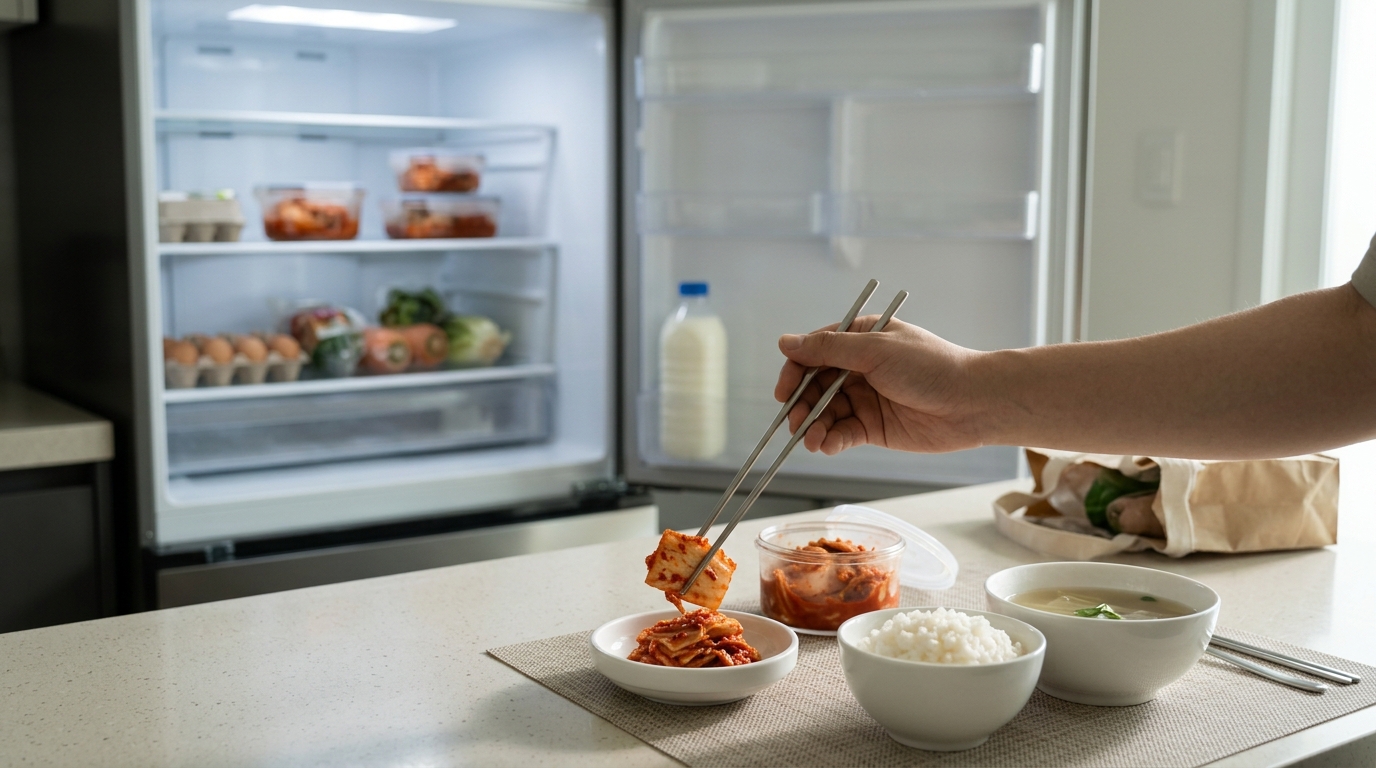
This approach also changes the order of storing and eating. Kimjang means making a large amount first and eating it through the winter. Buying small packs starts with how much is needed now, then repeats later. Households store less at home and can time their next purchase to how fast they eat. The answer that came up most in the institute’s survey, “as much as I need,” matches this way of living. It keeps the kimchi habit while breaking preparation into smaller units.
A market where shoppers pick taste and brand, not just convenience
Choices in finished kimchi are widening by price range and brand as well as by size. Hyundai Department Store’s Apgujeong flagship began selling “Myeongin Myeongchon Kimchi” on October 13, as announced, with napa cabbage kimchi priced at 30,000 won per kilogram. Instead of combining ingredients themselves, shoppers choose kimchi based on the taste and ingredients of a finished product. As kimchi, Korea’s everyday side dish, also sells as a premium department store food, buyers have more room to choose the quality and price level they want.
Hotel kimchi has become a product in its own right. Josun Hotels & Resorts sold 54 billion won worth of kimchi last year and has set a sales target of 62 billion won this year. Demand for bringing a hotel’s flavor to the family table has become a real line of business. Shoppers hand the work of mixing seasoning to a company and pick the product they like, and companies sell kimchi as a separate product. Part of the food prep once done at home now flows into professional production and purchase.
As the kimchi market splits into segments, each household can mix and match how it prepares kimchi. A family might buy small packs of packaged kimchi day to day and pick a premium product when it wants a particular taste. Those who prefer homemade kimchi can cut prep work with pre-salted cabbage. Households are sorting out what to do themselves and what to buy. Even without the whole family gathering to make kimchi at once, plenty of choices remain in how kimchi fits into daily meals, and retailers are targeting each of those needs.
What the salted cabbage sellout says about kimjang’s future
A family that reserves pre-salted cabbage has effectively bought part of the kimjang process. The salting is handled by a product, while making the seasoning and mixing it in can still happen at home. The labor family members share gets reorganized accordingly. With less prep, families can keep up kimjang at a scale they can handle. Rising sales of pre-salted cabbage and finished kimchi point to shoppers adjusting how much of the cooking they take on themselves.
Safety checks are also under way for families who pick their own ingredients. The National Agricultural Products Quality Management Service is testing kimjang vegetables for pesticide residues from October 12 to November 30. For households buying cabbage and radish and preparing seasonings, the safety of raw ingredients matters alongside price. This kimjang season, families will be looking at lower cabbage prices, higher salted shrimp prices and a wider range of processed products all at once. With those conditions in front of them, each household will choose a way of preparing that fits its budget, labor and taste.
The 75,000 boxes of salted cabbage that sold out in six days reflect a choice to keep kimjang going with less effort. The growth of small kimchi packs reveals a habit of buying only what will be eaten soon. What to watch next, along with cabbage prices, is how households divide kimchi preparation into smaller units. Somewhere between a winter supply made all at once and an everyday food bought when needed, kimjang is turning into a new mix of family labor and store-bought products.
Source: Aju Business Daily, October 11, 2026, https://www.ajunews.com/view/20261011144822655 ; Aju Business Daily, October 12, 2026, https://www.ajunews.com/view/20261012151833958 ; Yonhap News Agency, October 6, 2026, https://www.yna.co.kr/view/AKR20261006026700030 . Price data come from the Korea Agro-Fisheries and Food Trade Corporation’s agricultural price information service; production forecasts and kimjang purchase-plan data come from Korea Rural Economic Institute releases cited in those reports.