
Table of Contents
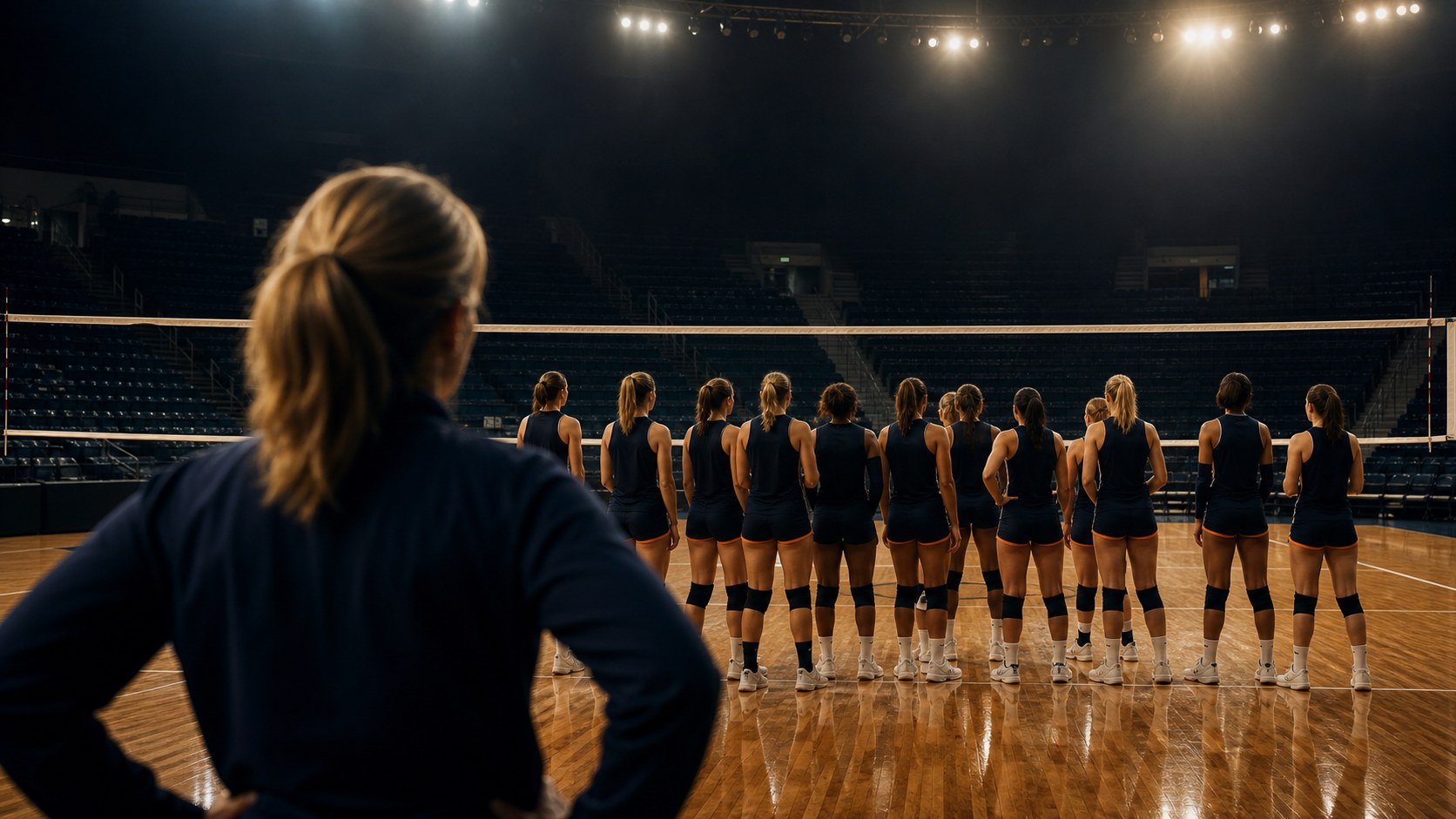
The Wonderdogs at the pro draft venue
The Wonderdogs held their send-off ceremony at the venue where Korea’s actual professional volleyball draft had taken place. In front of the players, the show played a mock draft video in which pro club officials assessed their skills. The scene comes from MBC’s “Rookie Coach Kim Yeon-koung 2,” which premiered October 11. It was billed as a team introduction, but what the players faced was an evaluation of their potential as professional athletes, not their fame as TV cast members. At that venue, the goal for the new season was framed as something bigger than winning a single match.
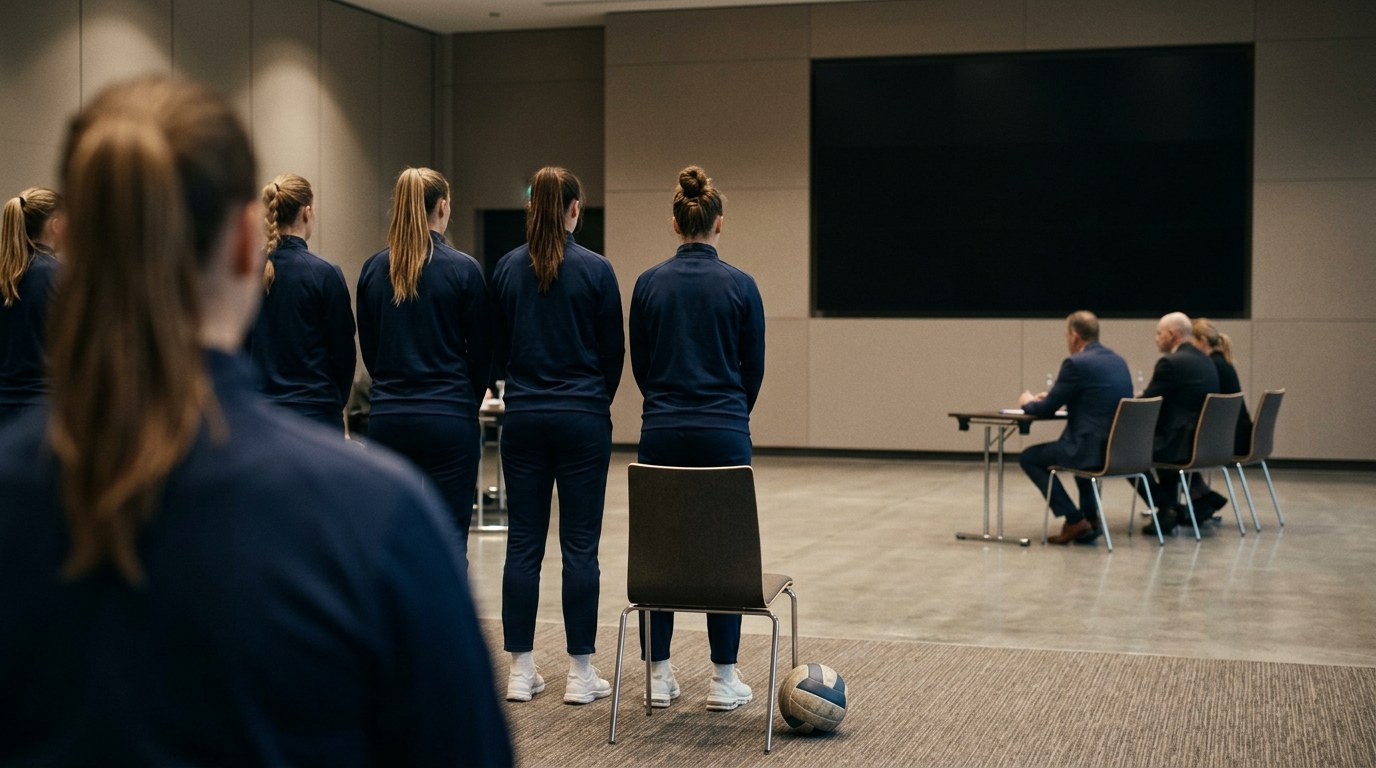
A draft is how clubs select players. What the show revealed that day, though, was a mock evaluation of the players’ competitiveness, not real contracts. It does not mean the Wonderdogs have become a pro club or that any player’s future is settled. The scene matters because a team built for TV stepped past the goals it had set for itself and faced an outside assessment. It showed, in concrete terms, the standards a team has to meet if it wants to go pro.
For international readers who remember Kim Yeon-koung as one of the world’s best volleyball players, this is a familiar figure in an unfamiliar role. Instead of spiking the ball herself, she now has to pick players and turn them into a team. On top of that sits the question of whether the team can exist after the cameras stop. The show tries to tie a coach’s growth and the players’ second chances to a real goal: founding a professional club.
The “eighth club” is a goal, not a status
Season 2’s stated goal is to found the eighth club in Korea’s women’s professional volleyball league. Kim summed it up as “found a club or disband.” The plan is to build pro-level strength, prove what the Wonderdogs are worth and find an owner. A volleyball team operations office was set up inside the broadcaster, and the producers sought advice from the Korean Volleyball Federation (KOVO). Preparing for the team’s survival off the court has become part of the show’s story.
Founding a club here is different from casting new players for another season of TV. The aim is to turn a team assembled for broadcast into an actual professional club. So “eighth club” should not be read as a status already secured. The operations office and the KOVO consultations are steps in the process, and they are separate from any announcement that a company has signed on or that the club’s operations are confirmed.
That difference changes how wins and losses look. Winning a match can show a team’s competitiveness, but it does not produce someone to run a club. Corporate interest, however strong, cannot prove what the roster can do on the court either. The Wonderdogs still have two jobs: showing their skill on the court and finding a sustainable way to operate off it.
Reading the premiere’s numbers: ratings and buzz
According to premiere coverage citing Nielsen Korea, episode 1 drew a 3.0% rating among viewers aged 20 to 54, the highest of any entertainment show that day. Its household rating in the Seoul metropolitan area was 5.0%, higher than the season 1 premiere. The minute-by-minute rating peaked at 6.6% during the scene introducing a player from Japan’s Shujitsu High School, whom the show described as the world’s No. 1 youth player. Viewers tuned in most at the moment the team’s next opponent came into view.
The buzz rankings told a similar story. Reports citing Good Data Corporation’s FUNdex said the show ranked first in Sunday non-drama buzz across TV and streaming in the second week of October. That measures the conversation around a show, separately from ratings. The comparison group matters, though: it covers Sunday non-drama programs. The ranking does not mean the show had the most buzz of any genre on any day of the week.
These numbers show the premiere caught people’s attention. But a rating in one age group, a household rating and a single scene’s peak are not the same measure. Buzz is not a direct judgment of the players’ skill or of the odds of founding a club either. Keeping the show’s opening scores apart from the work of building a pro club stops the show’s popularity from hiding the business problems that are still unsolved.
The Iran war, a folded team and the backdrop to the club talks
In episode 1, the producers explained that companies showed interest in founding a club after season 1, but the talks did not go smoothly. As reported by Money Today, the producers said, “When the Iran war broke out early in the year, every company had a hard time.” They added that the disbanding of the AI Peppers volleyball team had also soured the mood. That is the producers’ account of the background to the club talks, not an economic analysis of each company’s finances.
The “disbanding” of the AI Peppers makes more sense alongside what followed. When Pepper Savings Bank stopped running the team, it faced dissolution, and SOOP took it over and relaunched it as the SOOP Supers. That is the same SOOP Supers that appears on the Wonderdogs’ season 2 schedule. The operating crisis mentioned earlier and the new club that shows up later are one story, not two.
The connection also shows that launching a new team and taking over an existing one are different things. The SOOP Supers came from the acquisition of Pepper Savings Bank’s team, while the Wonderdogs are pursuing a separate eighth club. Both are talking about fresh starts, but they are not being built the same way. Knowing why the producers described the club talks as uncertain, and how their current opponent came to exist, helps explain how Korean women’s volleyball is changing.
Players returning to the pros left a team to rebuild
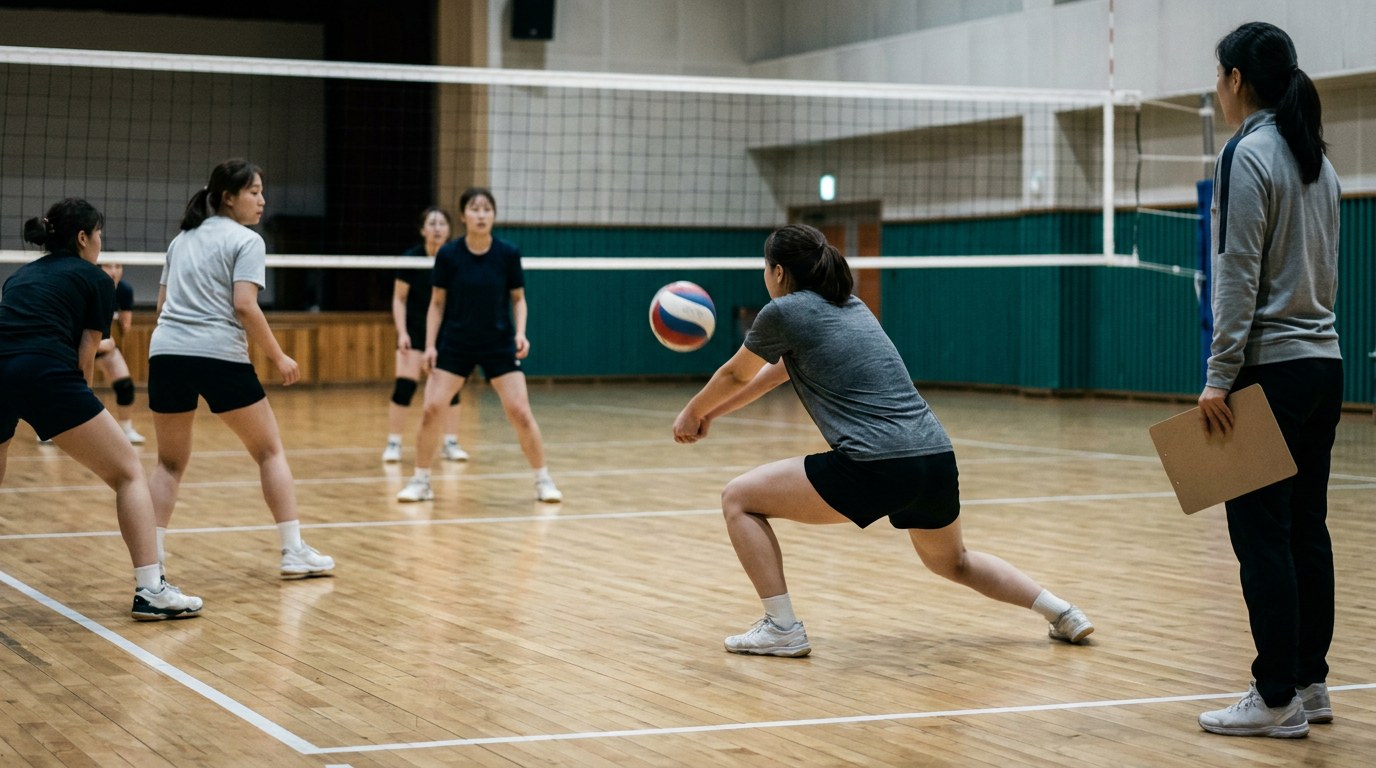
The roster changed too. Lee Na-yeon, Pyo Seung-ju and Gu Sol went back to the professional league, leaving gaps in the Wonderdogs’ lineup. Kim ran tryouts with a coaching staff that includes Yoon Bong-woo and Lee Hyo-hee and picked a final group of 13. Season 1 members Gu Hye-in and Lee Jin did not make the final list. Spots were not guaranteed by past relationships or screen time, and the club-founding goal showed up in concrete choices from the selection stage on.
Tryouts are where coaches look at applicants and pick the players the team needs. For returning members it was a chance to earn their places again, and for newcomers it was a chance to get in. Kim’s role went beyond advice and encouragement. She had to decide which of the players she had worked with would come along for the next stage, cheering on second chances while selecting on current form.
Describing those returns to the pros only as a loss of firepower erases what the players themselves achieved. Treating them only as success stories misses the rebuilding burden on the team left behind. For the Wonderdogs, an opportunity for one player turned into a new task for the whole team, which is why season 2 could not simply carry over the old lineup. The 13 new picks have to bring their own skills and also blend very different experiences into one team’s play.
A rematch with Japan as the first test
Season 2 revealed seven opponents, including the Heungkuk Life Pink Spiders, the Hyundai E&C Hillstate, a professional team from Southeast Asia and the SOOP Supers. First up is Japan’s Shujitsu High School, which handed the Wonderdogs a come-from-behind loss in season 1. The rematch was set for episode 2, scheduled to air October 18 at 9:10 p.m. How the new roster handles the team that beat them last season is its first real test.
This article looks at how the season was set up rather than at the match result. Last season’s comeback loss is the backdrop to this match, not a basis for predicting it. The player introduction at the end of episode 1 also worked as a teaser to build anticipation. The tension a broadcast creates and a confirmed match result are two different things.
The Korea-Japan framing alone does not explain the whole season. The Shujitsu match carries the weight of a rematch, but the show’s final goal is not revenge on one opponent. The bigger picture is a new team proving itself against a wide range of opponents. Whether the team can avenge an old loss and whether it has the strength to aim for pro status are linked questions, but they are separate ones.
Turning a mock draft into real opportunities
Go back to the mock draft at the send-off ceremony, and the question facing the players was how the pros see them. An evaluation video cannot replace a contract, and high ratings cannot replace a club owner. The show’s popularity, the players’ careers and the founding of a club can influence one another, but they are different achievements. Progress on one front is not proof that the others are solved.
Kim Yeon-koung’s name gives international readers a way into the story. Behind it are players trying to earn another shot and a coach who has to turn them into a team, along with producers who need to find a way to keep that team going beyond the broadcast. The premiere’s strong start matters because it gives more people a reason to follow that process.
What to watch next goes beyond how much buzz the Wonderdogs generate. Do the players get real opportunities, does the new roster prove competitive, and does anyone step forward to run the club? Whether the players who stood before the pros’ judgment at the send-off can keep playing under the same team name after the show ends is still an open question, and closing that gap is what this season is about.
Sources: Money Today, October 12, 2026; MBC News, October 14, 2026; MBC Entertainment program notes and KBS, “A Second Chance: SOOP Supers Make a New Start,” accessed October 18, 2026.


