
Table of Contents
Joseon’s Dangerous Wager Unfolds Again After 23 Years
The 2003 film Untold Scandal, which captivated adult audiences in Korean theaters, has returned 23 years later as a Netflix series. While it shares the same narrative roots and Joseon dynasty setting, the new adaptation expands the story from a single feature film into an eight-episode run. Even before its release, audiences were eager to see how this familiar tale would be reimagined for the streaming era.
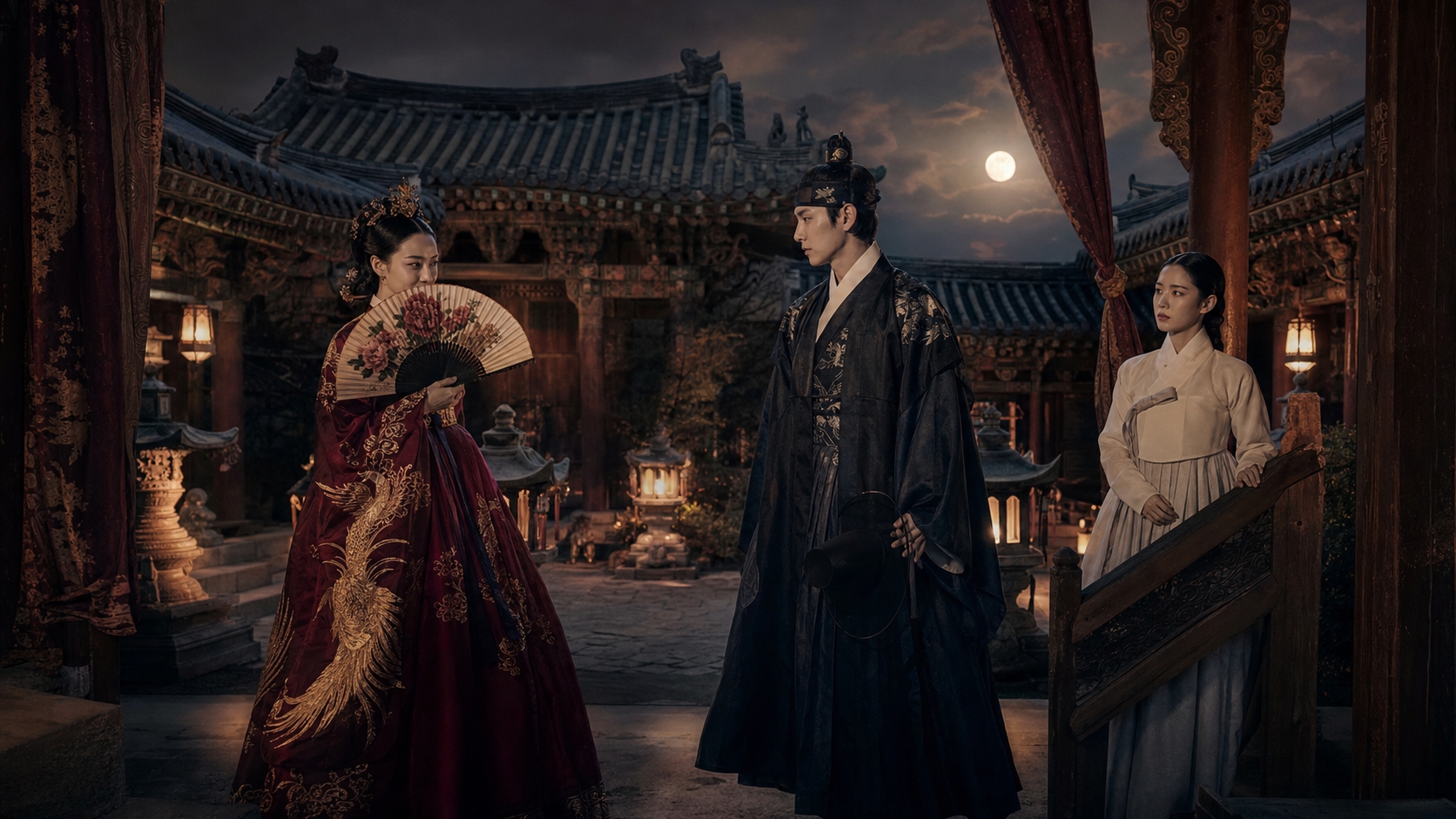
At the heart of the new Scandal series is Lady Cho, a talented woman stifled by the rigid constraints of Joseon society. She initiates a dangerous wager by pulling in Cho-won, a notorious playboy, to seduce Hee-yeon, a young widow living a virtuous life. Treating seduction as a game and a competition plunges the three into a tangled web of desire, deceit, and complex emotions.
Son Ye-jin stars as Lady Cho, Ji Chang-wook as Cho-won, and Nana as Hee-yeon. Directed by Jung Ji-woo, the script was penned by Lee Seung-young and Ahn Hye-song, with production by Movie Rock and Sumokwon. The trio of star actors, combined with a seasoned film director and the reinterpretation of a story that was already a massive hit in Korea, built strong early anticipation for the project.
The Story’s 1782 French Origins
The lineage of Scandal traces back to 18th-century France. French author Pierre Choderlos de Laclos published the novel Dangerous Liaisons (Les Liaisons Dangereuses) in 1782. The work centers on the relationships of characters who make a wager out of seducing and manipulating others. The core of the story explores the fallout that ensues when desire is treated as a calculated game, affecting both the players and everyone around them.
This French narrative translates seamlessly to a Korean setting because it deals with universally understood emotions across time and geography, such as seduction, jealousy, love, and honor. Yet, even with the same plot, the implications and risks of the characters’ actions shift when the social norms change. The Korean adaptation transplants this universal relationship dynamic directly into the strict class hierarchy and gender rules of the Joseon era.
Joseon was an era where personal romance, marriage, and social reputation operated under vastly different rules than today. The standards were starkly unequal, especially between women who were demanded to be chaste and men who enjoyed behavioral freedom. This environment elevates the wager among Lady Cho, Cho-won, and Hee-yeon beyond a mere love triangle. It lays bare who initiates and controls the relationships, and who ultimately bears the heavier burden of the consequences.

The Cultural Memory Shaped by the 2003 Film
The work that popularized this story in Korea was the 2003 film Untold Scandal. Starring Bae Yong-joon, Lee Mi-sook, and Jeon Do-yeon, the movie successfully relocated the character dynamics of the French novel to the Joseon period. Despite receiving an R-rating at the time, recent reports from outlets like the Hankook Ilbo and The Korea Times highlight it as a box office hit that drew in 4.15 million viewers.
There are some discrepancies in the exact audience figures depending on the source. While recent coverage and certain records cite 4.15 million, other tallies place the number at 3.52 million. Because the numbers vary based on counting methods, it is hard to pin down one absolute figure. What remains undisputed, however, is that this mature-rated period piece drew a massive crowd and left enough of a mark that the story was worth retelling decades later.
The success of the 2003 film proved that adapting a classic French novel into a Joseon setting could resonate with Korean audiences. It confirmed that the seduction and power games of Western aristocracy could function just as convincingly within Joseon’s upper crust. By blending the actors’ star power with the period drama format and mature themes, the film became one of the more talked-about titles in Korean pop culture at the time.
From a Feature Film to an Eight-Part Series
Rather than simply copying the 2003 film, Netflix’s Scandal reconstructs those shared roots into a modern series format. Unlike a movie, the luxury of eight episodes allows the show to methodically unpack how the relationships among the three characters begin and eventually unravel. The real draw isn’t just seeing how the events conclude, but observing how a familiar character dynamic transforms in the hands of a new cast and crew.
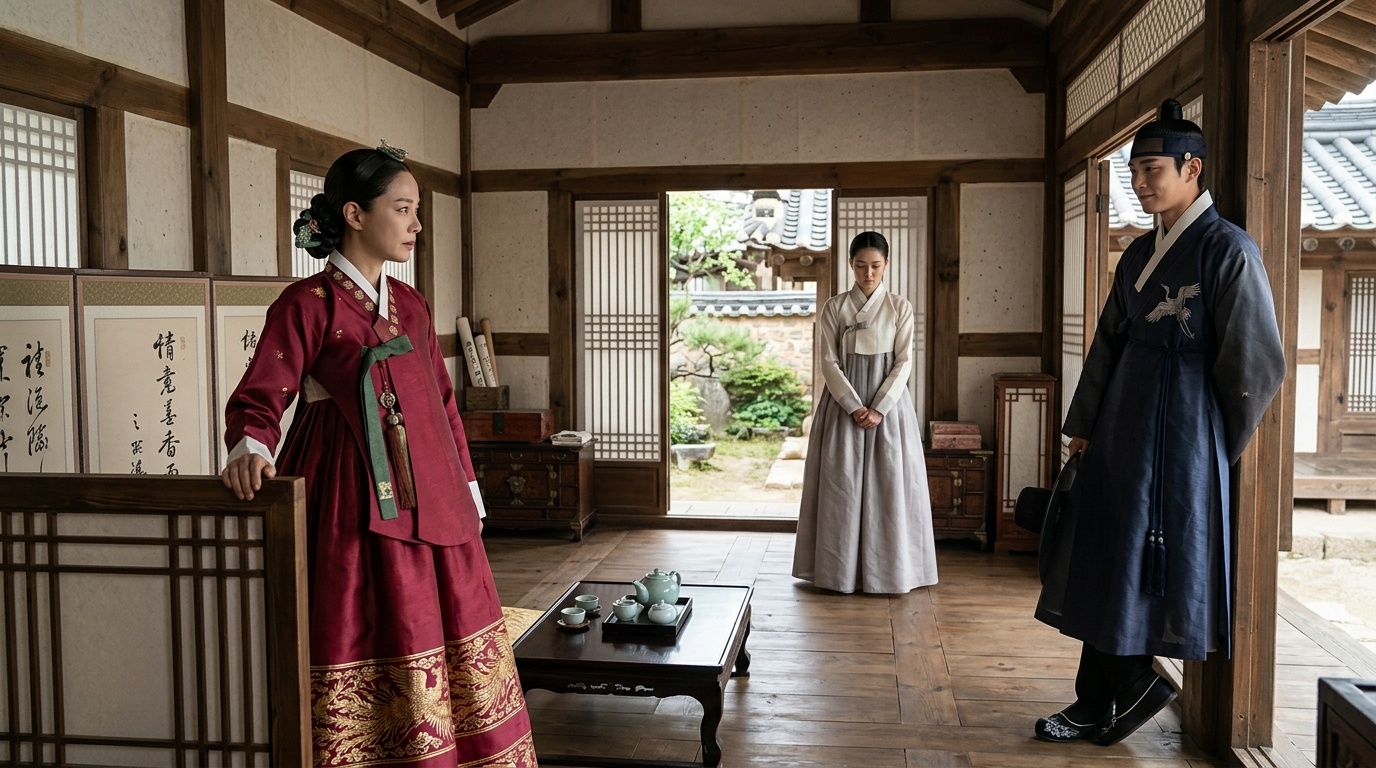
Lady Cho is a character who chafes against the restrictions of her era, yet uses the very relationships and rules of that society to engineer her wager. Cho-won is a man renowned for his seductive prowess, but once he steps into the game proposed by Lady Cho, he finds himself equally caught in the shifting relationship dynamics. Hee-yeon starts as the target of their bet, but as the story progresses, she becomes the emotional core driving the choices of all three.
The task of translating this vintage narrative into a 2026 series fell to director Jung Ji-woo, writers Lee Seung-young and Ahn Hye-song, and production companies Movie Rock and Sumokwon. The production team faced the challenge of leveraging the original film’s recognition while offering fresh reasons to watch for audiences already familiar with the plot and ending. For international viewers unfamiliar with the original, though, the show still had to clearly convey Joseon’s social constraints and the stakes of the characters’ wager without assuming any prior knowledge.
Eight Episodes Dropped on September 18 at 5 PM
Netflix dropped all eight episodes of Scandal simultaneously on Friday, September 18, 2026, at 5:00 PM KST. Instead of making viewers wait for a weekly rollout, this release strategy allowed audiences to binge the entire narrative at their own pace. It was the moment when the long lineage of the original work, fond memories of the 2003 film, and the star power of Son Ye-jin, Ji Chang-wook, and Nana finally met actual viewer reactions.
The immediate buzz quickly translated into chart performance. According to the Herald Economy, Scandal claimed the number one spot on Korea’s Netflix series chart on September 19, the day after its release. Hitting the top of the domestic rankings within 24 hours is the clearest early sign that the pent-up anticipation translated into a massive wave of day-one viewership.
Of course, a single day’s ranking doesn’t guarantee long-term success. The next hurdle is whether this initial surge of interest can be sustained, and whether the show can keep pulling in viewers who have no nostalgic ties to the original film. Reaching number one domestically confirms a robust start, but the series’ lasting impact and critical reception will only become clear through viewer engagement over a longer period.
Where Box Office and Streaming Metrics Meet
The 4.15 million theatergoers for the 2003 film and the day-one number one ranking of the 2026 series aren’t measured on the same scale. Box office admissions track cumulative ticket sales at cinemas, whereas Netflix rankings reflect relative viewership trends within the platform at a specific moment. Direct comparisons aren’t possible, but the same narrative lineage has captured the public’s attention again, this time through a completely different way of watching.
The Korea Times highlighted the anticipation surrounding the project, noting the significance of Netflix remaking a story that had already been uniquely adapted for Korea. For Korean viewers, the intrigue lies in comparing the 2003 film with the new series, while for international audiences, watching a French classic morph into a Joseon-era drama offers a completely fresh angle. A universal tale of desire, set against an unfamiliar historical backdrop, is what gives both audiences a reason to watch.
Ultimately, Scandal is the product of a long chain of adaptations, originating from a 1782 French novel, evolving into a 2003 Korean film, and culminating in a 2026 Netflix series. Claiming the top spot in Korea on its first day proves that curiosity about this lineage has successfully translated into actual viewership. The final thing to watch is whether this opening day curiosity evolves into lasting acclaim for the full eight-part run, and whether this reimagined Joseon tale can resonate with audiences far beyond Korea.
Sources: Herald Economy, September 19, 2026; The Korea Times, September 19, 2026; Hankook Ilbo, September 17, 2026.