
Table of Contents
From No. 1 in 12 countries to No. 2 worldwide
In its first week, the Disney+ original series The Remarried Empress reached No. 2 on Disney+’s global TV show chart, according to FlixPatrol. MyDramaList reported on November 6 that the show had also entered the top 10 in 76 countries, including the United States, the United Kingdom, Brazil, France, Germany, Spain and Italy. A romance fantasy in which Korean actors play characters in a fictional, European-style empire has drawn early attention well beyond Asia. These rankings reflect the moment they were reported and can change as the series goes on.
A day earlier, on November 5, Edaily cited FlixPatrol in reporting that the series was No. 1 in 12 countries, including South Korea, Belgium, Slovakia, Romania, Switzerland, Taiwan and Sweden, and seventh overall. Put side by side, the two reports show the overall ranking rising from seventh to second. The show was scheduled to premiere on November 4 but arrived a day early, on November 3, so these first-week numbers reflect only a few days of viewing.
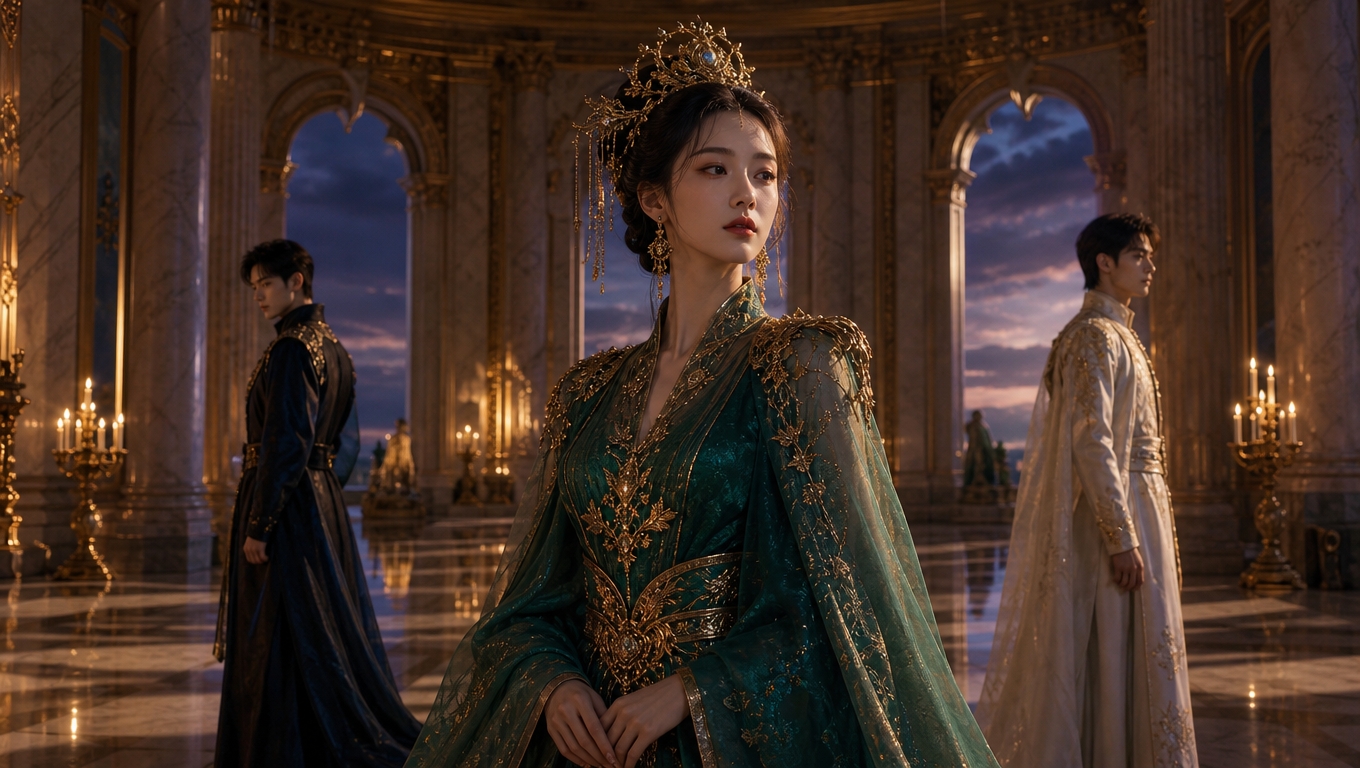
What makes the result interesting is the setting. Instead of a modern Korean office or family, the story takes place in an imaginary court of emperors, empresses and princes. The test for this adaptation is not just whether a popular story can find viewers. It is whether a world that fans have known through text and drawings can hold up once real actors give it bodies and voices.
A story that found readers first as a web novel and webtoon
Long before it reached the screen, The Remarried Empress had a large readership as a web novel and a webtoon. MyDramaList describes the series as based on the popular web novel of the same name, and Edaily reported that the webtoon had about 2.97 billion views worldwide as of July this year. Many viewers knew the story before the premiere. Those view counts show how far the source material has traveled, but they are a measure of reader interest, not a forecast of the drama’s audience.
In Korea, romance fantasy, or “rofan,” is a genre that sets love stories inside invented worlds. In The Remarried Empress, relationships shift against a background of empires, kingdoms and royal marriages. Unlike historical dramas that recreate a real period of Korean history, romance fantasy sets its own rules, and those rules decide what each character can and cannot do. For viewers abroad, knowing who stands where in this invented world is more useful than knowing any real dynasty.
An existing fan base gives a live-action version a head start, but it also gives fans something to compare it with. Anyone who pictured a character while reading, or remembers how the webtoon drew them, will be meeting a new interpretation in real actors and real sets. The popularity of the source and the visual persuasiveness of the drama are two separate hurdles. The production has to carry over a well-known story while making familiar scenes feel newly built.
An empress who answers a divorce with a demand to remarry
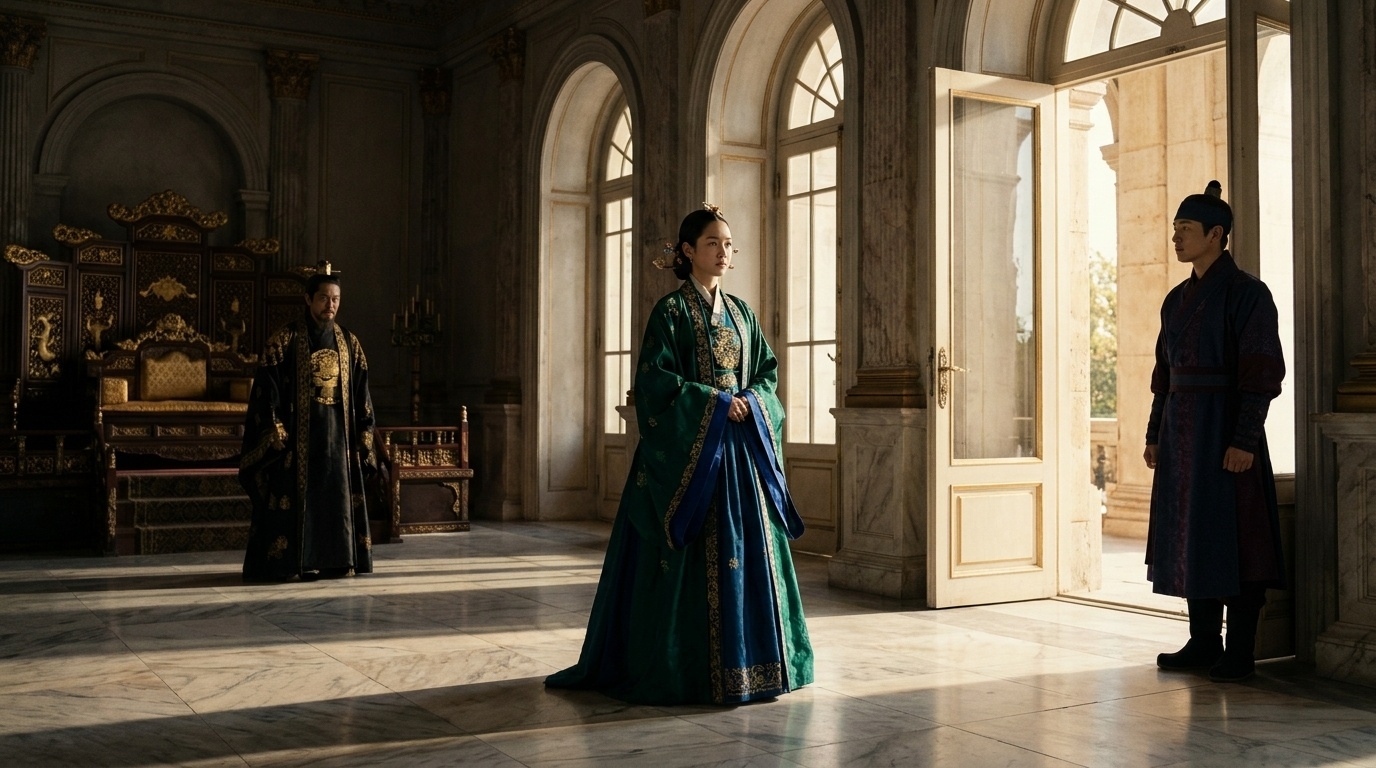
At the center is Navier, empress of the Eastern Empire, played by Shin Min-a. Emperor Sovieshu, who has fallen for a runaway slave named Rashta, tells Navier he wants a divorce. Navier does not simply accept it. In return for agreeing, she asks for permission to remarry Heinrey, prince of the Western Kingdom. Joo Ji-hoon plays Sovieshu, Lee Se-young plays Rashta and Lee Jong-suk plays Heinrey, and the romance grows out of this shift in relationships.
In this world, a marriage is tied to the empress’s power and position, not only to two people’s feelings. So Navier’s answer to the divorce is more than a woman accepting the end of a marriage. By asking to remarry, she starts to change the terms of the choice that was forced on her. The word “remarried” in the title points to how the main character pushes back, as well as to a future romance.
That is hard to put on screen, because shifts in power cannot be carried by dialogue alone. The screen has to show who has the authority to decide and how people of different rank collide in the same room. The court is not just scenery behind the relationships. It is the stage that makes them understandable, so the acting, costumes and sets all have to add up to one believable world.
Building an imaginary court for real cameras
After the release, reports credited the show’s visual treatment of the imperial world and its storytelling for the early word of mouth. Edaily noted the lavish portrayal of the imperial court alongside the story and the actors’ performances. Halls that readers had only imagined or seen in drawings have become a space where actors move and plot.
The challenge goes beyond expensive sets. Fantasy costumes and settings are far from daily life, so the characters’ movements and emotions have to feel natural inside them. The look can be unfamiliar, but the relationships need to be easy to follow, and the plot has to keep moving while the rules of the world are explained. The drama has to keep the visual appeal of the webtoon and also find a pace that works for television.
For viewers abroad, Korean actors leading a European-style royal court is itself part of the appeal. Instead of recognizing a Korean setting, they meet the emotional storytelling of Korean drama inside an invented world. The early response is a useful case for how far Korean content can stretch, and it shows that the origin of a genre and the look of its setting do not have to match.
Strong numbers abroad, and at home
Right after the premiere, the show topped Disney+ charts in several European and Asian countries, and later reports placed it in the top 10 in 76 countries, including markets in the Americas. In the same report, MyDramaList noted that the series ranked No. 1 on Kinolights, Korea’s largest content ranking platform, and on the review platform Watcha Pedia. Global chart positions and domestic interest arrived together in the first week.
Each of these numbers answers a different question. A high global chart position shows the show drew attention in many different markets, while the domestic platforms show how Korean viewers responded. Current reports give no figures that can be turned into viewing hours or completion rates, so the rankings are best read as signs of reach and early curiosity.
From the rankings alone, it is hard to say whether the source’s fame, the cast or the visuals did the most to bring viewers in. But strong results across so many regions suggest the series has already reached beyond the Korean readers of the original web novel. At least for first-time viewers, the risk that a live-action fantasy would feel awkward did not keep them away.
After the first impression: questions for the remaining episodes
The Remarried Empress runs for 10 episodes, with two new episodes every Wednesday. Unlike a full-season drop, the weekly schedule leaves room for reactions and rankings to change as the story unfolds. The No. 2 global ranking and top-10 placements in 76 countries are early snapshots of that release pattern.
From here, success depends on more than recreating famous scenes from the original. Viewers new to the story need to understand why the characters act as they do, and the court’s rules need to turn from explanation into real tension. The opening episodes caught attention with their setup. The next test is whether the characters’ emotions and changing relationships make people want the next episode.
The first week answered one question: a live-action version of a European-style Korean romance fantasy can draw early interest abroad. The open question is how long that interest lasts. The show’s test began with building an unfamiliar court on screen, and it will be judged by whether the people inside that court can keep viewers watching to the end.
Sources: Edaily, November 5, 2026; MyDramaList, November 6, 2026.