Table of Contents
From third place in 2021 to the world’s coolest in 2026
Seoul’s Jongno 3-ga has taken the top spot on Time Out’s “World’s Coolest Neighbourhoods of 2026” list. The global culture and travel publication ranks neighborhoods based on reviews from local experts, looking at food and drink, nightlife, independent shops, livability, and community. Jongno 3-ga came out ahead of L’Océan in Rabat, Morocco, and Neos Kosmos in Athens, Greece.
Jongno 3-ga also placed on the same list in 2021, coming in third behind Copenhagen’s Nørrebro and Chicago’s Andersonville. Time Out noted that the neighborhood, already drawing attention back then, has gotten livelier since, thanks to its late-night outdoor dining scene and a growing number of independent shops. This year’s win didn’t go to some newly invented trendy district. It went to an old, familiar part of the city that changed on its own terms.
A neighborhood shaped by old soup restaurants and street tents
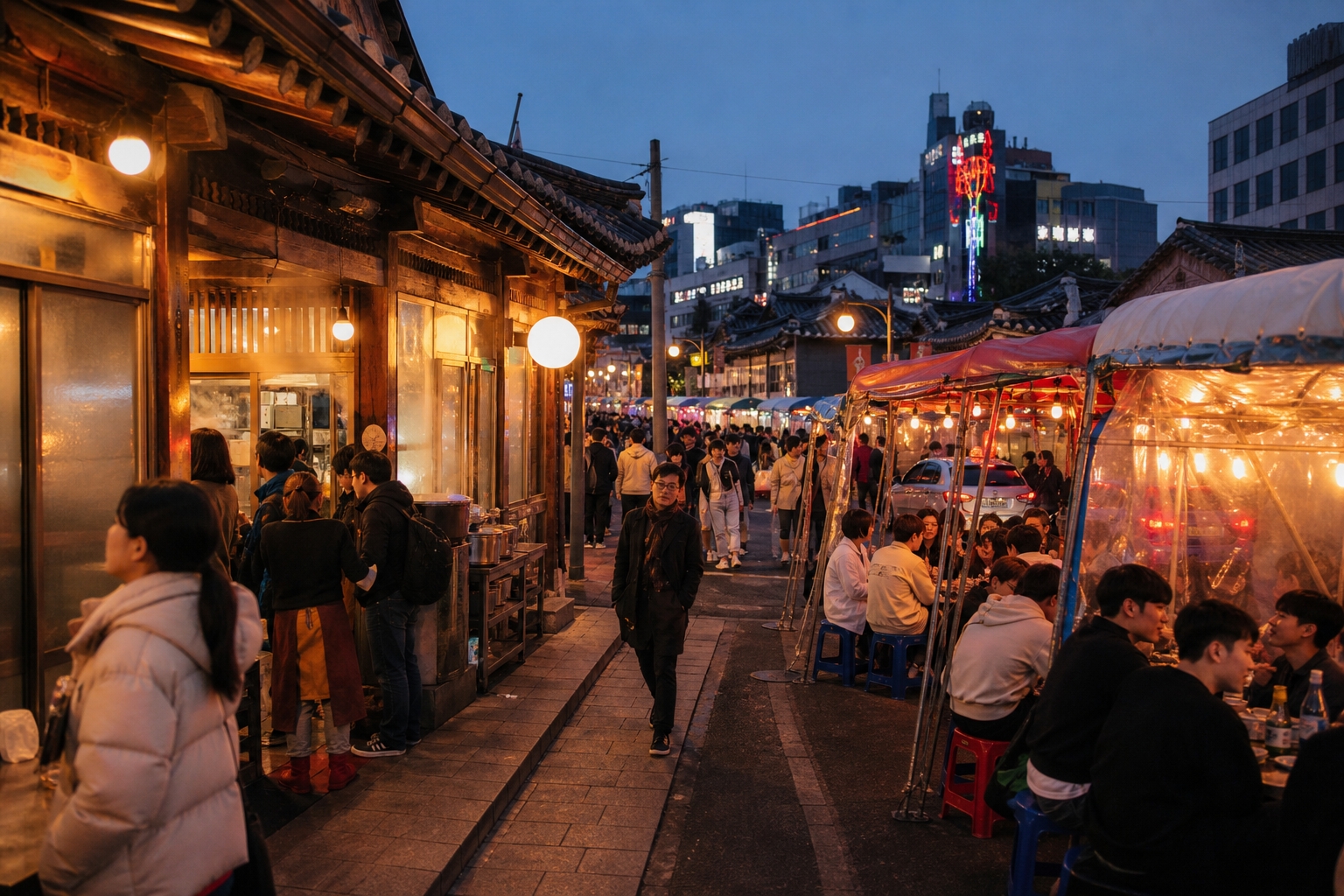
What makes Jongno 3-ga work is that new trends haven’t wiped out what was already there. During the day, older residents walk the alleys and gather at long-running gukbap (rice soup) restaurants and other old eateries. In the evening, a younger crowd that found the area through social media fills the pojangmacha, the street food tents. People pair drinks with tteokbokki, ramen, savory pancakes, and grilled snacks, and the two generations end up sharing the same streets.
To see the street tent scene for yourself, head to Donhwamun-ro 11-gil near Jongno 3-ga Station. Pojangmacha, often called “pocha,” are outdoor stalls where you sit on plastic stools under a tarp and get affordable food and drinks. Time Out noted that people start showing up on this street around 5 PM. This kind of open-air dining, running late into the night, is what gives Jongno 3-ga its nightlife.
Nakwon Instrument Arcade and makgeolli: the texture of Jongno
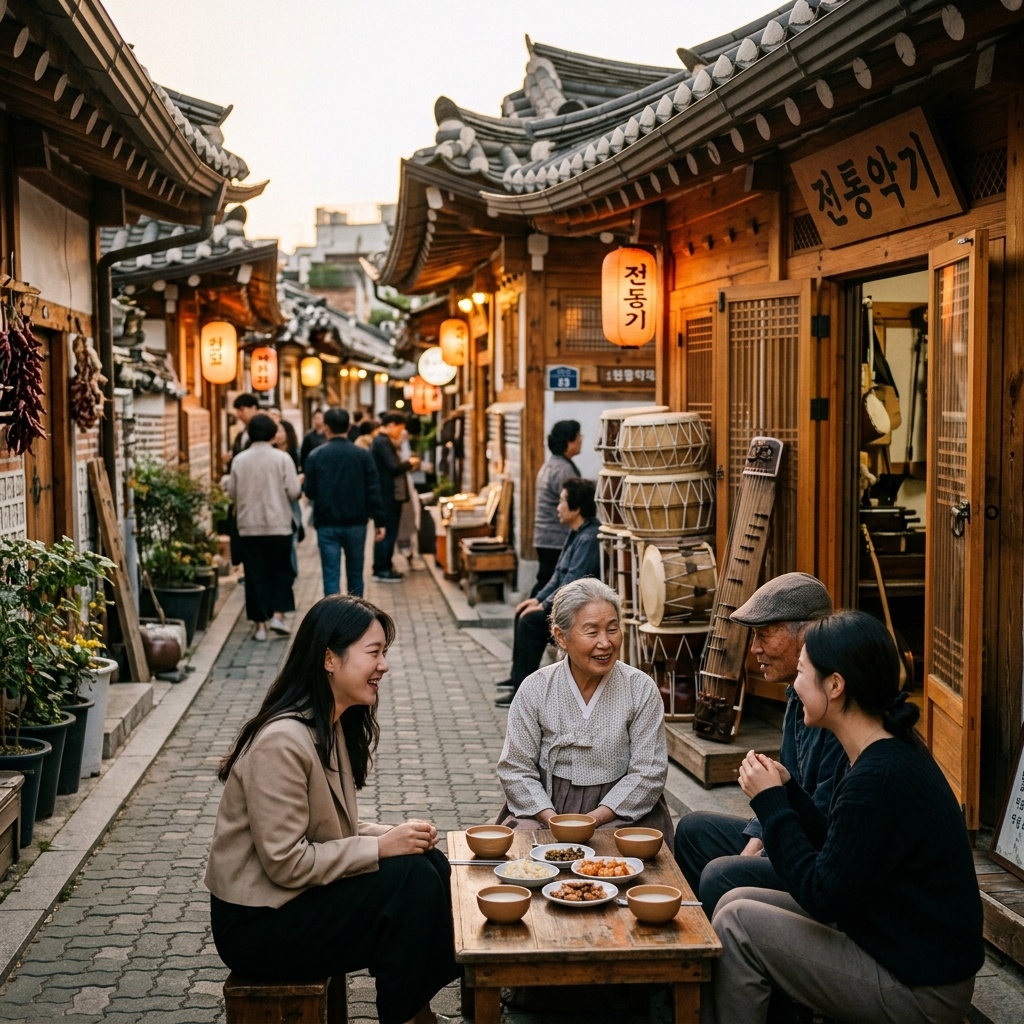
Another anchor of the neighborhood is Nakwon Instrument Arcade, which Time Out called the world’s largest specialized musical instrument mall. One building holds shop after shop selling guitars, keyboards, brass, percussion, and traditional Korean instruments, and it’s been part of Seoul’s music scene for decades. Rather than trendy pop-up shops, it’s full of repair counters and specialty dealers, which says something about how long this neighborhood has been doing its own thing.
The blocks around the arcade are also known for makgeolli, a cloudy, fermented rice liquor. At the pubs and restaurants nearby, people pair it with savory pancakes as a matter of course. A shop district for buying and fixing instruments sitting right next to old restaurants and casual bars is part of why Jongno 3-ga reads less like a tourist stop and more like a neighborhood where people actually live.
An easy route linking Ikseon-dong and Seosulla-gil
Just east of Jongno 3-ga Station, Ikseon-dong is known for its cafes, restaurants, and boutiques set inside renovated hanoks, traditional Korean homes built with wood and an open courtyard. Nearby, Seosulla-gil runs along the stone walls of Jongmyo Shrine, lined with craft workshops, jewelry studios, independent shops, and small bars. Visitors can walk from the studios on Seosulla-gil through the hanok alleys of Ikseon-dong to Nakwon Instrument Arcade, then finish the evening at the pojangmacha street.
Treating Jongno 3-ga as just a list of trendy stops misses the point of this ranking. What makes the neighborhood work is that the restaurants and shops older residents have relied on for years sit next to the new nightlife younger visitors brought in, all in the same narrow alleys. A new generation showed up without pushing out what was already there, and that mix of old and new is what fits Time Out’s criteria: good food, music, makgeolli, independent shops, and a community that’s still intact.
Source: Time Out, September 16, 2026 / CNN, September 17, 2026.