
Table of Contents
“How did you hear about us?”
When Hong Seung-jin, vice chair of the Shinheung Market Merchants Association, asks foreign customers how they found the neighborhood, the usual answer these days is social media. He told the Kyunghyang Shinmun on October 28 that most foreign customers used to be people who lived nearby, but that more travelers now come on purpose. Along with visitors from across Asia, he said, there are many families from Europe. The market sits on a slope below Namsan in Seoul’s Yongsan District, and it now serves two groups at once: the residents who shop there and travelers who put it on their itinerary.
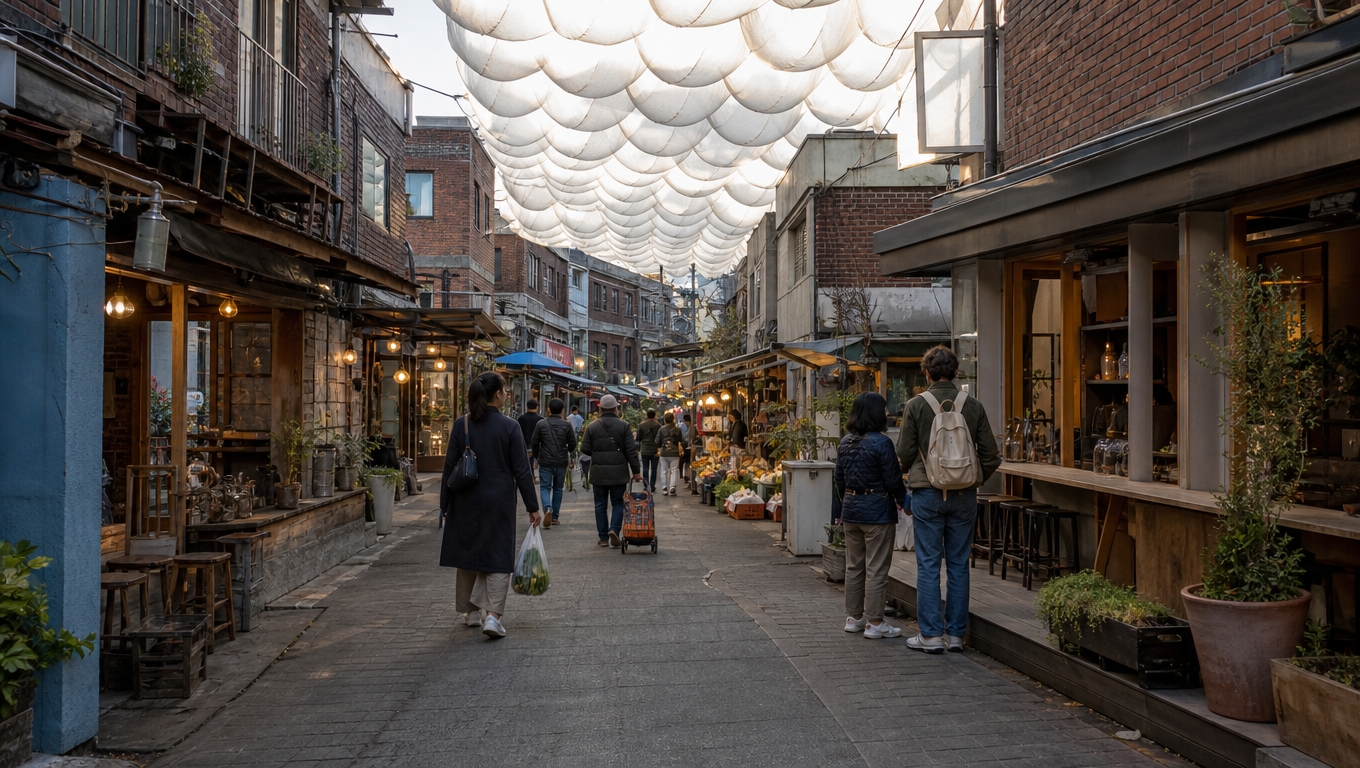
Today Shinheung Market is full of restaurants and cafes, and its narrow alleys and the cloud-shaped canopy over the market have become favorite photo backdrops. People used to come here for groceries. Now they come to eat, sit and look around. The current scene only makes sense with the longer history behind it. This street was not built to show tourists an old version of Seoul. It was a market where newcomers once made a living, and it went through the decline of local industry and then a regeneration project that kept the original buildings standing before visitors started arriving again.
1953: a market for new settlers
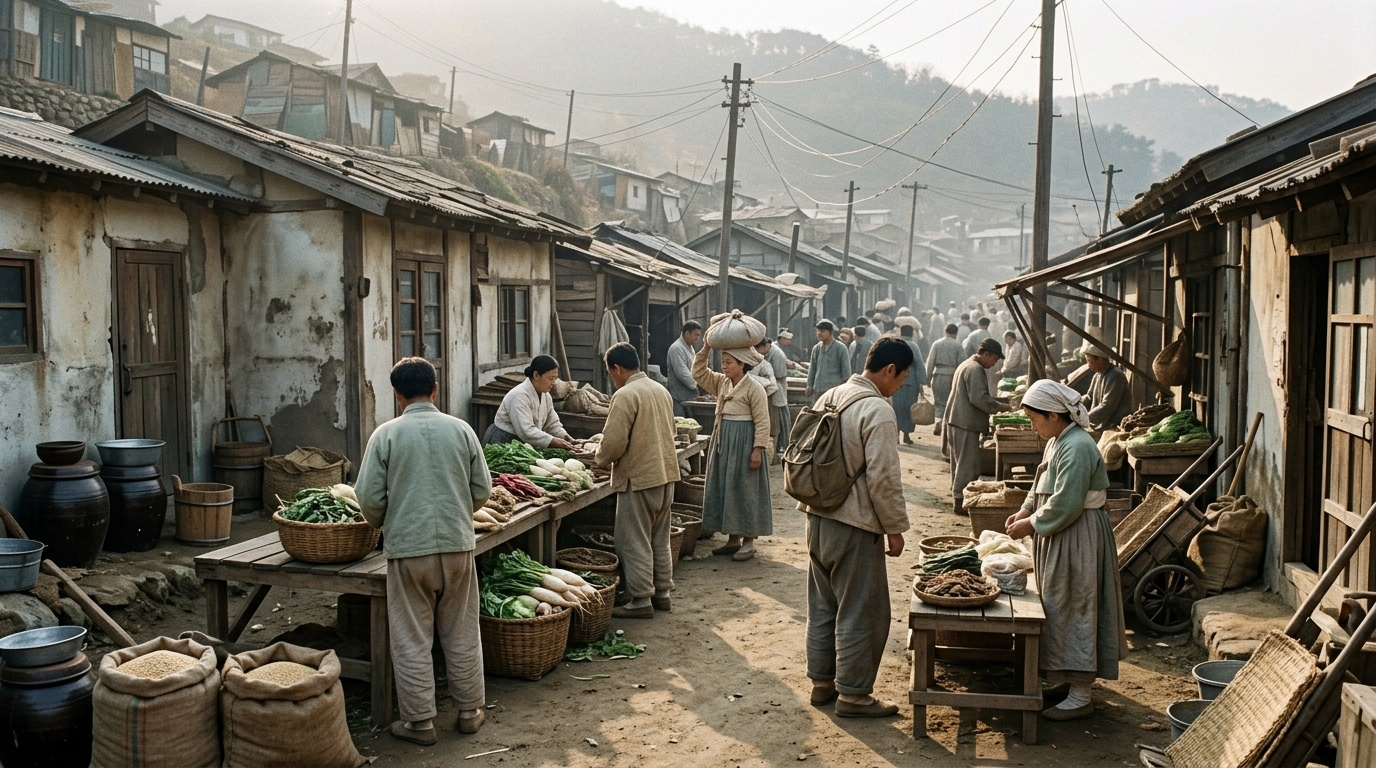
Shinheung Market opened in 1953. Haebangchon, the neighborhood around it, took shape on the slopes of Namsan after Korea’s liberation from Japanese rule and the Korean War. It was settled by Koreans returning from abroad, people displaced from the north and war refugees. The name itself means “liberation village,” a record of who settled there and when. People who had just found homes needed somewhere to buy food and daily necessities, and Shinheung Market grew up to meet that need. The alleys visitors walk today were tied to residents’ homes and livelihoods from the start.
The market later grew along with Haebangchon’s knitting and garment businesses. Knitting workshops turned yarn into knit fabric, and garment shops cut and sewed fabric into finished clothes. As more people worked and lived in the neighborhood, the market served their daily needs. Workshops, homes and shops all stood close together. In those years the alleys were valued for practical reasons, not for an old-fashioned look or good photos. The market was busy because people working nearby came there for what they needed.
When industry left, the city renovated instead of demolishing
As those industries declined after the 1990s, the market struggled too. Empty storefronts multiplied, and things got quiet enough that people called it a “ghost market.” Aging buildings were only part of the problem. Fewer people living and working nearby meant less demand, and the daily routine that had kept the market going faded. That is why today’s alleys of restaurants and cafes are not simply the old market carrying on. Some of the spaces visitors now fill had been empty for a long time.
One turning point came in 2015, when the Seoul Metropolitan Government designated Haebangchon an urban regeneration area. Urban regeneration tries to bring a neighborhood back to life by improving what is already there. At Shinheung Market, the market was not torn down and replaced with new buildings. The original buildings and alley layout stayed, and the facilities were upgraded. That kept the old spaces while making them usable for today’s businesses and visitors. As a result, the market changed through new businesses moving into the surviving alleys, not through new construction.
Second-time visitors spend differently
The rise in foreign travelers at Shinheung Market fits a broader change in how repeat tourists spend money in Korea. Orange Square, which runs the Wowpass prepaid card for foreign tourists, analyzed last year’s payment data. Tourists on their second or later trip to Korea spread their spending into small neighborhood shopping streets. Those on a third or later trip spent a smaller share on admission tickets and more on convenience-store snacks and local restaurants. The more often people come, the more their trips include casual meals and small purchases away from the famous landmarks.
The data covers people who used that payment card, so it is not a survey of Shinheung Market visitors. Read alongside what Hong describes, though, it helps explain why neighborhood alleys have become travel destinations. Someone who comes because of a restaurant or market scene on social media is likely to eat and spend time in the area. That kind of trip spends time in an everyday shopping street instead of buying tickets for attractions. At Shinheung Market, the restaurants, cafes and alleys between old buildings are less a single sight to tick off and more a place to linger.
Foreigners were neighbors first
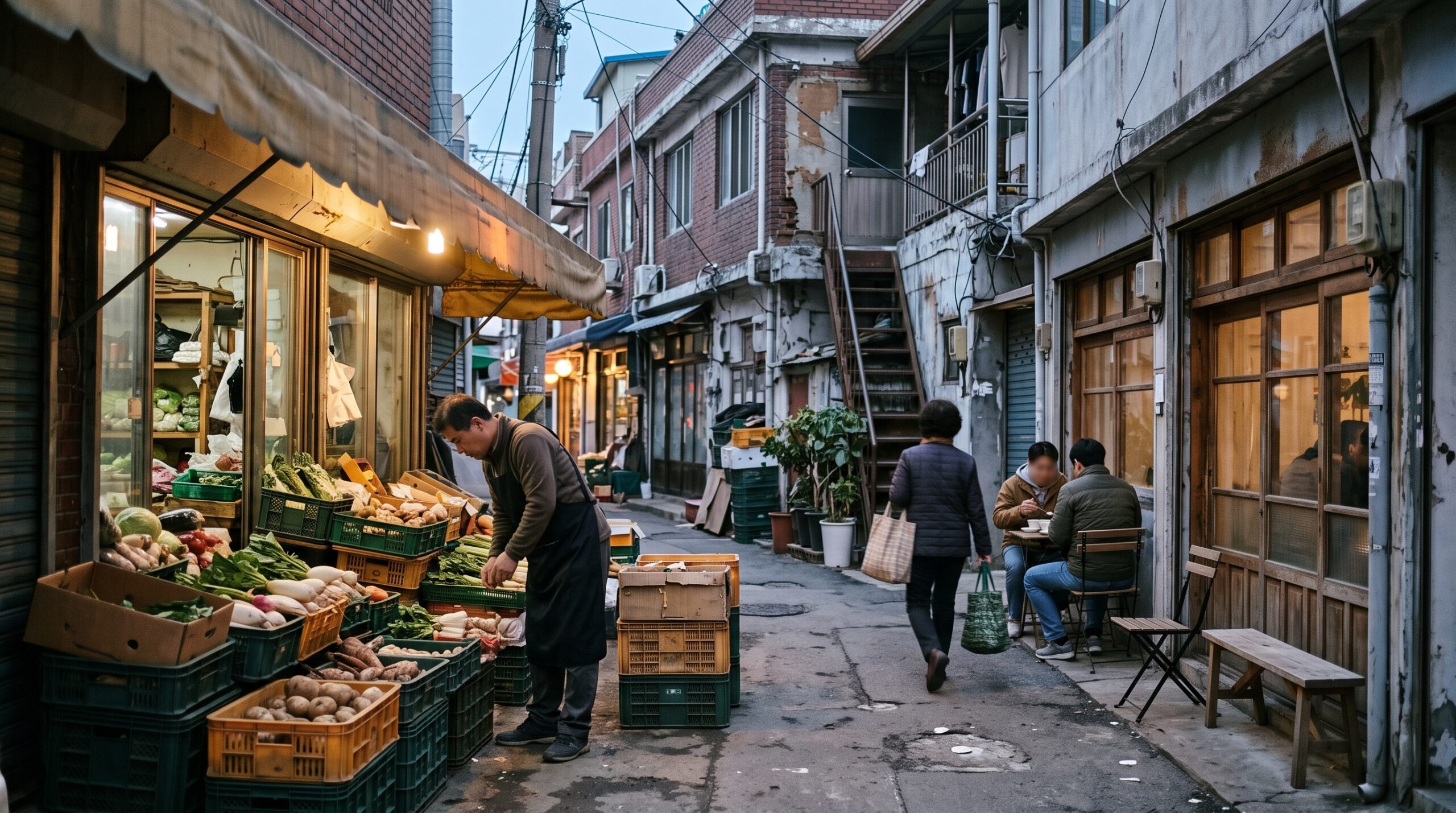
The recent tourist wave does not explain the foreign presence in Haebangchon on its own. Aju Press reported on August 21 that about 1,324 foreign residents lived in Haebangchon in 2023, roughly 10 percent of the neighborhood’s population. Citing community center data, the same report said foreigners made up 16 percent of residents of Yongsan 2-ga-dong, the administrative district, in 2025. The two figures cover different areas, so they should not be read as one growth rate. What they do show is that foreign residents are a real part of everyday life in the neighborhood.
That fits Hong’s point that earlier foreign customers were mostly local residents. Among foreign customers, residents come as part of their weekly routine, while tourists come as part of a trip. The market and the streets around it now serve both. The growing number of foreign travelers is arriving in a neighborhood where foreign residents already had their routines. Haebangchon today is a part of Seoul that overseas visitors are discovering, and it is also a place where people from many backgrounds settled long ago.
Live music, and worries about the neighborhood’s future
The neighborhood’s character shows up in more than the look of the market. At the Haebangchon block party in September, more than 100 live acts performed in bars, clubs and performance spaces. Spreading the shows across many venues turned the whole area into a stage. Just around the corner from the restaurants and cafes that draw crowds, there are places where music and performance bring people together. Anyone trying to understand the neighborhood, market included, should count those venues as much as the popular photo spots.
In The Korea Herald on September 19, the organizers said they worried gentrification could cost the neighborhood its identity. Gentrification is what happens when an area becomes popular and valuable enough that longtime residents and shop owners get pushed out. More visitors bring more customers, but whether the people who made the neighborhood appealing can afford to stay is a separate question. Keeping the market’s original buildings is one challenge. Making sure the people who live and work in and around them can keep their place is a related but different one.
Whose everyday life is in the photos?
Shinheung Market’s second life holds both what stayed and what changed. The original buildings and alley layout survived, but why people come and what the shops sell have changed. The industries behind the old neighborhood market are gone, and visitors looking for meals, coffee and photos now fill the alleys. Avoiding demolition kept an important link to the past, and the new people and new uses are part of the place now too. The market’s story is less about a past kept perfectly intact and more about finding new uses inside old spaces.
Go back to Hong’s question. The answer, “I saw it on social media,” also points to what the market has to deal with next. A photo on a screen brings people in, but what they find when they arrive are open shops and the people who run them. The daily life that repeat visitors come looking for only lasts if people keep living and doing business there. The thing to watch at Shinheung Market is not only whether more people come to take photos. It is how the new activity filling the market fits alongside the lives of longtime residents, merchants and cultural venues.
Source: The Korea Herald (October 15 and September 19, 2026), Kyunghyang Shinmun (October 28, 2026), Aju Press (August 21, 2026)