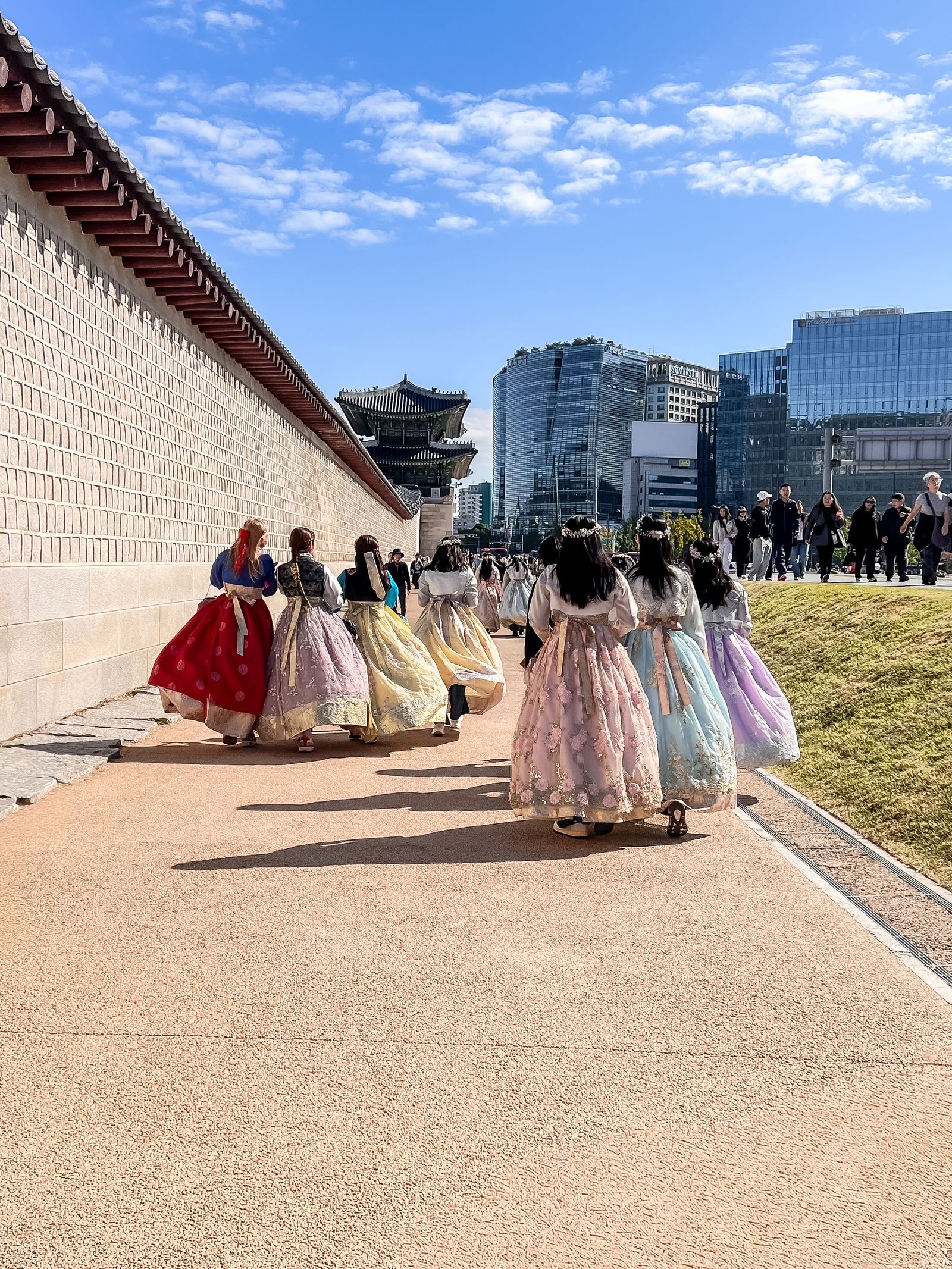
Seoul’s biannual celebration of its royal heritage just had its biggest spring turnout ever. The 2026 Spring Royal Culture Festival, held across the city’s five grand palaces and Jongmyo Shrine from April 24 to May 3, drew 725,281 visitors over its nine days, according to the Korea Heritage Promotion Agency, which organizes the event under the Korea Heritage Service’s Royal Palaces and Tombs Center. That’s up 26,723 from the previous spring festival’s 698,558 visitors, a new record for the event’s spring edition.
The most notable shift in this year’s numbers wasn’t the overall total, it was who was showing up. Foreign visitors across four of the five palaces (excluding Gyeonghuigung) and Jongmyo Shrine reached 183,427, an increase of roughly 33 percent, or about 45,000 people, compared to the previous spring festival. Organizers made a deliberate push to court that growth: for the first time, seating for the festival’s opening ceremony, previously reserved mostly for domestic attendees, was opened to foreign visitors through a dedicated ticket sale.
That international appetite showed up clearly in which programs sold out fastest. Changdeokgung Palace’s nighttime program “Hyomyeong Sejae and the Moon Dance” and the evening performance of Jongmyo Ritual Music, the UNESCO-recognized royal court music and dance tradition performed at Jongmyo Shrine, both saw their English-language sessions sell out completely, a strong signal of demand among international visitors specifically.
Every single reservation-based program across the festival’s 24 offerings sold out entirely. Changdeokgung’s “Morning Awakening the Palace” filled all 12 sessions across its six operating days well ahead of time, and Changgyeonggung’s “Yeongchunheon, A Spring Study” sold out its advance booking slots almost as soon as they opened, leaving long standby lines on-site. A foreign-visitor-specific program at Deoksugung’s Jungmyeongjeon hall, “Emperor’s Table,” which recreates royal dining culture, also sold out completely, reflecting strong interest in Korean royal cuisine specifically.
The festival also built in social outreach alongside the ticketed programming: a free event at Gyeongbokgung’s Gyeonghoeru pavilion invited single-parent families and other underserved groups for traditional music experiences and family photos, while 70 volunteer “Gung-idungi” guides helped both domestic and international visitors navigate festival grounds throughout. Organizers have already announced the next edition, the 2026 Fall Royal Culture Festival, running October 7 to 11 across Changdeokgung, Deoksugung, Changgyeonggung, and Jongmyo, with 17 programs planned.
Source: Korea Heritage Promotion Agency press release via Newswire, May 7, 2026.