
On three nights in late April, forty people at a time sat in a Changdeokgung courtyard after dark and watched court musicians and dancers recreate a banquet that was never meant to be public: preparations Crown Prince Hyomyeong made in 1828 to celebrate his mother Queen Sunwon’s 40th birthday, according to Seoul Economic Daily’s report on the program (Choi Soo-moon, Apr. 7, 2026). Hyomyeong — posthumously honored as King Munjo — died at 21, but the dance and music he choreographed survived in palace archives long enough to be performed again inside the actual palace where he lived, two hundred years later.
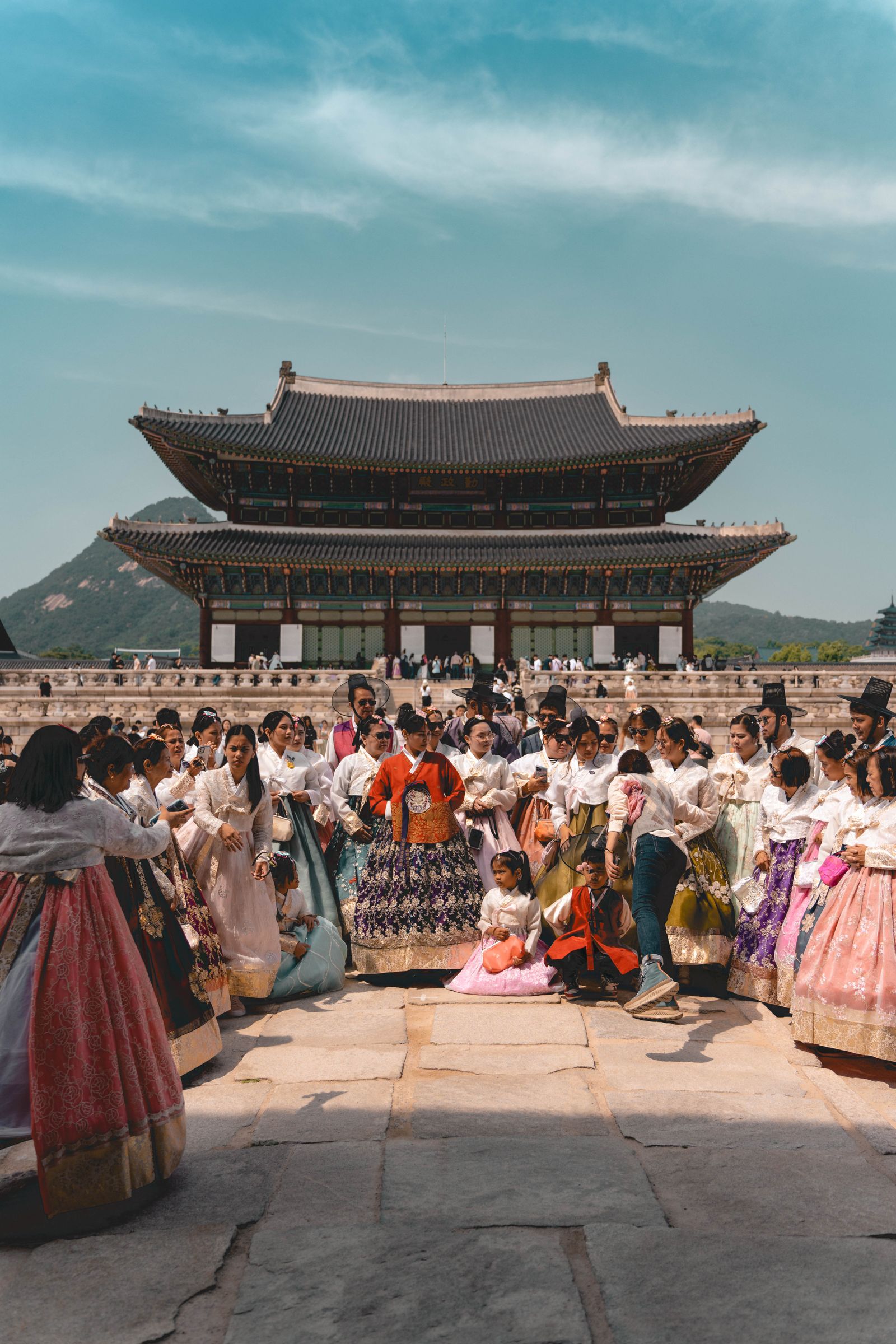
That program, “Crown Prince Hyomyeong and the Moon Dance,” is one piece of the K-Royal Culture Festival (궁중문화축전), now in its 12th year and running April 24 (opening ceremony) through May 3, 2026 across Seoul’s five grand palaces — Gyeongbokgung, Changdeokgung, Deoksugung, Changgyeonggung, Gyeonghuigung — plus Jongmyo Shrine. Heritage preservationist Dong-Hyun Song, writing for LetSeoul (published Mar. 19, 2026, updated Apr. 2, 2026), frames the festival’s purpose plainly: Joseon’s royal court maintained five centuries of ceremony, music, and dance entirely inside palace walls, and that world “came close to disappearing entirely” after Japanese colonial administration dismantled the court structure in 1910. The festival exists to make it visible again, if only for ten days a year.
It’s working, at least by attendance. Last year’s spring and fall editions drew a record 1.37 million visitors combined, and Kim Gwang-hui, head of the Royal Palaces and Tombs Division at the Korea Heritage Promotion Agency, told Seoul Economic Daily the 2026 target is 1.65 million — a 20% increase — backed by expanded foreign-visitor programming and multilingual guidance. Heo Min, commissioner of the Korea Heritage Agency, put the ambition in blunter terms at an April 7 press conference: “We aim to make this Royal Culture Festival a ‘palace for all’ that anyone can visit — not only Korean citizens including the socially disadvantaged but also tourists from around the world.”
The opening ceremony on April 24 made the festival’s real wager visible. Director Yang Jeong-woong — who also staged the cultural events for the 2025 APEC Leaders’ Meeting — built a program under the theme “Palace, Awakening Art — Hyper Palace” that ran rapper Woo Won-jae performing “Ganggangsullae” alongside a hanbok fashion show fused with gugak EDM, a pansori vocalist paired with a children’s choir, and a reinterpreted Bongsan Mask Dance, before closing with a media-façade projection and a National Gugak Center court-dance performance, per Seoul Economic Daily’s program rundown. Song, writing for LetSeoul, calls this blending deliberate rather than diluting: “this is a living tradition, not a museum piece.”
The festival saves its most unfiltered moment for Jongmyo Shrine, where Jongmyo Jeryeak — the royal ancestral ritual music inscribed on UNESCO’s Intangible Cultural Heritage of Humanity list in 2001 — was performed on three nights (Apr. 28–30) by an orchestra and ilmuwon ritual dancers facing the audience directly, a configuration designed for a more immersive experience of its deliberately slow, sparse melodies. Song notes this isn’t a reconstruction: it’s been performed on the same site, from largely the same scores, with only minor interruption, since the early Joseon dynasty — carried forward by practitioners trained through direct transmission from previous teachers, not by a script rebuilt from historical records.
That’s the real distinction underneath all the EDM and media-façade staging: most of what’s recoverable about Joseon’s palaces is the architecture — documented, photographed, in places reconstructed. What nearly vanished after 1910 was the sound and motion that gave those buildings a purpose, and what the festival stages each spring isn’t a guess at what that might have looked like. It’s the actual tradition, still being taught person to person, still capable of absorbing a rapper and a media wall without breaking — which is a stranger and more interesting kind of survival than a museum case ever could be.
Sources: Dong-Hyun Song, “Seoul K-Royal Culture Festival 2026: Five Palaces, One Living History,” LetSeoul (published Mar. 19, 2026, updated Apr. 2, 2026); Choi Soo-moon, “Korea Heritage Agency Chief Vows to Create ‘Palaces for All’ Through Royal Culture Festival,” Seoul Economic Daily (Apr. 7, 2026).