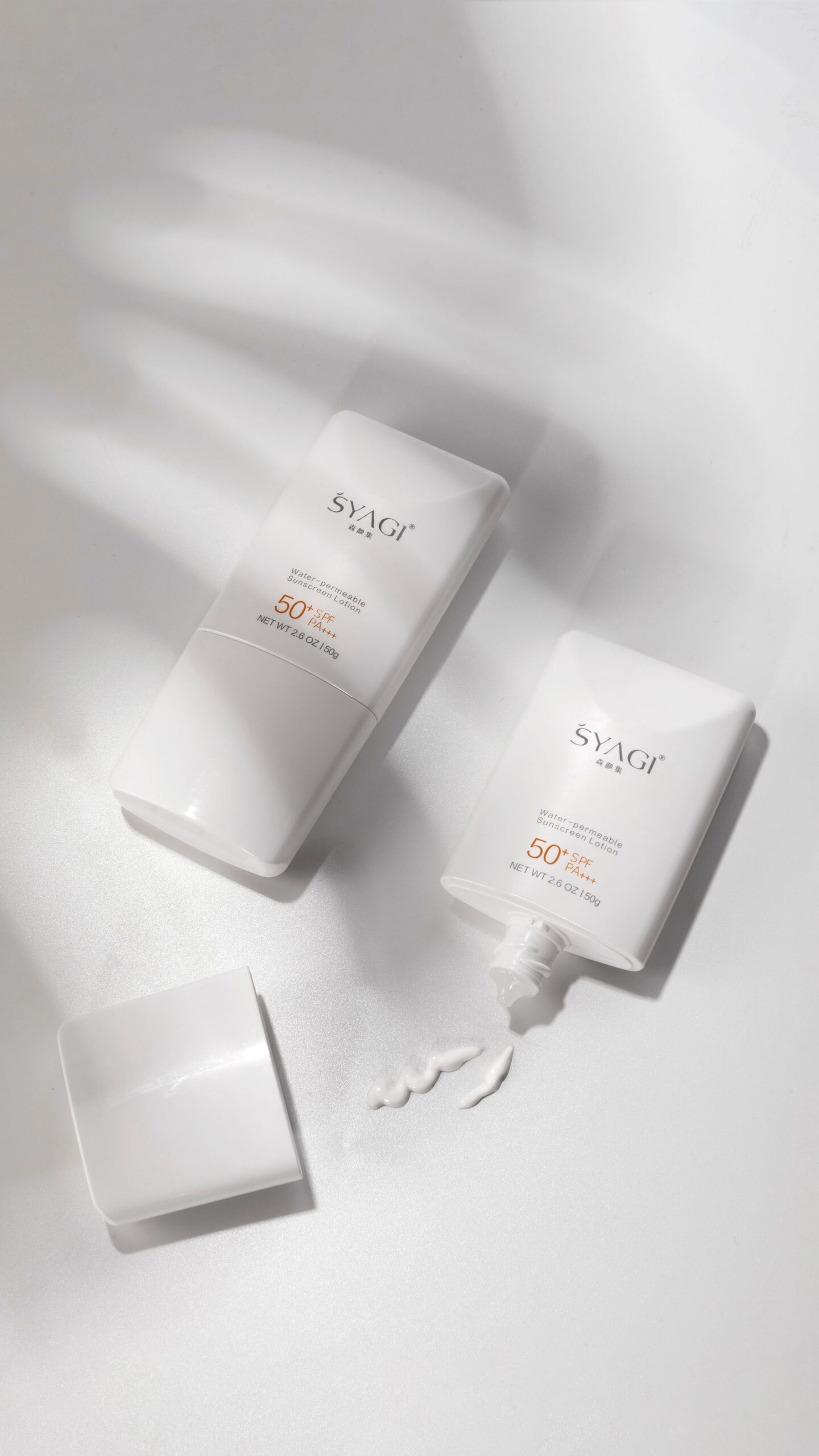
Walk down the sun-care aisle of an Olive Young store in 2026 and the marketing language has shifted. UV protection numbers barely register anymore — instead, the words plastered across the bottles are “mild,” “biome,” “mineral,” and “moisture.”
According to a monthly trend report from Hwahae Business, the beauty-data arm of Korea’s largest skincare review platform, sun protection factor has effectively plateaued across the market, so brands are competing on a new axis entirely: how gentle a sunscreen feels on skin. The report notes that Korean consumers increasingly treat sunscreen less as a final defensive step and more as an everyday skincare product that also happens to block UV rays — one meant to soothe the skin barrier and add hydration rather than simply sit on top of it.
That shift is visible in recent product launches. A company specializing in wild ginseng and black ginseng research listed its “Deopleus UV Defense PDRN Sunscreen” at Olive Young, positioning it as a hybrid of sun protection and barrier care, built around 99 percent high-purity rose PDRN along with cica and ceramide — ingredients more commonly associated with soothing serums than with sunscreen.
The same instinct is showing up beyond sun care. Skincare brand Signique, known for an emotionally driven approach to skincare efficacy, simultaneously launched a line of three eye creams — a PDRN hydrating eye cream, a peptide lifting eye cream, and a vitamin brightening eye cream — in both the domestic Korean market and the United States, tailoring each formula to a specific under-eye concern rather than offering one general-purpose product.
Industry watchers describe the broader 2026 K-beauty landscape as increasingly shaped by what they call “skintellectual” consumers — shoppers who scrutinize individual ingredients and demand clinical data rather than responding to emotional brand storytelling alone. Drawing on close to 9.4 million user reviews and data from 380,000 products, Hwahae Business frames this as part of three overlapping trends defining the year: hyper-sensory hair care, high-function minimalism, and what it calls “reassurance-focused soothing beauty” — skincare designed explicitly to calm rather than transform.
For a category long associated with whitening and wrinkle claims, the pivot toward barrier health and ingredient transparency marks a notable change in how Korean beauty brands are choosing to compete both at home and, increasingly, in the U.S. market that has become one of K-beauty’s fastest-growing export destinations.
Source: Hwahae Business monthly trend reports, 2026.