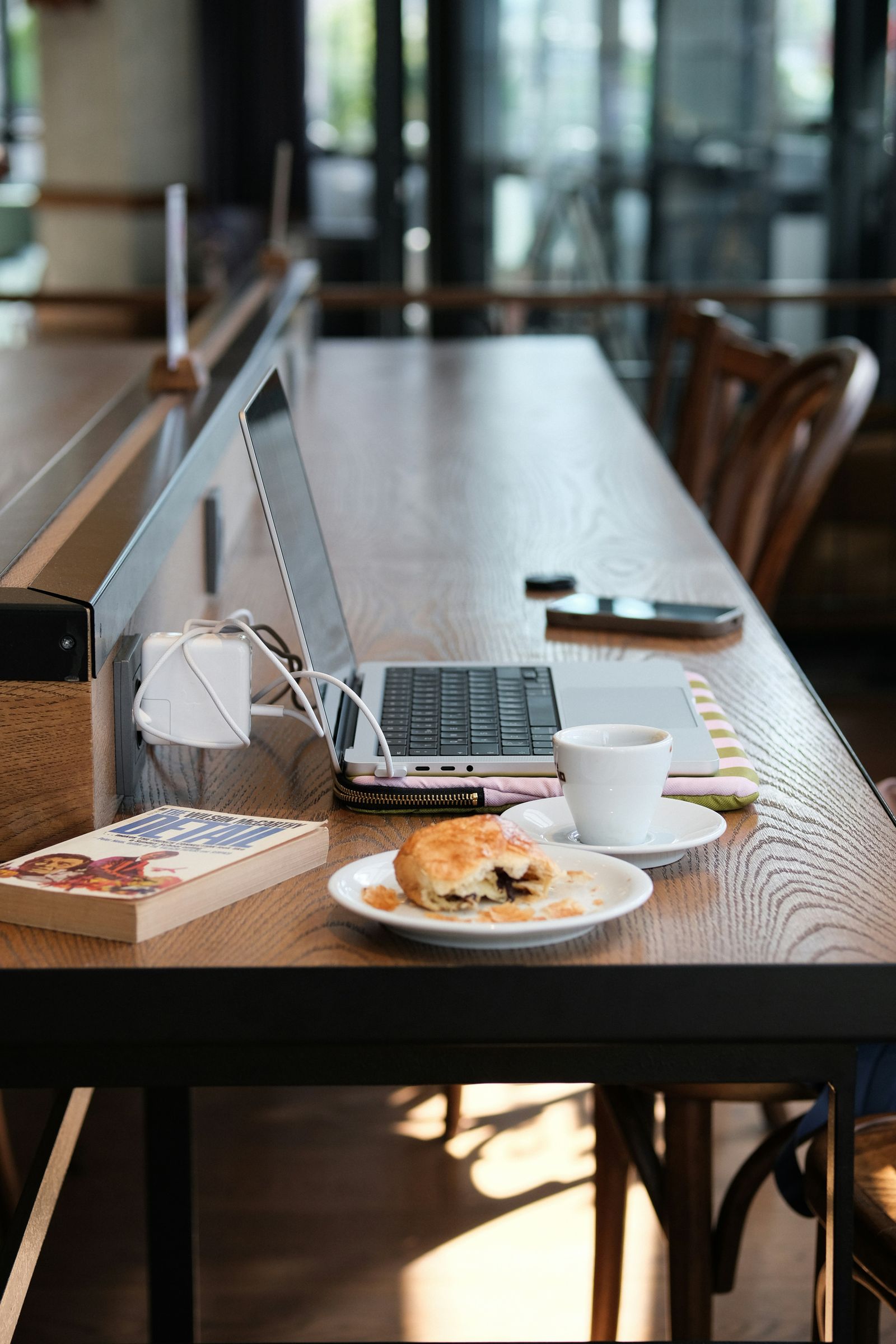
One of the more startling everyday sights for first-time visitors to Korea is the common practice of leaving a laptop, phone, or personal belongings unattended at a cafe table for extended periods — sometimes while the owner steps out to run an errand or even leaves the building entirely — a practice that functions as an informal but widely understood seat-reservation system across Korean cafes.
The custom relies on a level of ambient public trust and low theft risk that surprises visitors from countries with higher rates of petty crime, and it has become so normalized that most Korean cafes tacitly accommodate it, rarely clearing a table with unattended belongings the way many international cafes would after a short grace period, provided the espresso cup or drink is still present as a signal of active occupancy.
The practice does have implicit limits that longtime residents learn through observation rather than explicit rules: leaving a laptop unattended for a quick restroom trip is universally accepted, but claiming a table for an extended absence — say, running a lengthy outside errand — without at minimum leaving a drink or clear signal of continued use is more likely to draw quiet disapproval from other customers waiting for seating, particularly during busy periods.
The custom intersects interestingly with Korea’s broader cafe culture evolution, including the “Everyday Wellness” and solo-focused seating trends reshaping cafe layouts this year — as more cafes design explicitly around single, extended-stay customers, the seat-reserving norm has if anything become more embedded rather than less, since cafes increasingly expect and design for customers treating a table as a temporary personal workspace.
For visitors, the practice offers a genuinely useful, low-risk way to experience one of Korea’s more distinctive everyday social norms directly — though newcomers are generally advised to start with shorter absences and a visible drink before testing the custom’s outer limits in busier locations.
Source: Korean cafe culture and public trust behavior explainer coverage, 2026.