Table of Contents
Export records show K-beauty’s growing influence
Have you ever come across the term ‘K-beauty’ while browsing products at a beauty store abroad or on social media? It’s no longer just a label for Korean brands. Even brands from the US or Europe use it to highlight Korean-style skincare, Korean researchers, or Korean manufacturing technology.
Behind this trend is the rapid growth of Korea’s cosmetics industry. According to the Korea Health Industry Development Institute, cosmetics exports in the first half of 2026 reached $6.98 billion, up 26.9% from the same period last year. That’s the highest export figure for a half-year period. Basic skincare products accounted for a large share, and demand from North America and Europe, especially the US, was a key growth driver.
As the numbers grow, the meaning of ‘K-beauty’ expands too. In the past, it was pretty clear: a Korean company making products in Korea and selling them abroad. Now, it’s common for a brand’s headquarters, manufacturing location, and inspiration from Korean ingredients, formulas, or routines to all be different. Knowing these differences will help you pick products with way less confusion.
Just because it’s made in Korea doesn’t mean it’s a Korean brand
Take Yepoda, a skincare brand from Berlin, Germany. Their official description says the products are made in Korea by K-beauty experts. So as a consumer, you’re buying a product made in Korea, but you can’t say the brand’s founding and business operations are entirely Korean.
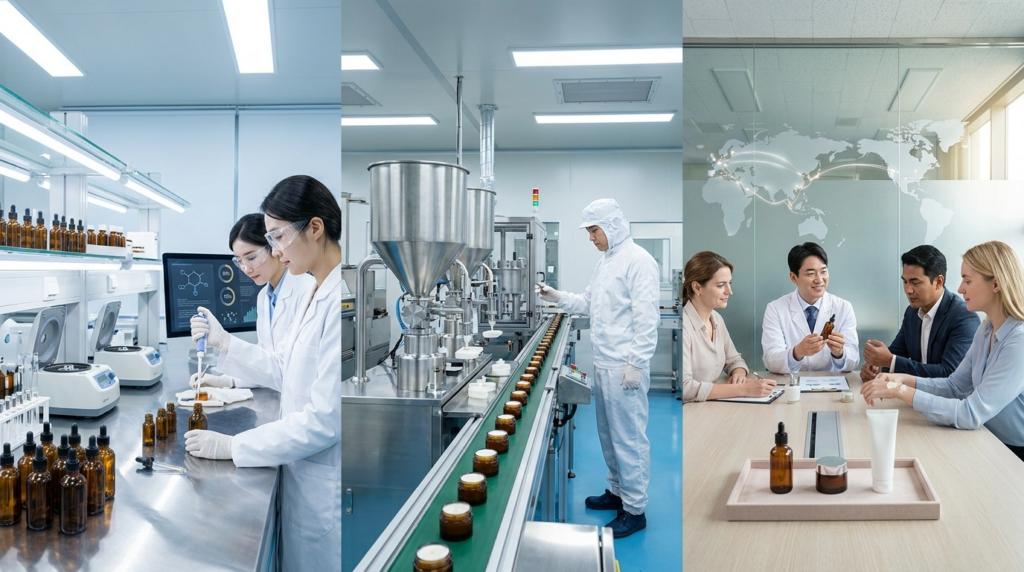
This structure isn’t unusual. In the cosmetics industry, it’s common for brand planning, formula development, manufacturing, and distribution to happen across different countries and companies. Korea’s ODM (Original Design Manufacturer) system is especially well-known: a brand proposes a concept, and the manufacturer handles both formula development and production. That’s why international brands partner with Korean factories.
So ‘Made in Korea’ tells you where it’s made, while ‘K-beauty brand’ is a broader, fuzzier marketing term. If you’re looking for products made in Korea, check the packaging or online product page for the country of origin. If you want a brand that’s planned and run by a Korean company, take an extra moment to verify the brand’s corporate info and official distributor.
Inspired by Korea doesn’t mean it’s Korean-made
Here’s the opposite case. SeoulCeuticals, a US brand, actively uses the brand name and marketing that reference Korean skincare and K-beauty. But their official info clearly states the products are 100% manufactured in US facilities. So being inspired by Korean skincare and referencing Korean ingredients or routines is separate from where it’s actually made.
This difference doesn’t automatically mean one is better quality. Products made in the US can be excellent, and products made in Korea aren’t right for every skin type. But if you think the single word ‘K-beauty’ guarantees the country of origin, brand identity, and ingredient philosophy all at once, you might be disappointed.
Rini, a kids’ skincare brand, is another example. Co-founded by actress Shay Mitchell and a partner, the brand emphasizes Korean skincare traditions and the expertise of Korean formulators. At the same time, they mention consulting with a US pediatric toxicologist. In this case, what you should check isn’t the brand’s Korean image—it’s the country of origin, age recommendation, full ingredient list, and usage instructions on each product page.
Don’t judge quality by the ‘K-beauty’ label alone
Let me clear up a common misconception. Just because a product is labeled K-beauty doesn’t automatically mean it’s approved by Korea’s Ministry of Food and Drug Safety or follows Korean manufacturing standards. Cosmetics must comply with the regulations and labeling requirements of the country where they’re sold. International brands distribute products according to local rules. So you need to look at the brand’s nationality, the regulations of the selling country, and the country of manufacture separately.
Before you buy, check these four things. First, the country of origin on the product page or container. Second, the full ingredient list and whether it contains fragrance. Third, whether it’s suitable for your skin concerns. For example, if you have sensitive skin, look beyond the ‘Made in Korea’ label—focus on the concentration of fragrance, alcohol, and exfoliating ingredients, plus how often you should use them. That’s more direct info.
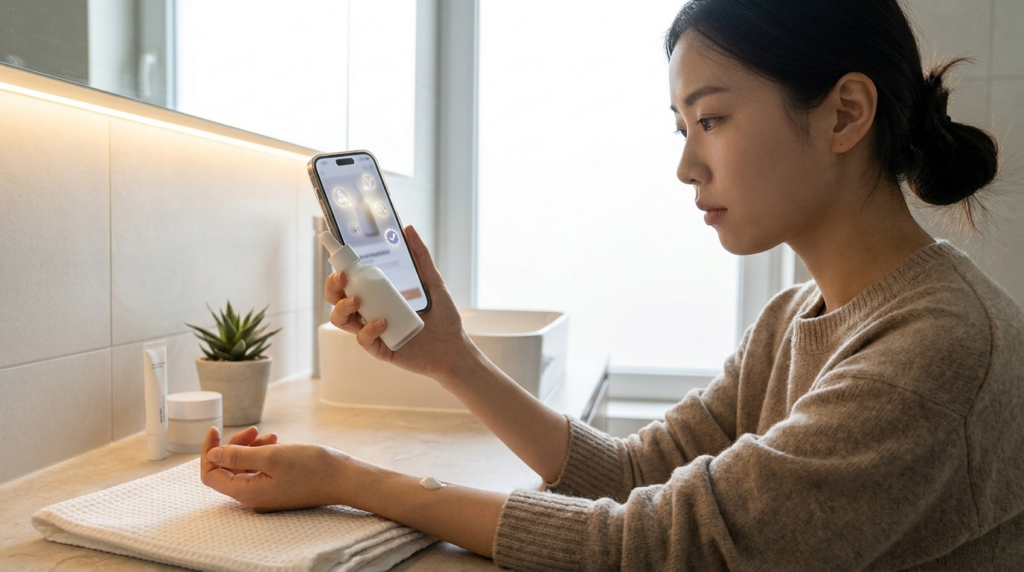
Last, the official sales channel. Especially with overseas direct purchases or open markets, make sure it’s an officially distributed product, and check the expiration date and return policy clearly. Korean skincare is famous for multi-step routines, but you don’t have to start every step at once. Add one new product at a time, and test a small amount on your inner arm or behind your ear before using it on your face. That way, you can easily see how your skin reacts.
The name’s expansion is both an opportunity and a challenge
The fact that ‘K-beauty’ is widely used worldwide is a good sign. It means Korea’s formula development, sunscreens, soothing ingredients, and layering-focused skincare habits are influencing the global beauty conversation. When international brands collaborate with Korean manufacturers, it can create new export and production opportunities for Korea’s cosmetics industry.
But when a term gets stretched too wide, there can be a gap between what consumers expect and what the product actually delivers. ‘Made in Korea,’ ‘inspired by Korean routines,’ and ‘a Korean company’s brand’ are not the same thing. For K-beauty to keep its credibility, brands need to be transparent about these differences, and consumers need to be able to verify them easily.
Next time you add a K-beauty product to your cart, don’t just look at the brand name. Check the country of origin, full ingredient list, and official sales channel first. Decide whether you want a product made in Korea, one with a Korean-style formula, or simply one that works for your skin. That’ll make your choice a whole lot easier.
Sources: Korea Health Industry Development Institute, ‘Export Trends in the Bio-Health Industry, First Half of 2026’, July 2026; Yepoda official brand introduction; Rini official brand introduction; SeoulCeuticals official country of origin information; Ministry of Food and Drug Safety cosmetics guidelines.