Table of Contents
Shanghai’s Exhibition Hall Was a Marketplace of Stories
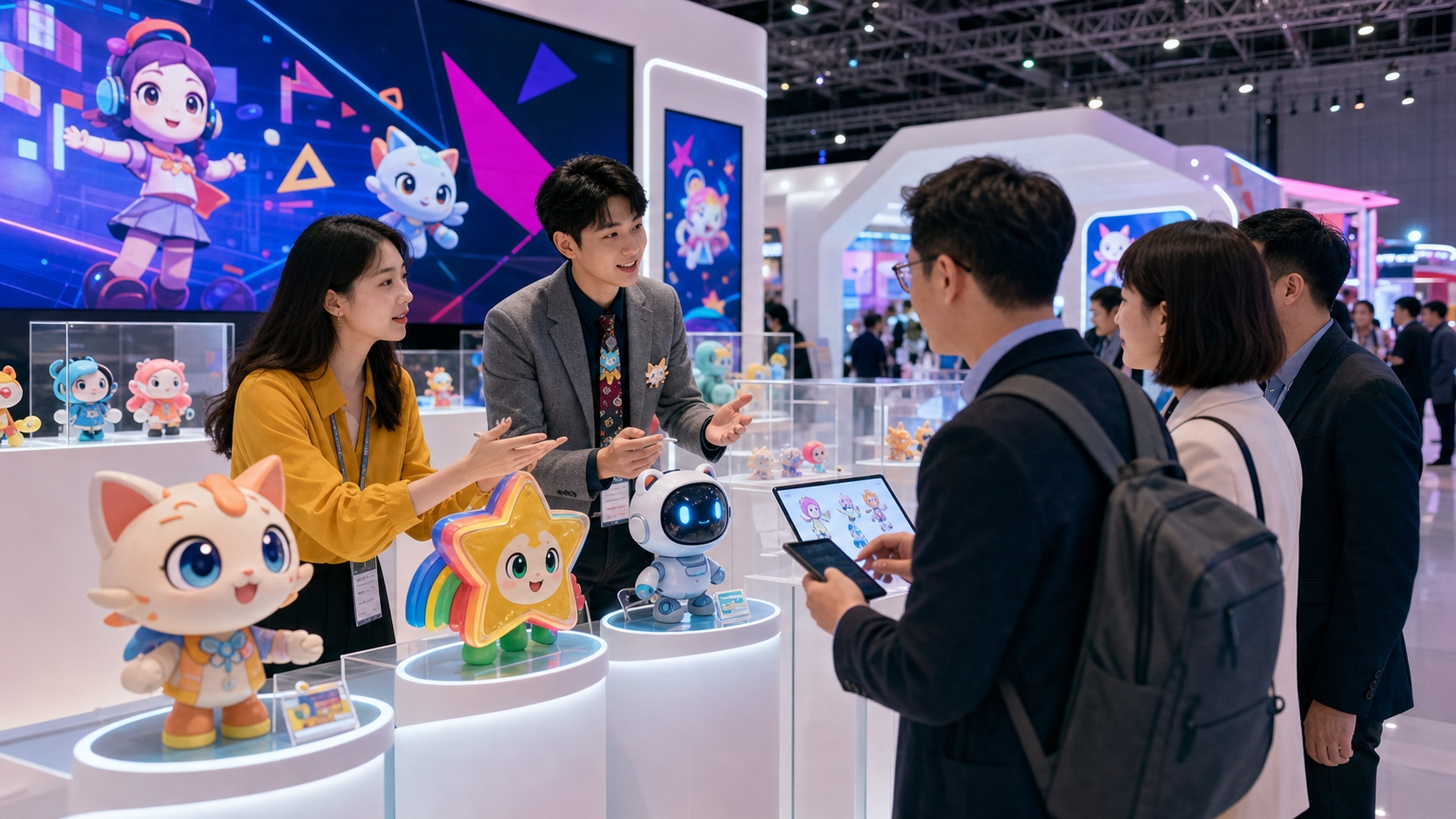
When an animated series crosses a border, it is not only the characters on screen who make the trip. A character becomes a toy, gets printed onto clothing and stationery, and is dubbed into another language for broadcast and streaming platforms. Licensing Expo China 2026, held in Shanghai from July 15 to 17, was exactly that kind of stage — the Greater China region’s leading marketplace for buying and connecting the rights to use stories and characters.
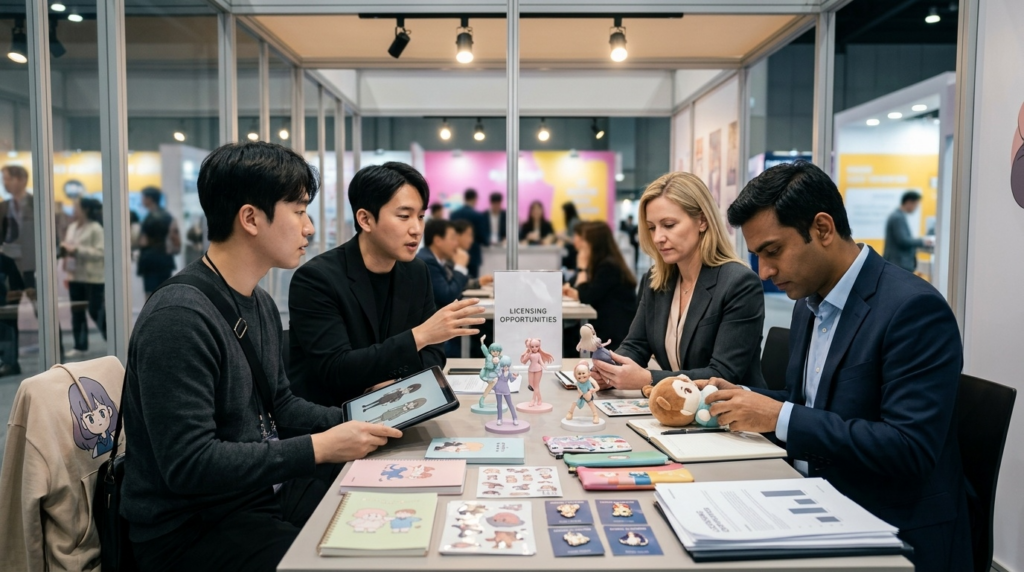
Korea’s Ministry of Culture, Sports and Tourism and the Korea Creative Content Agency operated a Korea pavilion at the expo for the first time this year. Fifteen domestic animation companies took part, holding 281 business meetings with local buyers, and the resulting export consultation value was tallied at 25.18 million dollars. Converted at the exchange rate applied at the time, 1,480.7 won to the dollar, that comes to roughly 37.3 billion won.
37.3 Billion Won Is Not a Completed Export
The exact texture of the phrase “export consultation value” deserves attention here. It is a sum of the projected scale of deals discussed during the event, not a figure that has already been deposited, nor one for which contracts covering the full amount have already been signed. Getting from a meeting to an actual export contract still requires renegotiating price, the scope of rights, contract length, territory, product category, and revenue split.
None of which makes the consultation figure meaningless. It functions as an early indicator of which characters and genres caught foreign buyers’ interest, and how much commercial potential they assigned to merchandising and distribution. But only once the number and value of the definitive contracts that follow, and whether actual production and distribution take place, are made public can anyone judge whether this year’s 37.3 billion won turned into a lasting result.
This year’s expo brought together roughly 420 exhibiting companies and more than 2,000 pieces of intellectual property from around the world, drawing around 70,000 industry visitors. Korean companies placed everything from titles already known in global markets to projects still in development inside the same space, testing appetite that went beyond straightforward video sales into licensing, co-production, and toy business opportunities.
Fifteen Companies Knocked on Fifteen Different Doors
The Korea pavilion brought together Graffizix, Devil’s Candy, Bread Barbershop, BeeDU Enterprise, Studio38C, Studio Shelter, AlimolyStudio, M29, OCON, Wygram, Weenops, Contents Saero, Kids Castle, PixelPlanet, and Haerye. From children’s characters and family animation to freshly developed original IP, what each of these fifteen companies had to offer the Chinese market differed from the next.
Among them, Bread Barbershop, Studio38C, AlimolyStudio, Wygram, and OCON went further, taking part in separate IP presentation sessions to introduce their titles’ competitiveness and business outlook. Rather than simply hanging character artwork on a booth wall, they laid out, in front of local buyers, exactly which audience each title targeted and how it could expand into toys, publishing, and distribution.
Two Agreements Went a Step Beyond Consultation
There were concrete cases of cooperation as well. Wygram signed a memorandum of understanding with the Chinese IP company Beijing Qingchunyu Technology on co-producing “Starlight Chef Nova.” OCON reached an agreement with the Chinese toy company Jump-Go covering business rights to a new project. The difference matters: one is a relationship built around making a work together, the other around expanding a character into merchandise and business.
A memorandum of understanding, though, still isn’t the same thing as a standard definitive contract. It can simply be a stage that confirms an intent to cooperate and the direction of discussion, which means detailed terms — production budget, minimum guarantee, release schedule, and the length of the rights period — are likely to be settled in a follow-on contract. That’s the reason to keep consultation value, memoranda of understanding, and finalized contracts distinct when describing what this expo actually produced.
Licensing is also different from handing over ownership of a work outright. It’s a structure in which the IP holder grants the right to use a character or title within a specific territory, time period, and product category, in exchange for payment. The same character can have its toy rights in China, its broadcast rights in China, and its publishing rights in another country all contracted out separately.
The Next Scene for Korean Animation Is Follow-Through
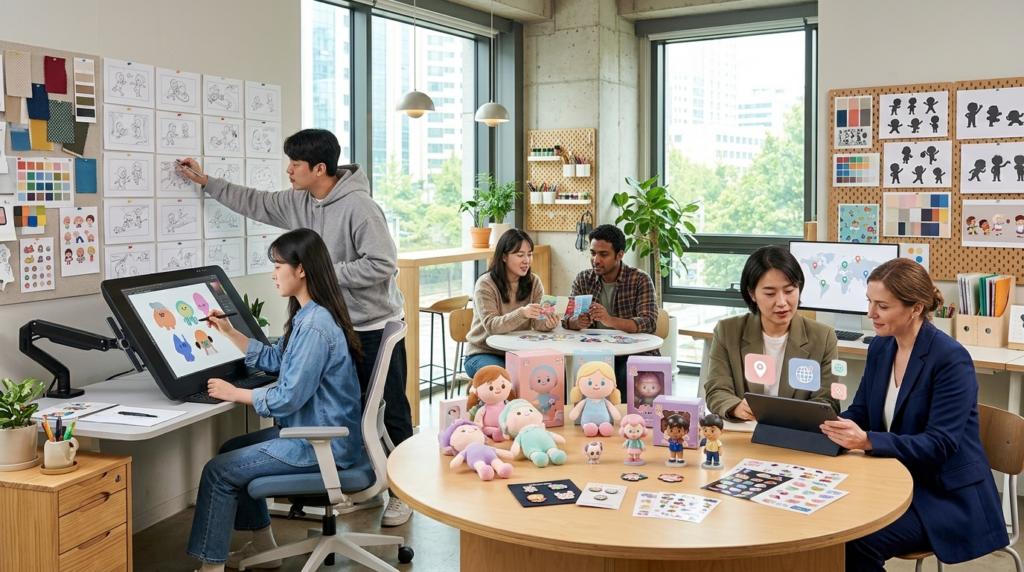
China’s market is large enough that entering it means weighing local content review, distribution networks, IP protection, and revenue settlement all at once. A title that has already proven popular in Korea doesn’t translate automatically into local broadcast slots or product sales. Character names and humor have to be translated, and the property has to be redesigned into merchandise that local consumers will recognize as their own.
The Korea Creative Content Agency plans to run a Korea pavilion again at MIPCOM in France this October and at Asia TV Forum in Singapore this December. The consultations that began in Shanghai can carry forward into follow-on contracts within Greater China, while the same IP gets a further chance to be pitched to buyers in Europe and Southeast Asia.
The figure of 37.3 billion won catches the eye, but the real measure of success in the animation industry is whether a character survives across multiple media and products for years, not months. What’s worth checking from here is how many of the 281 consultations turn into definitive contracts, whether the co-produced titles actually get made, and whether the creators behind them see ongoing revenue from it. Whatever was promised in that marketplace in Shanghai has now entered the long stretch of production and contracting that has to follow.
Source: Korea Creative Content Agency press release, July 23, 2026; Lee Chang-woo, Newsis, July 23, 2026.