Table of Contents
Opening the Stage with ‘The Value of What Remains’
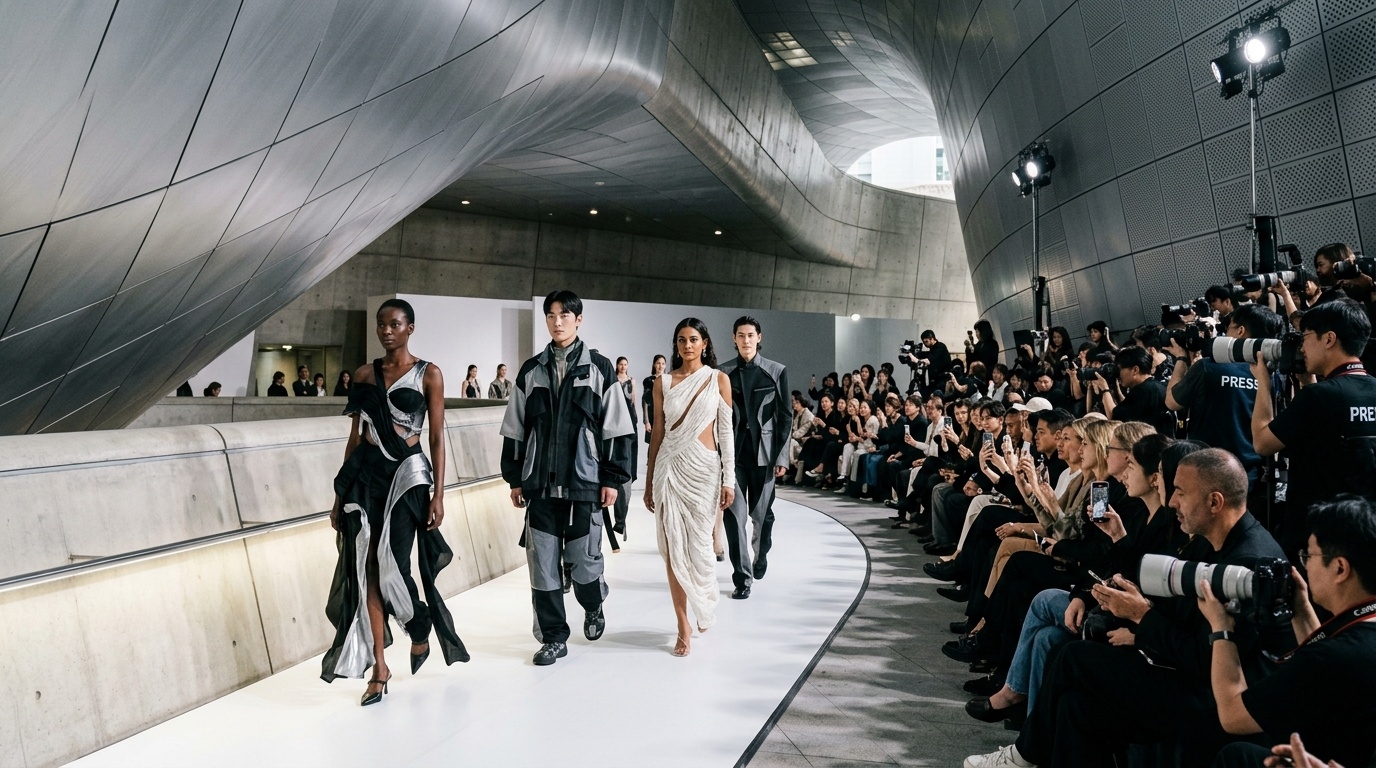
On September 1, 2026, the first runway at Seoul’s Dongdaemun Design Plaza (DDP) featured a collection that wove the traces of time into clothing. RE RHEE, a brand led by designers Junbok Lee and Hyunjung Joo, unveiled its Spring/Summer 2027 collection under the theme “The Value of What Remains.” By reinterpreting the lingering marks of the past through a contemporary design language, this stage officially signaled the start of the 2027 S/S Seoul Fashion Week.
K-pop group H1-KEY also hit the stage during the opening show. Having previously performed at Waterbomb Seoul 2026, this moment captured H1-KEY expanding their footprint beyond music festivals into the fashion scene. An opening ceremony shared by a designer brand and a K-pop group perfectly encapsulated the overarching direction of this season’s Seoul Fashion Week: an event striving to go beyond simply showcasing clothes, aiming instead to bridge various facets of K-culture.
Not all of the event’s programs are running simultaneously across its two locations from September 1. The DDP schedule kicked off first, while the Jamsil programs—centered around Lotte World Tower and World Park—run from September 3 to 6. These two hubs round out the entire itinerary with different timelines and distinct roles.
One Fashion Week, Two Seouls
The most striking change this season is the spatial setup. Seoul Fashion Week has anchored itself on two main pillars: DDP and Jamsil’s Lotte World Tower World Park. Set against the backdrop of its signature fluid architecture and the Dongdaemun fashion district, DDP serves as the nerve center for designer collections and fashion business. Meanwhile, Jamsil, blending a supertall skyscraper with sprawling shopping spaces, offers a stage where locals and tourists can more easily engage with fashion.
According to official data from the Seoul Metropolitan Government, Seoul Fashion Week launched in 2000, making 2026 its 26th year. Its 25th anniversary fell on the 2025 F/W season, framing this 2027 S/S season as a reflection of the subsequent year’s evolution. What used to be an event gathering industry insiders and spectators in a single location has now expanded into a city-wide festival connecting two landmarks with entirely different characters.
The goal of showcasing Seoul’s identity to the global stage has also moved away from merely highlighting the image of a single specific building. Dongdaemun is an area steeped in the history of fashion production, distribution, and design, while Jamsil is a commercial hub driven by massive retail facilities and high tourist foot traffic. By highlighting the contrast between these two locations, the event utilizes the city of Seoul itself as living fashion content.
Designers and Buyers Gather at DDP
At DDP, 17 designer brands are hosting runways, alongside 8 brand presentations. The runway is the traditional format where models showcase a collection sequentially to a seated audience. A presentation, on the other hand, allows a brand to convey the universe of its collection much more freely using spatial design, installations, and video. Even when introducing the exact same garments, the range of expression available to the designer is far broader.
Participating brands include RE RHEE, as well as LIE SANGBONG, CARUSO, LIE, DOUCAN, and HOLY NUMBER 7. From veteran designers with decades of experience to newer brands carving out distinct aesthetics, they are all unveiling their collections within a single season. Rather than attempting to box K-fashion into one defined style, the program showcases different generations and design languages side by side.
DDP’s role isn’t limited to just runway viewings. The trade show, running from September 2 to 4, features 97 participating brands. It is a vital B2B program where brands meet with overseas buyers and retail reps to present their products and discuss potential orders. If the public-facing fashion shows act as the glamorous front stage of Seoul Fashion Week, these consultations aimed at securing actual sales channels operate as the backstage engine determining its commercial success.
From Fashion Show to K-Culture Platform
Seoul Fashion Week’s approach to integrating K-pop goes far beyond just inviting famous singers to sit in the front row for clout. H1-KEY stepped up as an integral part of the opening ceremony, and NCT—celebrating their 10th anniversary—partnered with a program that re-examines their past activities through a fashion lens. The outfits worn on music stages have always visually completed the vibe of the songs and the members’ images. They are, in themselves, archives showcasing the history of K-pop.
From September 4 to 6, Lotte World Tower is hosting an exhibition featuring iconic stage outfits from NCT, NCT 127, NCT DREAM, WayV, and NCT WISH. On the final day, a “Curated Runway” is scheduled, reimagining the stage costumes and collectibles showcased over the past decade into a fresh runway format. Models will perform to NCT’s music, closing out the final act of Seoul Fashion Week.
This integration highlights that the relationship between K-pop and fashion runs much deeper than mere promotional collaborations. For overseas fans, an idol’s stage outfit often serves as their first gateway into Korean fashion. For domestic designers, musical content backed by a global fandom acts as a medium to broadcast their brand’s aesthetic and story across borders. Seoul Fashion Week has successfully drawn the shared audience of both industries right into the heart of the event.
The First Outdoor Runway Held in Jamsil
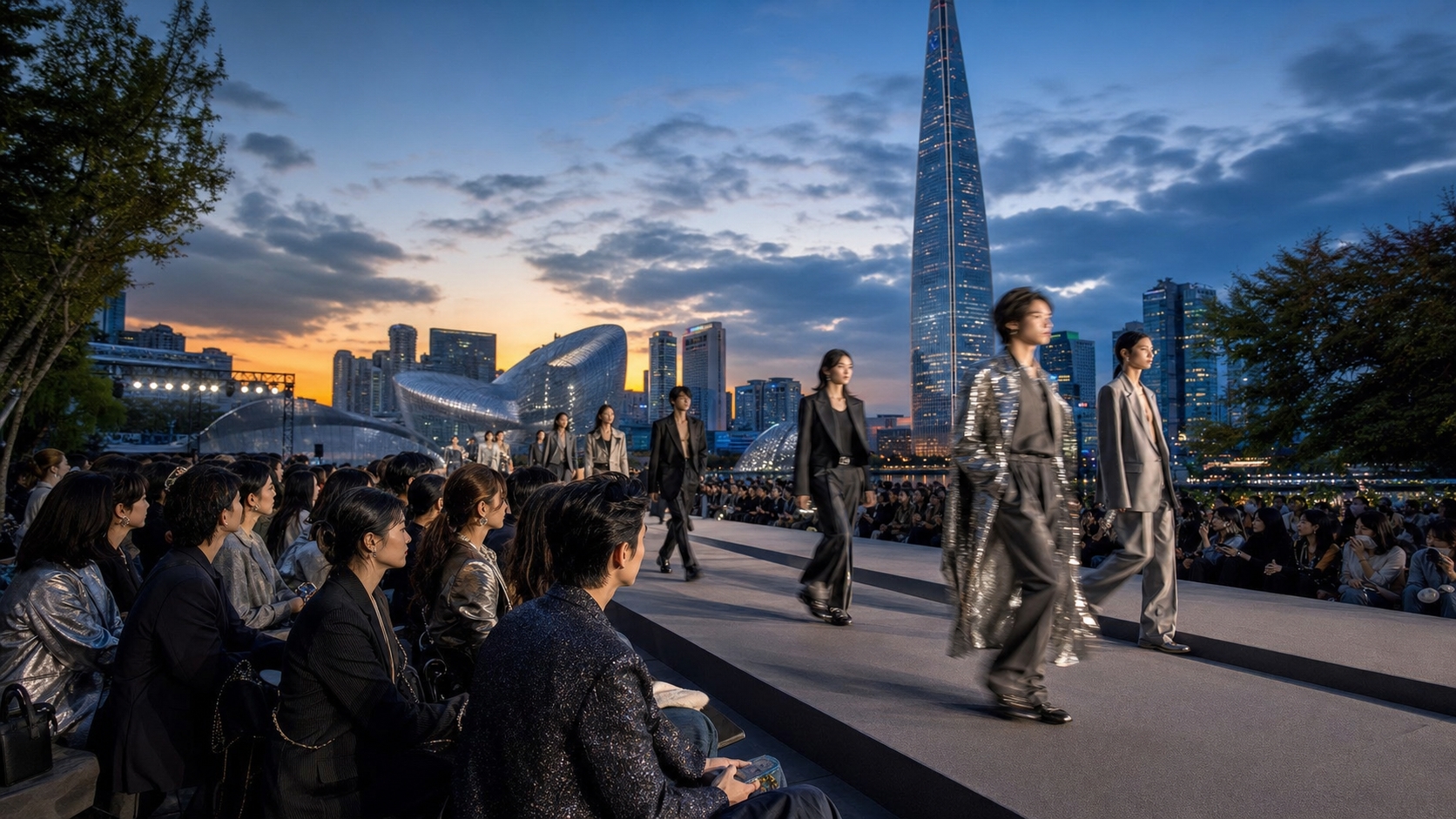
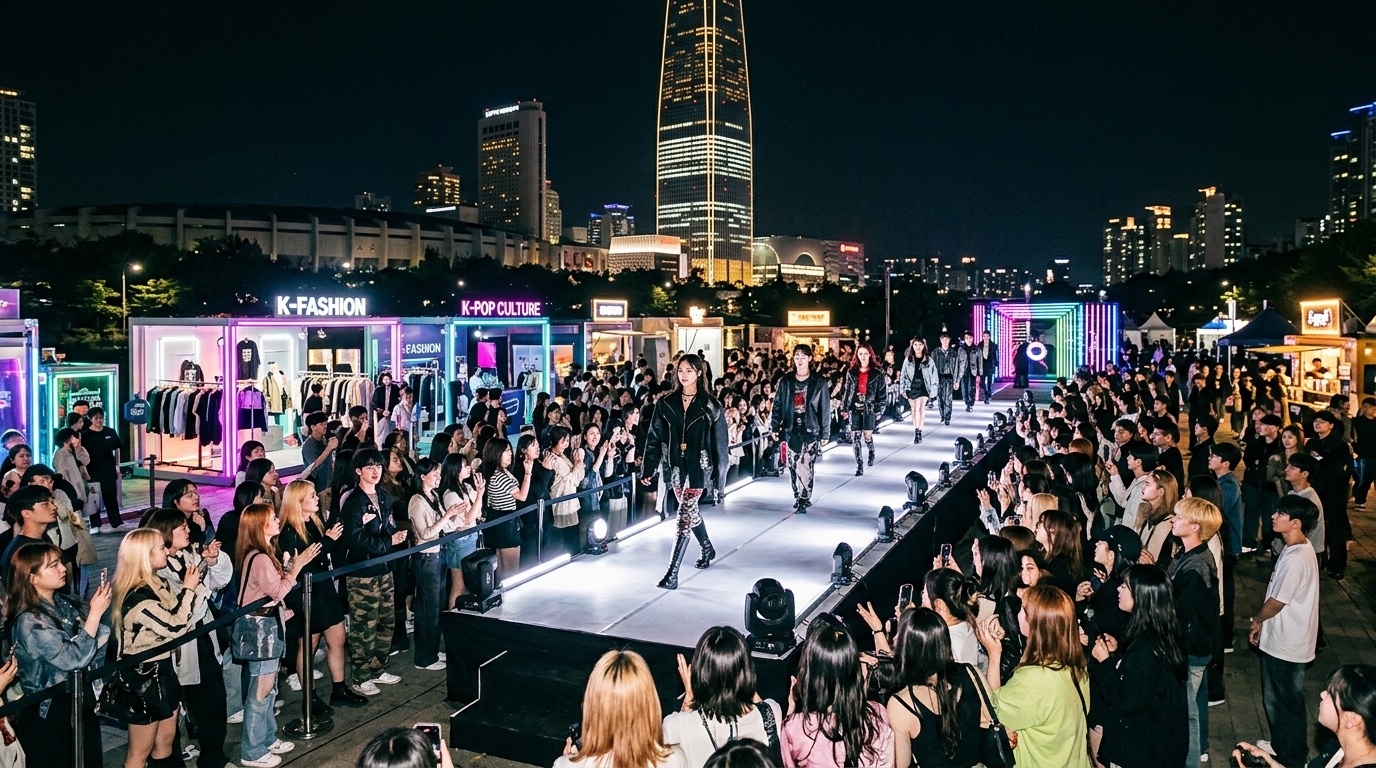
Lotte World Tower’s World Park is hosting Seoul Fashion Week’s very first outdoor runway. The opening stage of the Jamsil program was led by designer Kiminte’s KIMHĒKIM, a brand celebrating its 10th anniversary. This is a completely separate stage from the main event’s opening featuring RE RHEE and H1-KEY at DDP on September 1. DDP first opened the doors to Seoul Fashion Week, followed by KIMHĒKIM signaling the start of the Jamsil hub on September 3.
Alongside KIMHĒKIM, brands like Dunst, General Idea, EBM, and Mahagrid are participating in Jamsil. While DDP leans heavily into designer collections and buyer consultations, Jamsil fuses familiar contemporary brands with an accessible shopping environment. Attendees can watch the clothes on the runway and immediately continue their brand experience in nearby retail spaces and pop-ups.
An outdoor runway pulls in a shifting cityscape as the backdrop for fashion, a stark contrast to tightly controlled indoor venues. While subject to the whims of weather and surroundings, it easily broadcasts the event’s presence to everyday citizens passing by without an invitation. The World Park runway is an attempt to broaden Fashion Week from an exclusive industry-insider itinerary into a public event that city visitors can stumble upon and enjoy.
An Experiment Connecting Expertise and Public Appeal
The two hubs don’t just repeat the same programs. At DDP, designers present new collections, and 97 brands hunt for business opportunities at the trade show. In Jamsil, outdoor runways blend with contemporary brands, shopping, and K-pop exhibitions. By separating the space for creation and commerce from the space for experience and consumption, organizers have seamlessly woven them together into one cohesive event.
This dual-track approach draws in entirely different audiences within the fashion industry. Overseas buyers and media scrutinize brand collections and production capabilities at DDP. General attendees and tourists experience fashion shows and exhibitions with a much lower barrier to entry over in Jamsil. To succeed as both an international business event and a cultural festival for Seoul, both demographics are essential.
Public interest, however, doesn’t automatically translate into commercial success. K-pop fans flocking to exhibitions and runways is a completely different matter from overseas distributors placing consistent orders for Korean brands. Buzz easily draws a crowd, but a collection’s polish, production capacity, pricing, and distribution networks are evaluated on entirely different merits. Even as it fuses with K-culture, a careful balance must be struck so that the fashion itself doesn’t end up hidden behind the spectacle.
The City Returns to the Runway
The theme ‘The Value of What Remains,’ chosen by RE RHEE for the opening stage, seems to parallel the transformation of this season’s Seoul Fashion Week. The designer-centric fashion week, built up over 26 years, hasn’t disappeared; instead, it has been repositioned within new spaces and pop culture content. It’s a setup that layers the expertise and business functions DDP has long cultivated with Lotte World Tower’s mass appeal, outdoor spaces, and the massive international fandom of K-pop.
As of September 5, the event is in full swing. DDP’s main programs have already showcased the current state of the industry through RE RHEE’s opening, designer runways, presentations, and the trade show. Over in Jamsil, following KIMHĒKIM’s outdoor stage, contemporary brands and NCT-linked content are steadily rolling out. As the schedule unfolds sequentially, the contrasting landscapes of Seoul have all been swept into a single fashion event.
On the final day, September 6, a stage reimagining 10 years of NCT’s brand launch through fashion is scheduled. From the opening scene at DDP featuring H1-KEY to the closing act in Jamsil where NCT’s fashion archive will unfold, this season defines Seoul’s fashion not just through clothes, but through music, spaces, and the memories of fans. Whether this fusion evolves beyond a one-off spectacle into sustained overseas orders and distribution opportunities for Korean designers is something we’ll have to wait and see once the event wraps up.
Source: Seoul Metropolitan Government Seoul Fashion Week Press Release, August 2026; Marie Claire Korea, August 31, 2026; Yonhap News, August 27 and September 1, 2026.