
Table of Contents
An 11-Day Walking Tour of Korea Beginning at Bukhansan Mountain
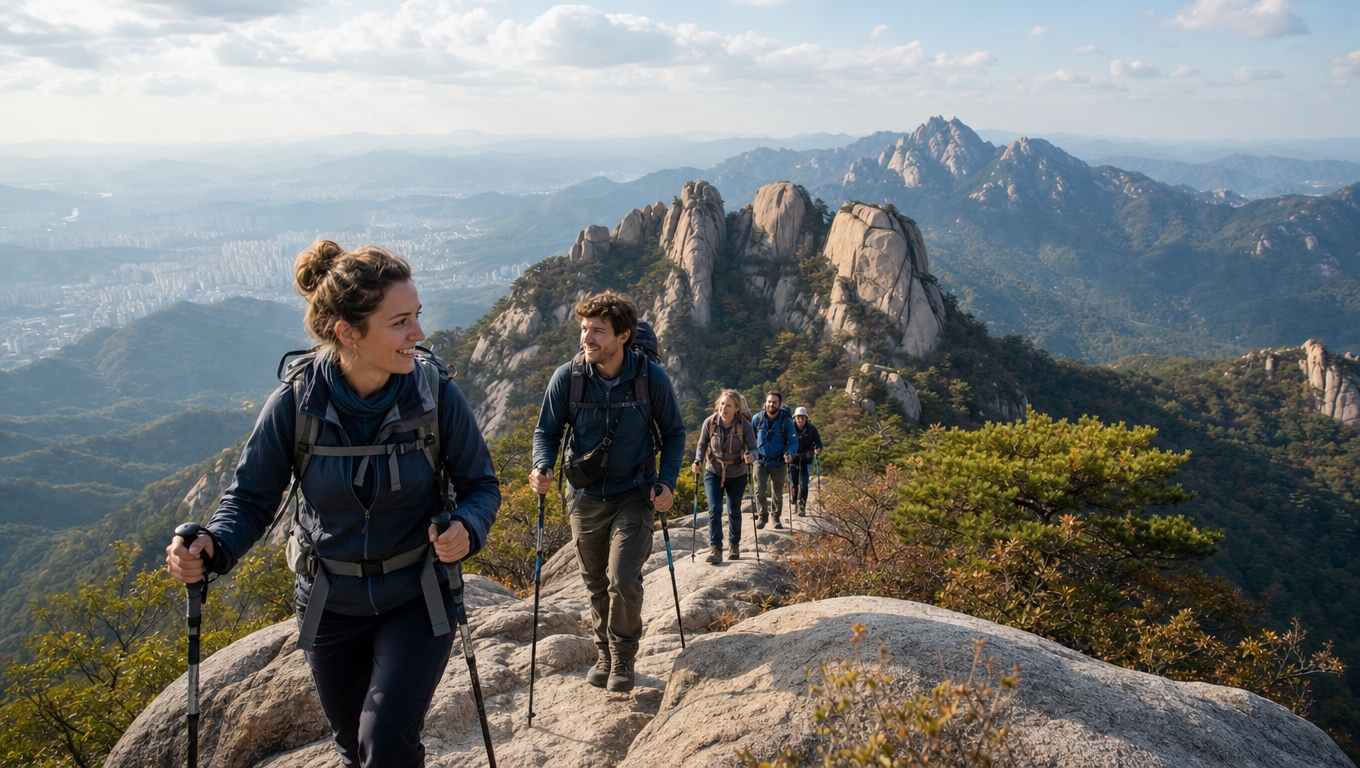
On Sunday, August 30, a group of 11 hikers from France gathered at the Suyu Branch of Bukhansan National Park in Seoul. Welcoming them were Minister of Culture, Sports and Tourism Choi Hwi-young and renowned Korean mountaineer Um Hong-gil. The two joined the visitors for a hike up Bukhansan, introducing them to Korea’s vibrant hiking and walking culture. Rather than a one-off welcoming event for a foreign tour group, this hike served as a proving ground to see if Korea’s mountains and trails could be cultivated into a distinct tourism draw.
The visitors are members of the Fédération Française de la Randonnée Pédestre (FFRandonnée), also known as the French Hiking Federation. Founded in 1947, it is France’s largest walking and trekking organization with roughly 240,000 members. Through regional branches and member clubs, the federation manages hiking trails across France, promotes walking as a daily exercise, trains guides, and produces trail maps. It operates less like a casual travel club and more like a professional body that institutionally supports walking culture.
For this trip, around 40 federation members are visiting Korea, divided into three groups. Each group is embarking on an 11-day, 10-night journey exploring the country’s mountains, cities, and historical heritage. The 11 hikers at Bukhansan marked the very first wave of this itinerary. As seasoned veterans of the global walking market, their firsthand experience with Korea’s trail environments, travel logistics, and cultural offerings makes this visit a practical test for the “K-Trekking Challenge.”
A Travel Route Connecting the Country, Not Just a Single Mountain
The French delegation’s itinerary extends far beyond a single hike up Bukhansan. After departing Seoul, the route weaves through Hahoe Folk Village in Andong, Namsan in Gyeongju, Geumjeongsan in Busan, and Suncheon Bay before reaching Jirisan. They will also experience a temple stay at Hwaeomsa in Gurye. This nationwide, mobile itinerary is designed to let them hike through diverse natural environments while taking in traditional villages, Buddhist culture, and local ways of life.
Each destination highlights a different facet of walking tourism in Korea. Bukhansan offers a rare national park experience right within a massive metropolitan area, while Andong’s Hahoe Village provides a chance to explore traditional landscapes on foot. On Gyeongju’s Namsan, mountain trails intersect with Buddhist relics. Busan’s Geumjeongsan further illustrates the relationship between sprawling cities and nature, and Suncheon Bay offers a wetland ecosystem distinct from the mountainous terrain. Finally, Jirisan and Hwaeomsa blend a long, demanding hike with an immersive temple retreat into a single cohesive journey.
This structure introduces Korea’s mountains to international guests without making summiting the sole objective. By weaving local history, religion, food, and lodging around the hikes, walking becomes the central axis connecting various regions. Instead of checking off isolated tourist spots, international visitors move along a unified route, experiencing a continuous blend of nature and culture.
Aiming for 3 Million International National Park Visitors by 2028
The institutional backdrop for this visit is a memorandum of understanding signed in July between the Korea Tourism Organization (KTO) and the Korea National Park Service. The two agencies have set a joint goal to attract 3 million foreign visitors to Korea’s national parks by 2028. To achieve this, they plan to promote Korean-style trekking routes abroad and develop travel packages that bundle national park visits with local tourism. The French delegation’s trip is a direct result of the KTO pitching these walking tours in France.
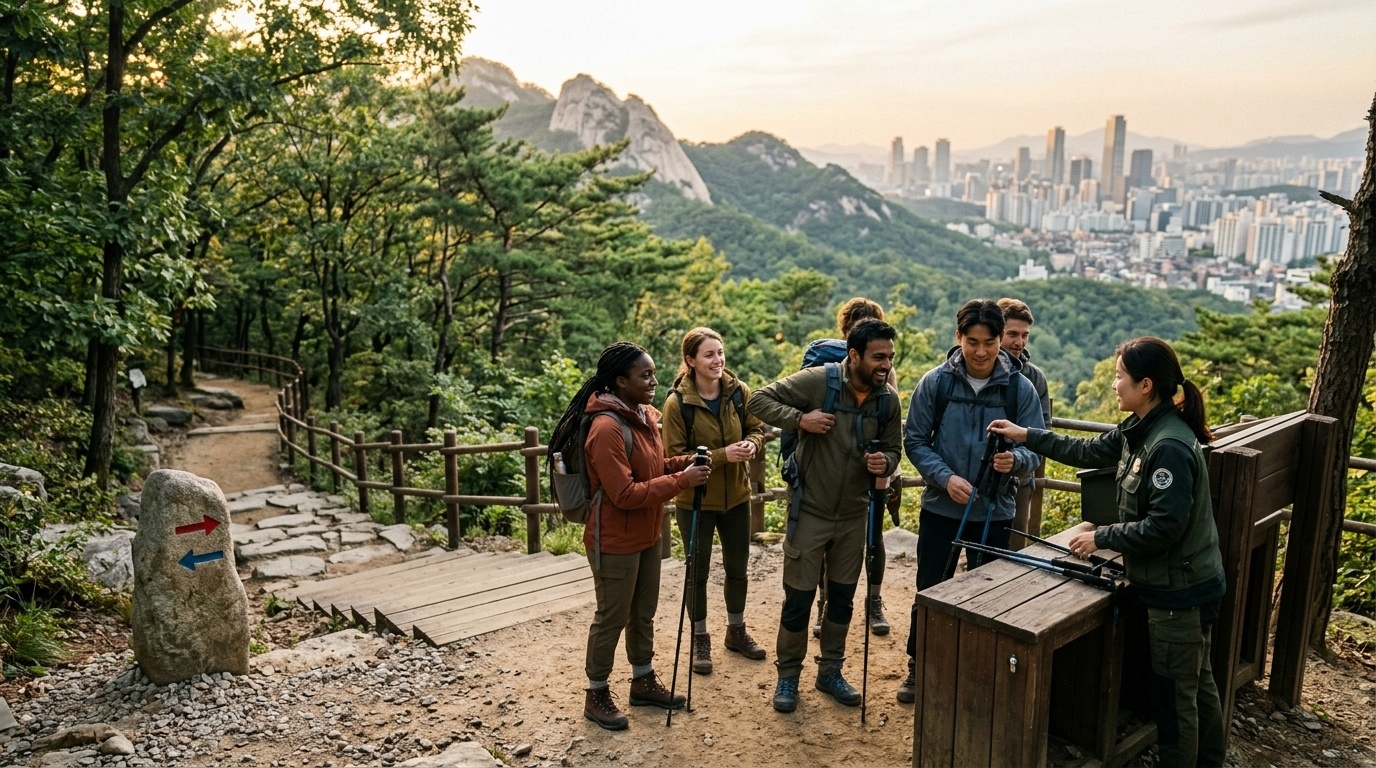
The “K-Trekking Challenge” is a campaign aimed at lowering the practical barriers foreigners face when trying to hike in Korea. It offers free rentals of safety gear, including hiking boots and poles, to international visitors exploring parks like Bukhansan, Seoraksan, Odaesan, and Gyeongju National Park, along with participation souvenirs. The idea is to allow short-term travelers, who might find it difficult to pack bulky and heavy personal gear, to easily rent what they need on-site and hit the trails.
While gear rental might seem like a minor convenience, it is closely tied to the success of international mountain tourism. Visitors packing for a typical city holiday are unlikely to bring proper hiking footwear or poles. If they had to purchase this gear separately, the incentive to spend part of a short trip on a mountain would plummet. Conversely, offering basic equipment and souvenirs on-site makes it far easier for even spontaneous travelers to join a walking program.
How a Country with 63% Forest Cover Turns Geography into a Tourism Asset
Korea’s ability to position mountain tourism as a new attraction for international visitors is rooted in its topography. According to the Korea Forest Service, forests cover roughly 63% of the land, and factoring in mountains and hills, the vast majority of the country is rugged. This forest-to-land ratio is the fourth highest among OECD member countries, trailing only Finland, Sweden, and Japan. This means mountains are not isolated, special destinations found only in specific regions; they are everyday landscapes woven into the fabric of cities and neighborhoods nationwide.
This geography provides the foundation for creating travel packages that vary in difficulty and duration. In Seoul, an accessible hike like Bukhansan can easily be slotted between urban sightseeing plans. For travelers who want to walk for days on end, long-distance itineraries linking regional mountains and national parks are entirely viable. Because there is no need to funnel novice hikers and expert trekkers through the exact same experience, the range of potential tour packages expands significantly.
However, an abundance of mountains does not automatically guarantee tourism competitiveness. Trail information, difficulty levels, estimated times, and safety guidelines must be provided in formats international travelers can easily understand. Logistics for getting from public transit to trailheads, and moving on to the next destination post-hike, must also be crystal clear. The firsthand experiences of the FFRandonnée members will shed light not just on Korea’s natural environment, but on how convenient these navigation and transport networks truly are for global walking tourists.
Travelers Who Stay Longer and Spend Locally
Another reason the Ministry of Culture, Sports and Tourism is keeping a close eye on hiking tourists is their length of stay and spending footprint. Unlike quick trips that merely skim the surface of a few major landmarks, traveling across multiple mountains and trails naturally requires a longer visit. This lengthier stay frequently translates into spending on accommodation, local transport, meals, gear, guide services, and cultural experiences. This economic ripple effect is why the government views mountain tourism as a high-value sector characterized by long stays and significant expenditure.
The French delegation’s 11-day itinerary brings this concept to life. Moving from Seoul down through Andong, Gyeongju, Busan, Suncheon, and Gurye ensures that their spending is not confined to the capital’s typical tourist hotspots. They will sleep, eat, and experience the mountains and cultural heritage in each respective region. It is a structure designed to push travel routes out into the provinces and extend the number of days visitors stay, rather than just bumping up arrival numbers.
Moving forward, the KTO and the Korea National Park Service plan to aggressively promote Korean-style trekking routes internationally and expand their long-stay offerings. The key lies in designing the mountain not merely as a scenic backdrop, but as the very medium of travel. Trails and local attractions must connect seamlessly, and the lodging, food, and cultural experiences surrounding a hike must be woven into a cohesive narrative, rather than presented as disjointed add-ons.
From K-Pop to the Post-Hike Meal
The motivations driving foreigners to Korea’s mountains are already expanding beyond traditional nature appreciation. According to a November 2025 report by The Korea Herald, international fans have begun showing up at spots like Gwanaksan Mountain to recreate the hikes their favorite K-pop artists shared in YouTube videos or vlogs. The desire to see the same views their idols saw and snap a photo has evolved into actual hiking during their trips to Korea.
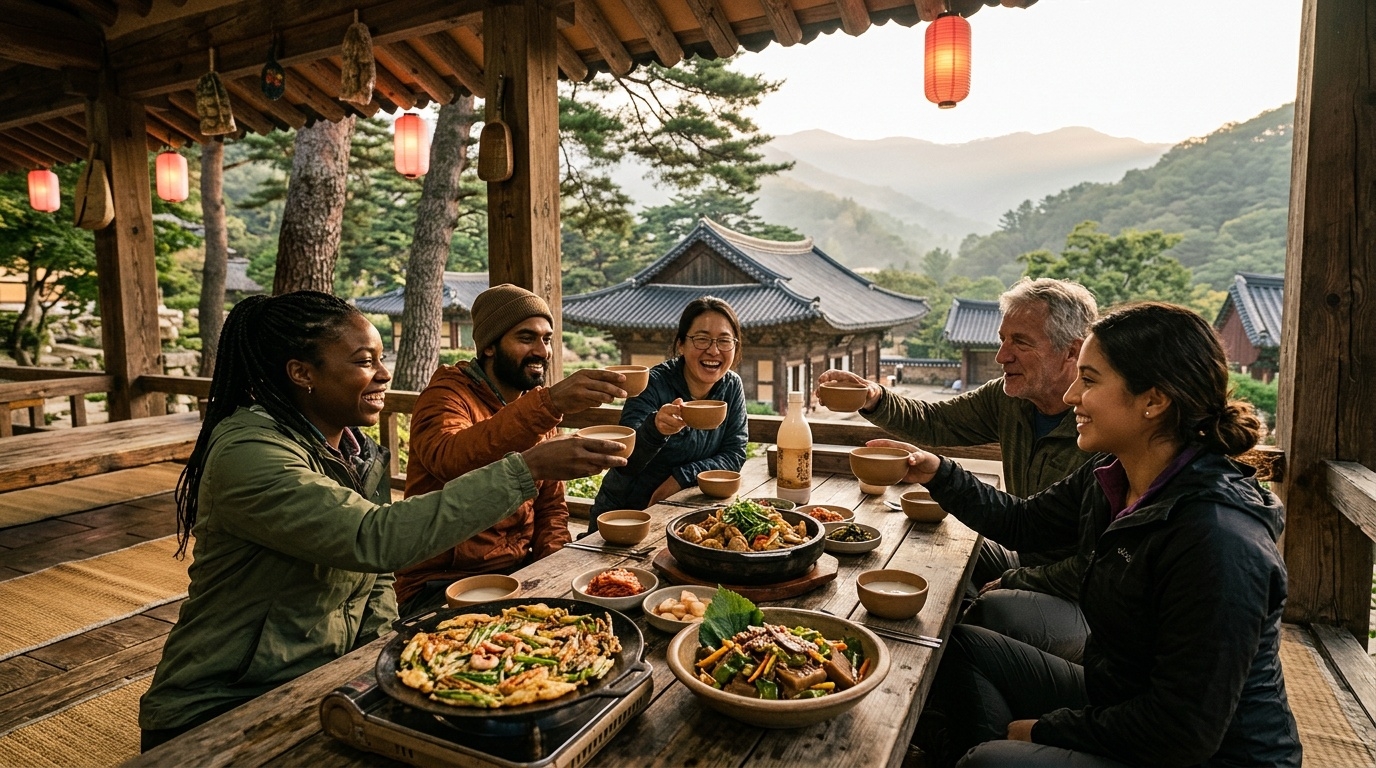
The distinctly Korean hiking culture of enjoying baeksuk (whole boiled chicken), dotorimuk (acorn jelly), pajeon (green onion pancake), and makgeolli (rice wine) after a climb serves as an entirely separate cultural experience for foreigners. While eateries huddled at the base of a trail and post-hike feasts are second nature to Koreans, international visitors see these moments as a bridge between nature and everyday local life. Hiking transcends the simple act of reaching a peak; it becomes a journey of tracking down spots seen in pop culture, sharing the trail with locals, and diving into regional cuisine.
The French hikers who met with Minister Choi and Captain Um at Bukhansan will continue their journey to Andong, Gyeongju, Busan, Suncheon, and Jirisan. What they are experiencing is not the scenery of a single peak, but an 11-day voyage that threads multiple Korean regions together through walking. This initial field visit is testing much more than basic tourist satisfaction. It is putting to the test whether Korea’s mountains can stand as independent destinations that convince global travelers to stay longer, and whether they can serve as the central axis of a cultural journey that encompasses K-pop, food, temples, and traditional villages.
Sources: Ministry of Culture, Sports and Tourism / Asia Economy, August 30, 2026; News1, July 9, 2026; The Korea Herald, November 29, 2025; Korea Forest Service Basic Forest Statistics.